










A handful of pioneering brands are now venturing into a captivating frontier, promising clothing and footwear designed to seamlessly return to the earth. This "soilpunk" vision, which intertwines ecological restoration with sustainable design, offers a powerful antidote to the prevailing environmental anxieties stemming from textile waste. However, as analyst and researcher Fru Bekefi explores in a recent report, the practical implementation of compostable fashion faces significant hurdles, including certification gaps, consumer confusion, and the inherent limitations of home composting systems. The critical question remains: what does compostable fashion truly look like in practice, and where does the marketing end?
The Mounting Crisis of Textile Waste and the Allure of Soilpunk
The global fashion industry, a colossal economic engine, also generates an immense and growing environmental burden. Annually, an estimated 92 million tons of textile waste are produced worldwide, with projections indicating a rise to 134 million tons by 2030. The vast majority of these discarded garments—often composed of fossil-fuel-derived synthetic fibers like polyester, nylon, and acrylic, or complex blends—end up in landfills or are incinerated. These textile mountains, vividly depicted in places like Accra, Ghana, and Chile’s Atacama Desert, contribute significantly to greenhouse gas emissions, release harmful microplastics into ecosystems, and leach toxic chemicals into soil and water. The traditional linear model of "take-make-dispose" is clearly unsustainable, prompting an urgent search for circular alternatives.
In this context, the "soilpunk" movement emerges as a compelling narrative. Rooted in art, design, and culture, soilpunk champions soil health and regenerative agricultural practices, envisioning a future where human activities actively nourish, rather than deplete, natural systems. The idea of a garment, once cherished and worn, gracefully decomposing into nutrient-rich soil for a garden, resonates deeply with a society grappling with eco-anxiety and the specter of irreversible climate tipping points. This alchemical process, transforming waste into value, offers a comforting vision of cyclical harmony, a stark contrast to the grim realities of fast fashion’s environmental footprint. It’s a conceptual and material promise that has begun to capture public imagination, evolving composting from a mundane chore into a form of cultural currency, as evidenced by mandatory food waste separation in major cities like New York and across France, and even its elevation to "status composting" in lifestyle publications.
Early Adopters and Industry Pilots: Navigating the New Frontier
Despite the industry’s heavy reliance on fossil-fuel fibers and the pervasive "disposable mindset" of ultra-fast fashion, a dedicated fringe of designers, material innovators, and brands are actively exploring soilpunk circularity. These pioneers are not just dreaming but are launching pilot projects and collections designed to test the viability of compostable fashion. Their motivations are multifaceted, driven by genuine environmental concern, consumer demand for sustainable alternatives, and legislative pressures such as the EU’s Extended Producer Responsibility (EPR) schemes, which seek to shift the burden of end-of-life product management from taxpayers to businesses.
As design futurist and author Sarah Housley notes, "Compostable fashion is having an extended moment because consumers have become aware of low rates of recycling, particularly for textiles. They’re seeking alternatives that still feel ecologically responsible, and the idea that your clothing can return to the earth is so irresistible. It’s popular with brands for similar reasons. While recycling requires daunting systemic change—which they can influence, but only to a certain extent—compostable designs may feel a little easier to crack." This strategic appeal allows brands to signal regenerative intent and gain an "innovation halo," even if full-scale implementation remains distant.
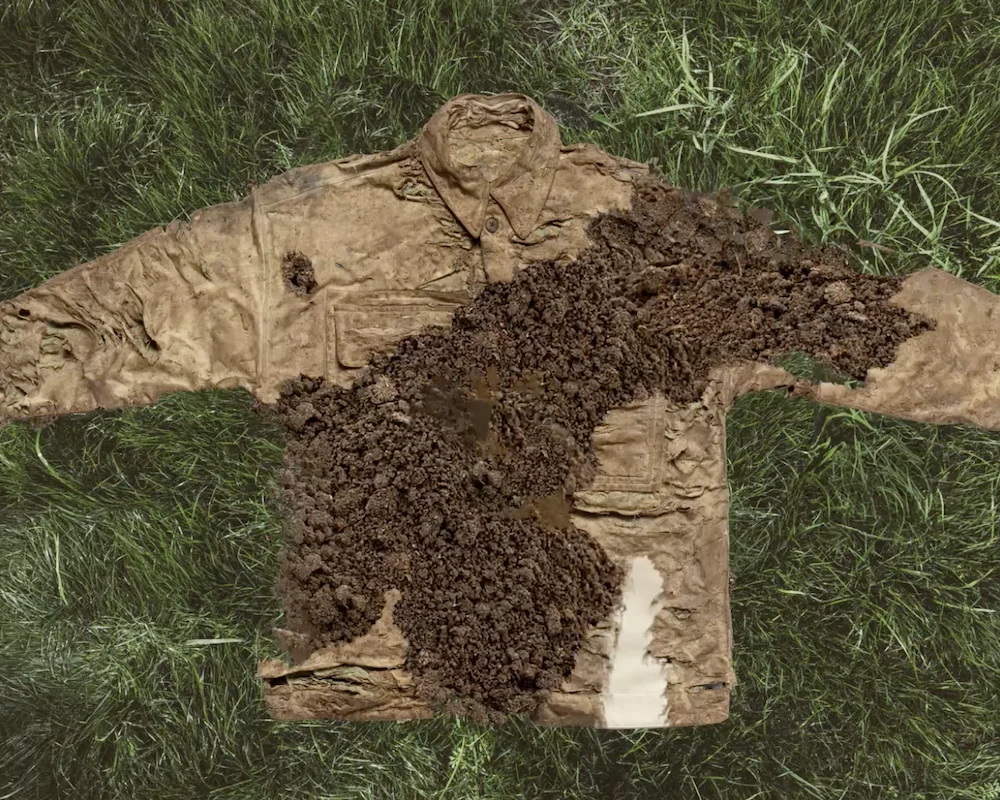
One notable example is the "regenerative sportswear collection" debuted by Under Armour and Unless Collective during Milan Design Week in April 2025. With the tagline "Make Good Dirt," this small pilot project teased a future where worn-out athletic gear could simply be buried in a backyard. Similarly, Stella McCartney, a long-standing advocate for sustainable fashion, has advanced her S-Wave sneaker line. Collaborating with material science startup Balena, the brand unveiled an upgraded S-Wave sneaker in 2025 featuring BioCir Flex soles made from leftover cinnamon from the spice industry. These trainers are designed for durability and recyclability, with industrial composting through Balena’s global network serving as a last resort in their lifecycle. The innovative use of cinnamon not only addresses material challenges but also imbues the shoes with a comforting, earthy fragrance, leveraging "incentive aesthetics" to engage consumers on a sensory level.
Distinguishing Compostable from Biodegradable: A Critical Clarity
A fundamental challenge in the compostable fashion discourse is the widespread confusion between "compostable" and "biodegradable"—terms often misused interchangeably, both by consumers and sometimes inadvertently by brands. It is crucial to draw a clear distinction:
- Compostable materials break down into organic matter within a specific timeframe and under specific conditions, typically resulting in a nutrient-rich soil amendment. This process is either certified for home composting (requiring ambient temperatures and varied microbial activity) or industrial composting (requiring higher, controlled temperatures and specific microbial environments).
- Biodegradable simply means a material can be broken down by microorganisms, but it offers no guarantee of timeframe, conditions, or the resulting byproducts. A "biodegradable" item could take hundreds of years to break down in certain environments, potentially leaving behind microplastic residues or other undesirable substances. Recognising this ambiguity, the EU now prohibits the unvalidated use of the term "biodegradable," and several member states, including France and Belgium, have banned it entirely in marketing claims.
This distinction is vital for understanding why seemingly natural fibers might not behave as expected. Asha Singhal, director of the Nature of Fashion Initiative at the Biomimicry Institute, highlights this complexity, stating, "Biodegradation is not just about the material itself. It depends on the ecosystem around it, from temperature and moisture to the presence of the right microbes." A recent paper in iScience, co-authored by Fashion Revolution co-founder Carry Somers, starkly illustrated this, revealing that cotton, often perceived as universally biodegradable, accounted for over 70% of the 150-year fiber record found in sediment from a UK lake historically fed by textile mills. This demonstrates that even "natural" fibers require the right environmental conditions to decompose effectively.
The Home Composting Conundrum: Idealism Meets Reality
The appealing vision of burying a garment in one’s backyard, however, runs into practical limitations. As Becca Willcox, ratings analyst at Good On You, explains, "The conditions in home composting systems are highly variable, in terms of temperatures, moisture levels, and the microbes that are present. Without the right conditions, textiles may take a lot longer than expected to break down, and perhaps much longer than achieved under the test conditions. The items won’t necessarily break down quickly if they are just left and forgotten about."
For a garment to be genuinely home compostable, it must be constructed from 100% natural, untreated fibers such as organic cotton, linen, kapok, hemp, organic bamboo, jute, or wool. Even then, the presence of dyes or chemical treatments can render them non-compostable. Furthermore, all functional and decorative trims—zippers, buttons, sequins, synthetic threads, and elastic—must be completely removed. This meticulous preparation adds a layer of complexity that often goes uncommunicated or is overlooked by consumers.
Consumer surveys corroborate these practical difficulties. Of ten consumers interviewed for this report, almost none had actually attempted to home compost a garment. Their hesitations predominantly revolved around a lack of suitable infrastructure ("Where would I compost it?") and concerns about product durability ("How long will it last after washing?"). This underscores a significant "composting literacy" gap and highlights the chasm between the aspirational marketing of "soilpunk" and the everyday reality of waste management.
Industrial Composting and Specialized Solutions
While home composting presents significant challenges, industrial composting offers a more controlled and effective environment for textile decomposition. These facilities operate at higher, more consistent temperatures, ensuring faster and more complete breakdown of materials. This is where many brands envision their compostable products ultimately ending up.
Certain apparel categories are particularly well-suited for compostable design, especially those with short lifespans, low resale value, or complex constructions that hinder traditional recycling. Underwear, socks, and tights are prime candidates, as they are frequently replenished, have limited reuse potential, and are often deemed unhygienic for resale or donation. Footwear also presents a critical opportunity: an estimated 90% of the 23.8 billion pairs of shoes produced annually end up in landfill or are incinerated, largely due to their intricate construction of glued layers of foam, rubber, mesh, and synthetic leather, making them nearly impossible to recycle.
Initiatives like Fashion For Good’s "Closing the Footwear Loop," launched in February 2025 in partnership with global brands such as adidas, Zalando, Inditex, and Target, are actively exploring bio-based polymers for soles to replace fossil fuel-derived materials and improve product circularity. Stella McCartney’s S-Wave trainers, designed to be durable and recyclable with industrial composting as a last resort, represent a tangible step in this direction, showcasing how brands can integrate compostability within a broader circular framework.
The underwear brand Kent exemplifies a successful, targeted approach with its "Compost Club." Relaunching in summer 2026, this take-back program allows US-based customers to return washed, cut-up briefs for $5, receiving a $10 credit. The textiles are then sent to a community composting organization in Southern California, diverting waste and creating nutrient-rich soil. Sarah Housley praises this model: "It’s a really strong use case because this is an item that people replenish frequently, that can only have its lifetime of use extended a certain amount, and that has no resale value and very little reuse or recycling potential."
Certification and Consumer Trust: Bridging the Credibility Gap
The efficacy of compostable fashion hinges on clear, verifiable claims, yet the certification landscape remains fragmented and often inadequate for finished garments. While indicators like OK compost HOME by TÜV AUSTRIA and Cradle to Cradle (C2C) certification exist, they come with limitations. TÜV AUSTRIA’s certification, for instance, typically validates individual fibers rather than complex finished products. C2C-certified products may guarantee compostability, but the organization itself acknowledges that textiles are "most likely" to be recycled into new products rather than composted.
The absence of widespread, robust certification schemes for finished clothing that guarantee home composting makes it difficult for consumers to make informed choices and for brands to credibly communicate their efforts. This lack of clarity fuels skepticism and leaves the door open for greenwashing—performative corporate environmentalism that prioritizes marketing over genuine impact. Sarah Housley warns, "Compostable clothing lends itself to great visuals: brands have started to show their products buried and in different states of decomposition to really grab consumers’ attention and interest. But they’re still being used to give companies an innovation halo." If the initial "fantasy fails to live up to expectations or evolve from one-off collections into more mature propositions," consumer trust could erode.
Furthermore, brands face the challenge of "engineering behavior change." As Housley notes, "There’s a huge amount of behaviour change for brands to engineer into place. For example, providing the envelope and label at point-of-purchase and then incentivising customers to return the product to them to dispose of professionally." Without clear disposal instructions, convenient return mechanisms, and incentives, even genuinely compostable products risk ending up in landfills due to consumer inertia or confusion.
The Path Forward: Innovation, Infrastructure, and Education
Compostable clothing is currently in its niche, experimental phase, appealing primarily to curious and committed early adopters seeking regenerative alternatives. However, research from the University of Pennsylvania suggests that social movements can reach a "tipping point" with just a 25% minority catalyzing significant change. This small but dedicated group of consumers and innovators could indeed drive broader adoption, provided the underlying systems catch up.
The future of compostable fashion lies in a multi-pronged approach encompassing continued material innovation, significant infrastructure development, and comprehensive consumer education. Biodesigners, working with living systems like bacteria and algae, are at the forefront of pioneering soil-compatible solutions. Startup Cell Sense, for example, creates compostable biodesigned embellishments, such as jade-like bioluminescent beads that last 15 years but decompose in kitchen compost within four weeks, showcasing the potential for durable yet truly circular components. Collaborations like Cell Sense’s with personal care company Dulcie, offering a durable yet compostable exfoliating face cloth as a limited edition experiment, build loyalty by providing transparent, behind-the-scenes glimpses into material development.
However, these innovations must be supported by systemic change. Governments need to invest in industrial composting infrastructure and establish clear, consistent labeling laws that differentiate between home and industrial compostability. Brands, in turn, must move beyond one-off collections to integrate compostable solutions into their core offerings, providing seamless end-of-life solutions and educating consumers effectively.
Compostable fashion is not a panacea for the industry’s environmental woes; rather, it is a powerful complementary strategy. It is best deployed in targeted, intentional ways: replacing seductive but toxic embellishments, transforming materials no longer fit for their original purpose, and providing an end-of-life solution for specific apparel categories like underwear and footwear where reuse and recycling are less viable.
The transformative potential of compostable design—its ability to ask what an object or material can become through decomposition—is truly exciting. It invites us to imagine a regenerative fashion future where, perhaps, we will indeed witness our cherished garments returning to nourish our own gardens, completing a beautiful and vital cycle of life.
Editor’s note
Lead image is a collage by JD Shadel. Decomposing jacket is a still from an Under Armour x Unless promotional video. And the third image is courtesy Kent. Good On You publishes the world’s most comprehensive ratings of fashion brands’ impact on people, the planet, and animals. Use our directory to search thousands of rated brands.