




Silk scarves, once a quintessential emblem of classic sartorial elegance, are experiencing a significant resurgence within contemporary menswear, transitioning from an underrated accessory to a sophisticated statement piece. This delicate yet impactful item offers a unique blend of warmth, vibrant color, and distinctive character, all without the cumbersome bulk of a traditional winter scarf or the inherent formality of a necktie. The prevailing question among style-conscious men is no longer about the permissibility of wearing silk scarves, but rather how to meticulously select and artfully integrate them into an ensemble in a manner that feels harmonious, timeless, and effortlessly natural.
A Historical Overview: The Scarf’s Journey in Menswear
The history of scarves in menswear is rich and multifaceted, tracing back centuries to utilitarian origins. Early iterations, often made of linen or wool, served primarily as protection from the elements, adopted by soldiers, laborers, and explorers. The Roman Empire’s "sudarium" (sweat cloth) is an early precursor, while Croatian mercenaries in the 17th century are credited with popularizing the cravat, a decorative neck scarf that evolved into the modern tie. Throughout the 18th and 19th centuries, scarves became increasingly fashionable, with silk emerging as a preferred material for its luxurious feel and ability to display intricate patterns. Dandies and gentlemen of leisure embraced them as markers of status and individual flair.
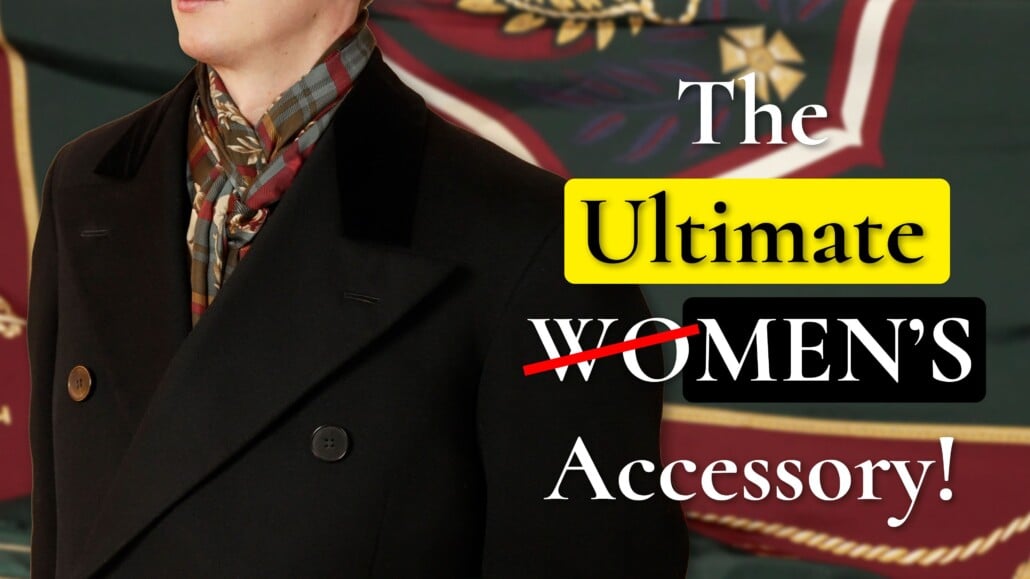
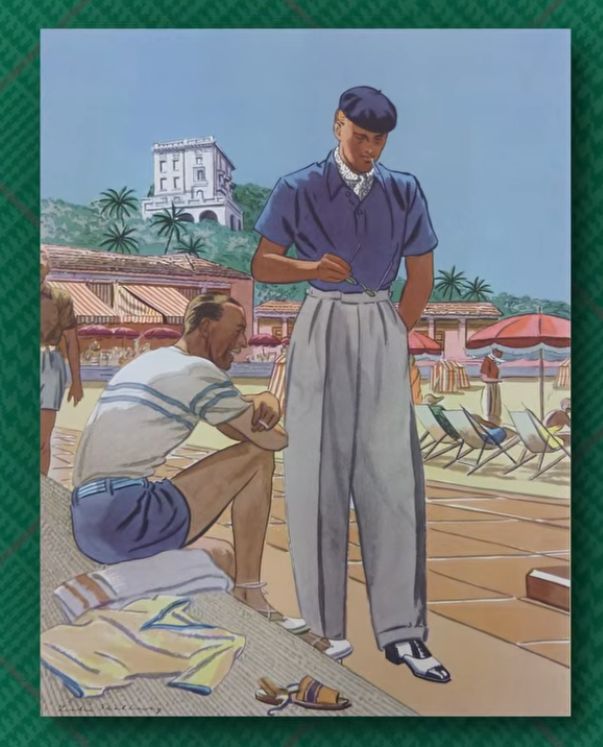
The early to mid-20th century saw silk scarves become synonymous with Hollywood glamour, aviation heroes, and motor racing enthusiasts, epitomizing a blend of adventurous spirit and refined taste. Figures like Cary Grant and Steve McQueen frequently donned them, cementing their place as a symbol of effortless cool. However, as casualization swept through fashion in the latter half of the century, the silk scarf, along with many other traditional accessories, receded from mainstream men’s wardrobes, often relegated to niche formalwear or considered overly flamboyant. The current revival, however, signals a broader shift towards more expressive and nuanced masculine dressing.
The Distinctive Appeal of Silk Scarves in Modern Wardrobes
A silk scarf occupies a distinct niche in the accessory spectrum, offering benefits that neither a necktie nor a heavy winter scarf can fully replicate. Its lightweight nature and inherent sheen imbue an outfit with a softness and visual intrigue that can elevate even the simplest attire. This unique versatility makes it particularly valuable for men seeking to:
- Add a refined touch without excessive formality: Unlike a tie, which often dictates a certain level of formality, a silk scarf can bridge the gap between casual and formal, lending polish to an outfit without making it feel stiff or overly structured.
- Introduce color and pattern subtly: For those hesitant to incorporate bold patterns or bright colors through primary garments, a silk scarf provides an ideal avenue for experimentation, drawing the eye without overwhelming the overall look.
- Provide adaptable warmth for transitional seasons: The natural thermoregulating properties of silk make it perfect for layering during spring and autumn, offering a comfortable degree of warmth when a heavier wool scarf would be too much.
- Enhance texture and depth in an ensemble: The smooth, lustrous quality of silk contrasts beautifully with fabrics like wool, tweed, or cotton, adding a rich tactile dimension to an outfit.
- Express personal style and individuality: In an era where personal expression through fashion is increasingly valued, a silk scarf allows for a subtle yet impactful display of one’s unique aesthetic.
Market Trends and Expert Commentary on the Silk Scarf Revival
The resurgence of the silk scarf aligns with a broader trend in men’s fashion favoring sophisticated accessories and a more eclectic approach to personal style. Industry reports suggest a steady growth in the global men’s accessory market, projected to reach approximately $60 billion by 2027, with luxury segment items like silk scarves showing particular momentum. This growth is driven by a confluence of factors, including the rise of social media influencers showcasing diverse styling, a growing appreciation for craftsmanship, and a desire among consumers for unique, artisanal pieces.

Fashion analysts note a shift away from rigid dress codes towards a more fluid interpretation of elegance. "We’re seeing men embrace accessories not just for their functional purpose, but as integral components of self-expression," comments Dr. Eleanor Vance, a fashion historian and consultant for several luxury brands. "The silk scarf, with its inherent versatility and rich history, fits perfectly into this paradigm, allowing for a creative outlet that is both understated and impactful."
Luxury brands, recognizing this evolving consumer preference, have increasingly featured silk scarves in their menswear collections, often reinterpreting classic motifs or introducing contemporary designs. This renewed visibility on runways and in editorial spreads has undoubtedly contributed to the accessory’s elevated status. "Brands are responding to a demand for pieces that offer both heritage and modernity," states Marcus Thorne, a prominent menswear stylist. "A well-chosen silk scarf instantly communicates a discerning eye and a confidence in one’s personal style."
Selecting the Ideal Silk Scarf: A Guide to Informed Choices
The successful integration of a silk scarf into a man’s wardrobe hinges significantly on thoughtful selection. The goal is to choose a piece that enhances, rather than overwhelms, existing attire.
Material and Quality Considerations
While the term "silk scarf" is broad, the quality of the silk itself can vary significantly. Look for scarves made from 100% mulberry silk, known for its superior smoothness, luster, and durability. Higher momme weight (a unit of silk density) indicates a more substantial and luxurious fabric, typically ranging from 12 to 22 momme for scarves. The hand-rolled edges, a hallmark of artisanal craftsmanship, also contribute to the scarf’s drape and overall perceived quality.
Color and Pattern Dynamics
The choice of color and pattern is paramount. To maintain a sense of classic masculinity and versatility, it is generally advisable to steer clear of overly vibrant or neon hues. Instead, gravitate towards:
- Muted Tones: Shades of burgundy, olive green, navy, charcoal, and various browns offer a sophisticated palette that integrates seamlessly with most menswear staples.
- Classic Patterns:
- Paisley: A timeless motif that exudes elegance and a touch of bohemian flair.
- Geometric Designs: Subtle checks, houndstooth, or abstract geometric patterns can add structure and visual interest.
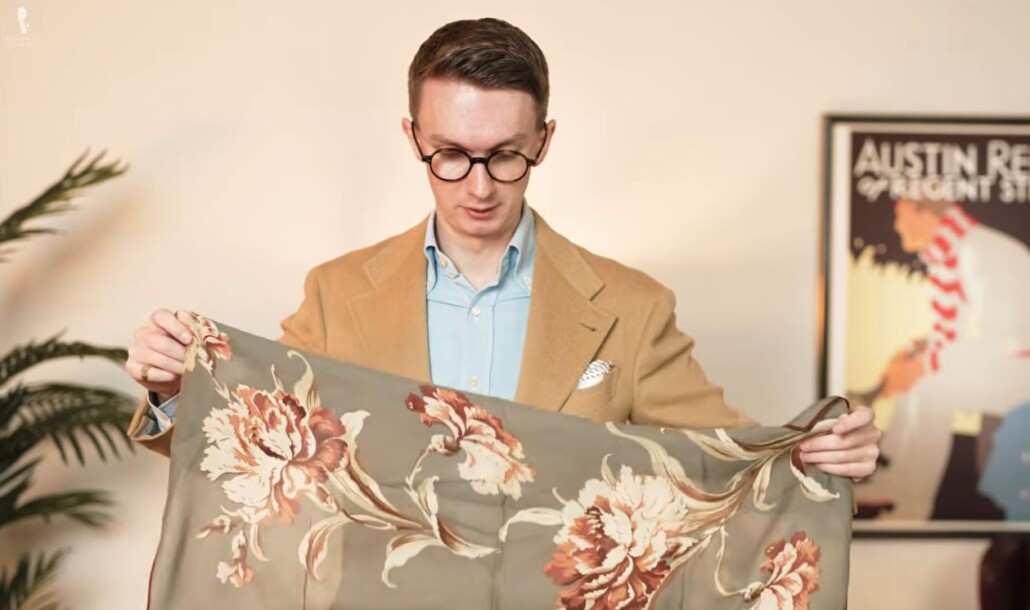
- Large Floral Prints (muted): When rendered in subdued colors, larger floral patterns can read as distinctly masculine, offering a softer aesthetic without being overtly feminine.
- Western-Inspired Motifs: Patterns reminiscent of bandanas, with intricate borders or equestrian themes, can evoke a rugged yet refined sensibility.
- Solid Colors: For beginners, a solid silk scarf in a versatile color like navy or cream is an excellent starting point, offering maximum styling flexibility.
When evaluating patterns, consider how they will appear once the scarf is folded and tied. A pattern that looks busy when fully spread may appear perfectly balanced when only a portion is visible around the neck.
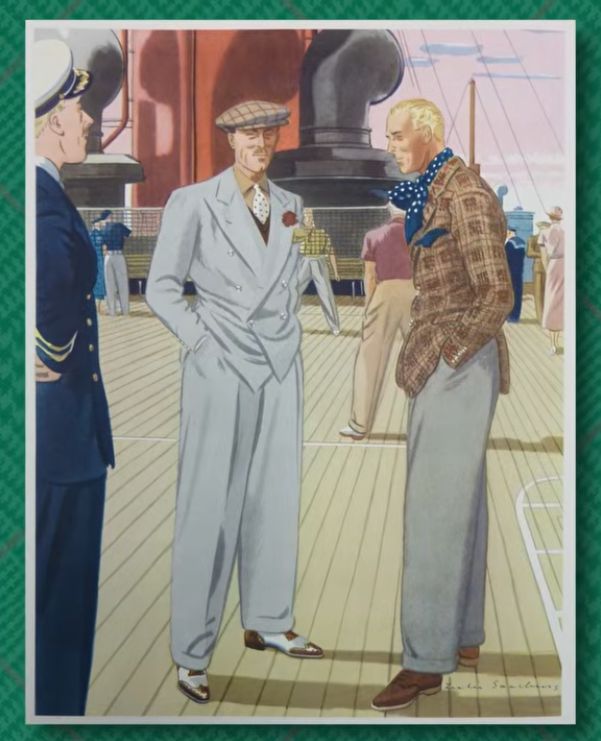
Size and Shape: Understanding the Options
Silk scarves typically come in a few common sizes and shapes, each offering different styling possibilities:
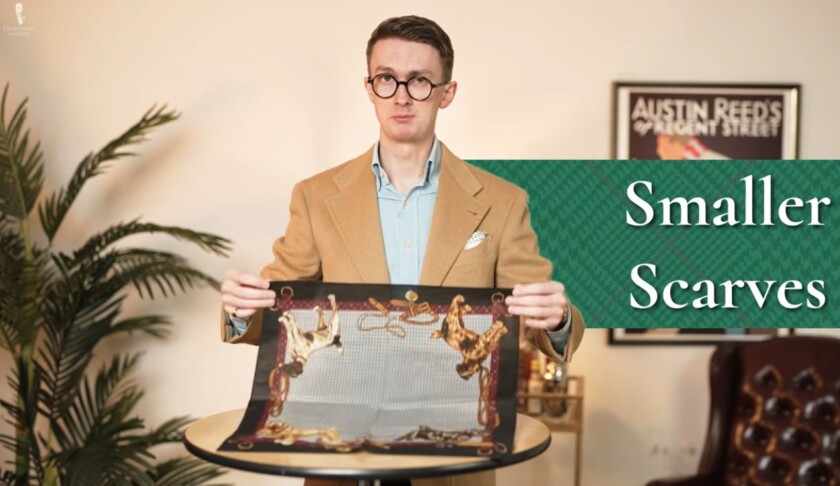
- Small Square Scarves (e.g., 50×50 cm or 20×20 inches): Often referred to as "foulards" or "neckerchiefs," these are ideal for neat, compact knots and adding a pop of color close to the neck. They are less about warmth and more about decorative flair.
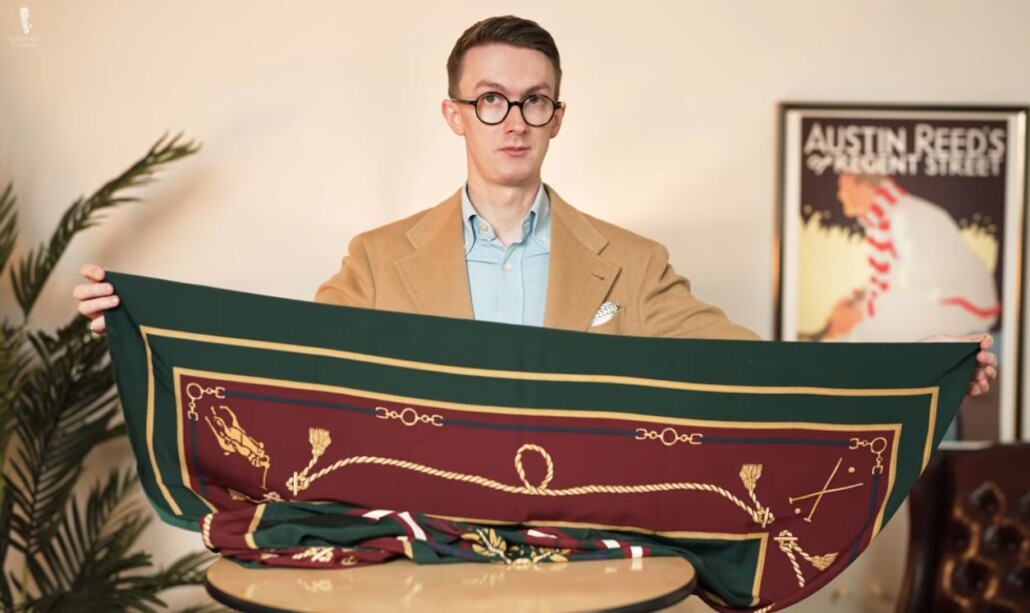
- Standard Square Scarves (e.g., 70×70 cm or 27×27 inches): This size offers a good balance, providing enough fabric for a range of knots while remaining relatively trim. They are perhaps the most versatile for beginners.
- Large Square Scarves (e.g., 90×90 cm or 35×35 inches and up): These provide the most material for dramatic drapes, voluminous knots, and under-the-collar styling. They offer greater visual impact and a more luxurious feel.
- Oblong/Rectangular Scarves: While less common for pure silk scarves (more typical for wool or cashmere), some silk blends come in this shape, offering classic scarf-tying options.
For those new to wearing silk scarves, a standard or large square scarf is often recommended due to its greater flexibility in knotting and draping, allowing for more experimentation and forgiveness in styling.
Mastering the Art of Styling: Knots and Drapes
The true charm of a silk scarf lies in its adaptability, with numerous ways to wear it depending on the scarf’s size, the outfit, and the desired aesthetic.
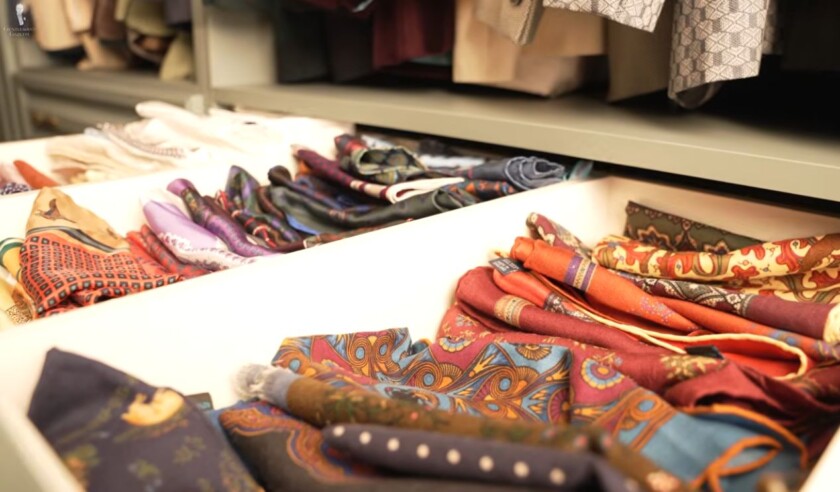
Styling Large Square Scarves
Larger square silk scarves provide the most creative freedom for drapes and knots, often working best when they have sufficient length to sit elegantly around the neck without feeling constricted. Useful options include:
- The Ascot Knot: A sophisticated knot where the scarf is folded diagonally, wrapped around the neck, and the ends are crossed and tucked into the shirt or under a jacket lapel. This provides a soft, voluminous look.
- The Drape: The simplest method, where the scarf is folded diagonally into a triangle, then draped over the shoulders with the point at the back, or folded into a band and simply draped around the neck, allowing the ends to hang freely.
- The French Knot (or Cowboy Knot): Fold the square scarf diagonally into a triangle. Place the point of the triangle at the front, and bring the two ends around the neck to the front, crossing them and tying them into a simple knot over the point of the triangle. This creates a casual yet stylish look, often seen with Western-inspired attire.
- The Loose Casual Knot: Similar to the French knot, but with more relaxed tension, allowing for a softer, more effortless appearance.
- Under-the-Collar Styling: Fold the scarf into a band, place it around the neck, and tuck the ends neatly under a shirt or jacket collar, allowing only a small portion of the pattern to peek out. This offers a discreet touch of elegance.
Styling Small Square Scarves (Neckerchiefs)
With less fabric, smaller scarves naturally lend themselves to neater, more restrained styling. The goal is often a clean, impactful focal point. Good options include:
- The Simple Knot: Fold the scarf into a narrow band, wrap it once around the neck, and tie a simple knot at the front or slightly off-center.
- The Square Knot: After wrapping, tie the ends into a clean square knot, which lies flat and looks polished.
- The Bandana Fold: Fold into a triangle, then roll it up from the point to form a band. Tie it snugly around the neck, leaving the knot visible or tucked.
- The Loop: Fold into a band, loop it once around the neck, and let the ends hang down, or secure with a discreet pin.
Styling Standard Silk Scarves (Medium Squares)
Standard square scarves offer the best of both worlds, easily adaptable to many familiar drapes and simple knots. They can often be folded to resemble oblong scarves for broader versatility.
- The Once-Around: Fold the scarf into a band, wrap it once around the neck, and let the ends hang loosely at the front.
- The Fake Knot: Similar to the once-around, but one end is slipped through a loop created by the other end, giving the appearance of a knot without actual tying.
- The Parisian Knot: Fold the scarf in half lengthwise, drape it around the neck, and pull the loose ends through the loop created by the fold. This creates a neat, warm, and classic look.
- The Four-in-Hand Knot (simplified): Can be adapted for silk scarves when folded into a narrow band, resembling a tie knot for a more formal touch.
The overarching principle is that larger scarves afford greater variety and more voluminous styles, smaller scarves shine with clean, precise knots, and standard sizes offer a harmonious blend, bridging classic scarf wear with lighter neckwear.
When and Where to Wear a Silk Scarf
Silk scarves excel in situations where a necktie might feel overly formal, and a heavier scarf would be superfluous. Their versatility makes them suitable for a wide array of occasions and outfits.
They work particularly well with:
- Sport Coats and Blazers: A silk scarf instantly elevates a casual sport coat or blazer, adding a layer of sophistication without the corporate feel of a tie.
- Casual Outerwear: Paired with denim jackets, trench coats, or leather jackets, a silk scarf introduces an unexpected element of refinement.
- Resortwear and Summer Suits: For a relaxed yet polished look, especially in warmer climates, a silk scarf can replace a tie with open-collared shirts or lightweight suits.
- Transitional Weather Outfits: Ideal for spring and autumn, providing light warmth without bulk.
- Open-Collared Shirts: It adds visual interest and a touch of panache to an otherwise simple shirt.
- Overcoats: Worn under an overcoat, it provides an additional layer of warmth and a stylish focal point when the coat is open.
- Smart Casual Attire: From weekend brunches to informal evening gatherings, a silk scarf can imbue an outfit with deliberate style.
- As a Statement Piece: When paired with minimalist clothing, a patterned silk scarf can become the focal point of the ensemble.
Furthermore, for men who regularly incorporate ties, pocket squares, and traditional scarves into their rotation, silk scarves offer a refreshing avenue for diversifying their accessory repertoire. A crucial styling principle is that the silk scarf should always complement the outfit, rather than dominate it. Beginning with subtle choices and gradually experimenting with bolder options is an effective strategy for building confidence and developing a personal style.
Broader Implications and the Future of Menswear
The renewed embrace of the silk scarf by men underscores a significant evolution in masculine dress codes. It signifies a departure from rigid traditionalism towards a more nuanced, individualistic approach to style. This trend suggests that men are increasingly comfortable exploring accessories that were once predominantly associated with feminine fashion or highly specific subcultures. The silk scarf, in its current iteration, challenges conventional notions of masculinity in style, demonstrating that elegance and strength can coexist with fluidity and decorative elements.
This movement aligns with a broader societal shift towards greater personal expression and a breakdown of antiquated gendered fashion norms. As men continue to seek ways to differentiate themselves through sartorial choices, accessories like the silk scarf will likely play an even more prominent role, fostering a richer, more diverse, and ultimately more interesting landscape in men’s fashion. It represents an opportunity for men to expand their style vocabulary, adding depth and personality to their everyday wear and special occasion ensembles alike.
Conclusion
Silk scarves, far from being a niche or outdated accessory, are emerging as a powerful tool in the modern man’s sartorial arsenal. They offer a unique combination of versatility, aesthetic appeal, and functional benefits, distinguishing themselves from other neckwear options. For men aspiring to cultivate a more refined, expressive, and individually tailored style without deviating from classic principles, the silk scarf presents an invaluable opportunity. Its subtle elegance, capacity for personal expression, and historical gravitas make it an accessory well worth considering for any discerning gentleman. The trend is clear: the silk scarf is not just back; it’s redefining understated masculine sophistication.
Frequently Asked Questions
Can men wear silk scarves without appearing overdressed?
Yes, absolutely. The key lies in selecting understated colors and classic patterns, then styling the scarf in a simple, balanced manner that complements the overall outfit rather than overpowering it.
What is the best silk scarf size for a beginner?
A standard or larger square scarf (e.g., 70×70 cm or 90×90 cm) is generally the easiest choice for beginners. These sizes offer more fabric, providing greater flexibility for various knots and drapes, which can be more forgiving during initial styling attempts.
Are silk scarves considered formal attire?
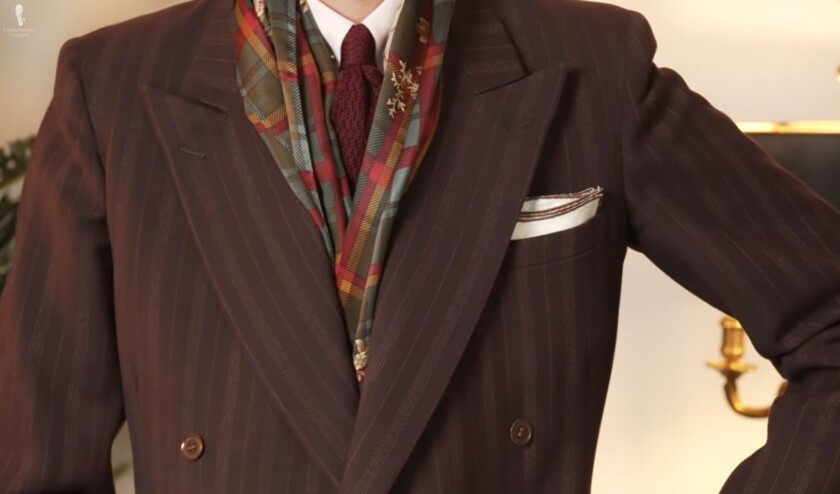
Not inherently. Silk scarves possess a remarkable versatility that allows them to be styled across a spectrum of formality. They can enhance a formal suit with a touch of flair or elevate a casual jacket and jeans ensemble, depending on the pattern, color, and the chosen knot.
Which silk scarf knots are easiest for beginners to master?
For novices, simple methods like a basic drape (allowing ends to hang freely), a loose casual knot, or the Parisian knot (folding in half and pulling ends through the loop) are excellent starting points. Larger scarves generally offer the most ease and flexibility for these foundational styles.
When do silk scarves offer the most utility?
Silk scarves are particularly useful during transitional weather seasons (spring and autumn) when light warmth is desired without the bulk of a heavier scarf. They are also ideal for outfits that benefit from an added layer of visual interest or a touch of elegance around the neck, such as with blazers, sport coats, or open-collared shirts, especially when a tie feels too formal.