










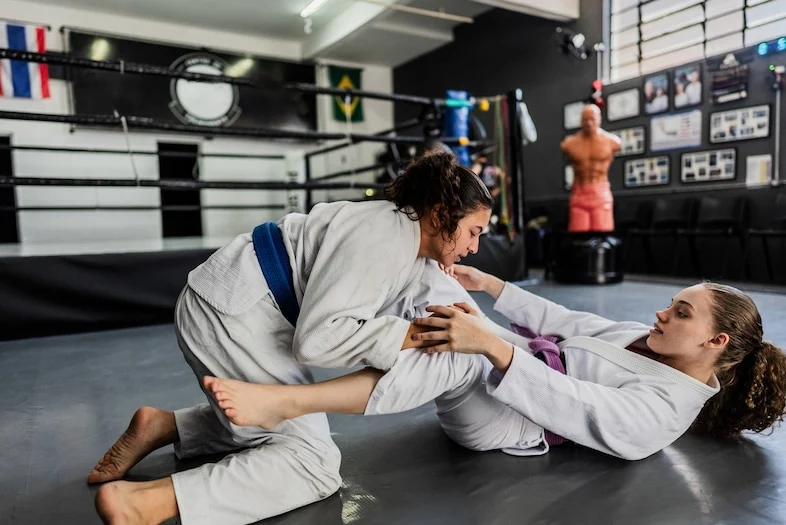
For many women, the body has long been perceived as a project, an external canvas constantly requiring management and presentation to align with prevailing beauty standards. From an early age, societal narratives often embed the notion that appearance equates to social currency, necessitating a labour-intensive ritual of grooming and aesthetic maintenance. Booking meticulous nail appointments, investing hours in hair styling, and applying elaborate makeup regimens before leaving the house are common facets of this demanding paradigm. In this construct, the body risks being reduced from a dynamic vessel of experience and feeling into an object to be meticulously managed and displayed. However, a powerful counter-narrative is emerging from an unexpected arena: the Brazilian Jiu-Jitsu (BJJ) gym, where the focus dramatically shifts from external validation to internal strength and functional capability.
The Ascendance of Brazilian Jiu-Jitsu: A Global Phenomenon
Brazilian Jiu-Jitsu, a grappling-based martial art rooted in self-defence, has witnessed an explosive surge in popularity over recent years, transforming from a niche combat sport into a mainstream fitness and empowerment trend. Its origins trace back to early 20th-century Brazil, where the Gracie family adapted and refined judo techniques brought by Japanese master Mitsuyo Maeda, emphasizing ground fighting, leverage, and submission holds over striking. This evolution allowed smaller, weaker individuals to defend themselves effectively against larger, stronger opponents, fundamentally altering the perception of combat.
Globally, the growth has been remarkable. In the United Kingdom alone, the number of BJJ clubs has skyrocketed by over 200 per cent in the last decade, reflecting a broader societal embrace of the discipline. Perhaps even more significantly, the State of BJJ Report 2025 indicates a staggering 70 per cent surge in female practitioners, signalling a profound shift in demographic engagement. This burgeoning interest did not go unnoticed by mainstream media; in January, The Times declared Brazilian Jiu-Jitsu "the hot workout for 2026," cementing its status as a cultural phenomenon. This rapid expansion can be attributed not only to its effectiveness as a martial art but also to its unique ability to foster a sense of community, discipline, and profound personal transformation. The timeline of BJJ’s modern expansion aligns with a growing global conversation around female empowerment, mental wellness, and a critical re-evaluation of rigid beauty standards, positioning BJJ as a timely and relevant vehicle for change.
A New Arena: Function Over Form
In stark contrast to many other sports or social environments that subtly (or overtly) reinforce aesthetic ideals, BJJ offers a refreshingly rare space where function unequivocally supersedes aesthetics. While sports like tennis might feature luxury jewellery and meticulously manicured hands, combat sports, by their very nature, necessitate a stripping away of such conventions. Make-up, for instance, is not merely impractical during an intense training session; it poses a tangible risk of staining a training partner’s pristine white gi (uniform), a transgression that can lead to penalties in competition. Similarly, long nails, often considered a beauty staple, are a direct hazard on the mats, requiring competitors to keep them trimmed short to prevent accidental scratches or injuries to training partners. The practicalities of avoiding disqualification and ensuring safety quickly relegate beauty rituals to a secondary, often irrelevant, concern.
This functional imperative subtly begins to dismantle ingrained habits and perceptions. For women who have spent years internalizing the pressure to maintain a perfectly curated image, the BJJ gym becomes a sanctuary where such concerns are not just de-emphasized but actively discouraged by the demands of the sport itself. The focus shifts from looking good to performing well, from being perceived as beautiful to being effective and resilient. This foundational principle creates an environment ripe for redefining one’s relationship with their body.
From Insecurity to Strength: Redefining the Female Physique
Beyond mere regulation, BJJ profoundly challenges and reframes perceptions of the female body, often transforming features previously deemed "flaws" under mainstream beauty ideals into powerful assets. Vanessa English, a celebrated black belt and coach, whose achievements include being the first British-born competitor to win the IBJJF World Championships in the adult division, eloquently describes her pre-BJJ mindset: "I was definitely preoccupied with how [my body] looked over how it functioned. I was particularly insecure about my shoulders, arms and hands, and would often hide these parts of myself." Many years and countless medals later, those very features are now her celebrated strengths. "Now I know my large hands give me better grip strength, my long arms wrap around necks easier, and my broad shoulders give me great upper body strength," English states. Her testimony highlights a critical paradigm shift: BJJ encourages women to re-evaluate their physical attributes through a lens of utility and power, rather than solely through aesthetic appeal.
This re-evaluation extends to the very essence of physical engagement. Training in BJJ inherently requires women to take up space, apply force, and become comfortable with intimate physical contact – actions that can feel profoundly alien to individuals socialized to be accommodating, demure, and non-threatening. For 28-year-old white belt Eman, this represented a significant psychological and physical recalibration. "Jiu-jitsu has really shifted my attention from what a body looks like to what it’s capable of," she explains. "With the focus being on skill rather than appearance, it’s made me appreciate and be super grateful to my body for allowing me to train." This perspective underscores a fundamental departure from passive observation of one’s body to an active, appreciative engagement with its capabilities.
Beyond Aesthetics: The Psychological Liberation
The transformative power of BJJ delves deep into the psychological landscape of its practitioners. For brown belt service designer Kat, who battled body dysmorphia throughout her formative years, BJJ offered an unexpected pathway to liberation. "It was always about being thin," she recalls of her early struggles. "I just took it as a fact that I needed to be thin and pretty and being those things would make life better." On the mats, however, the relentless mental and physical demands of sparring gradually eclipsed these preoccupations. "When you’re fighting someone there’s a million things that go through your mind, but none of them are, ‘Do I look fat right now?’" she asserts. The immediate, all-consuming nature of BJJ necessitates a complete mental presence. "When I’m sparring, I have a job to do – protect myself, get them off balance, isolate their limbs, solve the problem. Thinking about your body is too abstract when you have so many other things that require immediate and all-consuming attention."
This immersive focus fosters a unique form of mindfulness, where self-critical thoughts are superseded by tactical problem-solving. For Kat, this shift from external appearance to internal function fundamentally reshaped her understanding of her body. "I used to praise myself for being skinny and craved a thigh gap my body shape wouldn’t allow. Now I see what my legs do for me and what I can achieve with them. It’s given me a kind of love and appreciation for my body that I didn’t even know I wanted." Crucially, this newfound appreciation is not a mere substitution of one beauty ideal for another. "It’s not like I’ve just swapped one standard – skinny – for another – athletic," Kat clarifies. "I actually relate to my body differently. The muscles I have are a consequence of my hard work, not my goal." This distinction is vital; it signifies a genuine internal shift towards valuing effort and capability over a predetermined aesthetic outcome, fostering a more sustainable and healthier body image.
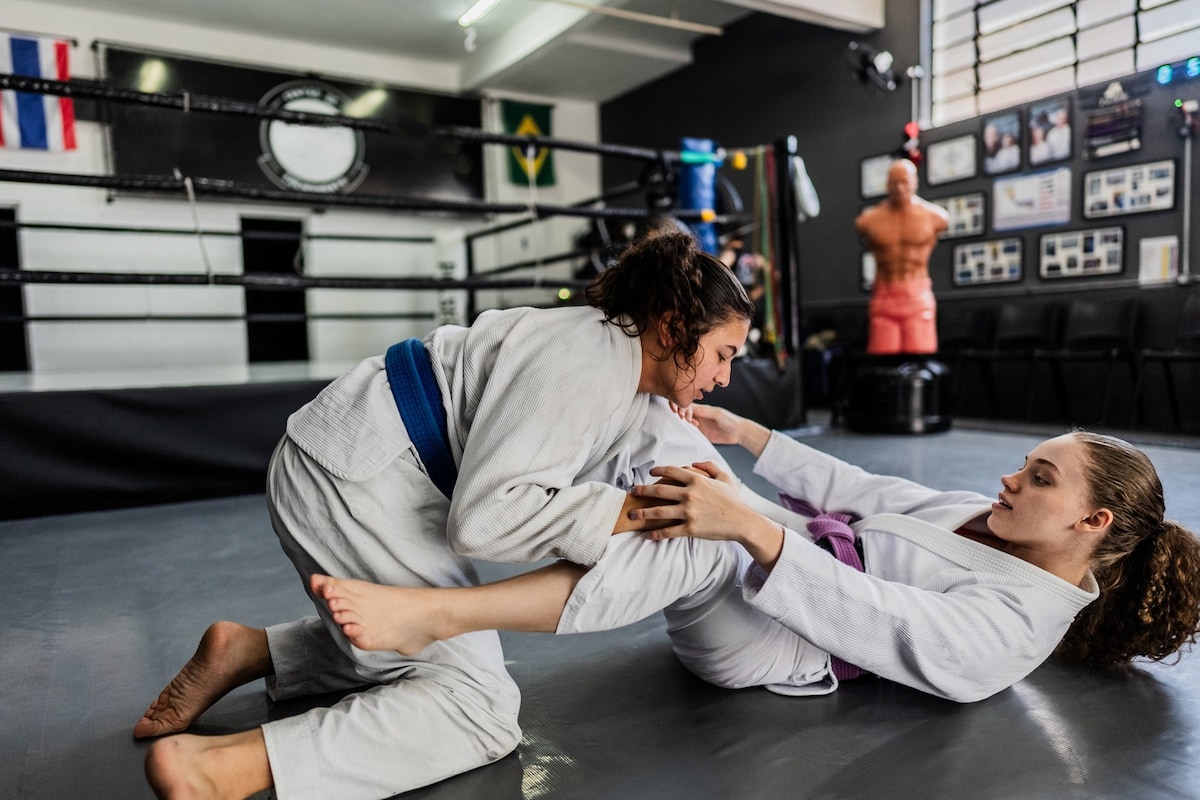
Eman echoes this newfound emphasis on strength, noting that extensive time in a martial arts gym helped her unlearn the deeply ingrained societal idea that women should not build muscle. "Most of my time now goes into getting stronger and embracing how capable that makes me feel," she shares, humorously adding, "Who doesn’t love being able to take all the shopping inside on one trip?" This practical application of strength further solidifies the appreciation for a functional body, demonstrating its tangible benefits in everyday life. Sports psychologists and experts in body image consistently highlight the therapeutic power of activities that promote embodied self-awareness and shift focus from external validation to internal competence, making BJJ a compelling case study for positive psychological transformation.
Demystifying the Scale: A Functional Approach to Weight
One of the most remarkable aspects of the BJJ community’s impact on body image is its unique approach to discussions about weight. In many societal contexts, conversations about weight are often fraught with shame, anxiety, or are altogether avoided. Outside the gym, numbers on a scale can trigger deeply personal insecurities and fuel body dissatisfaction. Within the BJJ world, however, weight is stripped of its emotional baggage and recontextualized as a purely functional metric.
"In the jiu-jitsu community it’s so normal to ask someone how much they weigh," Vanessa English observes. "Weight is just a number that determines what division you’re in and points you towards people who’ll be good training partners for you." This neutrality is a distinguishing feature of BJJ culture. The numbers on the scale serve a practical purpose: they provide context for fair competition, facilitate effective training partnerships, and inform strategic decisions. They do not, crucially, provoke mortification or self-condemnation. This objective approach contrasts sharply with the often-toxic discourse surrounding weight in broader society, offering a refreshing model for body neutrality.
Kat’s experience further illustrates this paradigm shift. "I used to weigh myself in stones and pounds," she recounts, "I have numbers in my head that are good numbers and numbers that are shameful numbers. But [now] I’m not interested in small; I’m interested in power." Her statement encapsulates the profound transformation: the scale’s primary function is no longer to judge her body against an arbitrary aesthetic ideal, but rather to provide data relevant to her pursuit of strength and performance. This reframing allows practitioners to engage with their bodies and their metrics in a way that is empowering rather than debilitating.
Shedding the Old Self: A Metaphor of Empowerment
Perhaps the most vivid and poignant illustration of this transformative journey is Kat’s anecdote involving a cherished red dress. For years, she had held onto a Karen Millen dress from her university days, not as a fond memory, but as "a stick to beat [herself] with." Each time it failed to fit, it reinforced a painful narrative of personal failure and inadequacy, a constant reminder of a body ideal she felt she needed to achieve.
Years later, after dedicated training and preparation for a BJJ competition, Kat decided to try on the dress again. This time, it wouldn’t zip over her back. However, instead of the anticipated shame or disappointment, a profound and unexpected emotion welled up within her: pride. "Instead of feeling shame, I felt proud," she recalls. "I laughed because I was too strong to wear that dress anymore." This moment of profound realization marked a complete liberation from her past self-perceptions. The dress, once a symbol of an unattainable ideal and a source of self-criticism, became an artifact of a bygone era. She has since given the dress away, declaring, "That dream was no longer the dream." This powerful metaphor speaks volumes about the capacity of BJJ to facilitate a fundamental reordering of values, where strength and capability are celebrated triumphs over restrictive beauty standards.
Broader Implications: A Paradigm Shift for Women’s Sports and Wellness
The burgeoning popularity of Brazilian Jiu-Jitsu among women and its documented positive impact on body image carries significant broader implications for women’s sports, wellness, and societal norms. This trend suggests a growing desire among women to engage in physical activities that prioritize function, skill, and personal growth over mere aesthetic outcomes. It challenges the historical tendency to pigeonhole women’s fitness into categories that emphasize slimness or "toning" without truly celebrating power or strength.
The BJJ community’s approach to body image and weight can serve as a powerful model for other sports and wellness initiatives. By creating environments where weight is an objective metric for performance rather than a source of shame, and where diverse body types are celebrated for their unique functional advantages, BJJ fosters inclusivity and positive self-perception. This aligns with calls from mental health advocates and body positivity movements for more nuanced and less appearance-focused approaches to physical activity.
Experts in sports psychology and gender studies are increasingly examining how activities like BJJ can contribute to women’s overall mental resilience, self-efficacy, and a more robust sense of self. The process of learning complex techniques, overcoming physical challenges, and engaging in controlled combat builds confidence that extends far beyond the mats. It cultivates problem-solving skills, emotional regulation under pressure, and a deep understanding of one’s own physical and mental capabilities. The profound personal transformations witnessed in practitioners like Vanessa English, Eman, and Kat underscore BJJ’s potential to empower women to reclaim their bodies as instruments of power and experience, rather than objects of scrutiny.
In conclusion, Brazilian Jiu-Jitsu is proving to be more than just a martial art; it is a catalyst for a profound cultural shift in how women perceive and relate to their bodies. By offering a demanding, skill-focused environment where function reigns supreme, BJJ empowers women to shed the stifling weight of conventional beauty ideals. It fosters a newfound appreciation for strength, capability, and resilience, transforming perceived flaws into undeniable assets. As more women step onto the mats, they are not only learning to defend themselves but also discovering a path to radical self-acceptance and a powerful, authentic connection with their own physical selves, proving that true strength and beauty emanate from within.