






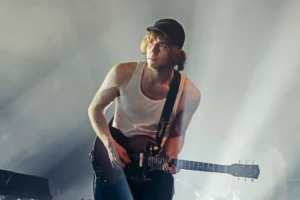

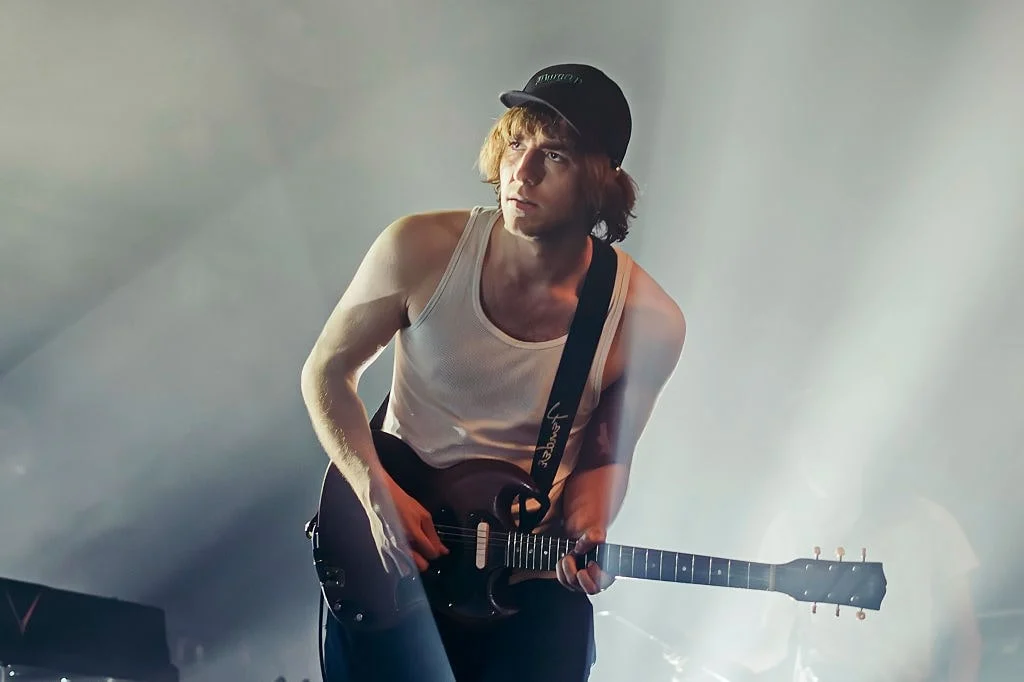
Cameron Winter, the enigmatic frontman of Geese and a figure currently sparking widespread cultural curiosity regarding his unconventional appeal, epitomizes an enduring truth about human attraction. In an era where societal discourse often centers on male appearance and "looksmaxxing," Winter stands apart, arriving onstage with an almost disarming nonchalance, seemingly indifferent to external validation based on his aesthetic. This distinctive presentation, whether it’s his famously "unwashed hair" or his understated stage presence, paradoxically amplifies his magnetic pull, captivating audiences who "lap it up." Yet, Winter is not an anomaly; he is merely the latest iteration of a historical phenomenon: musicians have consistently occupied a unique echelon of desirability, one rooted in something far more profound and atmospheric than mere physical beauty. Their allure stems from a complex interplay of talent, vulnerability, mystique, and the inherent emotional power of music itself, creating a connection that transcends the superficial.
A Modern Muse: Cameron Winter and the New Wave of Allure
The rise of figures like Cameron Winter in contemporary music highlights a subtle but significant shift in what audiences find compelling. His appeal isn’t manufactured; it radiates an authenticity that is increasingly rare in a hyper-curated digital landscape. Winter’s stage persona, often described as possessing a "vague disorientation," challenges conventional notions of rockstar charisma. He doesn’t perform a carefully constructed image of coolness; rather, he seems to embody a raw, unvarnished artistic dedication. This unpretentiousness, particularly in a culture saturated with self-promotion and image consciousness, becomes a powerful draw. It suggests an artist so consumed by his craft that external perceptions fade into irrelevance, a quality many find inherently attractive.
This resonates deeply with a generation that, while acutely aware of appearance and online presentation, also yearns for genuine connection and rebellion against the artificial. The commentary surrounding Winter, such as observations about his hair, underscores a fascination with his seemingly effortless detachment from conventional beauty standards. This "anti-perfection" allure implies a focus on internal substance—the music, the lyrics, the performance—rather than external polish. It positions him as a figure who is not "trying too hard," a refreshing contrast to the often-strained efforts seen in other public figures. This contemporary embrace of understated magnetism suggests a collective yearning for artists who prioritize artistic expression over personal branding, tapping into a deeper appreciation for authenticity that goes beyond the visual.
Echoes Through Time: From Lisztomania to Rock Idols
The captivating power of musicians is far from a modern invention. Its roots stretch back centuries, demonstrating a consistent human susceptibility to the charms of those who master the art of sound and performance. The phenomenon of widespread, almost frenzied admiration for musicians has a storied history, evolving alongside cultural shifts but retaining its core essence.
The Genesis of Fandom: Franz Liszt and the Birth of Hysteria
One of the earliest and most vivid historical precedents for this phenomenon is "Lisztomania," a term coined in the 1840s to describe the intense public frenzy surrounding Hungarian composer Franz Liszt during his concert tours. His performances, characterized by a virtuosic and emotionally charged style, elicited reactions that would be familiar to modern-day pop stars. Women in his audiences were known to shriek, faint, and even fight over his discarded gloves or locks of his hair. They wore brooches emblazoned with his portrait, turning their admiration into a public declaration of devotion. This wasn’t merely appreciation for musical skill; it was a visceral, almost religious adoration for the performer himself. Liszt, with his flamboyant stage presence and striking good looks, understood how to cultivate an aura that went beyond the notes, transforming a classical concert into a spectacle of emotional abandon. This era marked a significant moment in the public’s relationship with artists, establishing a template for celebrity worship that would endure for generations.
Evolution of the Idol: From Classical Virtuosos to Pop Superstars
Following Liszt, the trajectory of musical idolatry continued to ascend, adapting to new genres and cultural contexts. In the early 20th century, figures like Frank Sinatra harnessed the power of their voices and charismatic stage presence to become objects of mass affection, particularly among young women. The mid-20th century witnessed the explosive rise of rock and roll, where Elvis Presley’s rebellious persona, sensual dance moves, and distinctive voice ignited a cultural revolution and unparalleled fan hysteria. His performances were not just musical events; they were transformative experiences that challenged social norms and cemented his status as a sex symbol and cultural icon.
The 1960s brought The Beatles, whose collective charm, innovative music, and youthful energy sparked "Beatlemania," a global phenomenon characterized by screaming fans, sold-out stadiums, and merchandise mania. Later, artists like David Bowie and Prince pushed boundaries of identity and performance, creating enigmatic personas that amplified their artistic genius and attracted intense, devoted followings. Bowie’s chameleonic artistry and Prince’s flamboyant inscrutability cultivated a mystique that made them endlessly fascinating. Each of these figures, from Liszt to the rock and pop icons of the modern era, demonstrated that the appeal of a musician extends far beyond their technical prowess. It encompasses their personality, their perceived authenticity, their vulnerability, and their ability to tap into collective emotions, thereby creating a profound and often passionate connection with their audience.
The Psychology of Charisma: Beyond Superficial Appeal
The enduring attraction to musicians is not accidental; it is deeply rooted in human psychology. Experts in dating, relationships, and psychotherapy consistently point to a specific constellation of traits and environmental factors that contribute to this unique allure, extending far beyond conventional notions of beauty or physical attractiveness.
The "Halo Effect" and Emotional Contagion
Central to this phenomenon is the "halo effect," a cognitive bias where a positive impression of a person in one area influences one’s overall impression of them in other areas. In the context of musicians, exceptional talent, competence, and passionate dedication to their art create a powerful positive halo. As psychotherapist and professional matchmaker Sarah Louise Ryan explains, "When someone performs music, they are demonstrating emotion, vulnerability, confidence and creative intelligence in real time. Those are all qualities deeply associated with attraction, and this creates a feeling of connection." The sheer skill involved in creating and performing music—whether it’s the intricate storytelling of lyrics, the mastery of an instrument, or the emotive power of a voice—is inherently impressive. This perceived competence and confidence, especially in a high-emotion activity, spills over, making the individual seem more attractive across the board.
Furthermore, the act of musical performance often involves "emotional contagion," where the performer’s displayed emotions are mirrored and felt by the audience. A musician’s passion, joy, or vulnerability becomes a shared experience, forging a powerful, albeit one-sided, emotional bond. Sabrina, a 26-year-old from London whose dating history she jokingly describes as a "festival lineup," articulates this personal connection, stating, "The emotional IQ it takes to create a beautiful album says so much. I know that’s someone I want to sit and unpack life with. This is someone I want to spend my time with." This sentiment highlights how the perceived emotional intelligence and depth required for artistic creation translate into a desire for deeper personal engagement, suggesting that a musician’s art provides a window into their soul.
Spatial Dynamics and Symbolic Power of Performance
Beyond the inherent qualities of the performer, the very architecture and dynamics of a live performance space contribute significantly to a musician’s heightened attractiveness. Ryan elaborates on the "spatial psychology" at play: "Standing in a crowd and looking up at someone under a spotlight, or watching from a balcony as the room orients toward them, literally positions the performer as a figure of heightened importance, a person granted symbolic power by the architecture of the venues we queue to get inside." The stage, elevated and illuminated, transforms the musician into an almost mythic figure, an object of collective focus and admiration.
This physical elevation, combined with the spotlight’s symbolic illumination, grants the performer a unique status. They become a focal point, not just musically, but emotionally and symbolically. "They represent freedom, creativity and emotional depth as much as the individual themselves, which is why the attraction can take on an almost mythic quality," Ryan adds. The stage acts as an amplifier, creating "an amplified version of the self that feels both authentic and slightly untouchable," which encourages audiences to project their desires and fantasies. The distance—both physical and psychological—between the audience and the performer allows for the mind to fill in the blanks with idealized traits, transforming the musician into a canvas for longing and imagination. This ritualistic aspect of live performance, a shared experience of collective focus on an elevated figure, reinforces their extraordinary appeal.
The Digital Paradox: Mystique in an Age of Hyper-Connection
In an era defined by unprecedented digital connectivity and the constant pressure for self-exposure, the allure of the musician often paradoxically thrives on mystique and a curated sense of inaccessibility. The ability to maintain a degree of aloofness, even in the age of Instagram and TikTok, has become a powerful component of their magnetism.
The Allure of Absence: Curated Voids and Anti-Branding
For fantasies to flourish, a blank canvas is often more effective than an over-detailed portrait. The more mysterious and out of reach an artist appears, the greater the space for audience projection. Modern "stan culture," while often involving intense digital engagement, thrives on moments of controlled access, ensuring that the artist remains largely aspirational and somewhat unknowable. Historically, artists like Bob Dylan perfected the art of the aloof, poet-genius persona, while Prince mastered being both flamboyant and inscrutable. Their mystique wasn’t diminished by a lack of digital presence; it was enhanced by their deliberate distance.
Today, this mystique often manifests as a digital absence or, more subtly, a profound disinterest in the performative aspects of online life. "Having no Instagram is one kind of hot; it suggests a monkish disengagement from the algorithmic circus. But having an Instagram with nothing on it is arguably hotter," the original article notes. This "curated void" signifies a nonchalance so complete it triggers intense curiosity. For instance, the experience of seeking clues about mk.gee after a live show, only to find a sparse or empty social media presence, exemplifies this. The attraction in such cases "hinged on that irresistible ratio: minimal self-promotion against extreme talent." This approach positions musicians like mk.gee as relics from an "older world," artists primarily focused on playing music rather than performing the idea of musicianhood online. This "anti-branding" strategy inadvertently creates a powerful brand of authenticity, contrasting sharply with the pervasive culture of constant self-promotion.
Gen Z’s Response to Digital Detachment
This digital detachment holds particular resonance for Generation Z, a demographic raised online and accustomed to instant access and constant updates. For them, an artist who shuns the digital spotlight or uses it minimally represents a refreshing anomaly. Alex, 29, a self-proclaimed "groupie," voices this sentiment: "I’m tired of men who try. There’s all this weird curation nowadays of self and being, and I just feel so outside of that. With musicians, it’s fun to see someone fully in their element and really uninhibited. Especially at live shows." This highlights a longing for uninhibited self-expression, a stark contrast to the filtered and polished realities often presented online.
Tasha, 26, currently dating a musician, adds another layer to this, observing, "some musicians are a brand, yes, but when I think of someone like Alex G, for example, it feels like he arrives just as the person he is with himself." This perception of unvarnished authenticity—that the artist is simply being themselves, rather than performing a role—is incredibly powerful. In a world where personal identity is often mediated through digital platforms and meticulously constructed online personas, musicians who seem to exist outside this framework offer a sense of genuine connection. Their apparent disinterest in the algorithmic circus becomes a statement in itself, signaling a dedication to their art that transcends the need for constant validation, making them all the more compelling.
The Narrative of Intimacy: Lyrics as a Portal to the Soul
Beyond their stage presence and digital mystique, the most direct and intimate connection fans often forge with musicians is through their lyrics. Music, particularly songs rich in narrative and emotional depth, serves as a powerful conduit for perceived intimacy, allowing listeners to feel a profound understanding of the artist’s inner world.
Addressing Modern Romantic Deficits
In an contemporary dating landscape often described as challenging—marked by "situationships," ghosting, and a perceived decline in traditional romance—sensitive and poetic lyrics offer a much-needed emotional balm. For many, musicians become surrogate romantic partners, expressing feelings and desires that might be absent or suppressed in their real-life interactions. The ability of a songwriter to articulate complex emotions, vulnerability, and profound longing becomes incredibly magnetic.
Consider Cameron Winter’s lyric, "I need your feet more than you do," which, despite its absurdity, is imbued with a deeply poetic and almost embarrassingly obsessive romance. Such lines tap into a primal human desire for intense, unwavering affection. Similarly, Hozier’s "The only heaven I’ll be sent to/ Is when I’m alone with you," Frank Ocean’s "You showed me love / Glory from above," and John Legend’s "You’re my end and my beginning, Even when I lose, I’m winning" exemplify the kind of profound, often idealized romantic sentiment that resonates deeply. These lyrics articulate a level of devotion and emotional commitment that many listeners crave but may not find in their daily lives. They provide a fantasy of intense connection, offering a glimpse into a world where romance is not only alive but passionately expressed.
The Power of Shared Vulnerability
Dating and relationship coach Persia Lawson emphasizes this point: "Creative expression signals emotional depth. Someone who can channel their feelings into music and lyrics is literally demonstrating emotional range in real time — and that’s incredibly magnetic." The act of writing and performing such deeply personal lyrics is an act of profound vulnerability. It allows the artist to share their innermost thoughts and feelings, creating a sense of shared experience with the listener. This vulnerability is a powerful attractant, fostering empathy and a feeling of being understood.
When listeners connect with these lyrics, they often project their own experiences and desires onto the artist, making the songs intensely personal. The music becomes a soundtrack to their own lives, validating their emotions and offering a sense of companionship. This shared emotional landscape, albeit one-sided, creates a powerful bond. It allows fans to feel a sense of intimacy with artists they may never meet, providing an outlet for emotional needs that might otherwise go unfulfilled in the complexities of modern relationships. The lyrics thus serve not just as art, but as a form of emotional communication that transcends physical barriers.
Parasocial Bonds: Fulfilling the Human Need for Connection
The unique appeal of musicians often culminates in the formation of "parasocial relationships"—one-sided psychological bonds where individuals feel a sense of connection with media figures, despite having no direct interaction. This dynamic is particularly potent in the realm of music, shaping how fans perceive and idealize their favorite artists.
The Mechanics of Idealization
Sarah Louise Ryan explains how this manifests: "Fans feel as though they know a musician, even though the relationship is one-sided. This creates what can feel like a pseudo connection… that one-way dynamic can actually intensify desire, because the mind fills in the unknown parts of the person with imagination and idealisation." Because direct, reciprocal interaction is absent, the audience’s mind actively constructs a persona for the artist, often imbuing them with idealized qualities. The limited information available—lyrics, public appearances, minimal social media presence—becomes a framework upon which fans project their desires, hopes, and even their own unfulfilled emotional needs.
This idealization is further fueled by the curated nature of public personas. Even artists who appear "authentic" are still presenting a version of themselves. The gaps in information allow for imaginative embellishment, making the artist seem more perfect, more understanding, or more aligned with the fan’s personal ideals than they might be in reality. This psychological distance, rather than hindering attraction, actually amplifies it, as the imagined version of the artist becomes a potent source of emotional fulfillment and fantasy.
The Role of Fan Communities
Parasocial relationships are not always solitary experiences; they are often reinforced and amplified within fan communities. Online forums, social media groups, and even physical gatherings provide spaces for fans to share their interpretations, theories, and emotional connections to artists. This collective experience validates individual feelings and strengthens the shared idealization of the musician. When numerous individuals express similar admiration or emotional responses to an artist, it creates a powerful feedback loop, solidifying the artist’s elevated status and reinforcing the intensity of the parasocial bond.
These communities allow fans to feel a sense of belonging and shared identity centered around their admiration for a particular musician. The collective energy generated within these groups can heighten the emotional impact of the music and the perceived connection to the artist. In a fragmented world, these communities offer a sense of solidarity and shared purpose, with the musician at the heart of their collective identity. Thus, the parasocial relationship, while one-sided in its direct interaction, is often a multi-faceted experience, providing emotional sustenance, social connection, and a canvas for collective idealization.
Conclusion: The Enduring Resonance of Musical Attraction
From the fervent "Lisztomania" of the 19th century to the contemporary "TikTok lust" for Cameron Winter’s authentic, unpolished persona, the fundamental alchemy of attraction to musicians has remained remarkably consistent. While the platforms and expressions of fandom have evolved, the core psychological drivers behind this profound connection endure. Musicians, through their art, offer a unique and compelling space for human longing and emotional projection.
They provide rhythm to our sometimes-deluded projections, giving shape to our fantasies and offering a tangible body to house all the feelings and desires we often struggle to articulate or place elsewhere. In a dating milieu frequently characterized by emotional ambiguity, fleeting "situationships," and the painful silence of ghosting, musicians stand under the spotlight as beacons of emotional sincerity. They allow us to imagine, even if only for a fleeting moment, that someone out there still believes in romance deeply enough to sing about it with unwavering passion. As Winter eloquently suggests, "love takes miles"—a sentiment that resonates deeply, offering hope and a focal point for our deepest emotional yearnings. The magnetic pull of musicians is, ultimately, a testament to the enduring human need for art, emotion, connection, and the beautiful, often idealized, narratives of love and self-expression.