








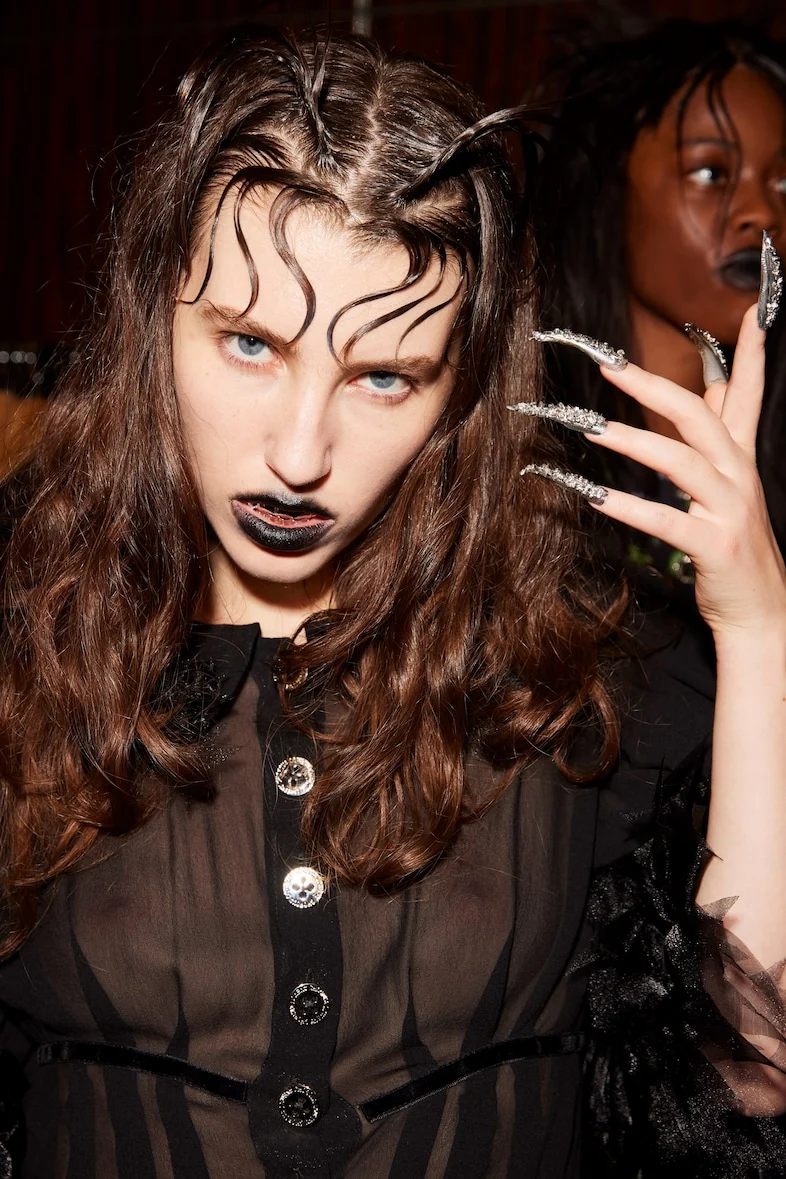
London Fashion Week has long established its reputation as a global incubator for avant-garde design, experimental styling, and theatrical runway presentations, yet few labels capture the peculiar intersection of high fashion and unbridled joy quite like Chopova Lowena. Founded by Emma Chopova and Laura Lowena, the brand has consistently positioned itself as a critical darling of the British capital’s fashion calendar. For their Spring/Summer 2027 (SS27) presentation, the design duo once again subverted traditional runway expectations, transforming a central London bowling alley into an occult-inspired enclave filled with witches, wiccans, and otherworldly entities.
The event, which quickly dominated fashion industry discourse both for its stylistic ambition and an unforgettable canine cameo, demonstrated the label’s ongoing capacity to merge dense historical and folkloric research with contemporary commercial appeal. Rather than relying on a conventional white-cube venue, Chopova Lowena rented out Bloomsbury Lanes, immersing editors, buyers, and critics in an environment that felt simultaneously nostalgic and deeply uncanny. The resulting collection showcased a sophisticated evolution of the brand’s signature aesthetic, balancing heavy hardware and patchwork textiles with whimsical, narrative-driven references.
The Main Facts of the Presentation
The SS27 showcase took place in central London, utilizing the infrastructure of a traditional bowling alley to frame a collection deeply indebted to Slavic folklore, pagan mythologies, and subcultural nostalgia. Models navigated the lanes amidst an atmosphere punctuated by dark romanticism and tongue-in-cheek theatricality. The collection featured a robust mix of the brand’s hallmark garment construction—characterized by mixed-media layering, carabiner hardware, and intricate textile juxtaposition—alongside a major footwear collaboration with Dr. Martens.
However, the most widely discussed moments of the afternoon involved unexpected live elements. The first occurred when a miniature schnauzer wearing designer sunglasses trotted down the runway, generating widespread amusement among an audience typically accustomed to rigid industry decorum. The comedic timing peaked moments later when the same canine staged a brief, stubborn strike, ignoring the handling model’s vocal cues to continue down the path. This lighthearted disruption underscored the distinct brand ethos of Chopova Lowena: a label that treats fashion not as an exercise in austere perfectionism, but as a communal, celebratory experience that invites humour into the narrative.
Background Context and Evolution of London Fashion Week SS27
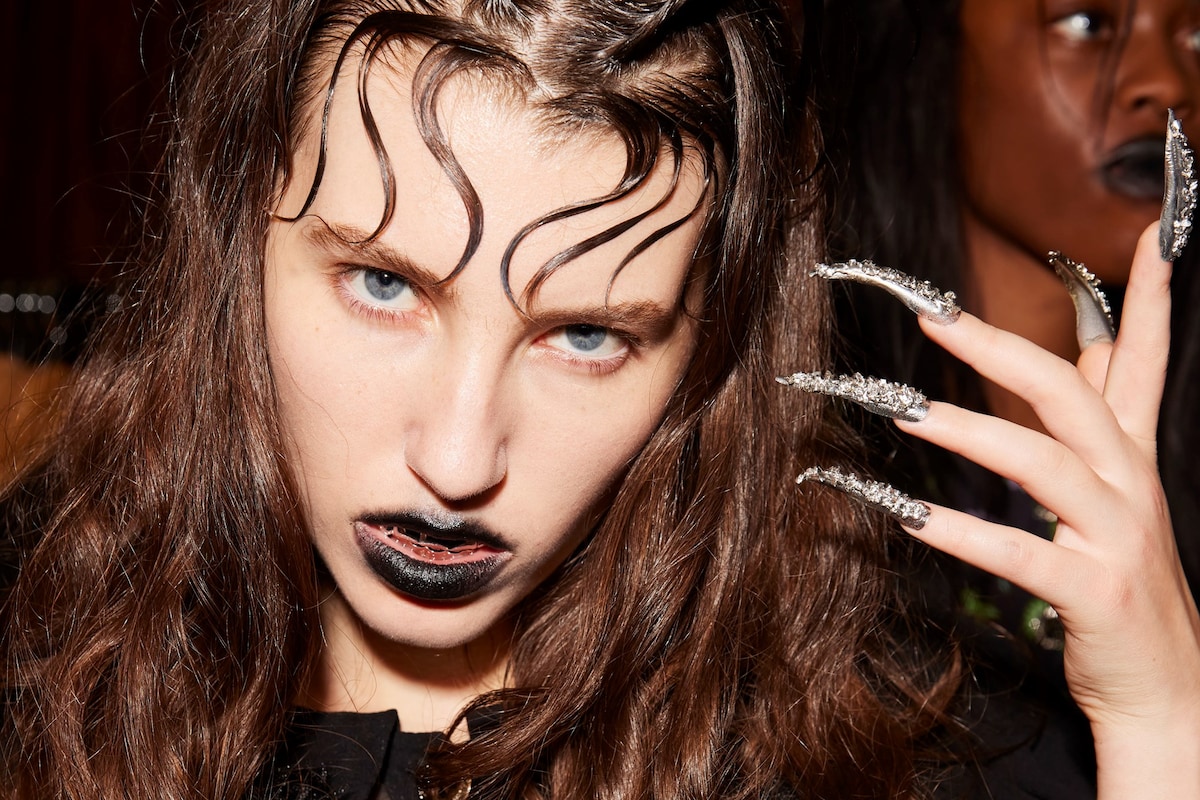
London Fashion Week continues to operate under intense economic and logistical pressures, requiring independent designers to continually reinvent their presentation formats to capture global media attention. In recent seasons, the British Fashion Council (BFC) has emphasized the importance of experiential storytelling to combat digital fatigue among consumers and press alike. Chopova Lowena has consistently answered this call by embedding their collections within immersive environments that reflect their multidisciplinary research process.
The brand’s trajectory since its inception has been marked by a steadfast commitment to artisan craftsmanship, particularly through the use of deadstock fabrics, traditional Bulgarian textiles, and heavy metal hardware. By choosing to anchor their SS27 collection in Slavic folklore and pre-religious behavioral enforcement figures, Chopova and Lowena bridged the gap between academic anthropological study and pop-culture subversion. The runway soundtrack—a carefully curated auditory pastiche featuring tracks like Paramore’s "Decode" (originally written for the 2008 cinematic adaptation of Twilight) and the novelty Halloween standard "Monster Mash"—further reinforced the designers’ interest in millennial nostalgia and gothic pastiche.
Chronology and Conceptual Framework of the Collection
To understand the scope of the SS27 collection, industry analysts often look directly to the designers’ own structural breakdown of their conceptual influences. Chopova and Lowena organized the presentation around five core thematic pillars that dictated both the garment design and the overarching atmosphere of the event.
Folkloric Paganism and Pre-Religious Rule Enforcement
At the heart of the collection was a rigorous examination of archaic European mythology, specifically focusing on folkloric entities tasked with maintaining social order before the advent of organized religion.
"We were looking at characters from Slavic culture who were there to enforce rules pre-religion," the designers explained. "They’re usually sinister characters, like Baba Yaga [an ogress and witch] or a woodland witch that would discipline children, or Kikimora the house elf or fairy, who would keep the house in order."
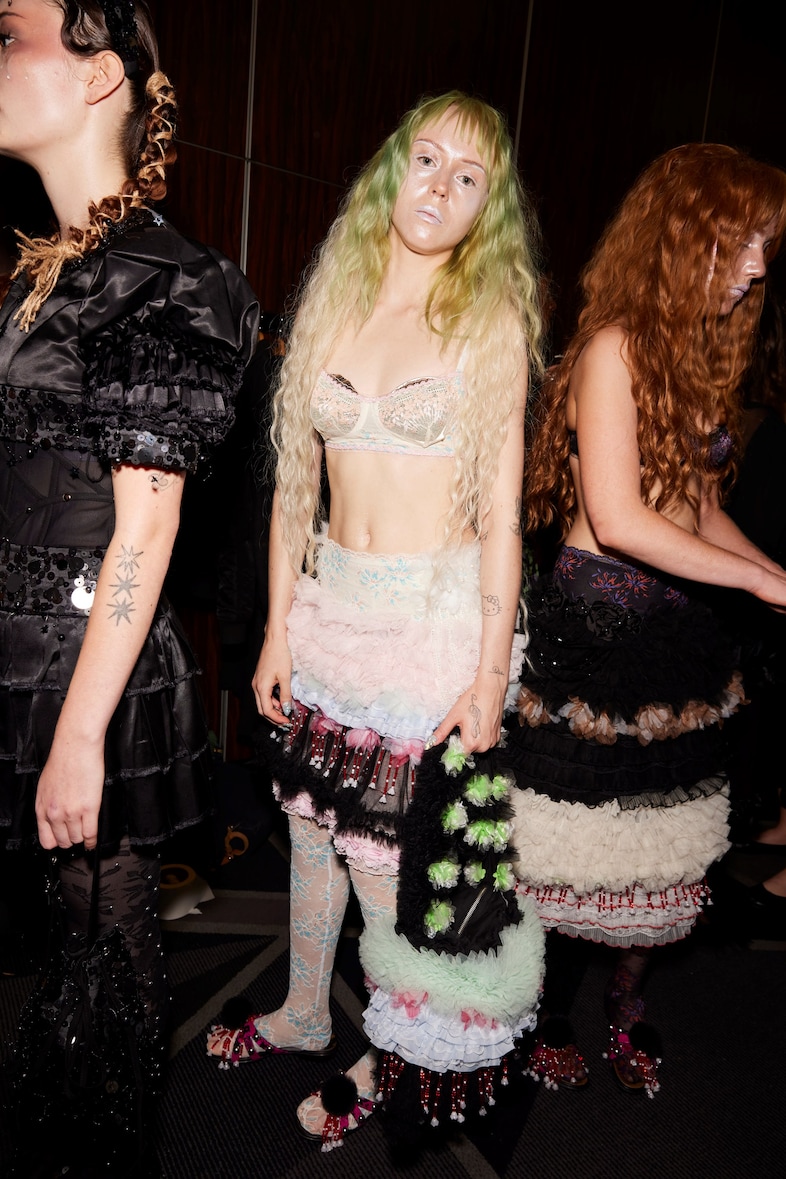
This dark heritage translated into garments featuring exaggerated silhouettes, distressed elements, and folklore-inspired stitching that mirrored traditional Central and Eastern European garments, filtered through a distinctly modern punk lens.
The Bowling Alley Setting and Thematic "Strikes"
The choice of Bloomsbury Lanes was not merely aesthetic but structural, informing both the choreography of the show and the nomenclature of the collection’s themes. The concept of the "strike" operated on multiple levels, referencing both the bowling achievement and the disruptive energy of the coven-like lineup of models.
"As in a bowling strike, because the collection was inspired by bowling," the designers noted, connecting the recreational venue directly to the kinetic energy required to pull off a complex, multi-reference runway show.
Monster Mash and Auditory Hybridity
The soundtrack served as a critical narrative vehicle, blending disparate sonic eras to match the eclectic visual language of the clothing.
"Because ‘Monster Mash’ the song was part of the soundtrack," the duo shared. "We had a lot of fun doing the soundtrack, it’s a real hybrid of all of our inspirations. It’s a cluster of overlaid titbits and references—songs that are either nostalgic and remind us of something, or just perfectly align with the energy of the collection."
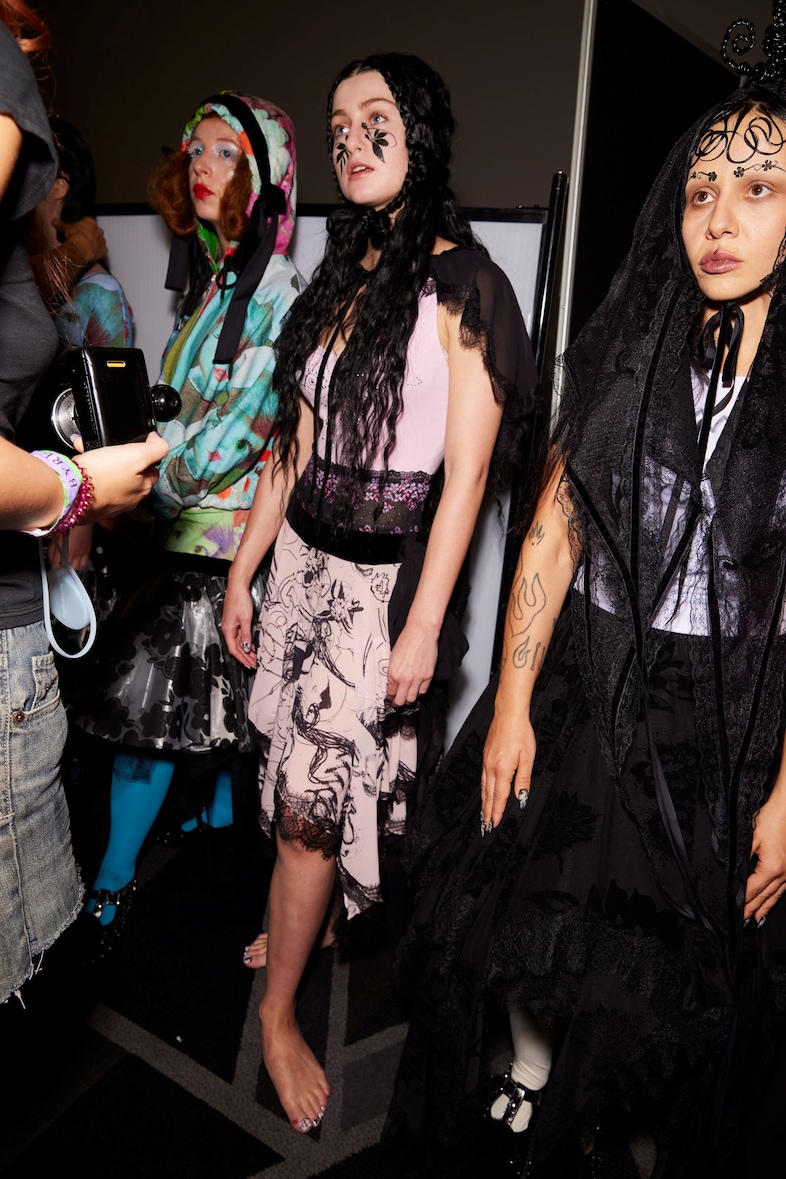
This auditory layering mirrors the brand’s visual methodology: a chaotic yet harmonious collage of tartans, prints, metal rings, and charms.
The Neon Dog and Canine Safety Advocacy
Beyond the runway-strutting schnauzer, the collection paid direct homage to the designers’ own chihuahua, Nikita, who made a memorable appearance in high-visibility outerwear.
"Neon dog refers to our chihuahua, Nikita, who walked the show in a big green neon puffer jacket," they stated. "She’s over-protected against road accidents—and she’s really cute. We loved having dogs at the show, we love our dogs. We’re so passionate about over-protecting them."
This playful inclusion highlighted the brand’s ability to balance serious garment construction with lighthearted, domestic intimacy.
Collaborative Footwear: The Dr. Martens Partnership
A major commercial highlight of the SS27 presentation was the official unveiling of the brand’s collaborative footwear capsule with Dr. Martens, a partnership that resonated deeply with both labels’ respective subcultural heritages.
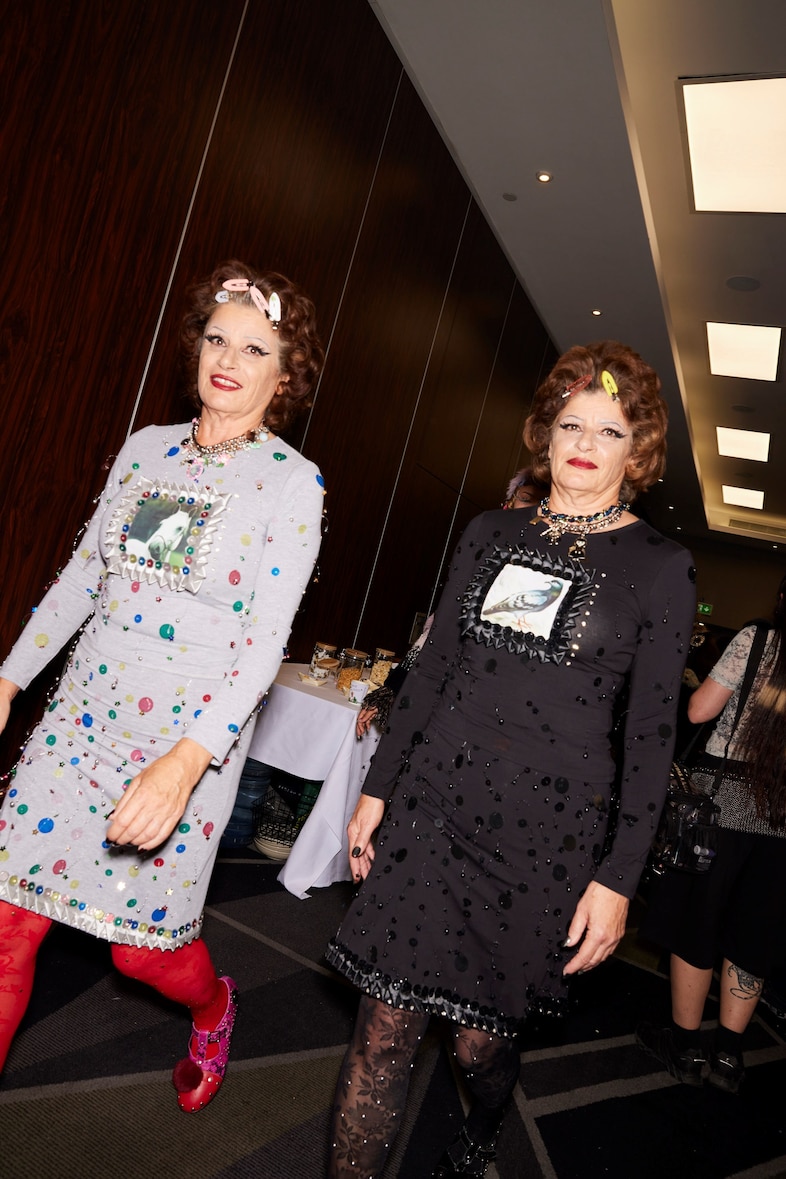
"This refers to our collaboration with Dr. Martens," Chopova and Lowena explained. "We feel like this is such a natural collaboration. We have genuinely worn Dr. Martens all of our lives and it’s such a great fit. We had so much fun designing them. There there are nods to Western, distressed and studded leather, tartan, folkloric stitching, charms, and a real rich mix of materials. So yeah, boot-up!"
Market Analysis and Broader Industry Implications
From a commercial and editorial standpoint, the Chopova Lowena SS27 presentation reinforces the brand’s status as a vital anchor for the British fashion economy. In an era where many contemporary labels lean toward minimalist commercialism to appease risk-averse retail buyers, Chopova Lowena’s doubling down on complex narrative-driven design proves that high-concept fashion can still achieve significant cultural cut-through and retail demand.
The integration of accessible, viral moments—such as the reluctant runway schnauzer—alongside robust, high-value commercial partnerships like the Dr. Martens footwear collection demonstrates a sophisticated understanding of modern fashion marketing. By generating immediate social media engagement through humor and spectacle, the brand successfully drives attention toward its intricate craft, deadstock utilization, and detailed textile development. As London Fashion Week continues to navigate global shifts in buyer behavior and media consumption, Chopova Lowena’s ability to combine rigorous folkloric research with joyous, community-driven spectacle remains an essential blueprint for independent design success.