











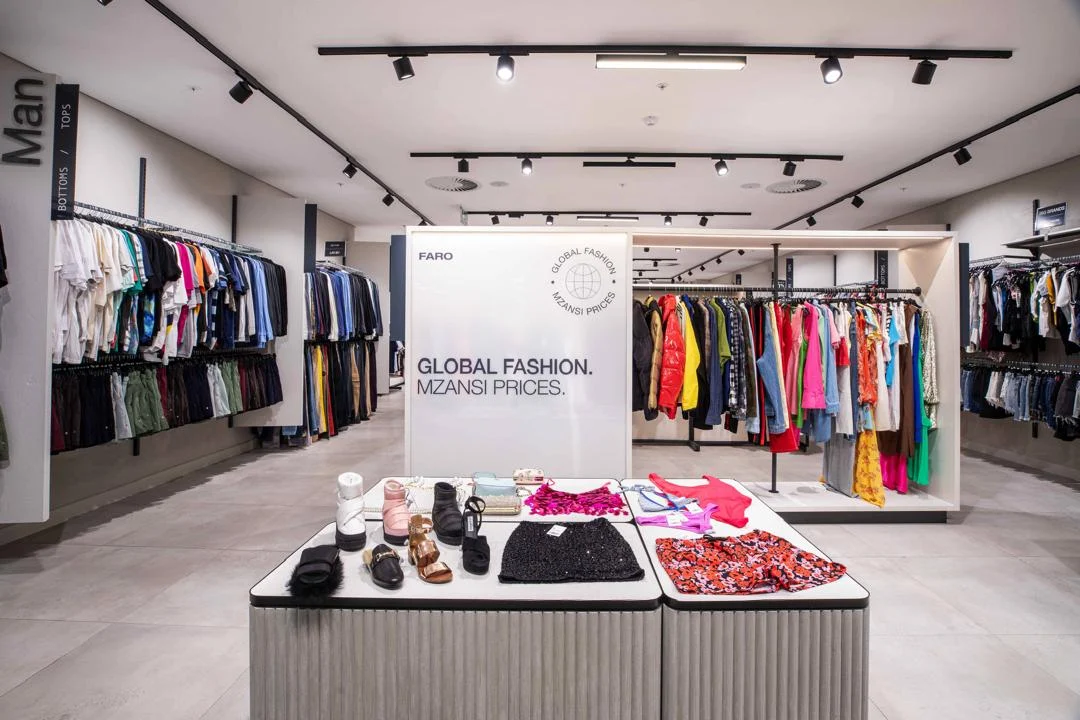
The global fashion industry is currently grappling with a systemic inventory crisis, holding billions of dollars in unsold stock that threatens both corporate balance sheets and environmental sustainability goals. In response to this challenge, FARO, a South African-based recommerce startup, has announced the successful closure of a $6 million funding round. The investment, led by Bloomberg President JP Zammitt and supported by a consortium of international venture capital firms, is earmarked to accelerate FARO’s mission of formalizing the secondary fashion market in emerging economies. By bridging the gap between surplus inventory in the Global North and high demand for quality apparel in Africa, the company aims to establish a circular economy model that addresses the inefficiencies of the traditional secondhand clothing trade.
The Global Inventory Crisis and the Recommerce Opportunity
The rise of fast fashion and the volatility of global supply chains have resulted in an unprecedented accumulation of deadstock. Leading retailers, including ASOS and H&M, have frequently reported inventory write-downs reaching into the hundreds of millions. Traditionally, brands have been reluctant to discount this excess stock in their primary markets—specifically the United Kingdom, the United States, and Western Europe—due to concerns regarding brand dilution and market cannibalization. When premium items are sold at steep discounts in the same jurisdictions as full-price collections, it risks eroding the perceived value of the brand.
Consequently, much of this inventory is either incinerated, sent to landfills, or exported to developing nations as bulk secondhand bales. This latter route has created a significant ecological burden. In regions such as Sub-Saharan Africa, the influx of imported secondhand clothing, often referred to as "Mitumba," has become a primary source of apparel. However, industry data indicates that between 30% and 40% of these imports are unusable upon arrival due to damage, poor sizing, or low quality. These discarded textiles end up in massive informal dumpsites, polluting waterways and contributing to environmental degradation.
The global recommerce market, or the resale of pre-owned or surplus goods, is projected to reach a valuation of $350 billion by 2027. This growth is driven by a shift in consumer behavior toward sustainability and value-based purchasing. FARO’s entry into this space represents a strategic attempt to capture a portion of this market by professionalizing the supply chain and ensuring that "waste" is transformed into a high-value retail product.
Operational Strategy: From Industrial Laundries to Physical Retail
FARO’s business model is built on a sophisticated logistics and reconditioning pipeline. Unlike traditional secondhand traders who buy unsorted bales, FARO enters into direct partnerships with major global brands, including Levi’s, G-Star, Jack & Jones, and Boohoo. The startup focuses on two primary streams of inventory: overstock and consumer returns. Consumer returns are particularly challenging for retailers because they often involve minor defects—such as a missing button, a slight pull in the fabric, or makeup stains—that make them unfit for full-price sale but too costly to repair in high-wage economies.
To extract value from these items, FARO utilizes South Africa’s labor market and industrial infrastructure. The company operates facilities equipped with industrial-grade laundries and steam tunnels where items are cleaned, repaired, and re-tagged. This reconditioning process allows FARO to acquire inventory at exceptionally low price points—sometimes as low as £1 per garment—and resell them at a significant margin while still offering consumers discounts of up to 70% off original retail prices.
David Torr, co-founder and co-CEO of FARO, noted that the business operates on a fixed-margin model. The company targets a 45% margin after processing costs, with a commitment to passing further efficiencies down to the consumer. This "customer-centric" approach is designed to build brand loyalty in a market where authentic, high-quality fashion is often out of reach for the average consumer due to price barriers.
The South African Market as a Strategic Gateway
While much of the African continent lacks the formal retail infrastructure found in the West, South Africa serves as a notable exception. The country boasts over 2,000 shopping centers and a highly developed retail ecosystem. This infrastructure is critical to FARO’s "offline-first" strategy.
In the off-price retail sector, inventory management is notoriously difficult to digitize. Because the stock consists of unique, single-item pieces with varying conditions, the cost of photographing, cataloging, and listing each item online often outweighs the potential profit. Global giants like TJX (parent company of TJ Maxx and TK Maxx) have historically remained brick-and-mortar focused for this very reason. FARO has adopted this logic, focusing its expansion on physical stores in urban hubs and mid-market shopping centers where foot traffic is high and the logistical costs of e-commerce—such as "last-mile" delivery and return processing—can be avoided.
The company’s growth trajectory validates this approach. FARO began 2023 with a single experimental pop-up store that generated $100,000 in its first month. By the end of the year, the company had reached $2.3 million in annual revenue with only four stores, vastly outperforming traditional retail benchmarks that suggested seven stores would be required to reach such a milestone.
Technological Integration and AI-Driven Logistics
Despite its physical retail presence, FARO is positioning itself as a technology-forward enterprise. One of the primary inefficiencies in the global off-price market is the reliance on manual labor for inventory planning. Large retail head offices often employ thousands of workers to manually manipulate massive manifests in Excel spreadsheets to determine what stock should be sent to which locations.
FARO is currently developing AI-powered agents designed to automate these complex buyer workflows. These agents can process data manifests in seconds rather than hours, achieving higher accuracy in predicting regional demand and optimizing stock allocation. By streamlining these micro-tasks, FARO aims to maintain a lean corporate structure while scaling its physical footprint.
Furthermore, the startup plans to introduce personalized shopping tools. These digital enhancements will notify customers when specific brands or styles are scheduled to arrive at their local store, merging the convenience of digital alerts with the high-margin efficiency of physical retail.
Timeline of Development and Future Expansion
The journey of FARO is marked by several key milestones that reflect its rapid ascent in the African retail landscape:
- Early 2023: FARO is founded by a team of veteran entrepreneurs, including David Torr (formerly of UCOOK), Will McCarren (Amazon and Jumia), Chris Makhanya, and Amber Penney-Young.
- Q1 2023: The company launches its first pop-up store in South Africa to test the "off-price" concept.
- Late 2023: FARO reports a 20x revenue growth, ending the year with $2.3 million in revenue and four operational stores.
- November 2024: The company announces its $6 million funding round, signaling its intent to expand beyond South Africa.
- 2025-2034: FARO sets an ambitious ten-year goal to open 1,000 stores across emerging markets, including regions in South America, Asia, and the Middle East.
Investor Participation and Leadership Context
The $6 million investment round attracted a diverse group of high-profile backers, indicating strong confidence in the recommerce model. Lead investor JP Zammitt, President of Bloomberg, is joined by venture capital firms Presight Capital, Gharage Ventures, and E4E Africa.
Individual participants in the round include several prominent figures in the global tech and retail sectors:
- Mato Perić (MPGI)
- Leonard Stiegeler (Pulse)
- Oliver Merkel (Flink)
- Vikram Chopra (Cars24)
- Tushar Ahluwalia (Razor Group)
- Sudeep Ramnani (885 Capital)
- Kresten Buch (88mph)
The founding team’s collective experience—spanning Amazon, Jumia, Superbalist, and Zumi—provides a robust foundation for navigating the complexities of logistics and consumer behavior in diverse markets.
Broader Economic and Environmental Implications
FARO’s expansion comes at a pivotal time for African retail. The rise of ultra-fast fashion platforms like Temu and Shein has disrupted local markets, offering low-cost apparel that appeals to price-sensitive consumers. However, these platforms often face criticism regarding the quality of goods and the environmental impact of their high-volume, disposable business models.
By offering authentic, branded apparel at similar price points, FARO provides a compelling alternative for "aspirational" buyers who value brand status and durability. From an environmental perspective, every garment sold through FARO represents a piece of clothing diverted from a landfill or an incinerator. By formalizing the repair and resale of these items, the company is effectively reducing the carbon footprint associated with the production of new textiles.
As FARO eyes expansion into Kenya, Nigeria, and eventually markets outside of Africa, the primary challenge will be adapting to localized demand. Consumer preferences in Nairobi differ significantly from those in Cape Town or Lagos. The success of the "1,000 stores" vision will depend on the company’s ability to leverage its AI models to build hyper-localized price and inventory profiles. If successful, FARO could set a new global standard for how the fashion industry handles its multi-billion dollar surplus problem, turning an environmental liability into an economic asset for the world’s fastest-growing consumer markets.