







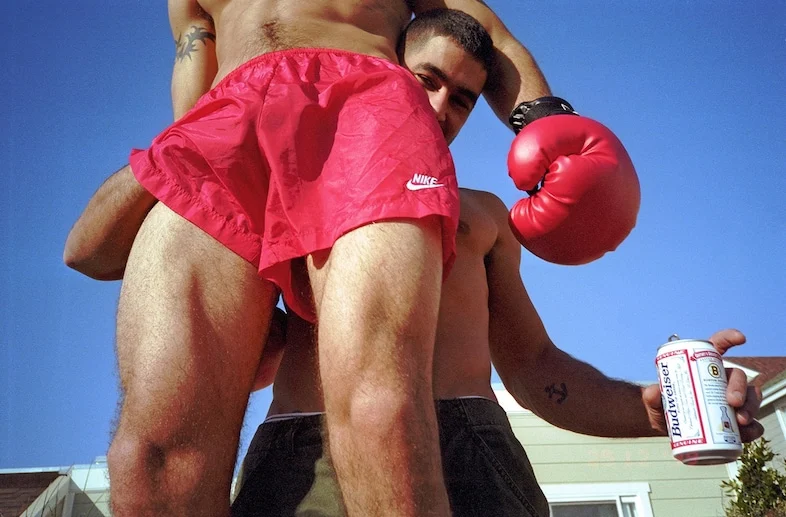
Slava Mogutin, a photographer renowned for his unflinching and politically charged work, is currently the subject of a major retrospective exhibition, "Analog Human Studies," spanning 25 years of his prolific career. Housed at the Bob Mizer Museum in San Francisco, the exhibition showcases Mogutin’s distinctive approach to photography, characterized by its raw intimacy, unapologetic eroticism, and a steadfast refusal of what he terms "safe art." Mogutin, a self-described dissident and provocateur, asserts, "I don’t believe in art for art’s sake. I don’t believe in safe art. I don’t believe in art that’s apolitical, decorative or elitist. We’re facing a worldwide epidemic of hate, bigotry and violence. It’s not the time for safe art." This declaration serves as a potent mission statement for an artist whose body of work consistently challenges societal norms, interrogates power dynamics, and documents the often-marginalized facets of queer existence.
The Exhibition: "Analog Human Studies"
The "Analog Human Studies" retrospective offers an expansive look at Mogutin’s oeuvre, emphasizing his primary medium: analog film. His portraits, which frequently oscillate between stark black-and-white and richly saturated color, are distinguished by their theatricality and directness. Subjects often appear with intriguing props—boxing gloves, gas masks, antlers—and frequently in states of explicit nudity. While undeniably beautiful, Mogutin’s images also convey a sense of immediacy and deliberate imperfection, resisting polished artifice in favor of authentic, lived experience. The exhibition runs from April 2 to June 13, 2026, and is complemented by a live event on April 10, featuring Mogutin in conversation with Hunter O’Hanian, an engagement that promises deeper insights into the artist’s motivations and methodologies.
A Quarter-Century of Provocation: Mogutin’s Artistic Journey
Over his career, Mogutin has solidified his position as a significant voice in contemporary photography and queer art. He has authored more than two dozen books, a testament to his prolific output and consistent thematic exploration. His work has been exhibited globally in major cities, transcending the art gallery space to intersect with the fashion world through collaborations with influential houses such as Helmut Lang, VETEMENTS, and Comme des Garçons. These partnerships highlight the transversal appeal of his aesthetic, capable of both challenging and captivating diverse audiences.
Mogutin’s artistic journey has also been deeply intertwined with a constellation of iconic queer artists and writers of the last century. His collaborations and associations include luminaries such as Beat Generation poet Allen Ginsberg, filmmaker and artist Bruce LaBruce, novelist Edmund White, and author Dennis Cooper. These connections underscore his place within a rich tradition of queer artistic expression that often pushes boundaries and critiques mainstream narratives.

San Francisco: A City of Contradictions and Awakening
San Francisco holds profound significance for Mogutin, making it an exceptionally fitting location for his first major retrospective. His initial encounter with the city occurred as a teenager in the early 1990s during a two-month student exchange program. This period, he recalls, was "the tail end of the Aids epidemic, the newspapers were filled with obituaries, and the Castro felt like a collective grave." What he had anticipated as a vibrant "gay mecca" presented a stark and sobering reality, leaving a chilling impression on him as a young gay man coming of age amidst a global health crisis that disproportionately affected the LGBTQ+ community. The AIDS epidemic, which peaked in the 1980s and early 1990s, decimated communities worldwide, particularly in cities like San Francisco, which had thriving gay populations. The somber atmosphere Mogutin encountered was a reflection of the profound grief, fear, and activism that defined the era.
Despite the palpable sorrow, this formative visit was not without its transformative pleasures and revelations. Mogutin spent countless hours immersed in the literary and artistic hubs of the city. He frequented the legendary City Lights Bookstore, a bastion of the Beat Generation and a crucible for counter-cultural thought. Even more pivotal was his time at Different Light, a bookshop in the Castro district. Here, he discovered a trove of queer literature and art that was then explicitly banned in his native Soviet Russia. This discovery included the works of pioneering photographers and artists such as George Platt Lynes, Herbert List, Robert Mapplethorpe, Tom of Finland, and, notably, Bob Mizer. Mogutin describes this period as "a real artistic and sexual awakening," an intellectual and emotional liberation from the repressive cultural environment of his upbringing.
Exile and Evolution: Return to San Francisco
Years after his initial visit, Mogutin returned to San Francisco under dramatically different circumstances: as a refugee, exiled from Russia due to his provocative writing and outspoken queer activism. Born and raised in Soviet Russia, Mogutin’s early career as a journalist and writer was marked by frequent clashes with authorities over his explicit and politically charged work addressing LGBTQ+ themes and societal taboos. The legal and social environment for queer individuals in Russia, particularly during the post-Soviet era, remained deeply conservative and often hostile, culminating in his forced departure. His exile, a profound personal and professional upheaval, solidified his identity as a dissident artist.
Upon his return to San Francisco, Mogutin began to forge significant collaborations with other photographers who shared his artistic sensibility, including Arthur Tress, Tom Bianchi, Marc Geller, and Kelly Grider. It was during this period that he produced some of his earliest and most iconic photographs, a selection of which are prominently featured in the current exhibition.
Mogutin’s entry into professional photography was somewhat unconventional, beginning with commissions for pornographic magazines such as Playgirl, Honcho, Inches, Mandate, and Torso. This early professional experience provided a unique lens through which to explore the complexities of desire and representation. However, his artistic vision often diverged from the industry’s commercial imperatives. He recounts, "My editors always complained there weren’t enough hard-ons — the industry’s gold standard." Mogutin’s interests lay beyond straightforward pornography or gratuitous nudity. He was drawn instead to the psychological dimensions of desire, exploring themes of roleplay, fetish, bondage, and BDSM—elements that offered ambiguity and depth rather than explicit satisfaction.

Beyond the Explicit: Eroticism, Power, and Vulnerability
Mogutin’s early work, deemed "too hardcore for print porn at the time," paradoxically found critical acclaim just a few years later when exhibited as outtakes from these same shoots at his first solo exhibition in New York. This shift in reception underscores the nuanced nature of his art, which, while undeniably erotic, transcends mere titillation. The esteemed photographer Christopher Makos lauded Mogutin as "the male Nan Goldin," a comparison Mogutin gratefully accepted as a high compliment. Nan Goldin, celebrated for her raw, intimate, and often unflinching photographic documentation of her own life and the lives of her friends, particularly within the LGBTQ+ subcultures, set a precedent for art that blurs the lines between personal narrative and broader social commentary. Mogutin’s work shares this ethos, presenting an eroticism that is not isolated but deeply interwoven with broader human experiences. "Desire, vulnerability, sex, power — they’re all intertwined," he explains, articulating a holistic view of human experience where these elements are inseparable.
Mogutin’s commitment to documenting the queer community spans over 25 years, primarily through portraits of his friends, lovers, and collaborators. Yet, he deliberately rejects the notion of "community" as a stable or unified entity. Instead, he finds artistic resonance in "disaffection and discontent." His work, he clarifies, is not about mere representation, but rather about "proximity: fragments of lived experience; bodies that carry desire, danger and damage at the same time." He does not aim to capture pristine images or fixed identities but rather a series of encounters that he describes as "intimate, unstable, sometimes tender, sometimes brutal." This approach reflects a postmodern understanding of identity as fluid and multifaceted, resisting simplistic categorization.
Tracing Influences: Pre-Stonewall Queer Art and Dissident Voices
Later in his career, Mogutin began to delve into the rich heritage of mid-20th-century, pre-Stonewall queer art and literature. This era, preceding the watershed 1969 Stonewall Uprising that galvanized the modern LGBTQ+ rights movement, offered a different paradigm of queer expression. He describes this period’s art as "more experimental, more dangerous, more political and emotionally charged." In this historical context, Mogutin identifies a profound parallel between his own experiences as a dissident in Russia and the struggles of figures like Jean Genet, William S. Burroughs, and James Baldwin, who fiercely battled oppressive systems.
These artists, he notes, "didn’t create because it was trendy or beneficial; they risked their lives and put their freedom on the line to express themselves in the most honest and radical way, with total disregard for the homophobic laws and morals." Their work emerged from a time when queer life was systematically criminalized, coded, and relegated to the shadows. This pervasive repression, Mogutin suggests, ironically "produced a different kind of eroticism, one that’s rooted in risk, secrecy and invention." While he harbors no nostalgia for such repression, he is deeply interested in the unique artistic and psychological output it generated—a phenomenon he evocatively terms "a poetics of survival." This concept speaks to the resilience and creative ingenuity born out of necessity and defiance in the face of systemic adversity.
Filmic and Literary Echoes: A Broad Palette of Inspiration
Mogutin’s inspirations extend beyond photography, drawing heavily from literature and cinema. He expresses profound admiration for writers who pushed the boundaries of language and narrative: "Rimbaud burned through language like it was a body. Genet turned crime and desire into mythology. Burroughs dismantled the narrative entirely." These literary giants, through their radical forms and content, provided blueprints for an art that challenges convention and transforms lived experience into myth.
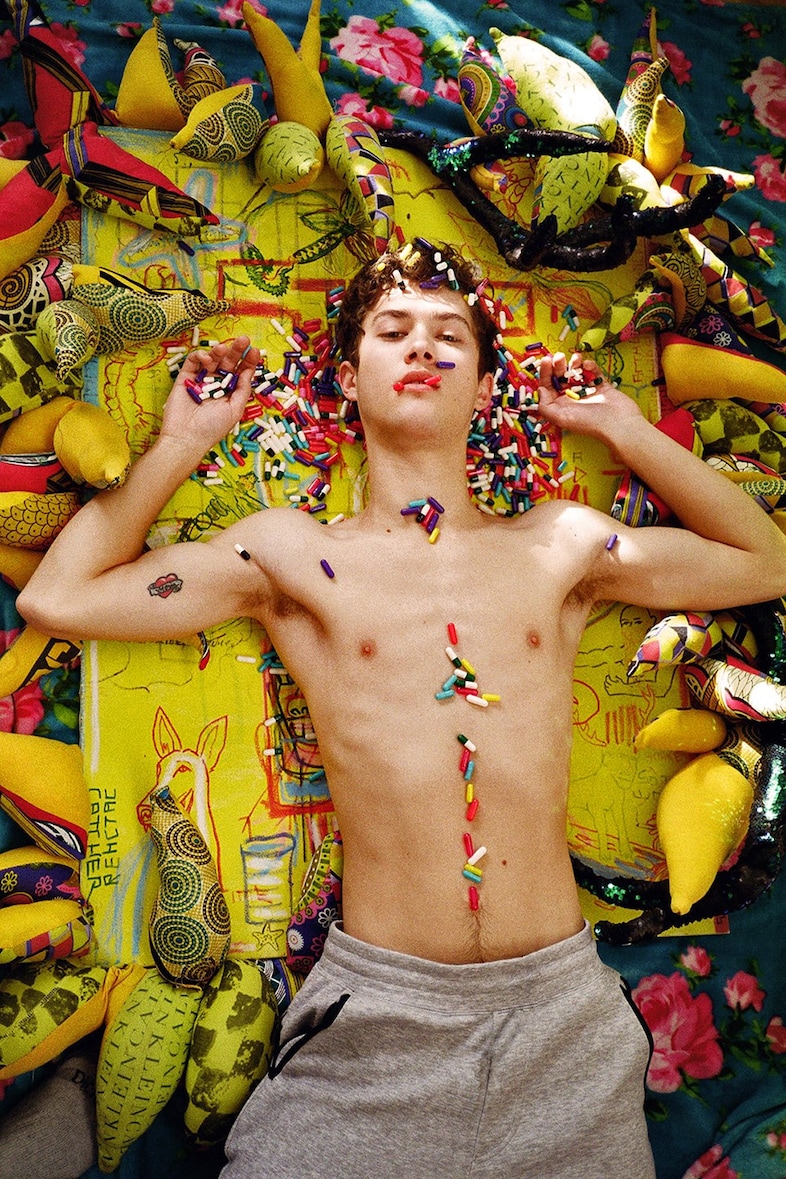
His cinematic influences are equally diverse and impactful. He cites filmmakers like Pier Paolo Pasolini and Rainer Werner Fassbinder, whom he believes "understood the violence inside love better than anyone." These directors explored the darker, more complex facets of human relationships with an unflinching gaze. John Waters, the "Pope of Trash," is celebrated by Mogutin for having "glamorised gore and kink and ridiculed anything heteronormative," embodying a joyful subversion of mainstream culture. And Bruce LaBruce, with whom Mogutin has collaborated, is praised for "pushed queer desire back into confrontation — where it belongs." What unites all these artists, Mogutin observes, is their collective refusal of "respectability." They chose to work "from excess, from contradiction, from the body. That’s the only place I trust," he concludes, reaffirming his own commitment to an art that is visceral, challenging, and deeply rooted in embodied experience.
The Bob Mizer Museum: A Fitting Venue
The Bob Mizer Museum, hosting "Analog Human Studies," is itself a significant institution in the history of queer art. Bob Mizer (1922-1992) was a pioneering American photographer and filmmaker, best known for founding the Athletic Model Guild (AMG) in 1945. AMG became a crucial, albeit often controversial, platform for male physique photography, predating and defying many of the social and legal restrictions on depicting male nudity. Mizer’s work, often considered proto-pornographic but also deeply artistic, created a visual language for gay desire at a time when such expressions were highly criminalized. His archive of over a million negatives provides an invaluable historical record of queer male aesthetics and community.
The decision to hold Mogutin’s retrospective at the Bob Mizer Museum is thus highly symbolic and thematically resonant. Both artists share a dedication to capturing the male form, challenging notions of obscenity, and operating at the intersection of art, eroticism, and social commentary. Mizer’s legacy provides a historical context for Mogutin’s contemporary provocations, creating a dialogue across generations of queer artists who have used photography to assert visibility and challenge repression.
Contemporary Relevance and Broader Implications
Slava Mogutin’s "Analog Human Studies" arrives at a particularly poignant moment. In an era where LGBTQ+ rights are increasingly politicized and challenged globally, and where digital culture often sanitizes or commodifies raw expression, Mogutin’s analog, unfiltered approach stands as a powerful counter-narrative. His insistence on "un-safe art" resonates deeply with ongoing struggles against censorship, homophobia, and political authoritarianism. The exhibition serves not only as a celebration of an artist’s journey but also as a vital commentary on the enduring necessity of art that confronts, discomforts, and ultimately, liberates. It underscores the continued importance of artistic freedom as a cornerstone of democratic society and a crucial tool in the fight against "hate, bigotry and violence." By presenting fragments of lived experience—intimate, unstable, sometimes brutal—Mogutin invites viewers to engage with the complexities of identity, desire, and resistance, challenging them to confront their own perceptions and prejudices in a world that increasingly demands conformity.
Event Details and Visitor Information
"Analog Human Studies: 25 Years of Photography by Slava Mogutin" is currently on view at the Bob Mizer Museum from April 2 to June 13, 2026. Visitors are encouraged to explore this comprehensive exhibition that traces the evolution of a singular artistic voice. Further engagement opportunities include a live event featuring Slava Mogutin in conversation with Hunter O’Hanian, scheduled for April 10. O’Hanian, a distinguished figure in the art world and former Executive Director of the Leslie-Lohman Museum of Gay and Lesbian Art, brings a wealth of expertise in queer art history and curatorial practice, promising a insightful discussion on Mogutin’s work and its place within the broader canon of LGBTQ+ artistic expression. For precise timings and additional visitor information, the Bob Mizer Museum’s official website should be consulted.