











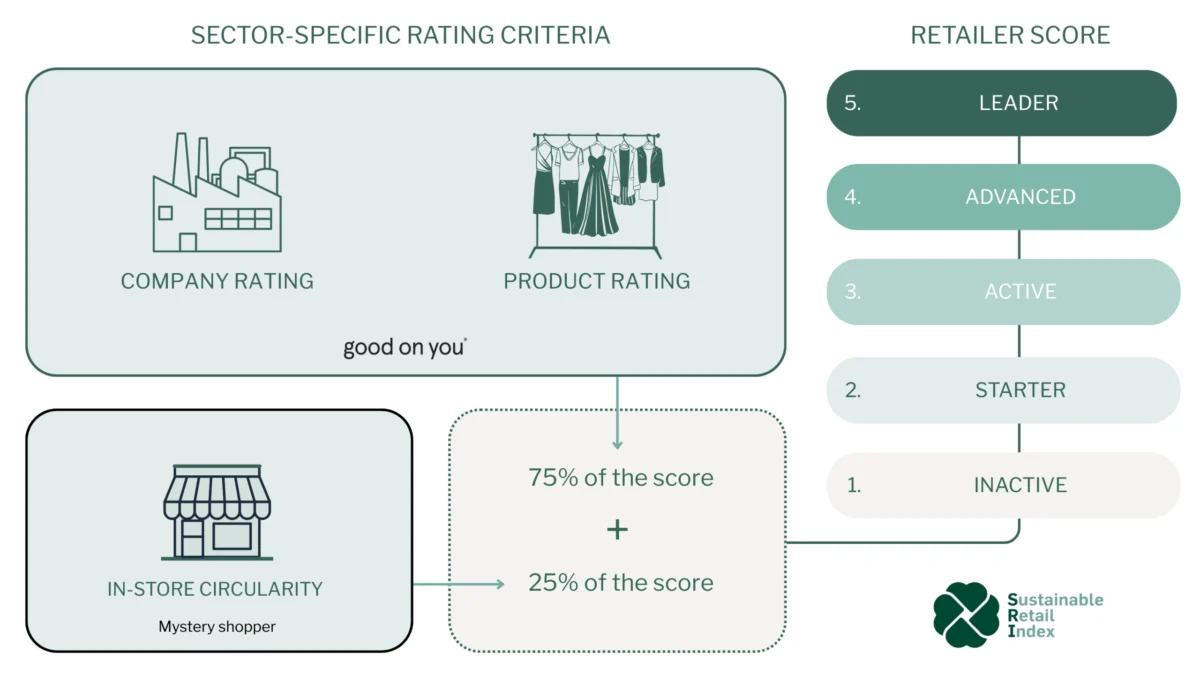
While consumer brands have long borne the brunt of public and regulatory scrutiny regarding their environmental, social, and governance (ESG) practices, the powerful landlords behind the world’s shopping centers, high streets, and retail precincts have largely operated outside this intense spotlight. This dynamic is rapidly shifting, however, with the recent announcement of the Sustainable Retail Index Association (SRIA). This new initiative signals a pivotal moment, aiming to bring unprecedented transparency and accountability to a segment of the retail ecosystem previously considered an "unseen player," despite its immense influence over the brand mix and the physical shopping experience.
The Unseen Architects of Retail: Landlords’ Undeniable Influence
For years, the discourse around sustainability in retail predominantly focused on the brands that manufacture and sell goods. Consumers, advocacy groups, and regulators alike have pressured these brands to disclose their supply chain ethics, environmental footprint, and social impact. Yet, an often-overlooked, yet immensely powerful, segment of the industry remained in the periphery: the retail landlords. These entities own and manage the vast commercial spaces where brands operate, effectively acting as gatekeepers who determine which businesses gain access to prime retail real estate. Their decisions directly shape the physical shopping landscape, influencing everything from store design and operational efficiencies to the very selection of brands available to consumers.
The power of retail landlords extends beyond mere space allocation. They can exert significant influence over the business decisions of their tenants, subtly or overtly nudging them towards more responsible practices. By curating a specific brand mix, they can either perpetuate fast fashion and unsustainable consumption models or champion brands committed to ethical production, circularity, and environmental stewardship. The question, therefore, arises: should these powerful intermediaries not be held to the same stringent ESG standards as the brands they host? The prevailing consensus, as evidenced by the SRIA’s launch, is an emphatic yes.
A New Benchmark for Sustainability: The Sustainable Retail Index Association
This week marks a significant stride in addressing this "missing link" in retail sustainability. The Sustainable Retail Index Association (SRIA) has officially launched, co-founded by two of the globe’s largest retail landlords: Unibail-Rodamco-Westfield (URW), a leading developer and operator of flagship destinations, and Ingka Centres, the parent group of IKEA. This collaboration underscores a growing recognition among industry giants of their collective responsibility and power to drive systemic change.
Central to the SRIA’s mission is the provision of a standardized, transparent mechanism for landlords to measure and assess the sustainability performance of their entire tenant portfolios. The initiative benefits from the expertise of Good On You, a prominent ethical rating platform, which serves as the data partner for the index. According to Sandra Capponi, co-founder of Good On You, the index is meticulously designed to rely on reliable, transparent, and publicly available information, ensuring its credibility and utility. The Index itself is a comprehensive assessment tool, integrating Good On You’s extensive brand rating data with an evaluation of in-store practices. This holistic approach scrutinizes everything from a brand’s intricate value chain to the availability of circularity services, such as repair, rental, or recycling options, within its physical stores.
The journey towards the SRIA began with a foundational collaboration between Good On You and URW, where the initial framework for the Index was developed. The establishment of the new Association signifies an ambition to elevate this proprietary tool into an industry-wide standard, fostering consistent measurement and encouraging broader adoption across the retail real estate sector. This development arrives at a critical juncture when an increasing number of landlords are seeking granular data on their tenants’ ESG credentials – encompassing major retailers and independent labels alike – to identify areas for improvement at both the individual store and overall shopping centre levels.
Physical Retail’s Enduring Gravitas
Despite the dramatic ascent of e-commerce over the past decade, physical retail continues to command a dominant position as the leading shopping touchpoint globally. In 2024, physical stores accounted for nearly 73% of all retail sales in the UK, underscoring their irreplaceable role in consumer habits. Across the Atlantic, while e-commerce sales in the US are projected to reach a staggering $1.6 trillion by 2028, this will still constitute only 24% of the total retail sales, according to Forrester research. These figures unequivocally highlight the enduring importance of physical retail spaces and, by extension, the landlords who control them.
"This is a huge, powerful industry," states Sandra Capponi, emphasizing the immense leverage held by retail landlords. "It has significant influence over which brands consumers can access, but it’s largely been left out of the sustainability conversation. The more I’ve investigated this space, the clearer it’s become that landlords have both the commercial incentive and the structural power to influence retailer behaviour." This perspective reinforces the strategic imperative for landlords to engage actively in the sustainability agenda, not merely as a moral obligation but as a critical component of long-term business viability and market relevance. The physical environment they provide offers a tangible interface for consumers to engage with sustainable practices, a dimension that online retail, despite its convenience, cannot fully replicate.
Reimagining Retail: From Consumption Hubs to Circularity Centres
The launch of the SRIA is not an isolated event but rather a significant indicator within a broader movement. There’s a discernible shift in how some forward-thinking retail players are perceiving and utilizing their spaces. The vision extends beyond mere commercial transactions, aiming to transform shopping centres and retail environments from "shrines to consumerism" into dynamic "hubs of education and circularity." This reimagining involves a multi-faceted approach, integrating sustainability at various operational levels and fostering new consumer behaviors.
Landlords and multi-brand retailers are exploring a wide array of initiatives, implemented both in partnership with tenants and independently. In-store upgrades form a foundational layer, encompassing practical changes such as the removal of single-use plastic bags, the introduction of refill stations for beauty and household products, the implementation of highly efficient waste and recycling systems, and the adoption of energy-efficient lighting across premises. These tangible changes contribute directly to reducing the environmental footprint of retail operations.
Beyond operational efficiencies, a more ambitious transformation involves integrating circularity directly into the retail experience. URW, for instance, is actively collaborating with its tenants to introduce rental, resale, and repair services within its destinations. A notable example is the partnership with Sojo, a next-generation alterations platform, which has established a presence in Westfield centres in both London and Paris. Anna Drozdowski, global head of sustainable retail and social impact for URW, explains, "[Sojo] offers a new way of repairing because it’s an omni-channel offer that is both online and on-site." This strategic integration aims to address a fundamental question for landlords: "How can we play our role to support retailers in offering services that maybe they can’t do themselves for different reasons?"
Similarly, multi-brand retailers like Percy Langley, which exclusively stocks British brands across its UK locations, are redefining their stores as multi-purpose community spaces. Poppy Sherbrooke, founder of Percy Langley, highlights their approach: "Our retail spaces are critical for us as event spaces." These events include repair workshops led by designers, showcasing visible mending techniques to empower consumers. They also host upcycling brands that conduct workshops, such as creating Christmas decorations from textile waste. This approach enables consumers to engage with the design community and circular economy principles, even if they are not seeking to purchase new items, thereby fostering a deeper, more meaningful connection to products and their lifecycle.
The Compelling Business Case for Sustainable Retail Real Estate
The impetus for retail landlords to embrace sustainability extends far beyond ethical considerations; it is increasingly driven by a clear and compelling business case. Initiatives like the Sustainable Retail Index Association are poised to become indispensable tools, guiding landlords in strategically curating their brand mix for each location. This curation will not only consider demographic alignment but also prioritize tenants that meet crucial ESG criteria, thereby enhancing the overall sustainability profile of their portfolios.
"Landlords like URW and Ingka Centres are taking action to improve the mix of retailers and tenants for a few reasons," explains Good On You’s Capponi. "So they can manage risk in their supply chain and their customer base, so that they can give shoppers better options, and so they can engage other stakeholders that are asking for this information, including investors." This multi-pronged approach addresses key aspects of modern business strategy: risk management, consumer engagement, and investor relations.
The expectations of ESG-focused investors represent a particularly potent driver for change. Research from Morgan Stanley reveals that a remarkable 88% of investors globally are interested in companies that achieve both financial returns and positive ESG outcomes. While political headwinds against ESG have made headlines, particularly in the US, institutional investors, especially in Europe, continue to pose rigorous questions concerning climate risk and supply chain ethics. Retail landlords capable of demonstrating robust, portfolio-level sustainability data gain a significant advantage, presenting a compelling narrative of responsible and resilient investment.
"There are shareholders and potential investors asking landlords about how they are de-risking their portfolio, and how they are tackling sustainability is definitely a driver," notes Capponi. "It’s an important one, because it’s not just a moral obligation; it’s commercial too. At many levels, there’s an appetite for shopping centres to do more." This commercial imperative transforms sustainability from a discretionary ‘nice-to-have’ into a strategic ‘must-have’ for attracting capital and ensuring long-term financial health.
Moreover, there is a substantial opportunity to appeal to a burgeoning segment of conscious consumers – individuals who are engaged and interested in making sustainable choices but often encounter barriers. The persistent "attitude-behavior gap," where consumers express a desire to buy sustainably but struggle to translate this into actual purchases, is a well-documented challenge. Zalando’s 2025 research identified that beyond price, key barriers include difficulty in identifying sustainable options, uncertainty about where to find them, and general confusion regarding the meaning of sustainability itself. Physical retail spaces, under the guidance of proactive landlords, possess the unique potential to resolve these issues by curating offerings that simplify and facilitate better choices for shoppers.
"People expect retailers, landlords and shopping centre owners behind the scenes to be doing more and to take accountability for their actions," Capponi asserts. "They don’t want to be in places that are just promoting the same old fast fashion; they want variety and options to make better decisions. And if landlords want to drive foot traffic for their retailers, they need to create a better, more diverse offering." This perspective highlights that catering to sustainability is not merely about compliance, but about competitive advantage and revitalizing the retail experience to meet evolving consumer values.
Broader Implications and The Path Forward
As a vital intermediary between fashion brands and their customers, physical shopping centres wield immense influence to foster more responsible practices among their tenant brands. Landlords adopting a more ambitious approach are looking beyond basic in-store experiences. They envision retail spaces as platforms for educating shoppers, enabling innovative ways of engaging with products through circular services, and becoming destinations for transformative experiences that genuinely bridge the attitude-behavior gap in sustainable consumption.
"I see so much potential for some big changes," enthuses Poppy Sherbrooke of Percy Langley. "The scale that these businesses are working at gives them so much scope and power to make significant change very quickly." This optimistic outlook underscores the transformative potential inherent in the retail real estate sector. The collective power of major landlords, working in concert, can accelerate the adoption of sustainable practices across the entire retail value chain.
The success of initiatives like the Sustainable Retail Index Association, and the broader shift towards sustainable retail environments, hinges on the ability to sustain this current momentum over the long term. However, the very fact that retail landlords are now treating sustainability as a critical portfolio-level concern, rather than merely a marketing opportunity, signifies a profound and promising evolution. The emergence of an industry-wide conversation, backed by concrete tools for measurement and accountability, represents a crucial initial step towards a more sustainable and responsible future for retail.
Editor’s note
Good On You publishes the world’s most comprehensive ratings of fashion brands’ impact on people, the planet, and animals. Use our directory to search thousands of rated brands.