







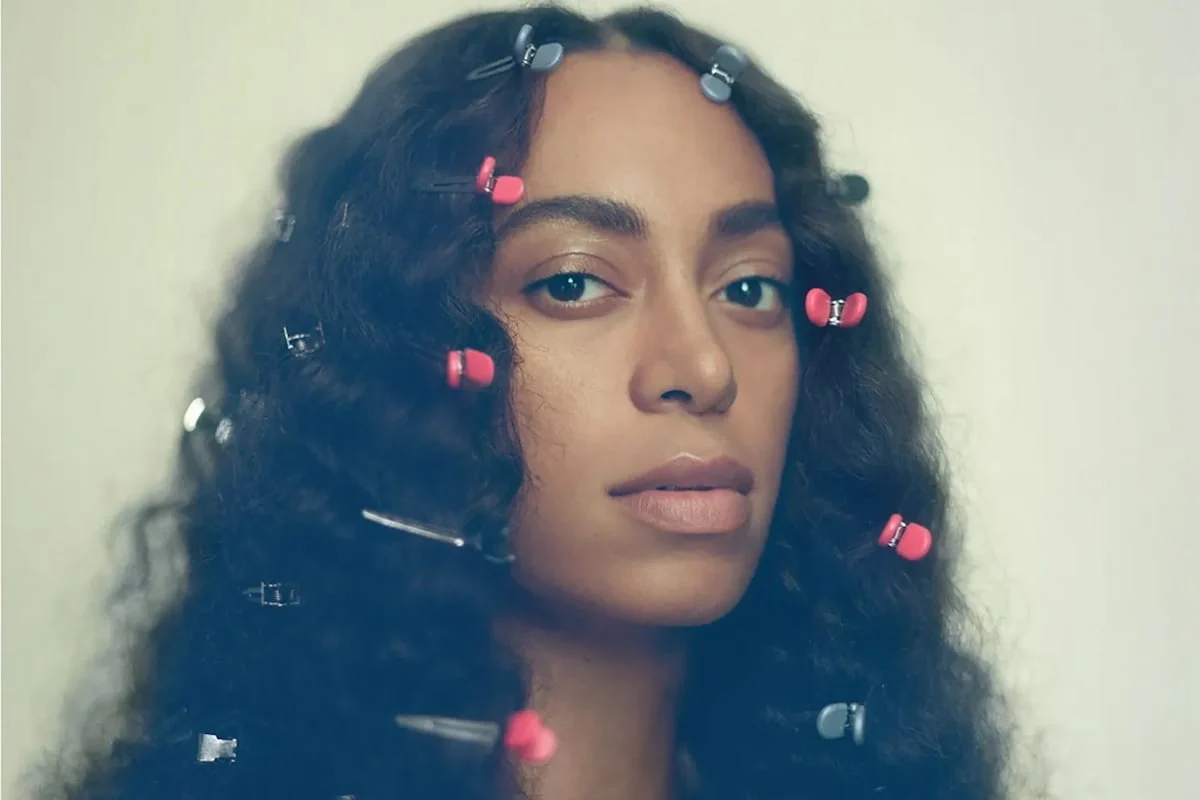
Solange Knowles occupies a rare tier within the contemporary entertainment landscape, operating as an artist whose public trajectory has traversed distinct creative eras, each functioning almost as a reinformation of her identity. While her familial lineage thrust her into the public consciousness at a remarkably young age, she systematically built a sprawling creative world that extends far beyond music. For early audiences, her presence was mediated through the screen, notably providing the iconic theme song for the Disney Channel animated series The Proud Family or starring in the Y2K dance-comedy film Bring It On: All or Nothing. Subsequent musical endeavors, such as the critically lauded 2012 single "Losing You"—co-written and co-produced alongside British artist and producer Dev Hynes—signaled a sophisticated shift toward left-of-center pop and R&B. However, it was her third studio album that crystallized her visionary aesthetic into a definitive cultural artifact, shifting the paradigm of how popular music engages with Black interiority, political resistance, and healing.
Chronology and Development of a Masterpiece
The trajectory of A Seat at the Table spans an eight-year conceptual gestation and a three-year recording process. Serving as a deliberate departure from her youthful debut, Solo Star (2002), and her sophomore release, Sol-Angel and the Hadley St. Dreams (2008), the record represents a massive stylistic evolution. Primarily recorded in New Iberia, Louisiana—a location chosen for its grounding geographical and ancestral ties—the album was executive produced by Raphael Saadiq. The creative process brought together an eclectic coalition of contributors, including Kelela, Lil Wayne, Sampha, Q-Tip, BJ the Chicago Kid, and Kelly Rowland.
Upon its release in September 2016, the album achieved commercial and critical milestones, debuting at number one on the US Billboard 200 chart. The project also garnered widespread critical acclaim, ultimately earning Solange her first career Grammy Award in the Best R&B Performance category for the arresting single "Cranes in the Sky." Beyond chart metrics and accolades, the project functioned as a socio-political anchor during a deeply turbulent era in American history.
Socio-Political Landscape and Cultural Context
To understand the resonance of A Seat at the Table, one must examine the sociopolitical climate of the mid-2010s. The record arrived during a period marked by intense political polarization, institutional instability, and widespread civil unrest concerning racial injustice in the United States. The Black Lives Matter movement, which mobilized nationally following the 2013 acquittal of George Zimmerman in the fatal shooting of Trayvon Martin, had gained unprecedented momentum.
In the year preceding the album’s release, the nation reeled from the Charleston church massacre, wherein a white supremacist gunman murdered nine Black worshippers at Emanuel African Methodist Episcopal Church. In the wake of the tragedy, Solange voiced a sentiment shared by millions, tweeting: "Was already weary. Was already heavy hearted. Was already tired. Where can we be safe? Where can we be free? Where can we be black?" This inquiry became the emotional and philosophical bedrock of A Seat at the Table, translating collective grief and exhaustion into a structured artistic framework.
Sonic Architecture and Thematic Exploration
Structured across 21 tracks, the album balances intricate sonic arrangements with raw, unfiltered emotional vulnerability. The opening track, "Rise," directly references the civil unrest in Ferguson and Baltimore, setting a meditative yet resolute tone. Throughout the tracklist, songs such as "Weary" interrogate the exhausting demands placed on marginalized identities, while tracks like "Don’t Wish Me Well" champion the necessity of emotional detachment and boundary-setting.
Crucially, the record incorporates nine spoken-word interludes featuring reflections from cultural figures and family members, including her parents and hip-hop pioneer Master P. These interludes function not merely as transitions, but as a stabilizing chorus that roots the musical compositions in authentic communal dialogue. Music critics and cultural analysts have frequently characterized the album as a form of non-physical architecture—a meticulously constructed sanctuary designed to offer refuge from systemic volatility.
Implications and Broad Cultural Impact
The mainstream triumph of A Seat at the Table demonstrated that commercial viability does not require the dilution of complex, niche cultural narratives. By articulating the nuanced realities of Black womanhood with unflinching honesty, Solange provided a mirror for audiences who had historically found themselves underrepresented or misrepresented in mainstream media. The album successfully bridged generational divides, validating historical trauma while simultaneously celebrating resilience, self-determination, and the beauty of Black diasporic identity.
As a decade has passed since its initial unveiling, the cultural footprint of the record continues to expand. To mark this milestone, ten young Black women reflect on the enduring legacy of an album that remains foundational to modern conversations surrounding art, identity, and liberation.
Nia Smith, 22
"To me, the album represents strength in knowing yourself and being completely self-assured. She’s so unapologetically herself, and there’s something really powerful about embracing your identity without feeling the need to make yourself smaller for anyone else. A lot of Black women see ourselves in her, and there’s something so affirming about seeing a Black woman embrace her identity so unapologetically, and the album’s celebration of Black womanhood and individuality is why it still resonates ten years on."
Halima, 26
"ASATT came out when I was 16. I had just started my A-Levels and was feeling super enraged by the murders of Black people at the hands of police in the UK, but particularly in the US. It felt scary to witness so much death in my teenage years and come to this horrifying realisation that my skin colour makes me a target for mistreatment and brutality. It made me depressed, but then I heard ASATT, an album made for Black people by a Black person. An album that is so unapologetically Black – that, amidst all the violence, made me feel proud and lucky to be Black. I love ‘Mad’ featuring Lil Wayne for obvious reasons. I’m mad as fuck most of the time, and racism sometimes means I need to quell those feelings to ensure nobody is misunderstanding or weaponising them against me. Anger is seen as such a negative emotion for Black people, but the song is a great reminder that I have the right to be mad as fuck at the state of the world and its treatment of Black people. Not only is it sonically a masterpiece, but it’s an album that doesn’t minimise Black women’s feelings. It acknowledges them, sees them, and creates real full space for them. It’s timeless. If the world don’t got me, I know Solange and this album do."
Steph, 23
"’Cranes in the Sky’ is a tale as old as time for any woman who fills an emotional void with productivity and being proactive. I’ve never felt so seen in a song, and I’m always reminded to face my emotions before I’m faced with emotions."
Chenai, 17
"I remember listening to ASATT for the first time and feeling a sense of recognition that I had never experienced with music in quite the same way. It gave me a different perspective on being a Black girl and made me think about parts of myself that I had not always known how to understand. As I get older, I hear it differently. Certain songs take on a different meaning depending on what I am going through. It has always felt like a love letter from a Black woman to other Black women, but I also hear it like notes from a big sister. Sometimes I hear a song and realise that she had already found the words for something I am only now beginning to understand. That is one of the most powerful things music can do. It also makes space for the beauty of what Black people have created and continue to create. I think it is poetic that it has gone on to become an example of that itself. Ten years later, it has become part of the work that people can look to when thinking about the ways Black culture has shaped the world around us. It gives so many of us a place to recognise parts of ourselves and our own experiences, while also making room for the beauty within them. I am grateful that Solange made something that I can continue to grow alongside."
Isabel, 24
"It’s hard to think of a song I nod my head to in agreement more than ‘Cranes in the Sky.’ On each listen, I find myself resonating with a different lyric, whether I’m drinking, dancing or working it away in that particular era of my life. To me, the ‘it’ Solange sings of ridding herself of is the melancholy and self-doubt that lives in all of us. I think it’s a song all women, but especially Black women, can see themselves in – life requires so much of us, and sometimes all you can do is keep trying, trying, trying to see what sticks."
Lydia, 27
"When the album came out, ASATT felt like a new way of being seen as a woman of colour was being put in the mainstream. Seeing a Black woman discuss complex issues with her gentle voice, demanding understanding over beautiful beats and expressing anger in a way I hadn’t heard before. It was laced with history and emotion, being celebrated for being soft and vulnerable. I genuinely also do believe that ‘Don’t Touch My Hair’ felt like the first time people understood the nuance of why this request was layered with deeper meaning, and I do believe it marked a shift in the end of being pet by strangers, so thank you for that too, Solange."
Liv, 25
"The album is a sanctuary. The validation of Black interiority, of Black grief and self-determination without being positioned as something that needs translation. It’s gentle while also being poignant, and that gentleness allows the themes to endure. The themes will always resonate because they are part of our experience, the cultural, historical, the personal, the political. But the format she delivered it in was actually really about softness with a certain respect for vulnerability that acted as a space-making moment. It’s restorative."
Zainab, 25
"To me, ASTT is important because it’s by and for Black women – both explicitly (‘Don’t Touch My Hair’) and implicitly (‘Rise’). And I know its impact on me only grows over time because it feels like regardless of our performance in the classroom or the workplace, the threshold for proper protections, fair compensation and recognition just keeps getting farther and farther away. It’s habitual for me after an especially hard day or week to put on my headphones and sing with Solange, ‘i tried to change it with my hair, i ran my credit card bill up… but that just made me even sadder’ – as if no one else in the world could possibly understand, because that’s exactly how it feels."
Noor, 23
"As an artist trying to navigate my way through predominantly white spaces, I spent a lot of my adolescence internalising daily microaggressions and categorisations that ultimately led to me making myself smaller, more digestible and palatable. Solange’s album is where I go when I need a reminder that I do not need to bow to the institutions and people who do not get me. Black women are not a monolith; we exist in every form. ASATT is the anchor I lean on when I find myself subconsciously moulding myself into the shapes people expect me to be."
Cara, 26
"ASATT was an album that introduced a sometimes misguided and wandering generation of young Black creative minds to themselves. It was for many of us the first time the Black diasporan experience was being articulated in the pop zeitgeist, and it felt like an open-armed homecoming. It had all the reasoning and the deep thought, but also in a very Black way, it also had the warmth, the forgiveness and understanding for those of us who had either lost our way home, or who hadn’t even yet started on our journeys. Being Black can be a surrealist experience in itself: you’re constantly pointing out things in a world that is adamant in pulling the cover over your eyes, convincing you that it wasn’t really racist, it wasn’t really misogynoir. It’s like stumbling through a dark labyrinth, grasping at the air for things you know to be at odds with your entire existence – but as soon as you’ve caught it, they’ve somehow managed to change and reconfigure the object. These topics that Solange lyricised are conversations that Black people had long been having behind closed doors with family, friends or romantic partners – yet hearing them on an album of this scale was truly liberating. Because of this, ASATT remains one of the defining albums of the modern Black diasporan experience, continuing to resonate today because its core mission endures: For Us, By Us."