










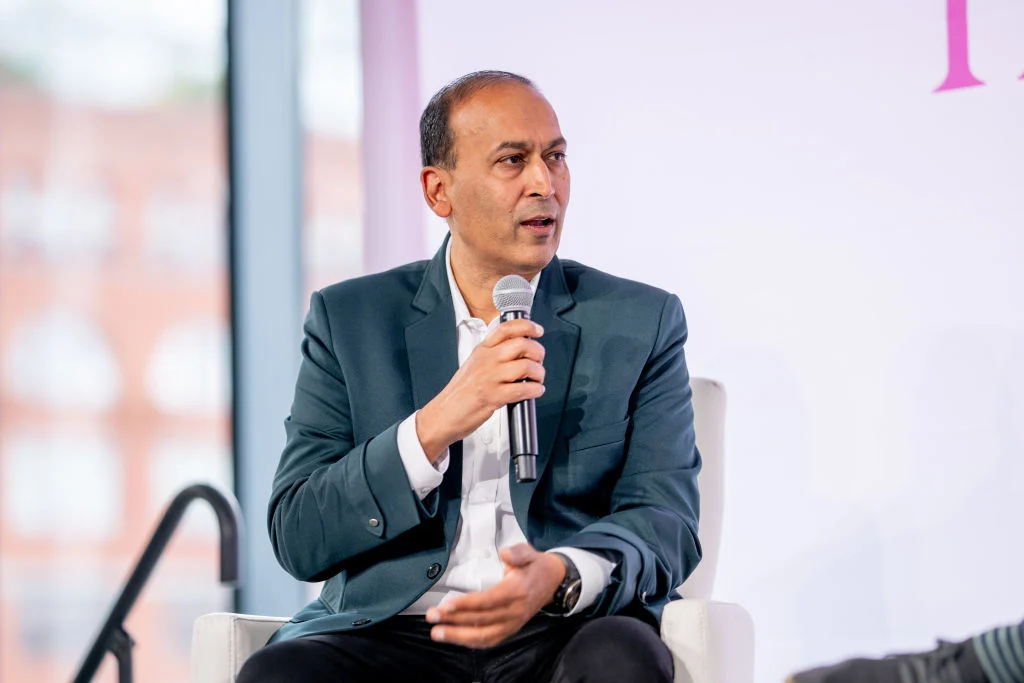
Poshmark, the leading social commerce marketplace for new and secondhand fashion, announced a significant leadership transition on Monday, marking the end of an era for the Silicon Valley-born platform. Manish Chandra, who founded the company in 2011 and guided it through a decade of rapid growth, a public listing, and a high-profile acquisition, is stepping down from his role as Chief Executive Officer. Namsun Kim, who has served as Poshmark’s executive chairman since April and currently holds the position of president of investments at Naver, has been named his successor. This transition occurs as the company enters a new phase of integration with its parent organization, the South Korean internet giant Naver, which acquired Poshmark in late 2022.
Chandra’s departure as CEO does not signal a complete exit from the company he built from the ground up; he will remain an active participant in the firm’s strategic direction as a member of the board of directors. The leadership change comes after a planned transition period, during which Kim and Chandra collaborated closely to ensure continuity for the platform’s 150 million users and its global workforce. The appointment of Kim, a seasoned investment executive with deep ties to Naver’s technological ecosystem, suggests a strategic shift toward deeper cross-platform synergy and technological modernization.
The Genesis and Evolution of Poshmark
The story of Poshmark is often cited as a quintessential Silicon Valley success narrative. Founded in 2011 by Manish Chandra, Gautam Golwala, Chetan Pungaliya, and Tracy Sun, the company began in a garage with the goal of making shopping social and accessible via mobile devices. At the time, the e-commerce landscape was dominated by transactional giants like Amazon and eBay. Chandra’s vision was different: he wanted to build a "social marketplace" where the act of buying and selling was secondary to the community interactions, such as "liking," sharing, and attending virtual "Posh Parties."
By 2021, Poshmark had become a household name in the United States, capitalizing on the "resale revolution" driven by Gen Z and Millennial consumers concerned with sustainability and value. In January 2021, the company went public on the Nasdaq, with its shares soaring more than 140% on their first day of trading, giving the company a valuation of over $7 billion at its peak. However, the post-pandemic market brought challenges, including shifts in consumer spending and increased competition from overseas platforms like Vinted and Depop, as well as established players like Etsy.
In October 2022, Naver Corporation, South Korea’s largest internet company, reached an agreement to acquire Poshmark for approximately $1.2 billion in an all-cash deal. The acquisition was seen as a strategic move for Naver to gain a significant foothold in the North American e-commerce market and to leverage Poshmark’s social data to enhance its own search and AI capabilities. For Poshmark, the deal provided the financial backing and technological resources of a global tech powerhouse.
A Strategic Succession: The Role of Namsun Kim
Namsun Kim’s ascent to the CEO role is a logical progression for Naver’s long-term strategy for Poshmark. As Naver’s president of investments, Kim was a central figure in the acquisition of Poshmark and has spent the last several months embedded in the company’s operations as executive chairman. His background is rooted in high-level finance and strategic growth, having played a key role in Naver’s international expansion efforts.
According to statements from Chandra, the transition has been in the works since the beginning of 2025. The goal was to ensure that the "Phase 2" of Poshmark’s growth under Naver’s ownership was led by an executive who could bridge the gap between Poshmark’s social-first culture and Naver’s data-centric infrastructure. Kim is expected to focus on scaling Poshmark’s technological offerings, particularly in the realms of artificial intelligence, image recognition for search, and live-streaming commerce—an area where Naver has significant expertise in the Asian market.
In a farewell email sent to the Poshmark community, Chandra expressed deep gratitude to the sellers and buyers who built the platform. He noted that leading the company had been the "greatest honor" of his professional life and emphasized that the strength of the company has always been its community. This focus on community has been Poshmark’s primary differentiator; while other platforms focused on logistics, Poshmark focused on the "Posh Ambassadors" and the social connections between users.
Data and Market Context: The State of Resale
The leadership change at Poshmark arrives at a critical juncture for the global resale market. According to industry reports from ThredUp and GlobalData, the global secondhand apparel market is projected to reach $350 billion by 2027, growing three times faster than the overall global apparel market. This growth is fueled by a "perfect storm" of economic factors: persistent inflation driving consumers toward value-oriented shopping, and a growing environmental consciousness that discourages "fast fashion" consumption.
Despite the positive market outlook, the sector is increasingly crowded. Poshmark currently competes with:
- Depop: A UK-based platform owned by Etsy that has a strong hold on the Gen Z demographic.
- The RealReal: A luxury-focused consignment site that offers high-touch authentication services.
- eBay: The original giant of the space, which has recently reinvested in its "Authenticity Guarantee" for sneakers and luxury goods to win back market share.
- Vinted: A European powerhouse that has seen massive success with a low-fee model.
Poshmark’s user base of 150 million individuals gives it a massive data advantage, but the platform has faced pressure to innovate its search functionality and shipping costs. Under Kim’s leadership, industry analysts expect Poshmark to integrate Naver’s advanced AI tools to help sellers price items more accurately and to help buyers find specific items through visual search technology.
Official Responses and Corporate Sentiment
The transition has been characterized by both parties as a positive and natural evolution. In his communication to users, Manish Chandra highlighted the "extraordinary community" and the "trust and creativity" that defined his 14-year tenure. He framed his move to the board of directors as a way to remain connected to the company’s mission while allowing new leadership to drive technical execution.
Naver has signaled its continued commitment to the Poshmark brand. While some acquisitions result in the "gutting" of the original company’s identity, Naver has maintained Poshmark’s independent branding and community-centric features. The appointment of Kim suggests that Naver views Poshmark not just as a subsidiary, but as a central pillar of its global "C2C" (consumer-to-consumer) strategy.
Industry analysts suggest that the market reaction to this news will likely be one of cautious optimism. Founder departures can sometimes lead to uncertainty, but the long lead time of this transition and Kim’s existing familiarity with the company mitigate many of those risks. The focus will now shift to how Kim addresses the "seller experience," particularly in relation to fee structures and the competition for high-quality inventory.
Broader Impact and Future Implications
The shift from a founder-led company to a corporate-synergy-led model is a common milestone for successful startups. For Poshmark, the implications are twofold. First, there is the potential for increased international expansion. While Poshmark has established footprints in Canada, Australia, and India, its presence in Europe and East Asia remains limited compared to its North American stronghold. With Naver’s global reach, Kim may look to aggressive international scaling as a primary growth lever.
Second, the integration of "Live Commerce" is expected to accelerate. In South Korea and China, live-streamed shopping is a multibillion-dollar industry. Poshmark launched "Posh Shows" (live-streaming selling) in 2023, and early data suggested a significant uptick in engagement. Under Kim, who understands the mechanics of Naver’s successful live commerce platforms in Asia, Poshmark could become the dominant player in Western live-streamed resale.
Furthermore, the leadership change reflects a broader trend in the tech industry where "efficiency" and "technological integration" are becoming the primary themes of 2024 and 2025. After the hyper-growth phase of the 2010s and the volatility of the early 2020s, companies like Poshmark are now focusing on sustainable profitability and leveraging parent-company assets to out-compete rivals.
As Manish Chandra moves to his new role on the board, he leaves behind a legacy of transforming how millions of people think about their wardrobes. Poshmark did more than just create a marketplace; it validated the idea that clothes are assets that can be recycled, resold, and shared. Whether Namsun Kim can maintain that unique "social" magic while applying the rigors of a global tech conglomerate will be the defining question of Poshmark’s next decade.
The transition officially takes effect immediately, with Kim assuming full operational control of the company’s global offices. For the 150 million "Poshers" who use the app daily, the platform’s interface and community features are expected to remain stable in the short term, with more significant technical updates likely to be rolled out toward the end of the fiscal year. The fashion world will be watching closely to see if this leadership pivot allows Poshmark to reclaim its position as the undisputed leader of the circular fashion economy.