








For creative director Kei Ninomiya, fashion functions less as a utilitarian blueprint for everyday wardrobes and more as an exercise in experimental sculpture meant to provoke intellectual discourse. During his AW25 presentation, the Japanese designer famously advised attendees that it was acceptable if the complex garments proved difficult to comprehend immediately, provided they successfully stimulated new concepts and ideas. That philosophy remained central to his latest runway presentation. At a time when the broader fashion industry accelerates its integration of artificial intelligence, automation, and digital novelties—evidenced by the viral incorporation of robotic dogs in recent seasons—Ninomiya’s collection served as a deliberate counter-narrative. It urged observers to disconnect from digital algorithms and reconnect with the physical world, presenting intricate wearable art crafted from fresh flora, delicate butterflies, and traditional playing cards.
The Evolution of Noir Kei Ninomiya Within the Global Fashion Landscape
Established under the Comme des Garçons umbrella, Noir Kei Ninomiya has consistently carved out a distinct niche defined by meticulous craftsmanship, industrial materials, and a nearly exclusive commitment to the color black. However, in recent years, Ninomiya has increasingly introduced ethereal elements, botanical integrations, and sculptural rigidity that challenge the traditional boundaries of garment construction.
The brand’s trajectory reflects a broader industry tension between high-tech acceleration and artisanal preservation. While major luxury houses heavily invest in digital showrooms, metaverse activations, and automated production methods, Ninomiya doubles down on hand-assembled, labor-intensive techniques. This approach positions the label not merely as a commercial enterprise, but as a conceptual laboratory where tailoring meets fine art. Industry critics and historians frequently categorize his work alongside avant-garde Japanese masters who prioritize silhouette, texture, and philosophy over conventional commercial trends.
Chronology of the Runway Presentation
The runway presentation commenced with an array of glowing, pearled raindrops threaded together to modify traditional suiting and embellished leather jackets. These elements were ingeniously transformed into subversive, swinging dresses and skirts that caught the light with every movement of the models.
As the presentation progressed through its chronological sequence, floral materials emerged as the dominant structural medium. Flowers were manipulated into a diverse spectrum of textures and shapes. In some instances, blooms were meshed together to mimic the appearance of colorful lace; in others, they were puffed out to add exaggerated volume to full-length gowns and structural tops. Furthermore, floral stems were woven tightly around the body like ropes or contrasted sharply against rigid leather harnesses.
When questioned backstage regarding the conceptual foundation of this extensive botanical showcase, Ninomiya offered a succinct and evocative summary, describing the pieces as an "armor of peace." This phrase bridged the dichotomy between the protective, industrial silhouettes traditionally associated with the brand and the delicate, vulnerable nature of living flora.
Deconstructing the Garments: Playing Cards and Botanical Architecture
Moving away from pure botany, the collection incorporated ordinary playing cards into high-fashion tailoring. Cards were engineered into structured, 18th-century-style skirts and mini-dresses that flared dramatically at the hips, playing with historical silhouettes through unconventional mediums. Shortly thereafter, precision 3D-printed renderings of hearts, diamonds, clubs, and spades were developed into standalone garments, demonstrating Ninomiya’s ongoing interest in marrying tactile traditional objects with advanced manufacturing techniques.
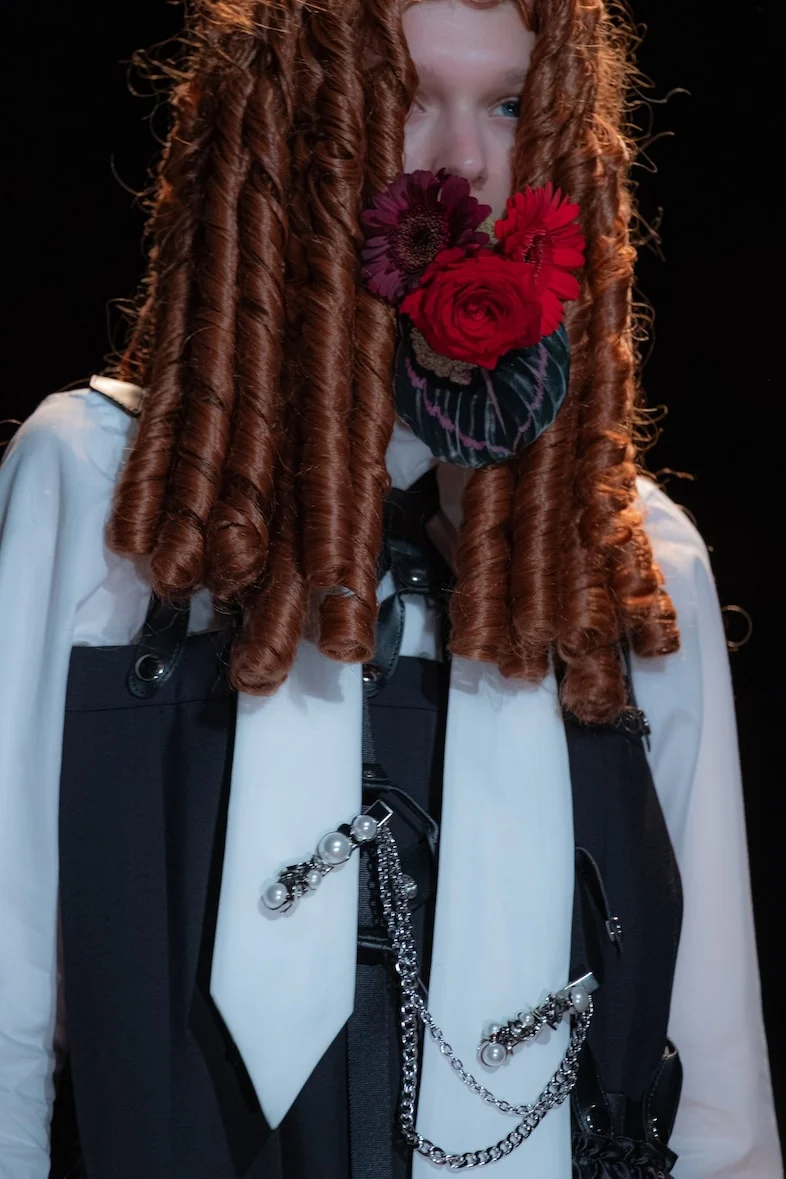
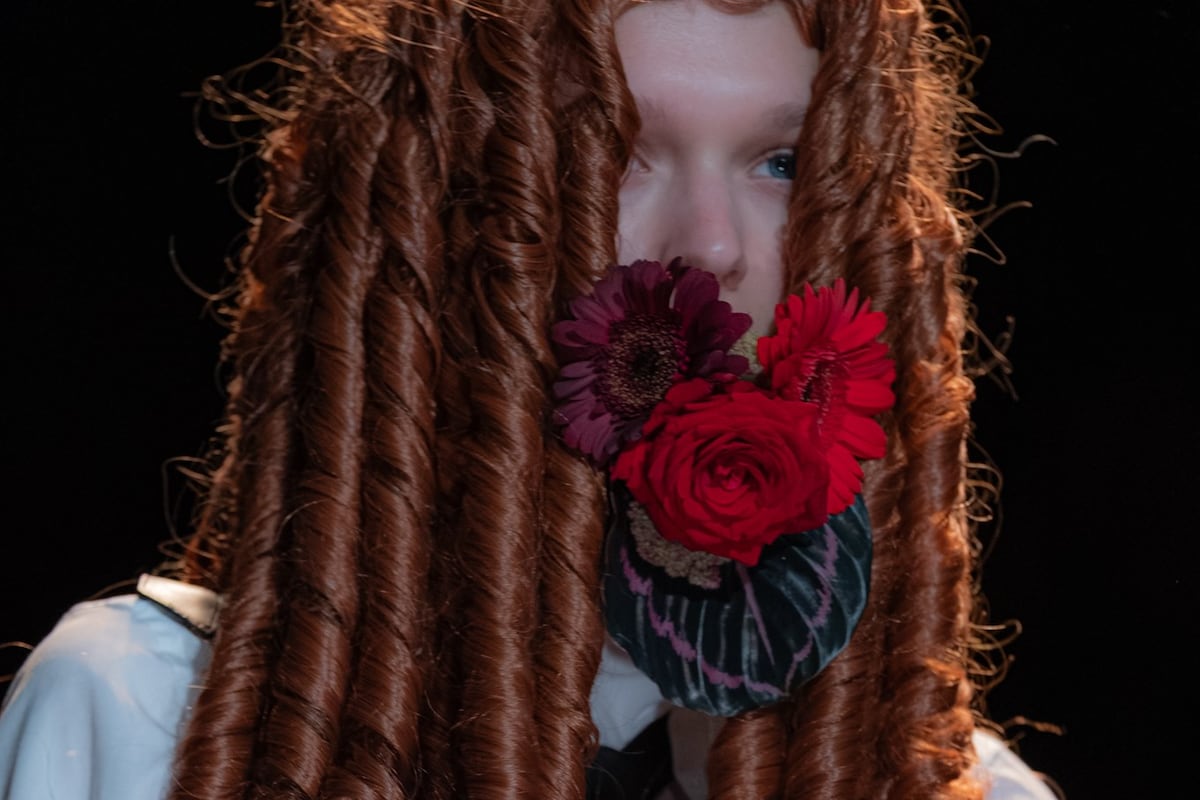
As has become a hallmark of every Noir Kei Ninomiya production, cutting-edge beauty styling dictated the visual presentation of the runway. While last season’s presentation memorably featured puffed-up rodent hair and intricate basket-weave structures, the SS27 showcase pivoted toward a different organic aesthetic. Models walked the runway with long, coiled-up ringlets dyed in shades of pink, platinum blonde, black, and red. These vibrant tresses stretched and bounced dynamically with the cadence of the models’ strides.
Complementing the hair architecture were towering headpieces resembling antlers and tree branches, appearing as though they had been directly foraged from a dense forest floor. Eschewing traditional cosmetics, the beauty direction substituted standard lipstick with real orchids, roses, and hydrangeas tucked directly inside the models’ teeth. This striking detail functioned as a visceral conceptual statement, visually translating the idiom to not merely smell the roses, but to fully consume and experience them.
Industry Reactions and Commercial Implications
While avant-garde collections of this caliber rarely translate directly to mass-market retail floors, they hold significant weight in shaping the creative direction and cultural capital of the luxury sector. Retail buyers and fashion editors who attended the showcase noted that while the living floral garments and towering branch headpieces are inherently ephemeral and non-commercial, they drive the brand’s global narrative and elevate the desirability of its more accessible ready-to-wear offerings, such as tailored outerwear and foundational black garments.
Furthermore, the collection’s underlying critique of hyper-digitization resonates deeply within contemporary cultural discourse. As consumers experience digital fatigue from relentless algorithmic curation on platforms like TikTok and Instagram, physical fashion shows that emphasize tactile, unrepeatable experiences—such as garments made from perishable flowers and delicate playing cards—gain heightened value. Analysts suggest that Ninomiya’s strategic rejection of technological gimmicks reinforces the enduring power of physical craftsmanship.
Broader Impact on Sustainable and Conceptual Design
Beyond the immediate theatricality of the runway, Ninomiya’s exploration of organic materials touches upon critical conversations surrounding sustainability and material sourcing in luxury fashion. By utilizing living plants, structured paper products, and recontextualized textiles, the collection challenges designers to rethink the lifecycle of garments. Although the inclusion of fresh flowers introduces questions regarding longevity and resource use, the overarching philosophy promotes a symbiotic relationship between fashion and the natural environment.
As the fashion calendar progresses, the resonance of the Noir Kei Ninomiya SS27 collection will likely be measured by its influence on upcoming seasonal presentations, particularly regarding how designers balance the pressure to adopt technological innovations with the persistent human desire for tactile, authentic artistry. By inviting his audience to pause, unplug, and engage all their senses—down to the literal taste of the botanicals on the runway—Ninomiya has once again established a high watermark for conceptual fashion design in the twenty-first century.