









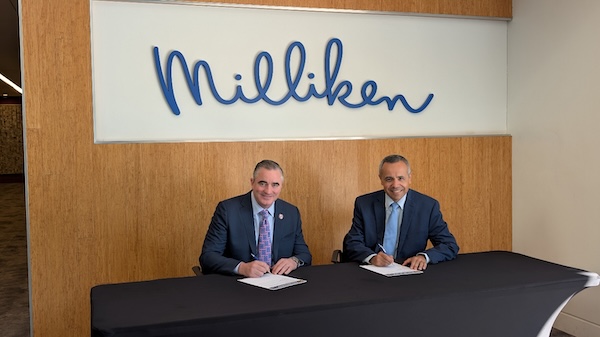
In a move that signals a significant shift in the safety and transparency standards of the emergency response supply chain, Milliken & Company has officially become the first textile manufacturer to sign the International Association of Fire Fighter’s (IAFF) new PPE Manufacturer Code of Conduct for Fire Fighter Protective Clothing and Equipment. The announcement, made from the company’s global headquarters in Spartanburg, South Carolina, marks a pivotal moment for the fire service industry as it grapples with long-standing concerns regarding the chemical composition and safety protocols of personal protective equipment (PPE).
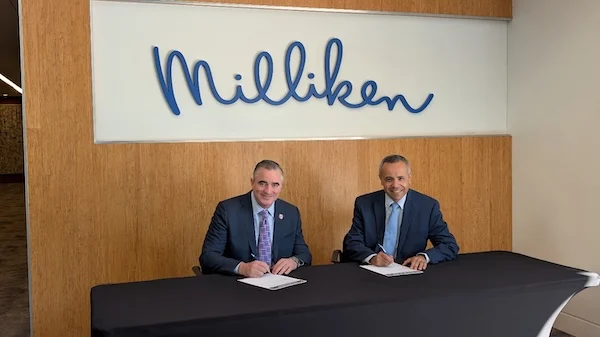
The signing ceremony, which took place on May 20, 2026, featured IAFF General President Edward Kelly and Milliken Apparel Executive Vice President Marcio Manique. By formalizing this agreement, Milliken commits to a rigorous set of standards designed to ensure that the materials used in firefighter turnout gear are not only high-performing in terms of heat and flame resistance but are also manufactured with a heightened focus on the long-term health of the personnel wearing them.
The Framework of the IAFF Code of Conduct
The IAFF PPE Manufacturer Code of Conduct was developed as a direct response to the growing body of evidence linking occupational cancer to the materials and chemicals used in the fire service. For decades, the primary concern for PPE was thermal protection and durability; however, the focus has expanded to include the chemical safety of the fabrics themselves. The Code of Conduct outlines four primary pillars of expectation for manufacturers:
- Safe and Compliant Product Design: Manufacturers must prioritize the health of the end-user by utilizing materials that minimize exposure to known toxins while maintaining the structural integrity required for firefighting environments.
- Truthful Representation: This requires full transparency in marketing and technical documentation, ensuring that fire departments receive accurate data regarding what is—and what is not—included in their gear.
- Proactive Hazard Assessment: Signatories are expected to conduct ongoing evaluations of their products to identify potential health risks before they become industry-wide issues.
- Timely Communication: In the event that a potential hazard or defect is identified, manufacturers commit to informing the IAFF and the broader fire service community immediately.
By adhering to these principles, Milliken is setting a precedent for other material science firms and garment manufacturers to follow. While the code is voluntary, the IAFF, which represents more than 340,000 professional firefighters and paramedics in the United States and Canada, wields significant influence over the procurement processes of municipal fire departments.
Addressing the PFAS Crisis in the Fire Service
The most pressing issue addressed by this new agreement is the presence of per- and polyfluoroalkyl substances (PFAS) in turnout gear. Known as "forever chemicals" due to their inability to break down in the environment and the human body, PFAS have been traditionally used in the textile industry to provide water and oil repellency. In the context of firefighting, these chemicals were essential for the moisture barriers and outer shells of turnout gear to prevent the absorption of hazardous liquids and hydrocarbons.
However, research has increasingly linked PFAS exposure to various forms of cancer, which has surpassed heart disease as the leading cause of line-of-duty deaths among firefighters. According to data from the International Agency for Research on Cancer (IARC), the occupation of firefighting is now classified as "Group 1: Carcinogenic to humans."
Milliken & Company took an early lead in this transition, announcing in 2021 that it had eliminated the use of PFAS in fabrics developed specifically for the fire service. As of 2026, Milliken remains the only manufacturer capable of providing non-PFAS options across all three critical layers of turnout gear: the outer shell, the moisture barrier, and the thermal liner. This "complete system" approach is vital because even if one layer is PFAS-free, the presence of the chemicals in another layer can lead to cross-contamination and continued exposure.
Validation Through Independent Testing
To reinforce its claims of chemical safety, Milliken recently underwent voluntary third-party testing conducted by Forever Analytical, a laboratory specializing in the detection of trace-level environmental contaminants. The testing protocols utilized high-resolution mass spectrometry to scan for a wide array of PFAS compounds.
The results of the audit confirmed that Milliken’s fire service fabrics contain no detectable levels of PFAS. This data is critical for fire chiefs and municipal leaders who are facing increasing pressure from labor unions and environmental advocacy groups to prove that the gear they purchase is safe. The shift toward non-PFAS solutions is no longer a niche preference but is becoming a standard requirement in large-scale municipal contracts.
Case Studies: San Francisco and Horry County
The real-world application of Milliken’s non-PFAS technology has already been seen in major departmental transitions. The San Francisco Fire Department (SFFD), one of the most proactive agencies in the United States regarding firefighter health, was among the first to move toward a completely non-PFAS turnout gear system. Milliken provided the technical fabric solutions that allowed the SFFD to maintain the high levels of thermal protection required for high-density urban firefighting while eliminating the chemical risks associated with traditional finishes.
Similarly, Horry County Fire Rescue in South Carolina recently completed a transition to Milliken-based non-PFAS gear. These transitions serve as proof of concept for the industry, demonstrating that the removal of legacy chemicals does not have to result in a compromise of physical protection or durability.
A Chronology of Milliken’s Commitment to Fire Safety
Milliken’s involvement in the fire service industry spans several decades, characterized by a steady progression from basic flame resistance to advanced material science.
- 1970s–1990s: Milliken establishes itself as a leader in flame-retardant textiles for industrial workwear and military applications.
- 2000s: The company expands its research into multi-layer turnout gear, focusing on breathability and "Total Heat Loss" (THL) to reduce the risk of heat stress for firefighters.
- 2021: In a landmark decision, Milliken ceases the use of PFAS in its fire service textile finishes, anticipating the regulatory and health shifts that would follow.
- 2023–2025: Milliken scales its non-PFAS production, becoming the first to offer a three-layer non-PFAS system and collaborating with every major turnout gear manufacturer in the U.S.
- May 20, 2026: Milliken signs the IAFF Code of Conduct, formalizing its ethical commitment to the fire service.
- June 2, 2026: The company publicly announces its status as the first textile manufacturer to adopt the code, challenging the rest of the industry to follow suit.
Statements from Leadership
The signing of the Code of Conduct is viewed by many as a bridging of the gap between labor and industry. Edward Kelly, General President of the IAFF, emphasized that the safety of the gear is an extension of the brotherhood of the fire service.
"It’s important for firefighters that we have clean gear and that we’re not introducing toxic chemicals into personal protective equipment," Kelly stated during the signing. "That’s why the IAFF Code of Conduct is so important. It ensures manufacturers share the same ethical and moral commitment to protecting our members and keeping harmful chemicals out of this gear."
For Milliken, the move is a natural extension of its corporate identity as a purpose-led company. Marcio Manique, EVP and Managing Director for Milliken’s apparel business, highlighted the gravity of the company’s role in the safety ecosystem.
"We recognize the responsibility that comes with supplying fabrics used in life-saving protective gear and for decades have gone above what’s required to keep firefighters safe on-the-job," Manique said. "Signing this Code reflects how we operate as a company—with integrity, rigorous manufacturing standards, and a clear commitment to the firefighters who depend on these materials."
Technical Analysis of Non-PFAS Textile Engineering
The transition away from PFAS is a significant engineering challenge. PFAS were prized for their "oleophobicity"—the ability to repel oils and fuels. In a fire environment, if a firefighter’s gear becomes saturated with fuel or hydraulic fluid, it can ignite or transmit heat more rapidly, leading to catastrophic burns.
Milliken’s research and development teams had to develop alternative finishes that could provide similar levels of protection without the use of fluorinated chemistry. This involved the development of new polymer structures and application methods that ensure the finish remains durable through dozens of industrial wash cycles and the harsh conditions of a fire scene. The success of these materials indicates a new era of "green" chemistry in high-performance textiles, where environmental and health safety are treated as primary performance metrics alongside traditional factors like tensile strength and thermal protective performance (TPP).
Broader Implications for the Industry
Milliken’s early adoption of the IAFF Code of Conduct is expected to have a ripple effect throughout the global textile and PPE markets. As the IAFF continues to advocate for the removal of PFAS from NFPA (National Fire Protection Association) standards, other manufacturers will likely face pressure to align their manufacturing processes with the Code of Conduct.
Furthermore, this move may influence insurance and liability landscapes. As fire departments face rising healthcare costs related to occupational cancer, the selection of PPE that adheres to a strict code of ethical and chemical conduct may become a requirement for risk management.
Milliken’s continued investment in research and testing suggests that the company is already looking toward the next generation of fire service needs. This includes fabrics that are lighter to reduce physical exertion, more breathable to combat heat stroke, and even smarter textiles that can monitor environmental conditions.
Conclusion
The signing of the IAFF PPE Manufacturer Code of Conduct by Milliken & Company is more than a corporate formality; it is a declaration of intent for the future of firefighter safety. By combining third-party validation, a history of chemical innovation, and a formal pledge to transparency, Milliken has positioned itself at the forefront of a movement that prioritizes the long-term health of those who serve the public. As the industry moves forward, the focus will remain on whether other manufacturers will rise to the standard set in Spartanburg, or if the market will continue to bifurcate between those who prioritize legacy chemistry and those who embrace the evolution of safety.