









The influence of twentieth-century military history on modern menswear is profound, fundamentally defining the foundational garments that populate contemporary male wardrobes. While the global conflicts of the past hundred years carried devastating human costs, they simultaneously acted as an unexpected crucible for functional design, liberating civilian fashion from restrictive, overly formal nineteenth-century constraints. From the standard-issue crew-neck T-shirt to durable chinos and rugged bomber jackets, garments engineered for the front line have seamlessly infiltrated mainstream civilian style. Rather than disappearing with the demobilization of armed forces, these utility-driven items have become enduring staples of modern dress, proving that form and function are rarely mutually exclusive.
Historical Context and the Evolution of Uniformity
The relationship between military attire and civilian fashion is historically reciprocal rather than a one-way street. Style historians note that centuries ago, when military uniforms were first standardized, design cues were frequently drawn from the prevailing civilian cuts of the elite. Tailors adapted fashionable silhouettes to fit the requirements of military service, creating a distinct aesthetic that prioritized both identification and utility.
However, as warfare industrialized during the twentieth century, the dynamic shifted. The unprecedented scale of conflicts such as World War I and World War II necessitated mass-produced, highly functional clothing capable of withstanding extreme environmental conditions. Governments commissioned private textile manufacturers and master tailors to innovate new fabrics and designs. Once these conflicts ceased, millions of discharged servicemen returned to civilian life carrying their standard-issue gear with them. Coupled with government surplus sales that flooded the market with affordable, durable outerwear, these military garments were rapidly adopted by working-class youths, cultural icons, and eventually high-fashion designers in fashion capitals like New York, London, and Paris.
Key Menswear Staples Derived from Military Service

The modern man’s closet is populated by numerous items whose origins lie strictly within military logistics and quartermaster stores. Understanding the pedigree of these garments offers valuable insight into why they remain perennial favorites.
The Trench Coat
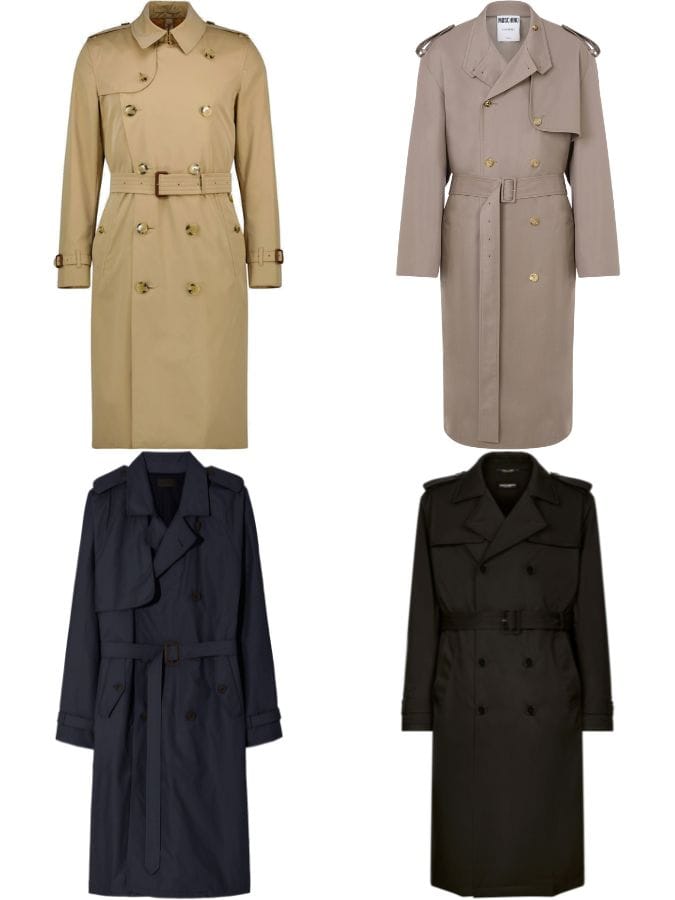
The origins of the trench coat remain a point of historic contention between British heritage brands Aquascutum and Burberry, both of which claim foundational involvement in its creation. Style historians generally credit Thomas Burberry with developing a water-repellent gabardine fabric commissioned by the British War Office during World War I. Designed to protect officers in damp, muddy trenches, the belted, double-breasted silhouette offered superior weather resistance without sacrificing mobility. Today, the trench coat has evolved from a functional piece of military hardware into a luxury fashion essential, appearing in varying lengths, cuts, and seasonal color palettes.

The White T-Shirt
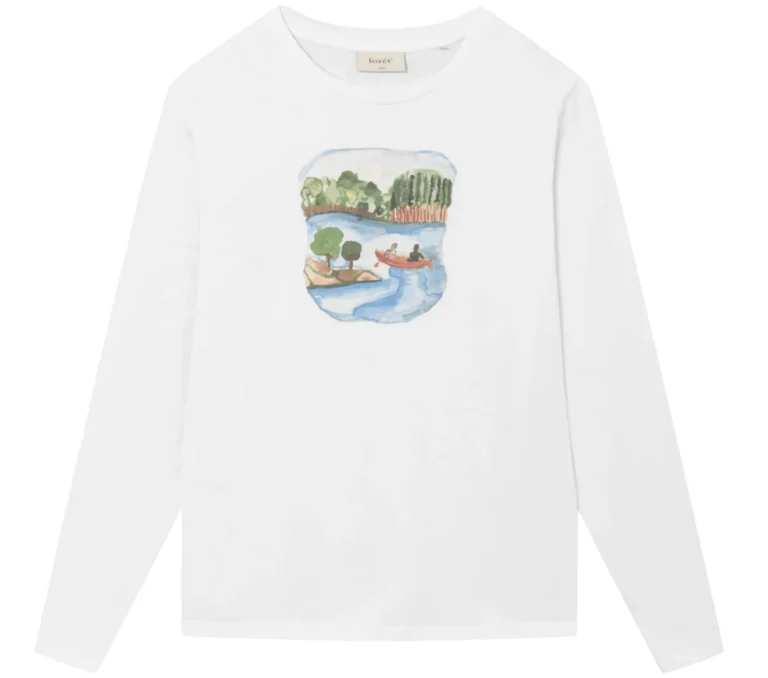
It is difficult to overstate the ubiquity of the classic white cotton crew-neck T-shirt, an item that spent decades relegated to the status of an undergarment. Originally issued as standard under-layer apparel by the United States Navy and Army during the 1910s, the breathable, lightweight cotton shirt was worn by sailors and soldiers in tropical and temperate climates alike. Following the conclusion of the World Wars, veterans continued wearing the garments casually. Cinematic icons such as Marlon Brando and James Dean cemented the white T-shirt as a symbol of rugged individualism, transforming a utilitarian undersuit into the cornerstone of modern casualwear.
The Pilot’s Watch
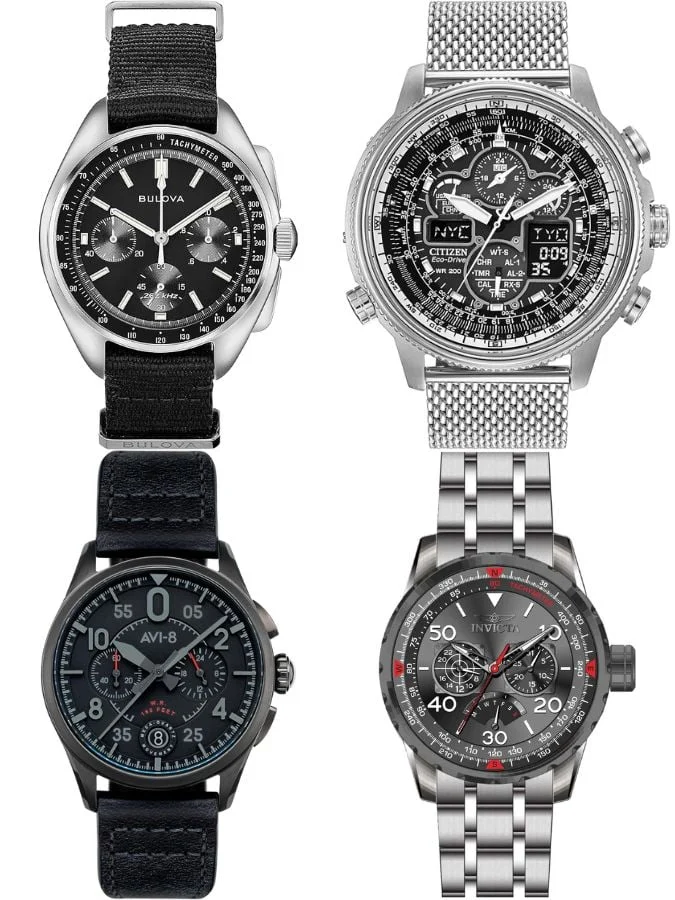
Horology has long been driven by the demands of navigation and aviation. The pilot’s watch emerged as a direct response to the need for high-visibility, precision timekeeping in early unpressurized cockpits. Emphasizing extreme legibility, high-contrast dials, luminous hands, and anti-magnetic properties, pilot watches prioritised function over decorative form. Modern iterations frequently feature chronographs, unidirectional bezels, and durable leather or NATO straps, making them versatile accessories suitable for both formal and casual settings.

The Bomber Jacket
Originally designated as flight jackets, early bomber models were engineered to protect aviators from freezing temperatures in open-cockpit aircraft during World War I and II. Constructed from heavy-duty leather and lined with insulating sheepskin, these garments were heavy and restrictive. As aviation technology advanced, military specifications shifted toward lighter, weather-resistant materials, culminating in the iconic nylon MA-1 jacket. Today, designers frequently reinterpret the bomber silhouette using luxury fabrics such as velvet or refined leather trims, bridging the gap between utilitarian outerwear and high fashion.
Chinos and Combat Trousers
The evolution of military trousers spans from lightweight warm-weather camouflage to heavy-duty tactical storage. Chinos trace their lineage to British and French military forces stationed in tropical climates during the nineteenth century, who dyed white cotton uniforms with a mixture of coffee, curry powder, and mulberry juice to achieve a natural dust camouflage known as khaki. Adopted by US forces and later popularized on college campuses during the mid-twentieth century, chinos remain the ultimate smart-casual trouser. Similarly, cargo trousers—originally outfitted with side patch pockets by British paratroopers in World War Two to hold field dressings and ammunition—have transitioned from military necessity to high-street staple through refined, slim-fit tailoring.

Desert Boots
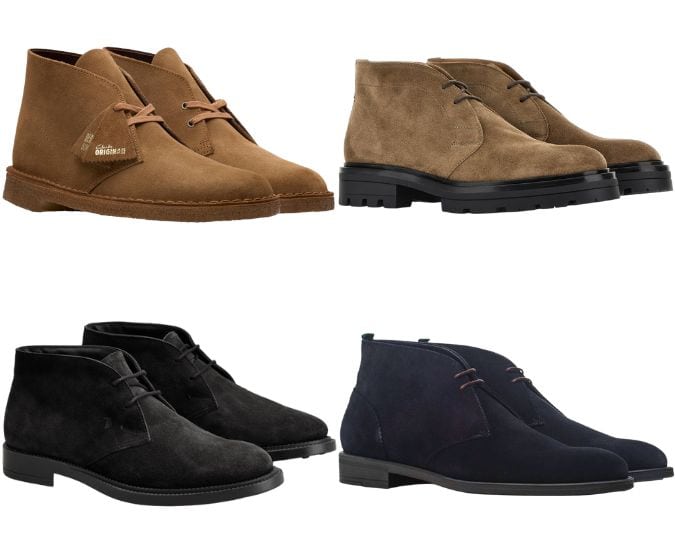
During the North African and Burmese campaigns of World War II, British army officers stationed abroad sought footwear that offered comfort, breathability, and traction in sandy environments. Observing the soft suede boots worn by off-duty officers in Cairo bazaars, Nathan Clark of the Clarks footwear dynasty recognized their commercial potential. Upon returning home, he introduced the design to the global market. Today, the desert boot remains a premier footwear choice, successfully bridging the divide between formal leather shoes and casual sneakers.
The Peacoat and the Cardigan
Naval heritage has contributed significantly to cold-weather menswear, most notably through the peacoat. A product of nineteenth-century nautical attire, the cropped, double-breasted wool coat was designed to allow sailors to climb rigging freely while remaining insulated against harsh sea winds. Post-war surplus made these coats widely accessible to the civilian population.
Similarly, the cardigan owes its name to James Thomas Brudenell, the seventh Earl of Cardigan, who led the Charge of the Light Brigade during the Crimean War. He commissioned a knitted woolen waistcoat for his officers to provide warmth during harsh winter conditions. The garment quickly transitioned from military utility to civilian comfort, embraced across generations and subcultures alike.
Actionable Style Lessons Derived from Military Discipline

Incorporating military elements into a contemporary wardrobe requires a measured approach to avoid the appearance of costume. Style experts recommend several strategic principles for adopting military-inspired aesthetics successfully.
Embrace Tonally Versatile Palettes
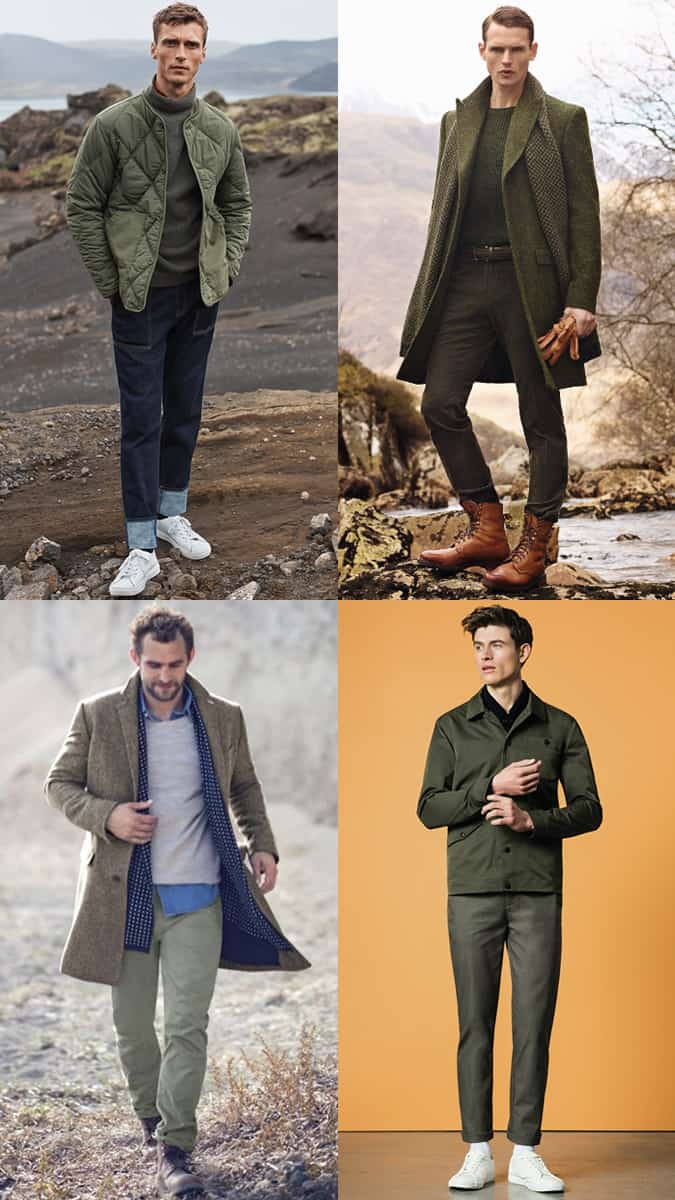
Military dress relies heavily on functional camouflage, resulting in a rich palette of greens, olives, earth tones, and neutrals. Embracing shades of olive and forest green provides a versatile foundation that can be worn tonally from head to toe or paired effectively with contrasting black denim, navy tailoring, or earth-toned knitwear.

Balance Tailoring with Outerwear
Military coats, particularly peacoats and duffles, offer exceptional versatility due to their generous shoulder cuts and structured silhouettes. These garments can be layered effortlessly over formal business suits for a sophisticated commute, or dressed down with dark selvedge denim and brogue boots for weekend wear.
Prioritize Clean Lines and Minimal Detailing
While authentic military garments frequently feature heavy detailing—such as epaulettes designed to hold gloves or caps, and waist straps originally utilized to secure sidearms—civilian wardrobes benefit from restraint. Purchasing modern interpretations with fewer decorative elements ensures greater longevity and seamless integration with existing clothing.

Invest in Commando Soles and Footwear Maintenance
The rugged rubber lug soles utilized in modern footwear trace their origins to the Carrarmato tread design introduced for Italian mountain troops in the early twentieth century. These thick soles provide exceptional traction in inclement weather while adding visual weight to outfits when paired with structured trousers or suits. Furthermore, adhering to strict maintenance protocols—such as treating leather with natural conditioners and beeswax—prolongs the lifespan of footwear, reflecting the rigorous inspection standards of military life.
Master the Basics and the Military Tuck
A functional wardrobe begins with foundational basics: a well-fitting white crew-neck T-shirt, a sky-blue Oxford shirt, a quality grey sweatshirt, a wool overcoat, and sturdy dark denim. These items act as a blank canvas for statement pieces. To maintain a polished appearance without the supervision of a drill sergeant, style enthusiasts frequently employ the "military tuck." This technique involves pulling a shirt down tightly into the trousers and creating neat vertical folds at either side of the waist to eliminate excess fabric, ensuring a clean, streamlined silhouette throughout the day.
Strategic Wardrobe Organization
The ability of military personnel to maintain preparedness under strict time constraints stems directly from disciplined organization. Translating this mindset to civilian life involves auditing wardrobe contents, ensuring that newly acquired pieces coordinate with at least three existing items, and arranging garments logically by type. By maintaining an organized closet and planning outfits proactively, individuals can optimize their personal style with military-grade precision.