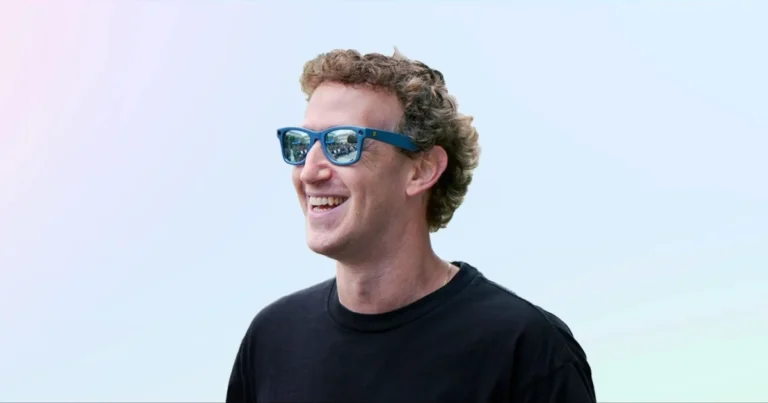










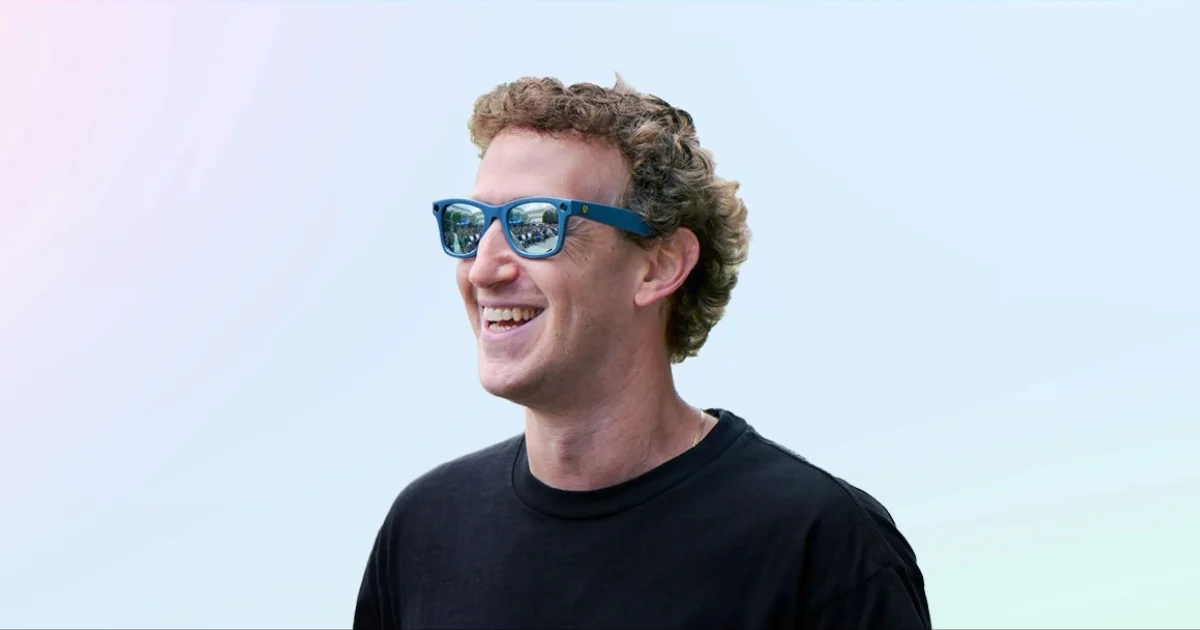
The intersection of high fashion and Silicon Valley reached a new milestone on Thursday as Meta CEO Mark Zuckerberg and his wife, Priscilla Chan, took prominent front-row seats at Prada’s Fall/Winter 2026 Fashion Week show in Milan. The appearance of the social media executive at one of the world’s most prestigious sartorial events has ignited intense industry speculation regarding an impending partnership between Meta and the Italian luxury house. Zuckerberg was observed in deep conversation with Lorenzo Bertelli, Prada’s Chief Merchandising Officer and the son of lead designer Miuccia Prada, further fueling rumors that a high-end version of Meta’s AI-integrated smart glasses is nearing a formal announcement.
While Zuckerberg has undergone a notable public image transformation in recent years—adopting a more curated wardrobe and a relaxed persona—analysts suggest his presence in Milan transcends personal interest in fashion. Instead, the visit appears to be a strategic move to solidify Meta’s position in the luxury hardware market. This development follows a series of reports and financial disclosures indicating that Meta is aggressively expanding its wearable technology portfolio through its long-standing partnership with EssilorLuxottica, the parent company of Ray-Ban and Oakley, which also holds the eyewear licensing rights for Prada and Miu Miu.
The Strategic Expansion of Meta’s Smart Eyewear
The potential for a Prada-branded Meta AI device is not a new concept. In the summer of 2025, industry reports first surfaced suggesting that Prada-themed AI glasses were in development. This move follows the commercial success of the Ray-Ban Meta collection, which transitioned the technology from a niche enthusiast product to a mainstream consumer accessory. By aligning with Prada, Meta aims to capture a demographic that prioritizes aesthetic prestige and craftsmanship as much as technical capability.
The partnership between Meta and EssilorLuxottica has proven to be one of the most successful collaborations in the history of wearable technology. Initially launching under the "Ray-Ban Stories" moniker, the product line has evolved significantly in its second and third generations, integrating more sophisticated artificial intelligence, improved camera optics, and seamless social media integration. The expansion into Oakley-branded glasses earlier in 2025 demonstrated Meta’s intent to segment the market, targeting athletes and outdoor enthusiasts with rugged, performance-oriented designs. A Prada collaboration would represent the final piece of this segmentation strategy: the luxury tier.
A Record Year for Meta AI Wearables
Data released in February 2026 highlights the accelerating adoption of Meta’s smart eyewear. EssilorLuxottica reported that it sold over 7 million units of Meta-powered AI glasses in 2025, a staggering increase from the 2 million units sold in 2024. This growth trajectory suggests that the public is becoming increasingly comfortable with the concept of "the computer on the face," provided the device looks like traditional eyewear.
The financial implications for both companies are substantial. For Meta, the glasses serve as a primary gateway for its Meta AI assistant, gathering real-world data and providing a hands-free interface for its ecosystem. For EssilorLuxottica and its licensed brands like Prada, the integration of technology offers a way to command premium pricing and stay relevant in an era where digital utility is becoming a consumer expectation. The current licensing agreement between Prada and EssilorLuxottica, which was recently extended through 2030 with an option to renew until 2035, provides a stable legal framework for a multi-year product roadmap involving smart technology.
Chronology of the Meta-EssilorLuxottica Partnership
To understand the significance of the potential Prada deal, one must look at the timeline of Meta’s hardware evolution:
- September 2021: Meta (then Facebook) launches Ray-Ban Stories, its first foray into smart glasses with EssilorLuxottica. The product receives a lukewarm reception due to limited battery life and privacy concerns.
- October 2023: The launch of the Ray-Ban Meta collection marks a turning point. Improved AI features, better audio, and a sleeker design lead to a surge in consumer interest.
- June 2025: Reports emerge from major financial outlets indicating that Meta is exploring collaborations beyond Ray-Ban, specifically naming Prada and Oakley as potential partners.
- September 2025: Meta officially unveils Oakley Meta glasses, targeting the sports and lifestyle market.
- February 2026: Sales data confirms that Meta AI glasses have become a multi-million-unit product category.
- February 26, 2026: Mark Zuckerberg’s high-profile appearance at the Prada show in Milan serves as a de facto confirmation of the deepening ties between the tech giant and the fashion house.
Bridging the Gap Between Tech and Luxury
The move into the luxury sector is a calculated effort to combat the "glasshole" stigma that plagued earlier attempts at smart eyewear, such as Google Glass. By ensuring that the hardware is indistinguishable from high-fashion accessories, Meta is betting that style will override the inherent social friction of wearing a camera on one’s face.
Prada, a brand synonymous with intellectualism and "ugly-chic" aesthetics, offers Meta a level of cultural capital that Ray-Ban—a more accessible, "cool" brand—cannot provide. A Prada version of the glasses would likely feature the brand’s iconic triangle logo and signature materials, such as Saffiano leather accents or recycled Re-Nylon cases, positioning the device as a status symbol rather than a mere gadget.
The Privacy Paradox and Consumer Backlash
Despite the commercial success of Meta’s eyewear, the company faces significant headwinds regarding privacy and public surveillance. As Meta considers adding more advanced features, such as real-time facial recognition, the pushback from privacy advocates and the general public has intensified.
Recent months have seen a documented rise in consumer hostility toward surveillance devices. In various metropolitan areas, there have been reports of citizens disabling Ring doorbells and destroying Flock surveillance cameras. This "surveillance fatigue" poses a risk to the long-term adoption of AI glasses. If the public perceives these devices as a tool for invasive data collection rather than a personal assistant, the market for luxury smart glasses could stall.
In response to these concerns, developers have already begun creating "anti-glass" technology. One such app, recently gaining traction on mobile platforms, uses Bluetooth and Wi-Fi signals to alert users if someone wearing smart glasses is in their immediate vicinity. This technological arms race highlights the tension between the convenience of wearable AI and the right to anonymity in public spaces.
Market Analysis: The Implications of Facial Recognition
The reported plan to integrate facial recognition into future iterations of Meta’s glasses is perhaps the most controversial element of the product roadmap. While Meta has framed this as a way to help users "remember names" or "provide context" about the people they meet, critics argue it turns every wearer into a mobile surveillance node.
From a business perspective, the luxury market might be more insulated from this backlash. Luxury consumers often prioritize exclusivity and advanced functionality, and Prada’s endorsement could provide a "halo effect" that makes the technology seem more acceptable. However, Meta must navigate a complex landscape of international privacy laws, particularly in the European Union, where the AI Act imposes strict regulations on biometric surveillance.
Official Responses and Future Outlook
As of late February 2026, Meta has declined to provide an official statement regarding the purpose of Zuckerberg’s visit to Milan or the status of a Prada partnership. Prada has similarly remained tight-lipped, maintaining its traditional stance of silence regarding unannounced collaborations. However, the presence of Lorenzo Bertelli alongside Zuckerberg is viewed by analysts as a "soft launch" of the partnership, intended to gauge market reaction and build anticipation.
Industry experts predict that a Prada Meta AI collection could be officially unveiled at Meta’s annual Connect conference later this year, with a retail launch timed for the 2026 holiday season. If successful, the collaboration will set a new standard for how technology companies and luxury brands interact, potentially paving the way for other high-fashion houses like LVMH or Kering to enter the wearable tech space.
The success of the Prada Meta glasses will likely depend on three factors: the subtlety of the hardware integration, the actual utility of the AI features, and the company’s ability to address the growing chorus of privacy concerns. If Meta can successfully blend Prada’s timeless design with cutting-edge artificial intelligence, it may finally achieve the goal of making smart glasses an indispensable—and fashionable—part of the modern wardrobe. For now, the world of fashion and technology remains focused on the front row in Milan, where the future of the "intelligent face" is being styled in real-time.