








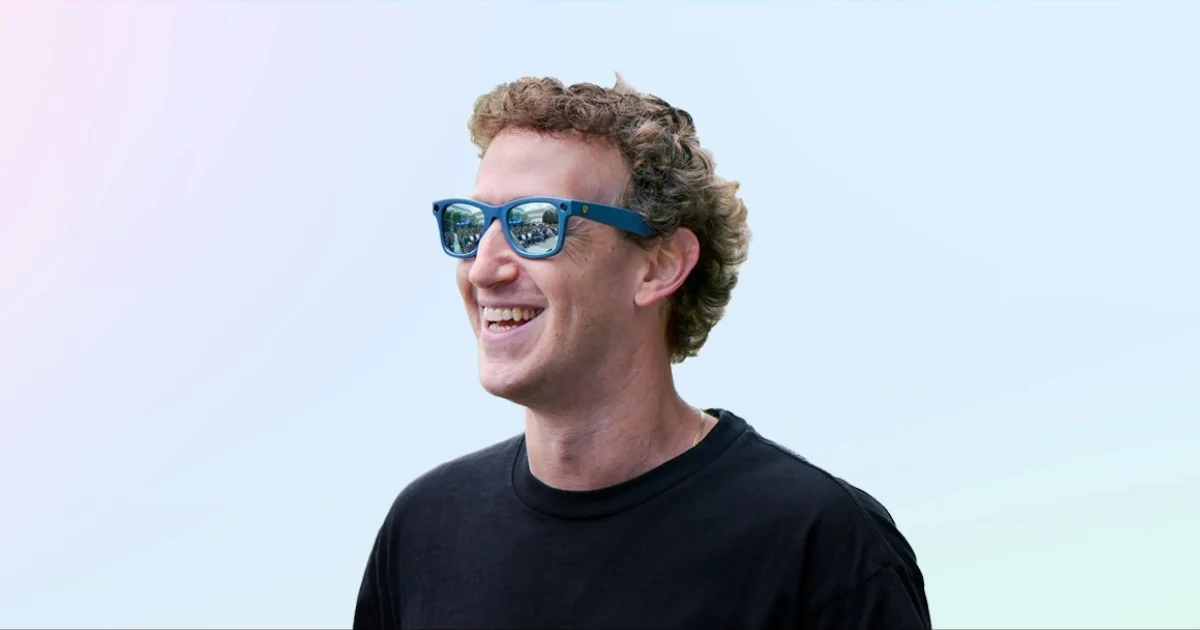
The intersection of high fashion and wearable technology reached a new milestone this week as Meta Platforms Inc. CEO Mark Zuckerberg and his wife, Priscilla Chan, took prominent front-row seats at Prada’s Fall/Winter 2026 Fashion Week presentation in Milan. The appearance has intensified industry speculation regarding an imminent collaboration between the social media giant and the Italian luxury house to produce a high-end version of Meta’s AI-integrated smart glasses. Zuckerberg was observed in close conversation with Lorenzo Bertelli, Prada’s Chief Merchandising Officer and the son of head designer Miuccia Prada, suggesting that the relationship between the two companies has moved beyond casual interest into strategic partnership territory.
While Meta has not officially confirmed the development of Prada-branded smart glasses, the presence of its chief executive at one of the world’s most exclusive fashion events aligns with a broader corporate rebranding strategy. Over the past two years, Zuckerberg has transitioned from a utilitarian aesthetic to a more curated, fashion-conscious image, often appearing in custom-designed apparel and luxury streetwear. Industry analysts suggest that this personal "makeover" is a calculated move to position Meta’s hardware as a lifestyle choice rather than a mere technical utility.
The Strategic Alliance with EssilorLuxottica
The foundation for a Prada-Meta collaboration lies in Meta’s existing and highly successful partnership with EssilorLuxottica, the French-Italian eyewear conglomerate that owns Ray-Ban and holds the licensing rights for Oakley, Prada, and Miu Miu. This month, EssilorLuxottica reported a significant surge in its technology division, announcing that it sold more than 7 million pairs of AI-enabled glasses in 2025. This figure represents more than triple the 2 million units sold in 2024, signaling a rapid consumer adoption of screenless wearables.
The 2025 sales figures included the second-generation Ray-Ban Meta glasses and the recently launched Oakley Meta line, which caters to the performance and athletic demographic. To maintain this momentum, Meta requires expansion into the "ultra-luxury" segment, a niche currently underserved by its existing portfolio. Prada, which recently renewed its licensing agreement with EssilorLuxottica through 2030 (with options extending to 2035), provides the ideal vehicle for this expansion. By integrating Meta’s Llama-based AI into Prada’s iconic frames, the company aims to transform smart glasses into a status symbol.
Chronology of Meta’s Wearable Evolution
The journey toward a Prada-branded wearable has been several years in the making, marked by steady hardware iterations and strategic licensing moves:
- September 2021: Meta (then Facebook) launches "Ray-Ban Stories," its first generation of smart glasses. The product focused primarily on photography and music but faced criticism for limited battery life and basic functionality.
- September 2023: The launch of "Ray-Ban Meta" (Generation 2) introduces integrated AI, improved camera quality, and live-streaming capabilities. This version marks the transition from a camera-on-your-face to a voice-activated AI assistant.
- June 2025: Reports surface via CNBC and other outlets that Meta is actively developing specialized hardware with both Oakley and Prada. The Oakley Meta glasses are unveiled shortly thereafter, focusing on the sports market.
- December 2025: EssilorLuxottica and Prada Group finalize a long-term licensing extension, specifically including provisions for "innovative eyewear technologies."
- February 2026: Mark Zuckerberg’s high-profile appearance at Milan Fashion Week serves as the strongest signal to date that the Prada AI glasses are nearing a public debut.
Market Analysis: Luxury as a Trojan Horse for AI
The move into the luxury sector is viewed by market analysts as a critical step in overcoming the "social friction" associated with wearable cameras. While early attempts at smart glasses, such as Google Glass, failed due to their "geeky" appearance and perceived intrusion, the Ray-Ban Meta line succeeded by prioritizing aesthetics. A Prada collaboration would take this a step further, leveraging the brand’s cultural capital to make AI-integrated hardware desirable to the fashion elite.
"The goal is normalization," says Marcus Thorne, a senior technology analyst. "If you can make the hardware indistinguishable from a $600 pair of luxury frames, the consumer is more likely to overlook the fact that they are wearing a sophisticated surveillance and data-collection node. Prada offers a level of prestige that Ray-Ban, while popular, cannot reach."
Furthermore, the luxury market offers higher margins and a demographic that is less price-sensitive. As Meta continues to invest billions into its Reality Labs division, which oversees its hardware and metaverse ambitions, the ability to sell premium-priced devices is essential for reaching eventual profitability in the hardware sector.
The Surveillance Backlash and Privacy Implications
Despite the commercial success of Meta’s current AI glasses, the potential launch of a Prada version comes amid a growing wave of consumer pushback against the ubiquity of surveillance technology. In early 2026, reports emerged of a "surveillance fatigue" movement, where citizens in urban areas began actively disabling or destroying public and private monitoring devices. This includes the widely publicized incidents of individuals ripping out Ring doorbells and dismantling Flock license-plate-reading cameras in residential neighborhoods.
This climate of skepticism presents a significant challenge for Meta. Recent reports from The New York Times suggest that Meta has considered adding facial-recognition capabilities to its smart glasses, a move that would allow users to identify strangers in real-time. While this feature would offer unprecedented utility, it has drawn fierce criticism from civil liberties groups and privacy advocates.
In response to these concerns, developers have already begun creating "counter-tech" solutions. One recently released mobile application utilizes Bluetooth and radio-frequency scanning to alert users if someone wearing Meta AI glasses is in their immediate vicinity. The "Prada version" of these glasses would likely feature the same recording LED and privacy safeguards as the Ray-Ban models, but the subtle integration of tech into high-fashion frames may make these indicators harder for the public to notice.
Official Responses and Industry Reactions
Meta has remained characteristically tight-lived regarding the Milan appearance. A spokesperson for the company declined to comment on Zuckerberg’s specific itinerary or whether a formal announcement regarding Prada is scheduled for the upcoming Meta Connect conference later this year. Similarly, Prada Group has not issued an official statement, though Lorenzo Bertelli has previously expressed interest in how digital innovation can enhance the "physical experience" of luxury goods.
Within the tech industry, the reaction is one of cautious optimism. Competitors like Apple and Snap Inc. are reportedly watching the Meta-Luxottica partnership closely. While Apple’s Vision Pro remains a high-end, heavy-duty spatial computing device, Meta’s strategy of "lightweight AI wearables" appears to be gaining more traction with the general public. If Meta successfully integrates its technology into a brand as prestigious as Prada, it could set the standard for how AI is worn by the masses.
Future Outlook: Beyond the Runway
The potential launch of Prada AI glasses represents a pivotal moment for Meta’s hardware roadmap. If successful, it would validate the company’s belief that AI is best delivered through everyday accessories rather than bulky headsets. The technical challenges remain significant: Meta must fit high-resolution cameras, open-ear speakers, and a battery capable of powering multi-modal AI into frames that meet Prada’s exacting design standards.
As the tech world looks toward the Meta Connect 2026 event and the TechCrunch Disrupt conference in San Francisco this October, the industry expects a formal unveiling of the "Luxury Collection." This collection is rumored to include not only the Prada collaboration but potentially a Miu Miu line targeted at a younger, trend-focused demographic.
For now, the image of Mark Zuckerberg sitting front-row in Milan serves as a potent symbol of the new era of Silicon Valley. It is an era where the success of a technology product depends as much on its silhouette and brand heritage as it does on its processing power. Whether the public will embrace Prada-branded surveillance remains to be seen, but the momentum behind Meta’s wearable ambitions suggests that the future of AI is increasingly fashionable.