









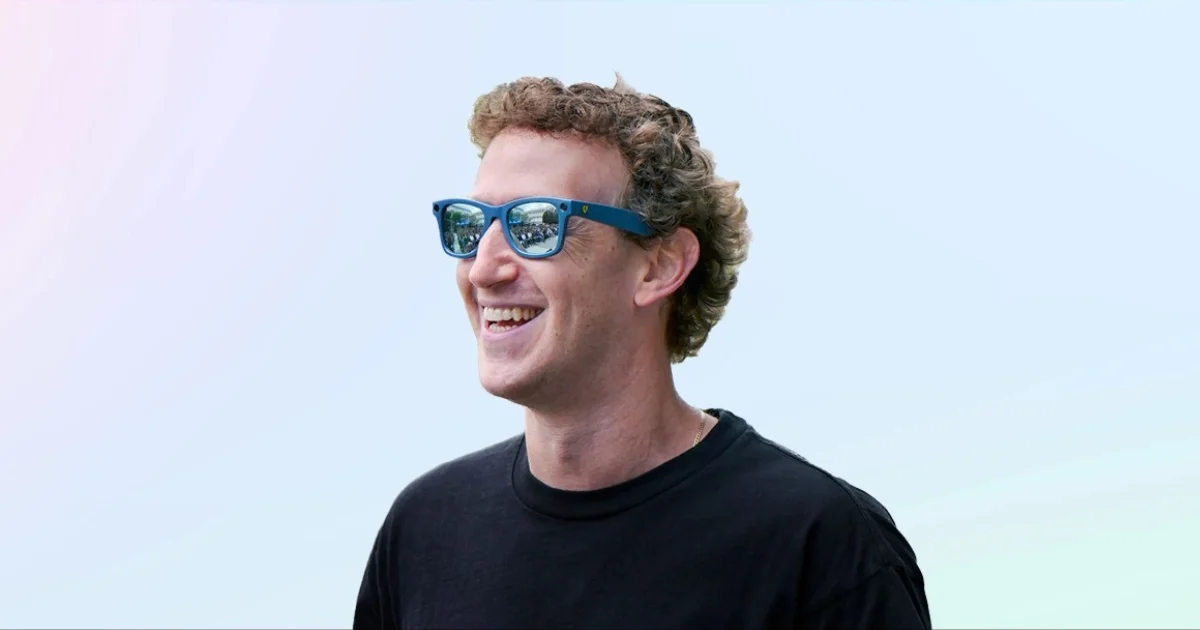
The intersection of high fashion and Silicon Valley reached a new milestone on Thursday as Meta Platforms CEO Mark Zuckerberg and his wife, Priscilla Chan, occupied front-row seats at Prada’s Fall/Winter 2026 Fashion Week show in Milan. The appearance of the social media executive at one of the world’s most exclusive fashion events has intensified industry speculation regarding an imminent partnership between Meta and the Italian luxury house. During the event, Zuckerberg was observed in deep conversation with Lorenzo Bertelli, Prada’s Chief Merchandising Officer and the son of lead designer Miuccia Prada, suggesting that the relationship between the two companies has moved beyond casual networking into strategic territory.
While Zuckerberg has undergone a public-facing aesthetic transformation in recent years—shifting from his signature grey t-shirts to high-end streetwear and tailored pieces—industry analysts suggest his presence in Milan was primarily driven by business objectives rather than a newfound interest in seasonal trends. The visit follows a series of reports and financial disclosures indicating that Meta is aggressively expanding its smart eyewear portfolio to include luxury segments, aiming to bridge the gap between utilitarian technology and high-fashion accessories.
A Strategic Timeline of Meta’s Eyewear Ambitions
The trajectory of Meta’s hardware division, specifically within its Reality Labs segment, has seen a significant pivot from immersive virtual reality headsets toward more socially acceptable augmented reality (AR) and artificial intelligence (AI) powered glasses. The partnership between Meta and EssilorLuxottica, the world’s largest eyewear company and owner of brands like Ray-Ban and Oakley, has been the cornerstone of this strategy.
The collaboration began in earnest in September 2021 with the launch of "Ray-Ban Stories." While the initial product saw modest adoption, the second generation, rebranded as "Ray-Ban Meta," debuted in late 2023 with significantly improved audio, camera quality, and integrated AI features. By June 2025, reports from CNBC and other financial outlets indicated that Meta was looking to diversify its offerings. These reports suggested that both Oakley and Prada versions of the AI glasses were in development.
In February 2026, EssilorLuxottica confirmed the commercial viability of this product category. The company announced that it sold more than 7 million units of AI-integrated glasses in 2025, a substantial leap from the 2 million units sold the previous year. This growth was attributed to the expansion of the product line, which recently included the Oakley Meta glasses—a ruggedized version targeted at athletes and outdoor enthusiasts. The anticipated Prada collaboration represents the final pillar of this market-segmentation strategy: the luxury consumer.
The Prada-EssilorLuxottica Licensing Synergy
The move toward a Prada-branded AI device is bolstered by the long-standing corporate relationship between Prada and EssilorLuxottica. In early 2024, the two entities renewed their licensing agreement for the design, production, and worldwide distribution of eyewear under the Prada and Miu Miu brands. The agreement, which was set to expire at the end of 2025, was extended through December 31, 2030, with a further provision for renewal until 2035.
This ten-year commitment provides a stable framework for Meta to integrate its technology into Prada’s high-fashion frames. For Prada, the collaboration offers a way to maintain relevance among a younger, tech-savvy demographic that increasingly views wearables as status symbols. For Meta, the "Prada" logo provides a level of cultural capital and aesthetic prestige that its own brand—historically associated with software and social media controversies—cannot achieve alone.
Market Analysis: Luxury as a Shield for Technology
The decision to target the luxury market is a calculated move to overcome the "glasshole" stigma that has plagued smart eyewear since the failure of Google Glass a decade ago. By embedding cameras and microphones into frames designed by world-renowned fashion houses, Meta is attempting to normalize surveillance technology by masking it as a high-end accessory.
Luxury goods are often immune to the same price sensitivities and utilitarian critiques as standard consumer electronics. A Prada version of the Meta AI glasses would likely command a significant premium over the $299 starting price of the Ray-Ban models. Analysts suggest that if Meta can successfully position its AI glasses as a "must-have" item on the Milan and Paris runways, it will accelerate the adoption of wearable AI across all demographics.
Furthermore, the integration of Meta’s multimodal AI—which allows users to ask the glasses questions about what they are seeing in real-time—aligns with the luxury consumer’s desire for "concierge" style services. Whether identifying a piece of art or translating a menu in a foreign city, the utility of the device is enhanced by the prestige of the brand.
Growing Public Backlash and Privacy Concerns
Despite the commercial success of the Ray-Ban Meta line, the expansion into luxury fashion comes at a time of heightened public sensitivity regarding privacy and surveillance. The rise of AI-powered wearables has coincided with a broader consumer movement against "always-on" monitoring devices.
In recent months, there has been a documented uptick in incidents involving the destruction of surveillance hardware. Reports have surfaced of homeowners disconnecting or physically damaging Ring doorbells, and activists in several American cities have been seen dismantling Flock license-plate recognition cameras. This climate of skepticism poses a significant challenge for Meta.
The controversy was further fueled by a recent report from The New York Times, which claimed Meta is considering the addition of facial-recognition features to its smart glasses. Such a feature would theoretically allow a wearer to identify a stranger in public and instantly access their social media profile or public data. While Meta has not officially confirmed these plans, the mere possibility has sparked a backlash from civil liberties groups and privacy advocates.
In response to these concerns, the developer community has begun creating "counter-tech" solutions. One such application, recently highlighted by 404 Media, uses specialized sensors to warn users if someone wearing smart glasses is in their immediate vicinity. This digital "arms race" between wearable manufacturers and privacy-conscious consumers could dictate the long-term viability of the Prada-Meta partnership.
Technical Implications and the AI Frontier
The hardware expected to power the Prada AI glasses will likely be an iteration of the Qualcomm-based architecture found in the current Ray-Ban Meta models. However, the 2026 iteration is expected to feature improved battery life and more sophisticated thermal management to allow for longer periods of AI processing without the frames becoming uncomfortably warm.
The software side is where Meta hopes to differentiate itself. The company’s Llama AI models are being optimized for low-latency interactions, allowing the glasses to provide near-instantaneous feedback via the built-in speakers. For a luxury user, this could mean real-time fashion advice, language translation during international travel, or even "augmented" social interactions where the AI provides context about a business contact or acquaintance.
Broader Impact on the Tech and Fashion Industries
The presence of Mark Zuckerberg at Milan Fashion Week signals a permanent shift in how tech giants view their role in the consumer ecosystem. No longer content with providing the platforms on which fashion is discussed, Meta is now seeking to own the physical objects through which fashion is experienced.
This move forces competitors like Apple and Google to reconsider their wearable strategies. While Apple has focused on the high-fidelity, high-cost Vision Pro, Meta is betting that the average consumer—and even the high-end luxury consumer—prefers a device that looks like a traditional pair of glasses.
Industry observers note that if the Prada collaboration is successful, it will likely trigger a wave of similar deals. Brands under the LVMH or Kering umbrellas may feel pressured to seek their own tech partners, potentially leading to a fragmented ecosystem where your choice of AI assistant is determined by your choice of fashion house.
Conclusion and Future Outlook
As of this writing, Meta has not issued a formal statement regarding the specific details of a Prada-branded device or the nature of Zuckerberg’s discussions with Lorenzo Bertelli. However, the evidence—from the 7 million units sold in 2025 to the ten-year licensing renewal between Prada and EssilorLuxottica—points toward a major product announcement in the second half of 2026.
The success of the Prada Meta AI glasses will depend on the company’s ability to balance three conflicting forces: the technical requirements of high-performance AI, the aesthetic demands of the luxury market, and the growing societal demand for privacy. If Meta can navigate these challenges, it may finally succeed in making the "computer on your face" not just a functional tool, but a coveted object of desire.
The tech world will likely look toward the upcoming TechCrunch event in San Francisco this October for further clues. Until then, the sight of the world’s most powerful social media mogul in the front row of a Milanese runway remains the clearest indicator yet of where the future of personal computing is headed.