









In an era increasingly dominated by digital ubiquity and the democratization of filmmaking tools, where a smartphone can theoretically transform anyone into a director of Sean Baker’s calibre, Mark Jenkin stands as a defiant artisan, championing the visceral, tactile experience of old technology. His distinctive approach to cinema, rooted in the analogue realm, has not only carved a unique niche for him but has also garnered critical acclaim and a dedicated following. Jenkin’s 2019 debut feature, Bait, was a powerful testament to this philosophy, shot entirely on scratchy 16mm film using a wind-up Bolex camera from 1976. This grainy, black-and-white portrayal of a Cornish fishing village grappling with gentrification became an instant cult success, culminating in a BAFTA award in early 2020 and personal praise from cinematic titan Quentin Tarantino, who famously dubbed Jenkin "the Bait guy."
Today, as Jenkin embarks on a Q&A tour for his latest feature, Rose of Nevada, he might well be known as "the Bolex guy," a moniker that encapsulates the profound impact of his chosen instrument on his eerie, esoteric aesthetic. The Bolex camera, with its mechanical limitations, is not merely a tool for Jenkin; it is a co-conspirator in his creative process. Its inability to sustain shots longer than 27 seconds – the point at which the camera demands manual cranking – imposes a distinct visual grammar on his films. Rather than relying on conventional, often "lazy" coverage, Jenkin’s work is characterized by a deliberate choreography of purposeful close-ups and an inherent spontaneity, each frame meticulously considered within its brief window. This technical constraint, far from being a limitation, fosters a heightened sense of immediacy and narrative intensity.
Beyond the visual, Jenkin’s sound design further elevates his films into a realm of Lynchian disconnect. He eschews on-set audio recording entirely, crafting the soundscape in post-production. This meticulous, often disorienting approach contributes significantly to the unsettling atmosphere that pervades his work, creating a sensory experience that is both immersive and subtly unnerving. Despite his deep immersion in analogue methods, Jenkin is acutely aware of the contemporary world, often injecting jarring reminders into his films, such as the unexpected appearance of a MacBook in Bait, underscoring the paradox of his anachronistic craft in the modern age.
The Revival of Analog: A New Generation’s Embrace
Jenkin’s embrace of vintage filmmaking techniques, initially perceived as a niche appeal to cinephiles nostalgic for "the good old days of shooting on film," has surprisingly resonated most strongly with a younger demographic. "When I went out with Bait, I thought it was going to be queues of old people wanting to talk about the good, old days of shooting on film," Jenkin recounts during an interview at Picturehouse Central. "But they weren’t there. It was young people with 35mm cameras. They’d come up to me afterwards and ask about Super 8 and 16mm." This observation is not anecdotal; the resurgence of analog photography and filmmaking among Gen Z and millennials is a documented trend. Platforms like TikTok and Instagram are rife with content showcasing users experimenting with film cameras, developing their own prints, and celebrating the imperfections and unique aesthetics of analogue media.
This renewed interest extends beyond mere aesthetics, signifying a deeper cultural shift. In an increasingly digital and ephemeral world, there is a growing appreciation for the tangible, the handcrafted, and the enduring. Young filmmakers, often congregating on social platforms like Letterboxd, are actively seeking out and championing unique cinematic voices that challenge the polished, often homogenized visual language of mainstream digital productions. Jenkin notes, "It’s always flattering when the younger generation, who are always going to be cooler than you, are interested in what you’re doing. Every day, we’re told cinema’s dead, but there’s a whole younger generation that gather on Letterboxd that studios and filmmakers can’t ignore anymore. That’s so exciting." This vibrant community represents a powerful counter-narrative to the prevailing pessimism about the future of theatrical cinema, demonstrating a hunger for diverse, artistically driven storytelling.
"Rose of Nevada": A Hypnotic Horror with a Societal Mirror
Rose of Nevada, Jenkin’s latest offering, marks a significant evolution in his filmmaking journey. Released in April, the film is a hypnotic horror that seamlessly blends elements of time-travel melodrama, currently on a Q&A tour across the UK. Jenkin, a staunch advocate for the communal cinematic experience, who is often spotted as an audience member at 35mm repertory screenings at BFI Southbank, expects Rose of Nevada to broaden his audience significantly. Unlike the monochromatic Bait and his subsequent feature Enys Men, Rose of Nevada is shot in colour, adding a new dimension to his distinctive visual language. Furthermore, the film features bona fide movie stars in George MacKay and Callum Turner, signaling a step towards greater mainstream visibility without compromising his artistic integrity.
The film’s narrative plunges viewers into a ghostly mystery set in a Cornish fishing village that has evidently "seen better days." Nick (MacKay), a struggling family man reliant on a food bank, crosses paths with Liam (Turner), who arrives in Cornwall without prospects. Their lives intersect when they encounter a mysteriously reappeared, long-believed-lost boat. Despite an ominous inscription – "GET OFF THE BOAT NOW" – carved into its wood, they embark on a fishing trip that unexpectedly transports them 30 years back in time to 1993.
Jenkin, who single-handedly wears the hats of writer, director, cinematographer, editor, and composer on his projects, maintains a deliberate ambiguity regarding his artistic intentions. "It’s not a film about fishing," he states, "It’s also not about time-travel, because it’s not reliant on the time slip." However, he is remarkably candid about one overarching message: his film is not romanticizing the past. "There’s no better time to be alive in terms of standard of living, life expectancy, tolerance, and the acceptance of difference," he asserts. While acknowledging societal progress, Jenkin simultaneously uses the time-travel conceit to deliver a potent, albeit subtly rendered, socio-political critique. He avows his intent to "illustrate that without it being a political statement," highlighting the enduring damage wrought by austerity measures in the UK.
Austerity’s Echoes: The Normalization of Food Banks
The stark contrast between 2023 and 1993 in Rose of Nevada serves as a powerful visual metaphor for Jenkin’s commentary on modern societal regressions. Upon their arrival in 1993, Nick and Liam discover a thriving local fishing industry and the building that currently serves as a food bank is, in the past, a bustling post office. This transformation underscores a critical point Jenkin wishes to make about the "normalization of food banks." While acknowledging their vital role, he laments their pervasive presence in contemporary society. "Food banks are good and serve a purpose," Jenkin says, "But the normalisation of food banks is bad. It’s fucking insane that we’re the sixth-biggest economy in the world, and people are relying on food banks. The film flags up that in some ways we’re going backwards."
This sentiment is supported by grim statistics. While food banks existed in the UK in 1993, their scale and necessity were dramatically different. The Trussell Trust, one of the UK’s largest food bank networks, reported distributing 2.9 million emergency food parcels between April 2022 and March 2023, a 37% increase from the previous year and more than double the number five years prior. This explosion in demand, largely attributed to the cost-of-living crisis, stagnant wages, and inadequate social security, starkly illustrates the regression Jenkin points to. The film, therefore, acts as a poignant mirror, reflecting a societal paradox where advanced economic status coexists with widespread poverty and dependence on charitable aid.
Casting and Performance: Nuance in Analog Takes
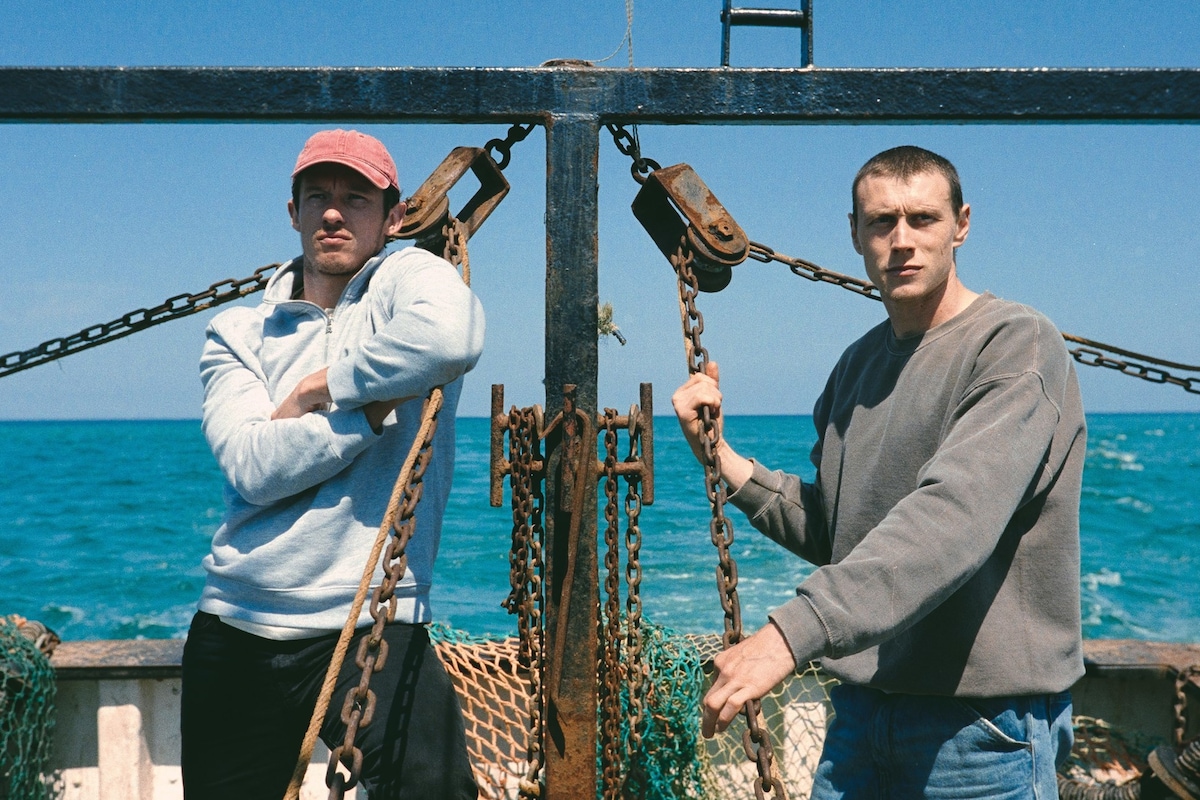
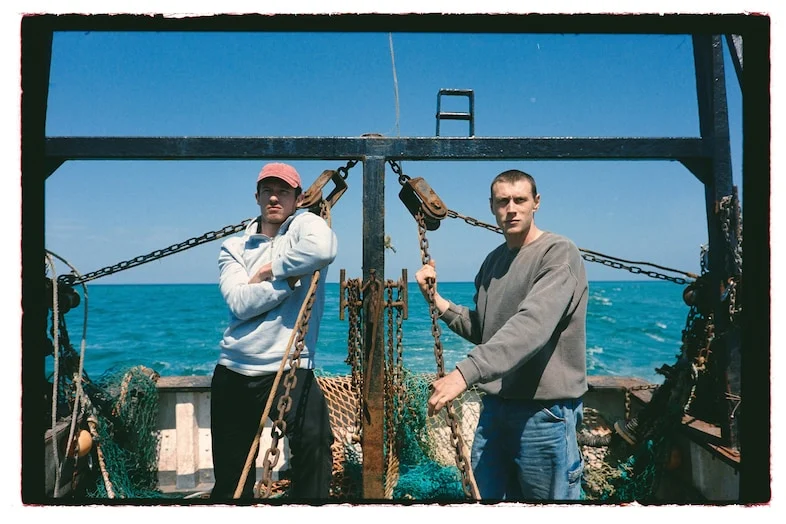
The casting of George MacKay and Callum Turner in Rose of Nevada introduces a dynamic interplay of character and performance. Stranded in 1993, Nick, portrayed by MacKay, is distraught by his distance from his 2023 family, embodying a profound sense of loss and displacement. Conversely, Liam, played by Turner, readily adapts, inserting himself into a new household and effectively usurping a dead man’s life. This dichotomy is central to the film’s emotional core, and the actors deliver nuanced performances that complement Jenkin’s distinctive style.
MacKay, known for his thoughtful, sensitive portrayals in films like The Beast and The End, brings a profound gravitas to Nick. Turner, whose rising star status has even led to speculation about him being the next James Bond, injects Liam with a captivating, rock-star energy. Interestingly, Jenkin initially envisioned MacKay for the role of Liam. "When I [eventually] met Mark, we didn’t talk about the film once," MacKay recalls over Zoom. "We talked about our lives. At the end of that, he said I’d be more right for Nick. And it felt right, because Nick behaves the way he does because he’s trying to do what’s best for his family. I haven’t had a role where that’s been at the character’s core before."
MacKay’s recent personal experiences, having become a father of two, have deeply informed his approach to this role. "In the last few years, I’ve got my own family," the 34-year-old English actor shares. "I’ve matured so much. I just know more. Being a father of two has taught me things about myself. The things I’m still concerned by are no longer that of those younger characters." This personal growth aligns perfectly with the emotional depth required for Nick’s predicament.
Both MacKay and Turner were admirers of Jenkin’s previous works, Bait and Enys Men, and were eager to engage with his idiosyncratic filmmaking methods. The Bolex-enforced rule of one or two takes per shot, a stark departure from the typical multiple-take approach in digital productions, fostered a unique dynamic on set. Jenkin observes that the actors had contrasting approaches: MacKay would meticulously prepare and adhere to his ideas, while Turner might spontaneously devise something new and request a third attempt – earning him the playful moniker "Three-take Turner" from MacKay.
Despite the limited takes, MacKay emphasizes the profound trust built with Jenkin. "You develop a real trust in Mark. If he’s happy with the first take, you move on." He also notes how Jenkin’s sparse writing allows for a multitude of interpretations. "The sparsity of the writing allows for multiple interpretations to be projected onto it, rather than for you to offer a number of definitive interpretations of a line. I knew that a level of neutrality to the delivery would leave it more open to a number of interpretations." Yet, the film’s underlying political statement remains undeniable, as MacKay points out: "The film begins with my character coming into a food bank. It’s set in a world that’s real. That in itself is a political statement: that’s where things are in some places in the UK."
The Philosophy of Ambiguity: Sound, Subconscious, and Lasting Impact
Jenkin’s refusal to explicitly explain his films’ meanings is a deliberate artistic choice, echoing the enigmatic approach of directors like David Lynch. This shared philosophy leads to a tangent about their mutual fascination with Lynch’s work, particularly Laura Palmer’s iconic scream at the end of Twin Peaks: The Return. "Lynch realised you can unsettle an audience with sound in a way you can’t do with visuals," Jenkin explains. "A jump scare is over in a second, and you laugh at yourself. It’s almost impossible to create a visual that’s unsettling for a prolonged amount of time – because our brains make sense of it. But Lynch might have 30 tracks of audio that are naturalistic, and one’s playing backwards. If you don’t know why something’s not right, it’s unsettling."
Jenkin applies this principle in his own work. He cites an example from Enys Men, where the cottage’s ticking clocks are subtly, yet persistently, either too quick or too slow, creating a persistent, subconscious unease. This mastery of sonic manipulation highlights the power of sound in shaping perception and emotion, a facet often overlooked in mainstream cinema.
He also shares a remarkable anecdote about Rose of Nevada‘s post-production. The film was practically complete, save for Callum Turner’s final dialogue, which had been temporarily voiced by Jenkin himself. "Callum came in one day, did his dialogue, we dropped it in, and it changed the entire film. It changed George’s performance. [People thought] we recut it. I was like: ‘No, all we did was replace my voice with Callum’s.’ How the f*** does that happen? It’s supernatural." This experience underscores Jenkin’s profound belief in the mysterious, almost alchemical nature of cinema. "But that’s what cinema does. It’s the greatest art form we’ve ever invented, because it’s so keyed into how our minds and subconscious work. But it’s so sophisticated, I don’t understand how it works."
For Jenkin, the power of film lies in its ability to transcend explicit explanation. He acknowledges the tragic finality of Lynch’s passing and the unlikelihood of a fourth Twin Peaks series. Yet, he finds solace in the enduring legacy of unexplained art. "But now Twin Peaks will play forever because he didn’t explain it. He leaves us to work it out. That’s what I want to do with my films. A film falls to pieces if you explain the meaning. You kill it. If you don’t understand a film in the moment, it carries on once you leave the cinema." This philosophy imbues his films with a lasting resonance, encouraging viewers to engage deeply with the material, to ponder its mysteries, and to allow its unsettling images and sounds to linger in their minds long after the credits roll.
Broader Impact and The Future of Independent Cinema
Mark Jenkin’s distinctive filmmaking, particularly with Rose of Nevada, stands as a powerful counter-narrative to the prevailing trends in contemporary cinema. In an age of "Netflix-ification," where many productions gravitate towards a polished, often uniform aesthetic designed for passive consumption across various devices, Jenkin’s Bolex-shot images offer a stark, poetic, and immediate alternative. His commitment to the raw, imperfect beauty of 16mm film, coupled with his masterful sound design and narrative ambiguity, challenges audiences to actively engage with the cinematic experience rather than merely observe it.
The success of Bait and the anticipation surrounding Rose of Nevada demonstrate that there is a significant appetite for this kind of artisanal, auteur-driven filmmaking. The "younger generation on Letterboxd" that Jenkin mentions is not merely a niche; it represents a growing demographic yearning for authentic, challenging, and unique cinematic voices. Jenkin’s influence is palpable within the independent film community, inspiring others to experiment with analog techniques and to prioritize artistic vision over commercial expediency.
By introducing established stars like George MacKay and Callum Turner and venturing into color cinematography, Rose of Nevada is poised to broaden Jenkin’s appeal without sacrificing the integrity of his vision. It showcases a filmmaker who is evolving, pushing his own boundaries, yet remaining steadfast in his core principles. His films serve as a reminder that cinema, in its purest form, is not just about storytelling, but about creating an experience – one that can be deeply unsettling, profoundly thought-provoking, and ultimately, enduring. As Rose of Nevada continues its journey through cinemas and prepares for its summer release on BFI Blu-ray and BFI Player, Mark Jenkin solidifies his position as a crucial, innovative voice, reminding us of the profound, almost supernatural power of cinema.