









The evocative power of Maria Callas’s voice first captivated Marina Abramović in her grandmother’s kitchen, a moment etched into the artist’s memory as a profound, almost spiritual awakening. As a teenager, Abramović encountered the operatic legend’s plaintive tones emanating from a radio, an experience she later described to Nikolaus Bachler, director of the Bayerische Staatsoper, with vivid recollection: “I remember that I froze. Literally, time stopped, nothing was moving… I put the radio on maximum, and this voice was just filling the space… There was electricity in the air.” This singular auditory experience laid the groundwork for a lifelong fascination, culminating in Abramović’s multidisciplinary opera and art installation, 7 Deaths of Maria Callas, which explores the intertwined themes of love, loss, and the theatricality of death, now on exhibition at Copenhagen’s subterranean Cisternerne Gallery.
The Genesis of an Artistic Obsession
Abramović, renowned globally as the "grandmother of performance art," has consistently pushed the boundaries of physical and mental endurance throughout her career, often turning her own body into the primary medium for exploring pain, identity, and consciousness. Her encounter with Callas’s voice was more than a mere appreciation of musical talent; it was an visceral connection to an artist whose life, much like her own, was marked by profound public and private suffering. The enduring resonance of Callas’s soaring tones and tragic narrative continued to haunt Abramović for decades, evolving into a deeply personal artistic endeavor.
In 2020, this obsession materialized into 7 Deaths of Maria Callas, an opera premiered at the Bayerische Staatsoper. The project saw Abramović not only direct but also perform, embodying seven iconic operatic deaths popularized by Callas. This ambitious work featured original music by Serbian composer Marko Nikodijević, interludes between the famous arias, and striking costumes by acclaimed fashion designer Riccardo Tisci. Six years later, the stirring short films from the opera, starring Abramović and actor Willem Dafoe, are presented in the uniquely atmospheric, crypt-like venue of Cisternerne, a former underground reservoir in Copenhagen, offering a suitably dramatic backdrop for the work’s exploration of demise and emotional intensity.
Maria Callas: The Voice, The Legend, The Tragedy
To fully grasp the depth of Abramović’s homage, one must understand the colossal figure of Maria Callas. Born Maria Cecilia Sophia Anna Kalogeropoulos in New York City in 1923 to Greek immigrant parents, Callas rose to become arguably the 20th century’s most acclaimed opera singer, celebrated for her vocal range, dramatic intensity, and unparalleled stage presence. Known as "La Divina," her voice was a phenomenon – a soprano drammatico d’agilità capable of both shattering high notes and profound emotional depth, famously embellishing even opera’s most melodramatic parts with an added, almost unbearable, pathos. She was instrumental in the revival of bel canto opera, bringing forgotten masterpieces to new audiences with her transformative interpretations.
Callas’s career was defined by iconic performances in roles such as Norma, Violetta in La traviata, Tosca, and Lucia di Lammermoor. Her recordings continue to be revered, demonstrating her meticulous artistry and the sheer power of her expressive capabilities. However, the legacy of her performances became inextricably intertwined with her tumultuous private life, which was as drama-infused as her on-stage roles.
Her infamous affair with the charismatic Greek shipping magnate Aristotle Onassis began in the late 1950s, leading to the dissolution of Callas’s marriage to Giovanni Battista Meneghini. This scandalous relationship captivated the world, but ultimately ended in heartbreak when Onassis abruptly left Callas to marry Jacqueline Kennedy in 1968. Callas remained devoted to Onassis for the rest of her life, a devotion that became a source of profound, public anguish. Following years of relative exile and isolation, her voice having faded and her health compromised by heartbreak and long-term extreme dieting, Callas died of a heart attack in her Paris apartment in 1977, aged just 53. Her death cemented her image as a tragic figure, a prima donna whose life echoed the grand, devastating narratives she so brilliantly brought to the stage.
"7 Deaths of Maria Callas": A Theatrical Journey
Abramović’s 7 Deaths of Maria Callas project meticulously dissects seven of these iconic operatic deaths, drawing parallels between Callas’s fictional demises on stage and the perceived emotional "deaths" she experienced in her personal life. The opera, and subsequently the exhibition, serves as both a tribute to Callas’s artistry and a profound meditation on the universal themes of love, betrayal, and mortality.
The seven deaths explored are:
- Violetta Valéry from La traviata: Dying of consumption, a slow, agonizing farewell.
- Desdemona from Otello: Strangled by her jealous husband.
- Lucia Ashton from Lucia di Lammermoor: Driven to madness and murder, then death, after being forced into a loveless marriage.
- Cio-Cio San from Madama Butterfly: Committing hara-kiri after her American husband abandons her and takes their child.
- Carmen from Carmen: Stabbed by her spurned lover Don José.
- Norma from Norma: Choosing immolation for herself and her lover, Pollione, after her betrayal is revealed.
- Floria Tosca from Tosca: Leaping to her death after her lover Cavaradossi is executed.
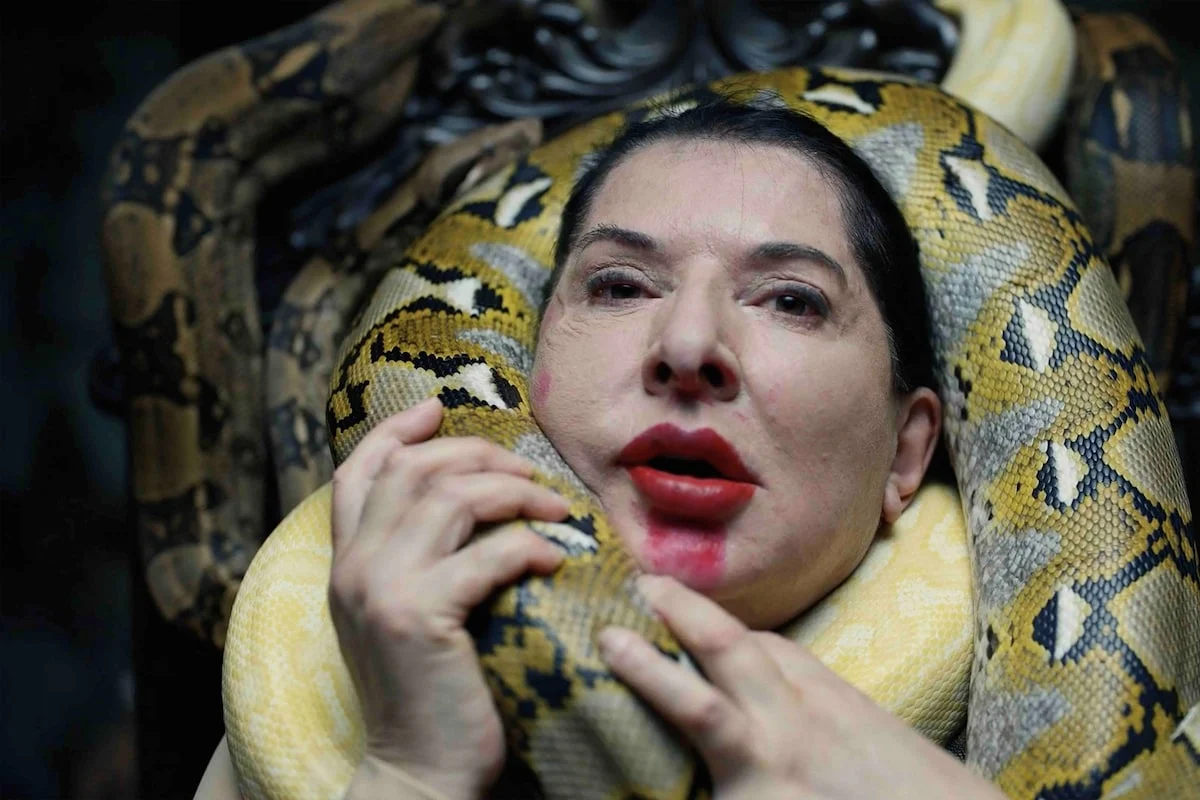
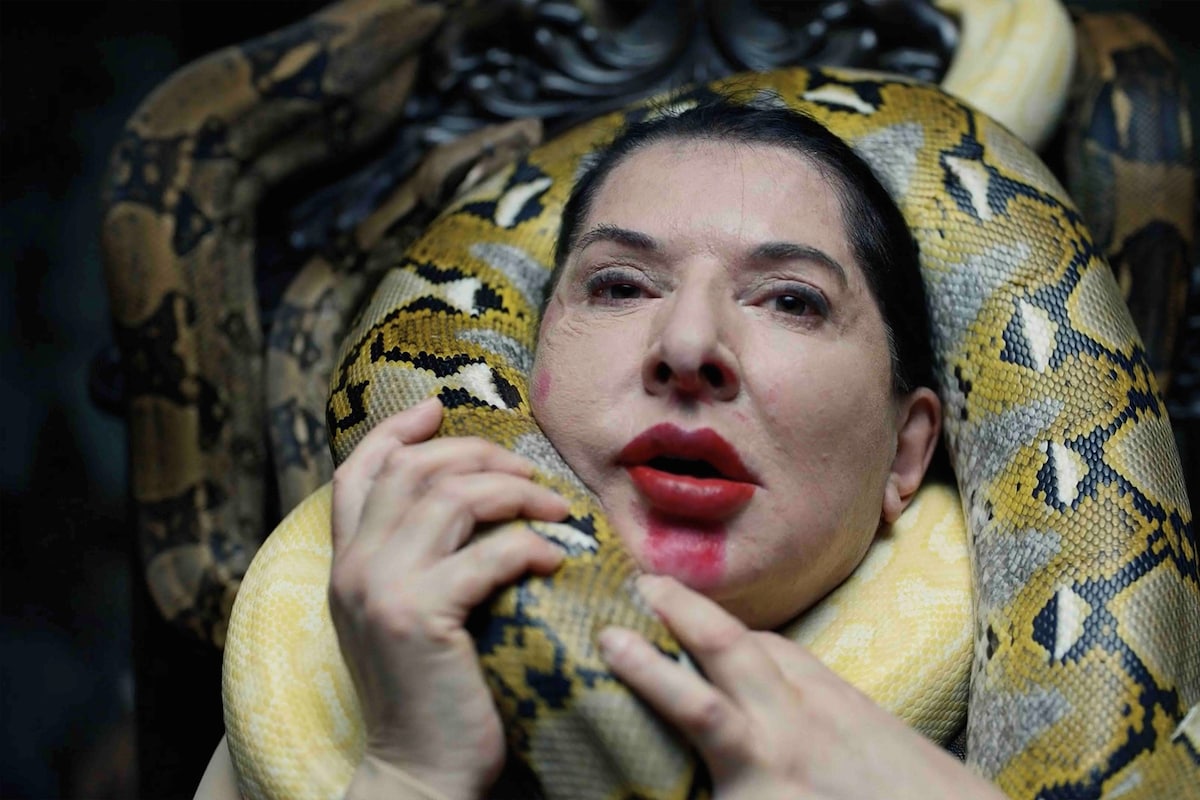
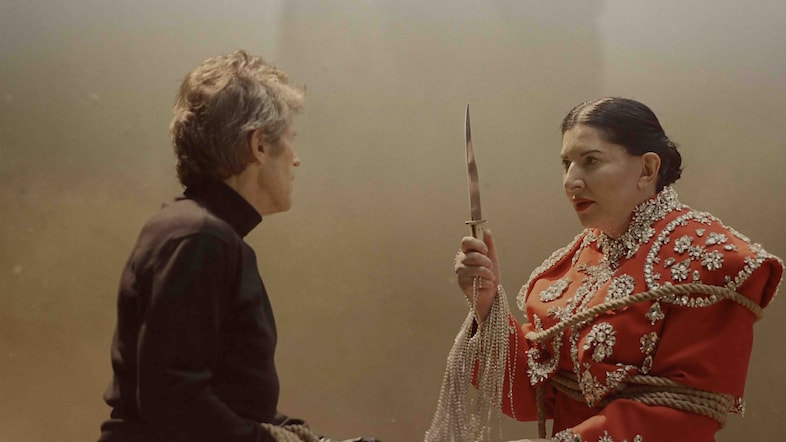
In the short films showcased at Cisternerne, Abramović embodies each of these operatic heroines, performing a lavish and elaborate series of suicides, murders, and demises. These powerful visual narratives are accompanied by Callas’s original, heartrending arias, creating a multi-sensory experience that blurs the lines between performance art, cinema, and operatic tradition. Willem Dafoe, in his role as the arbiter of death, a harbinger of disaster, or an embodiment of heartbreak, observes and sometimes participates in these staged fatalities, adding another layer of dramatic tension and symbolic weight. Each death is meticulously crafted: from a dramatic, drawn-out leap from a skyscraper (Tosca) to the slow, deliberate removal of a radiation suit (perhaps a contemporary take on a lingering illness), a majestic last consumptive gasp (Violetta), and a bouquet of strangulating snakes (a primal, mythical demise). The visual interpretations are contemporary and stark, yet deeply respectful of the operatic source material, pushing the audience to confront the emotional extremes inherent in these stories.
Shared Sensibilities: Abramović and Callas
The resonance between Marina Abramović and Maria Callas extends beyond a simple artistic admiration; it reflects a shared sensibility and a common approach to confronting the discomforting and torturous experiences of life. Both women, in their distinct artistic realms, have embraced heartbreak, physical endurance, and immense personal risk to inhabit the extremes of human emotion and, through their work, explicate them for the wider world.
Callas lived her personal dramas with an operatic intensity, her public life often mirroring the tragic roles she portrayed. Her devastation over Onassis’s desertion was public knowledge, played out in the media and reflected in the increasingly melancholic timbre of her later performances. Similarly, Abramović has famously incorporated her private heartbreaks into her public art. Her iconic 1988 performance, The Lovers: The Great Wall Walk, saw her and her long-term collaborator and lover, Ulay, walk for three months from opposite ends of the Great Wall of China to meet in the middle and formally end their relationship. This immensely grand and respectful gesture, intended as a powerful farewell, was tragically marred by Ulay impregnating his young Chinese guide en route, a public betrayal that echoed Callas’s own experience of being abandoned.
In an interview in 2020, Abramović articulated this profound connection: “I was very much touched by Maria Callas. I had a very similar experience of a broken heart as she did. She died, but I didn’t die, and my work really saved me after that. I’ve always wanted to address this problem, and dying for love is something that is always there. As long as human beings exist, we all die. We all have at least one experience of loving so much that we want to die – or, we don’t die, but we have broken hearts.”
This shared understanding of public heartbreak and artistic catharsis forms the core of 7 Deaths of Maria Callas. Both artists are deeply embodied in their practices, using their very beings to channel and express profound emotional states. There is a raw, sensual, and emotionally charged quality to both women’s work, inviting audiences into a deeply personal, often uncomfortable, yet ultimately transformative space.
The Cisternerne: A Subterranean Stage
The choice of Cisternerne in Copenhagen for this exhibition is particularly poignant. This former underground reservoir, with its vast, cavernous spaces, dripping stalactites, and perpetual twilight, offers a uniquely atmospheric and crypt-like venue. Once a vital part of Copenhagen’s water supply, the space now serves as an exhibition hall for contemporary art, its damp, cool environment and echoing acoustics lending an ethereal quality to any presentation.
The subterranean setting enhances the themes of death, descent, and introspection central to Abramović’s work. The vaulted ceilings and endless corridors create a sense of timelessness and solemnity, allowing the audience to fully immerse themselves in the weighty narratives of love, loss, and sacrifice. The natural humidity and dim lighting imbue the films with an almost dreamlike quality, blurring the lines between reality and the staged operatic deaths. It transforms the viewing experience from passive observation into an active, almost ritualistic engagement with the material, mirroring the immersive and often challenging nature of Abramović’s live performances.
Broader Implications and Legacy
Where Callas ultimately succumbed to the grief of heartbreak, Abramović found restoration and catharsis through her work. This exhibition is not merely a recounting of tragic operatic narratives or a biographical tribute; it is an exploration of resilience and the transformative power of art. Abramović hopes that audiences can find a similar path to healing when they experience these films. “It’s very romantic, but, at the same time, it needs to be cured. When you make something about your broken heart, and you go through these heavy emotions, you come out the other side healed. Healing is very important to me. One of the effects of this work should be that humans can always project their own feelings into this project, and they can heal. The broken heart takes time, but you can come to heal on the other side.”
In a statement accompanying the Cisternerne exhibition’s opening, the eminent performance artist encapsulated the core message: “In opera as in life, death is stronger, love becomes absolute, pain becomes unbearable. It is not about dying once, it’s about dying many, many times. You die many times in life and yet you continue living. You give me your time, and I will die for you, seven times.” This statement underscores the philosophical depth of the work, suggesting that emotional "deaths"—the end of a relationship, the loss of a dream, profound grief—are recurring experiences in human life, and art can be a means to process and transcend them.
7 Deaths of Maria Callas stands as a powerful testament to the enduring legacy of two extraordinary women: one, a vocal icon whose life became a tragic opera; the other, a performance art pioneer who transmutes suffering into profound artistic expression. By intertwining their narratives, Abramović not only pays homage to Callas but also reinforces her own artistic mission: to confront the extremes of human existence, to transform pain into purpose, and to offer a path toward healing through the shared vulnerability of performance. The exhibition at Cisternerne offers a rare opportunity to witness this deeply personal and universally resonant work, inviting introspection into the nature of love, loss, and the eternal possibility of rebirth through artistic catharsis.
Marina Abramović: Seven Deaths is running at Cisternerne in Copenhagen until 30 November 2026.