










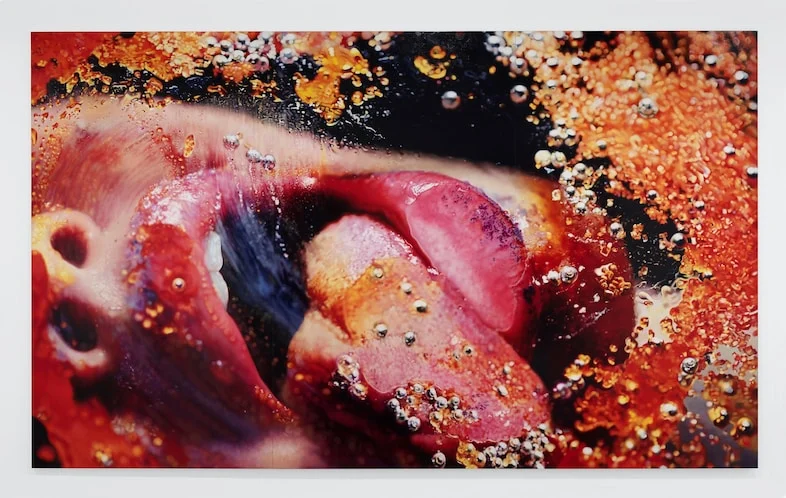
The acclaimed artist Marilyn Minter, whose provocative body of work has consistently challenged societal norms around beauty, sexuality, and aging for over five decades, is set to be honored this summer at the Anderson Ranch Arts Center. This recognition comes as Minter continues to produce art that seduces and confronts, cementing her status as a vital voice in contemporary art, even as the landscape for arts funding faces renewed threats reminiscent of past culture wars. Her career, marked by periods of condemnation, resilience, and eventual canonization, offers a compelling narrative of an artist committed to her unique visual language.
A Career Forged in Fire: Decades of Provocation
Marilyn Minter is an artist who has navigated the tumultuous waters of the art world, emerging with an unflinching resolve. Her paintings, photographs, and videos, characterized by their lush, often visceral portrayal of the human form and its desires, have spent decades simultaneously offending and captivating audiences and critics. This journey began in earnest with works that deliberately pushed boundaries, earning her both scorn and admiration.
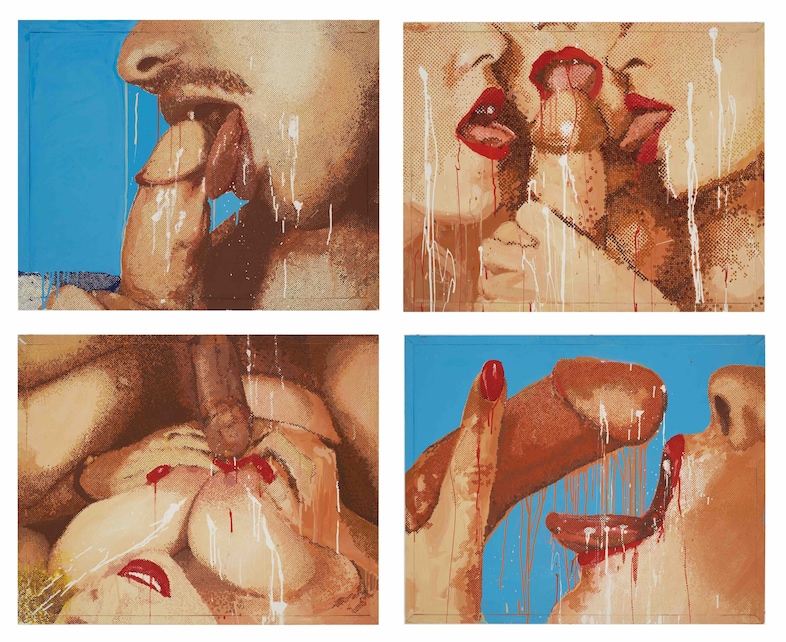
One of Minter’s earliest and most impactful series was Porn Grid, created in the late 1980s and early 1990s. This series of enamel-on-metal paintings meticulously rendered X-rated images sourced from pornographic magazines. At a time when the feminist movement was deeply divided on the issue of pornography, Minter’s work found itself at the epicenter of a heated debate. Critics, influenced by prominent anti-porn feminists like Andrea Dworkin and legal scholar Catharine MacKinnon, accused Minter of complicity in the very patriarchal imagery she claimed to subvert. Dworkin and MacKinnon’s influential arguments posited that all sexually explicit imagery, regardless of artistic intent, inherently harmed women by perpetuating objectification and inequality. Minter’s engagement with these images, rather than a clear denunciation, was seen by some as an endorsement, leading to significant professional repercussions. She openly recalls how profoundly this period damaged her standing in the art world, leading to cancelled gallery affiliations and institutional exclusion. A notable instance was her omission from Marcia Tucker’s landmark 1994 exhibition Bad Girls at the New Museum, a show intended to highlight transgressive feminist art, where Minter’s work was deemed too explicit even for that context. Despite the professional ostracization, Minter persisted, a testament to her steadfast dedication to her artistic vision.
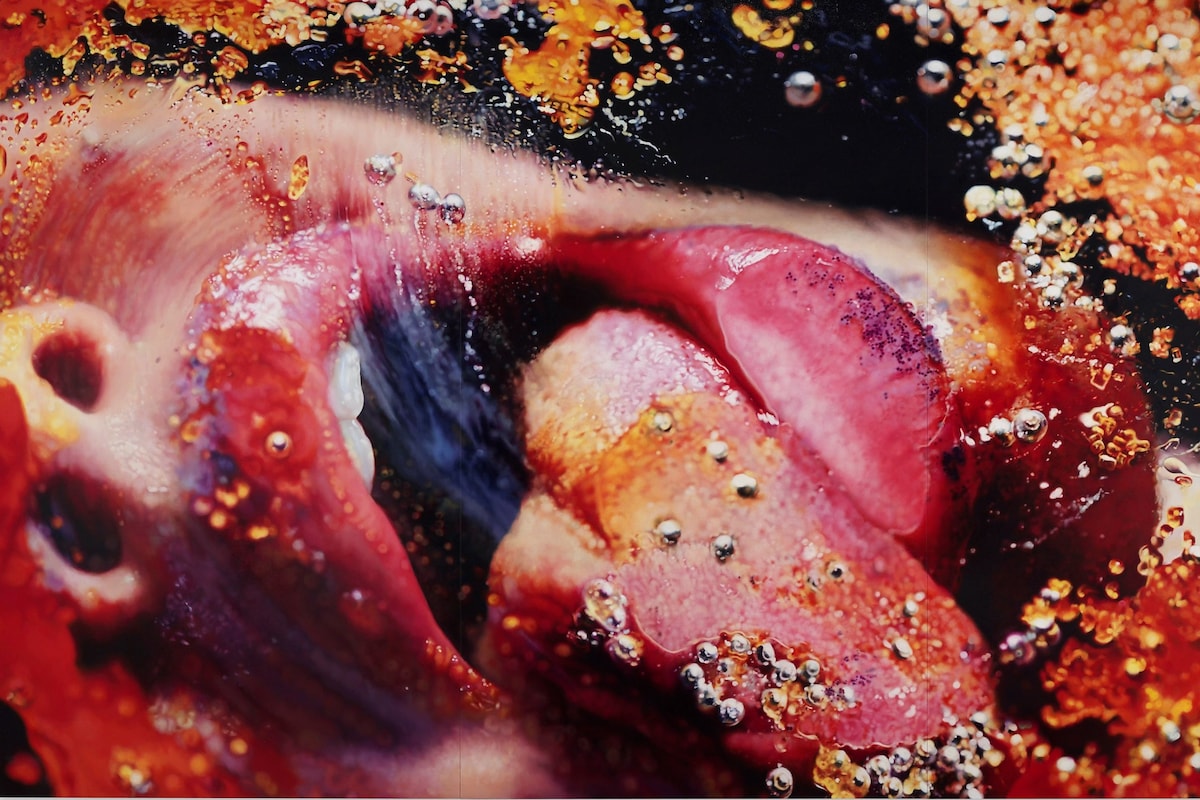
Years later, Minter continued her exploration of the female form and societal expectations with Plush (2014). This series of archival inkjet prints presented extreme close-ups of female pubic areas, transforming them into rich, textured landscapes. The series was originally commissioned by Playboy magazine, an institution long associated with a highly controlled, idealized, and male-gaze-driven fantasy of the female body. However, Playboy ultimately rejected Minter’s images, finding them "too feral" and "insistently frank." This rejection underscored Minter’s ability to create work that even commercial giants, built on sexual imagery, found challenging to assimilate. The series eventually found a home when Richard Prince’s press published it in a limited edition of 500 in 2014, selling out within a week – a clear indication of its powerful appeal and the existence of an audience hungry for such raw, unvarnished representation.
Minter’s long-standing interest in depicting subjects outside approved fantasies extended into her Elder Sex series (2022). Initially commissioned by New York Times Magazine, the project expanded into a full body of work exhibited at the LGDR gallery in 2023. This series features couples over the age of 70, stripped to lingerie or briefs, engaged in acts of intimacy: hugging, kissing, and caressing. The images, shot through textured or frozen glass, deliberately highlight the authentic textures of aging bodies—wrinkles, flesh, and unmistakably, desire. One striking image depicts a woman adorned in pearls and red nail polish, wielding a sex toy, boldly asserting pleasure and agency in later life. As with much of her work, the core objective of Elder Sex is not novelty but visibility, turning the artistic gaze toward intimacy, pleasure, and glamour in realms that polite society often prefers to ignore or deem unsuitable for public display. This consistent defiance of aesthetic and social conventions has, over more than five decades, led to Minter’s work being acquired by prestigious institutions such as the Museum of Modern Art (MoMA), the Solomon R. Guggenheim Museum, and the Whitney Museum of American Art, among many others, a clear sign of her enduring significance and eventual critical embrace.
Anderson Ranch Arts Center: A Sanctuary for Creativity Amidst Shifting Tides
Marilyn Minter’s upcoming honor at the Anderson Ranch Arts Center this summer is more than just a personal accolade; it highlights the critical role of independent arts institutions in a perpetually challenging cultural and political climate. When interviewed, Minter, speaking from her New York home amidst the sounds of her husband preparing for yoga and two rescue dogs, expressed a profound appreciation for the Ranch. She described it as "a unique little universe of ideas and creativity and freedom," unlike anywhere else she has experienced.
Founded in 1966 by ceramic artist Paul Soldner on a former sheep ranch outside Aspen in Snowmass Village, Colorado, Anderson Ranch operates on a simple yet powerful premise: artists flourish when allowed to converge, collaborate, and create in a secluded environment, removed from the commercial pressures of the market, the distractions of urban life, and the constant hum of external noise. Minter first encountered the Ranch in 2014 when she introduced fellow artist Catherine Opie as a featured artist. It was there that Minter witnessed Opie engaging with ceramics, a quieter, less public facet of her practice—precisely the kind of exploration the Ranch is designed to facilitate. For Minter, who endured decades of her work being policed and censored, a space like Anderson Ranch is not merely a retreat; it is a vital haven from the gatekeepers and the often-restrictive machinery of the mainstream art world.
However, this unique universe of creative freedom, like many arts organizations, finds itself increasingly reliant on private support in an era of dwindling public arts funding. Minter, ever the realist, voiced concerns about the current political landscape, specifically referencing the ongoing threats to federal arts endowments. She noted, "We’ve got this horrible fascist losing his mind, who is not going to support any art he doesn’t understand or agree with." This statement directly addresses the proposed fiscal 2026 budget by the Trump administration, which called for the elimination of both the National Endowment for the Arts (NEA) and the National Endowment for the Humanities (NEH). While Congress has historically pushed back to preserve some level of federal support, the threat remains palpable and underscores the precarious position of arts funding in the United States.
Minter, the 28th recipient of the Ranch’s International Artist Award, possesses a keen historical perspective on these battles. She vividly recalls the "culture-war" attacks of the late 1980s and 1990s, a period when conservative figures like Senator Jesse Helms launched concerted campaigns against federally supported art deemed "obscene." These attacks led to the revocation of NEA grants, efforts to shut down Robert Mapplethorpe’s The Perfect Moment retrospective, and the condemnation of Andres Serrano’s Piss Christ on the Senate floor. Minter plainly states that Helms "dried up the National Endowment for the Arts," observing grimly, "It repeats." This cyclical nature of ideological conflict impacting artistic expression and its funding forms a crucial backdrop to her enduring career and the value of institutions like Anderson Ranch. Despite these recurring challenges, Minter firmly believes in the inherent power and resilience of fine art. For her, art has always been about breaking rules, and it can only be suppressed to a certain extent. "I’ll never get along with people who want art to be about landscapes," she asserts, implying that the avant-garde and the challenging will always find a way.
Resilience and Reimagination: Minter’s Enduring Legacy
Marilyn Minter’s journey from vilification to canonization is a powerful testament to artistic persistence and the shifting tides of cultural acceptance. Her ability to survive and thrive across decades of "cultural whiplash"—first embraced, then vilified, and now widely recognized as foundational—speaks volumes about her artistic integrity. The very explicit nature of her work, which once led to her being marginalized, is now celebrated for its pioneering role in feminist discourse and its unwavering gaze at subjects often deemed taboo.
The trajectory of Minter’s career, from the condemnation surrounding Porn Grid in 1989 to her current status as an indispensable figure in contemporary art, is meticulously documented in Pretty Dirty: The Life and Times of Marilyn Minter. This acclaimed documentary traces her five-decade rise, periods of exile, and eventual return to prominence, featuring insights from cultural luminaries like Jane Fonda, Monica Lewinsky, and Lizzo. The film itself serves as a crucial artifact, illustrating how Minter navigated the complex interplay between artistic vision and public perception, ultimately emerging as a resilient and influential force. Minter herself reflects on this arduous path, stating, "I don’t think you have any choice. You just make your work from loving it, or you get broken." She acknowledges the casualties of such battles, noting, "I know artists who have been broken by culture… But they were the poster child for rebellion, and it destroyed them." Her own resilience, at 77, still actively creating new work, provoking dialogue, and showing up, underscores a deep-seated commitment that transcends fleeting trends or critical consensus.
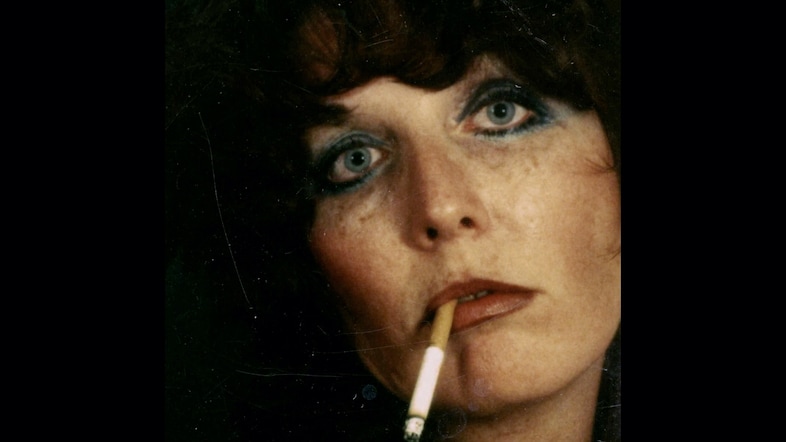
A central conviction that Minter returns to again and again, almost theological in its certainty, is that "All art comes from pain. I’ve never seen an exception. People come from a challenging lot, and they make art. Those are the ones that become good artists." Her own biography powerfully illustrates this point. In 1969, as an undergraduate at the University of Florida in Gainesville, Minter presented proof sheets of her photographs during a critique session led by the iconic Diane Arbus, despite not being officially enrolled in the class. Arbus, known for her own unsettling portrayals of society’s marginalized, was singularly impressed by Minter’s raw, black-and-white studies of her aging mother. These images depicted a Southern belle, smoking and dyeing her eyebrows in bed, braless in her nightgown, liver spots visible on her arms, with something hauntingly spectral in her eyes, staging herself against a backdrop of domestic decay. These unsettling portraits, which Minter titled Coral Ridge Towers after her mother’s Florida apartment complex, remained unprinted for twenty-five years. Yet, in retrospect, they can be seen as the psychic and visual source code for much of her subsequent work, laying the groundwork for her fearless exploration of vulnerability, beauty, and the uncomfortable truths of the human condition.
Minter’s career offers a profound, if unvarnished, lesson: artistic institutions can be fickle, critical language is subject to change, and moral certainties often age poorly. However, artists who meticulously build a genuine visual language, rooted in deep conviction and unflinching observation, will ultimately outlast those who attempt to discipline, censor, or confine it. Her trajectory exemplifies how an artist’s commitment to challenging established narratives can, over time, transform initial outrage into lasting critical acclaim and cultural significance.
Upcoming Events and Continued Engagement
The Anderson Ranch Arts Center’s 2026 summer program promises a vibrant array of activities, including 150 workshops designed for all skill levels. The highlight, Ranch Week, runs from July 13–18. During this period, Marilyn Minter will engage in a public conversation with Lisa Phillips, the esteemed director of the New Museum, on July 14, offering unique insights into her extensive career and artistic philosophy. The celebratory Ranch Gala honoring Minter is scheduled for July 15. All public events are free, and interested individuals can register for participation and attendance via the Anderson Ranch website. Concurrently, Pretty Dirty: The Life and Times of Marilyn Minter, the documentary chronicling her five decades of influential art practice, will be screened, providing a cinematic companion to the ongoing celebration of her impactful work.