









Acclaimed Japanese animation director Mamoru Hosoda, a visionary known for pushing the boundaries of the medium, unveils his eighth and newest film, Scarlet, an ambitious fantasy-thriller that not only reworks Shakespeare’s Hamlet but also represents a significant evolution in his artistic and technical approach to filmmaking. At 58, Hosoda continues to captivate global audiences, moving beyond the predominantly hand-drawn aesthetic of his early career towards a sophisticated hybrid animation style that marries traditional 2D artistry with cutting-edge 3D computer graphics (3DCG). This shift, prominently featured in Scarlet, is not merely a technical choice but a deliberate artistic statement, aimed at enriching narrative depth and updating the very language of animation for contemporary storytelling.
A Director’s Evolving Vision: From Hand-Drawn Narratives to Hybrid Worlds
Mamoru Hosoda’s trajectory in the anime world has been marked by a consistent drive for innovation and a deeply personal touch. Early in his career, he garnered widespread acclaim with films like 2012’s Wolf Children, an anime fairy tale celebrated for its intricate hand-drawn animation that brought to life a poignant story of motherhood and familial bonds. This film exemplified the beauty and emotional resonance achievable through traditional animation techniques, earning critical praise and solidifying Hosoda’s reputation as a master storyteller.
However, as the animation landscape evolved and digital tools became more sophisticated, Hosoda’s filmmaking philosophy also began to shift. He explicitly notes this change, telling Dazed, "Compared with the time when I made Wolf Children, my own thinking on filmmaking has changed, and my approach to CG and spatial design have also evolved considerably. So I do not think I would make it in exactly the same way." This statement underscores a director who is not content to rest on past successes but is continuously exploring new avenues for expression.
The fruits of this evolving perspective were vividly demonstrated in his 2021 sci-fi fantasy, Belle. In Belle, Hosoda expertly contrasted two distinct realities: a young girl’s grounded, real world, depicted with the familiar warmth and detail of hand-drawn animation, and her virtual adventures within the metaverse, which exploded onto the screen through expansive and dynamic 3DCG. This deliberate juxtaposition served a crucial narrative purpose, highlighting the distinct qualities and emotional experiences of each realm. The success of Belle, which earned significant box office revenue globally (over $60 million worldwide) and critical acclaim, further validated Hosoda’s innovative hybrid approach, demonstrating its potential to resonate with a broad international audience.
Looking back, Hosoda acknowledges that while a hypothetical 2026 version of Wolf Children might incorporate new techniques, its core emotional essence—the quiet accumulation of tangible time, the growth of children, the changing seasons, and a mother’s journey—would remain paramount, transcending mere technical innovation. Yet, for films like Belle and now Scarlet, he finds hybrid techniques particularly effective in depicting the "expansiveness of another world or psychological fractures," suggesting that the choice of animation style is deeply intertwined with the story’s emotional and thematic demands.
The Genesis of Scarlet: A Modern Hamlet with a Timely Message
Scarlet stands as Hosoda’s latest and perhaps most ambitious undertaking, a testament to his forward-thinking vision. This action-heavy fantasy-thriller reimagines William Shakespeare’s iconic tragedy Hamlet, transposing its core elements into a vibrant anime narrative set in 16th-century Denmark, yet infused with contemporary sensibilities. The audacious choice to adapt one of Western literature’s most revered plays, particularly by a Japanese anime director, immediately positions Scarlet as a significant cultural bridge.
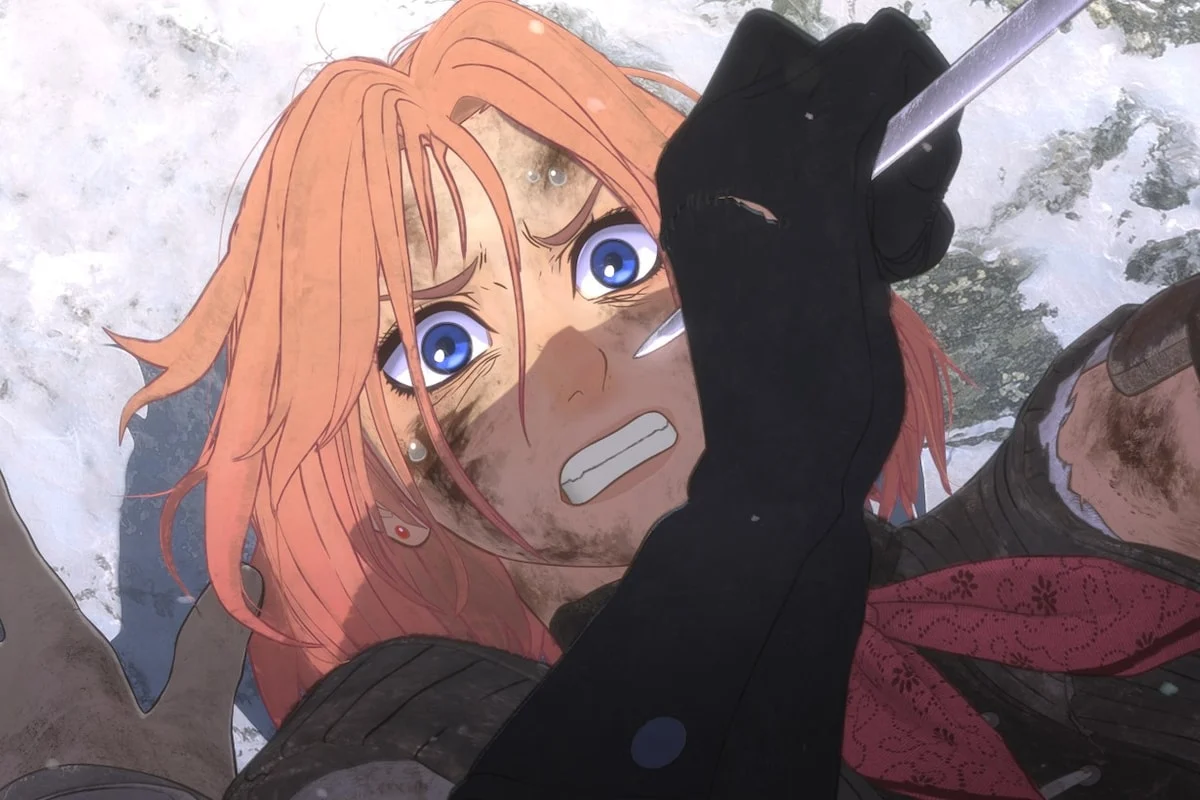
At the heart of Hosoda’s Hamlet reinterpretation is Princess Scarlet, a red-haired protagonist who takes on the mantle traditionally held by the Prince of Denmark. In the hand-drawn realm of Elsinore, Scarlet embarks on a quest for vengeance against her uncle, Claudius, whom she suspects of murdering her father, King Amleth. This initial premise aligns closely with the original play’s inciting incident. However, Hosoda introduces a radical departure: when Claudius poisons Scarlet, the sword-trained teen is not simply overcome but instead thrust into the "Otherworld."
This Otherworld is where Scarlet truly unfurls its innovative wings. Animated entirely with modern 3DCG technology, it is a dizzying purgatory, a realm of epic, fantastically detailed landscapes that contrast sharply with the grounded reality of Elsinore. Here, musical numbers take on a contemporary flair, and sequences featuring a flying dragon shooting lightning bolts across the frame showcase the spectacular capabilities of digital animation. This dual-world structure, mirroring Belle‘s distinction between the real and virtual, is central to Scarlet‘s visual and thematic identity.
Hosoda explains his artistic rationale: "I believed that a film must have a sense of scale that matches the size of its story. As a basic visual structure, the world in which Scarlet lives in reality is depicted through hand-drawn 2D animation, while the Otherworld is constructed entirely in 3DCG." He emphasizes that this wasn’t merely about creating a "hybrid form" but about "updating the language of animation itself." For Hosoda, the decision to combine 2D and 3D was not a gimmick but "the result of considering how to convey the distinctiveness in emotions and spaces to the audience’s physical senses," ensuring that the animation style directly enhances the emotional impact and narrative clarity.
Technical Innovation and Artistic Intent: Blending Realities
The strategic deployment of 2D and 3D animation in Scarlet is a sophisticated narrative tool. The hand-drawn Elsinore evokes a sense of traditional grandeur and historical weight, grounding Scarlet’s initial motivations in a tangible, relatable reality. This traditional aesthetic pays homage to both classical animation and the historical setting of Shakespeare’s play. By contrast, the 3DCG Otherworld provides a canvas for boundless imagination, allowing for fluid camera movements, complex environmental details, and dynamic action sequences that would be exceedingly challenging, if not impossible, to achieve with traditional 2D alone.
This approach is reflective of a broader trend in the global animation industry, where studios increasingly leverage the strengths of both mediums. While purists might argue for the sanctity of hand-drawn animation, a growing number of creators, particularly in Japan, are embracing hybrid techniques to expand their storytelling capabilities. Hosoda, through Studio Chizu (which he co-founded in 2011 and has produced all his films from Wolf Children onwards), is at the forefront of this movement, demonstrating how 3DCG can complement, rather than replace, traditional artistry. The intricate detailing of the Otherworld’s landscapes and the contemporary choreography of its musical numbers are examples of how 3DCG pushes the visual envelope, creating a truly immersive and spectacular experience. The lightning-shooting dragon, a visual flourish typical of modern fantasy, gains immense impact through the dynamic capabilities of 3DCG, making its presence electrifying and memorable.
Hosoda’s Enduring Themes: Empowering Female Protagonists
Beyond the technical brilliance, Scarlet also delves deep into themes that have consistently defined Hosoda’s filmography. He has specialized in narratives featuring young protagonists, from the time-traveling schoolgirl in The Girl Who Leapt Through Time (2006) to the maths geeks of Summer Wars (2009) and the complex family dynamics in Mirai (2018), which notably became the only non-Studio Ghibli anime to receive an Oscar nomination.
A fundamental motivation for Hosoda, deeply rooted in his personal life, is the depiction of the world his daughter will inhabit. "I have a daughter, and the question of how I depict the world she will live in is always one of the fundamental motivations behind my work," he shares. This personal commitment translates into a conscious effort to challenge traditional narrative structures that may have marginalized certain groups. Both Belle and Scarlet exemplify this, presenting protagonists who actively choose their own paths in life.
Hosoda aims to portray female characters not as infallible heroines, but as complex individuals who "are hurt, who hesitate, who fail, and yet, still strive to find their own voice." He believes that "that process is where human reality lies." This philosophy underpins Scarlet’s journey, making her a more relatable and compelling figure than a simple gender-swapped Hamlet.
The choice of Scarlet as a red-haired princess carries symbolic weight. While it visually represents anger, a driving force for her character, Hosoda also references Queen Elizabeth I, the "red-haired queen," subtly linking Scarlet to a historical figure of power and resilience. Hosoda clarifies that Scarlet is more than just a gender-swapped Hamlet. By making a young woman the protagonist, he felt the story could explore not just revenge, but a deeper existential question: "Whose story do you choose to live your life as?" Unlike Hamlet, burdened by a royal destiny, Scarlet, as a princess, faces the unique vulnerability of having her voice suppressed even within structures of power. This is precisely why Hosoda wanted her story to be one where, "through her anger and sorrow, she ultimately chooses how to live." This choice, he asserts, is not a defiance of Shakespeare but an attempt to "bridge his era and the modern age, discovering the essence of Hamlet in a new form."
The Philosophy of Forgiveness: A Radical Reinterpretation of Hamlet
Perhaps the most radical departure in Hosoda’s Scarlet lies not in its gender-swapped protagonist or its hybrid animation, but in its profound reinterpretation of Hamlet‘s core theme of revenge. Scarlet, after training herself with an intensity reminiscent of Uma Thurman’s character in Kill Bill, teams up with a nurse, Hijiri, in the Otherworld. Their quest involves battling monsters, criminals, and even familiar Shakespearean figures like Rosencrantz and Guildenstern, all in pursuit of Claudius.
However, a pivotal plot twist reveals that Scarlet’s father’s dying wish was not for vengeance, but for forgiveness. This revelation transforms Scarlet from a tale of retribution into a narrative centered on compassion, a stark contrast to the vengeful spirit that defines much of the original Hamlet. This shift raises a critical question about the relevance of revenge as a human emotion in contemporary storytelling.
Hosoda addresses this directly, stating, "In my view, Hamlet itself is not only a revenge tragedy, but also a work that gestures toward forgiveness beyond revenge." He argues that in real life, even if revenge is achieved, "what has been lost does not truly return. Defeating the other person does not suddenly heal everything in that instant. In many cases, the emptiness that remains afterwards can be even greater." He finds depicting revenge without confronting this reality "somewhat irresponsible in the context of our current times."
He further clarifies the often-misunderstood concept of forgiveness: "It does not mean to simply let everything be forgotten, nor does it mean pretending that the other person’s wrongdoing never happened." Instead, Hosoda acknowledges that anger is a valid emotion, especially for young people, but he emphasizes how thoughts of retribution can imprison an individual.
In a world seemingly caught in endless cycles of retaliation and conflict, where many feel resigned to conflict as "simply human nature," Hosoda posits a different path. He suggests that while everyone wishes for peace, true cessation of conflict might not begin with grand slogans but "quietly, when each individual realises that their own life matters more than revenge." Scarlet, therefore, is not the story of a hero saving the world, but "the story of a single girl who chooses to reclaim a life not defined by revenge." This message of personal agency and the profound choice for forgiveness resonates deeply in a global landscape grappling with persistent conflicts and societal divisions.
Broader Impact and Legacy
Mamoru Hosoda’s standing as one of the leading figures in anime is undeniable. His brief association with Howl’s Moving Castle before Hayao Miyazaki took over speaks volumes about his early potential. With Studio Chizu, he has fostered an environment for creative freedom and technological exploration. His consistent ability to blend deeply personal narratives with visually stunning animation has garnered him numerous accolades and a dedicated international fanbase.
Scarlet, with its bold narrative choices and sophisticated animation techniques, is poised to further solidify Hosoda’s legacy as an innovator. It challenges conventions not only within the anime genre but also in how classic literature can be reinterpreted for modern audiences. By engaging with profound themes like vengeance, forgiveness, and personal identity through the lens of a powerful female protagonist and a groundbreaking visual style, Hosoda invites audiences to reflect on timeless human struggles in a fresh and compelling manner.
The film’s exploration of hybrid animation is likely to influence future anime productions, demonstrating the artistic potential of combining traditional hand-drawn aesthetics with the dynamic capabilities of 3DCG. This integration reflects a growing maturity in the industry’s approach to technology, moving beyond simply adopting new tools to thoughtfully applying them in service of storytelling.
As Scarlet arrives in cinemas, it represents more than just a new animated feature; it is a statement on the evolving art of animation, the enduring power of classic narratives, and the urgent need for messages of compassion in a complex world. Mamoru Hosoda continues to inspire, proving that the question is not "2D or not 2D," but how best to blend every available artistic tool to tell stories that resonate deeply and provoke thought.