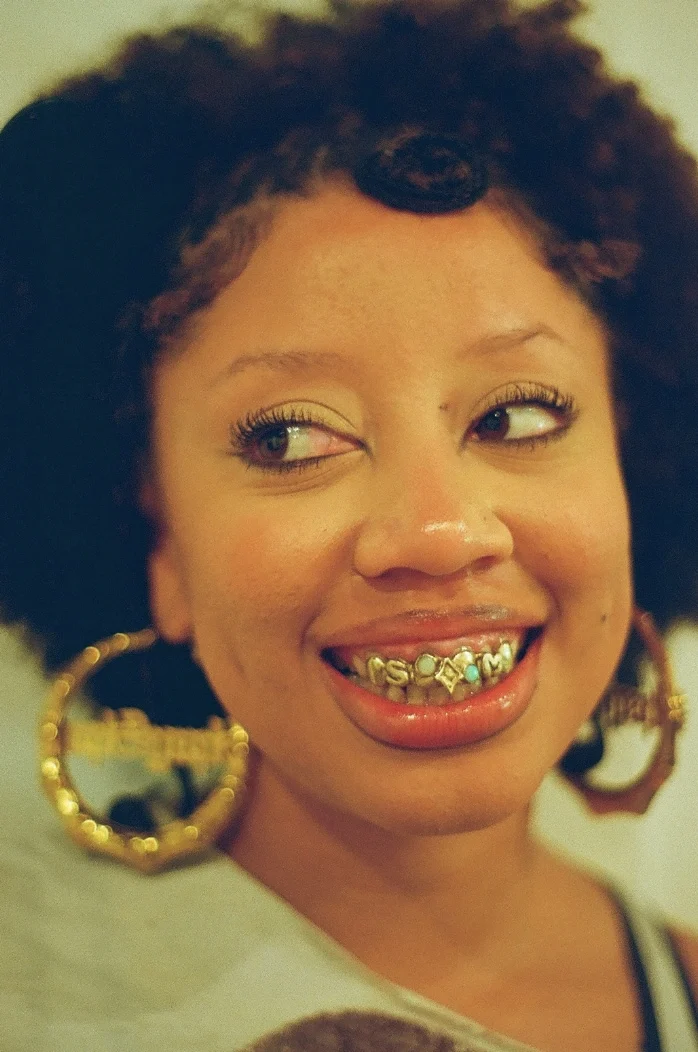







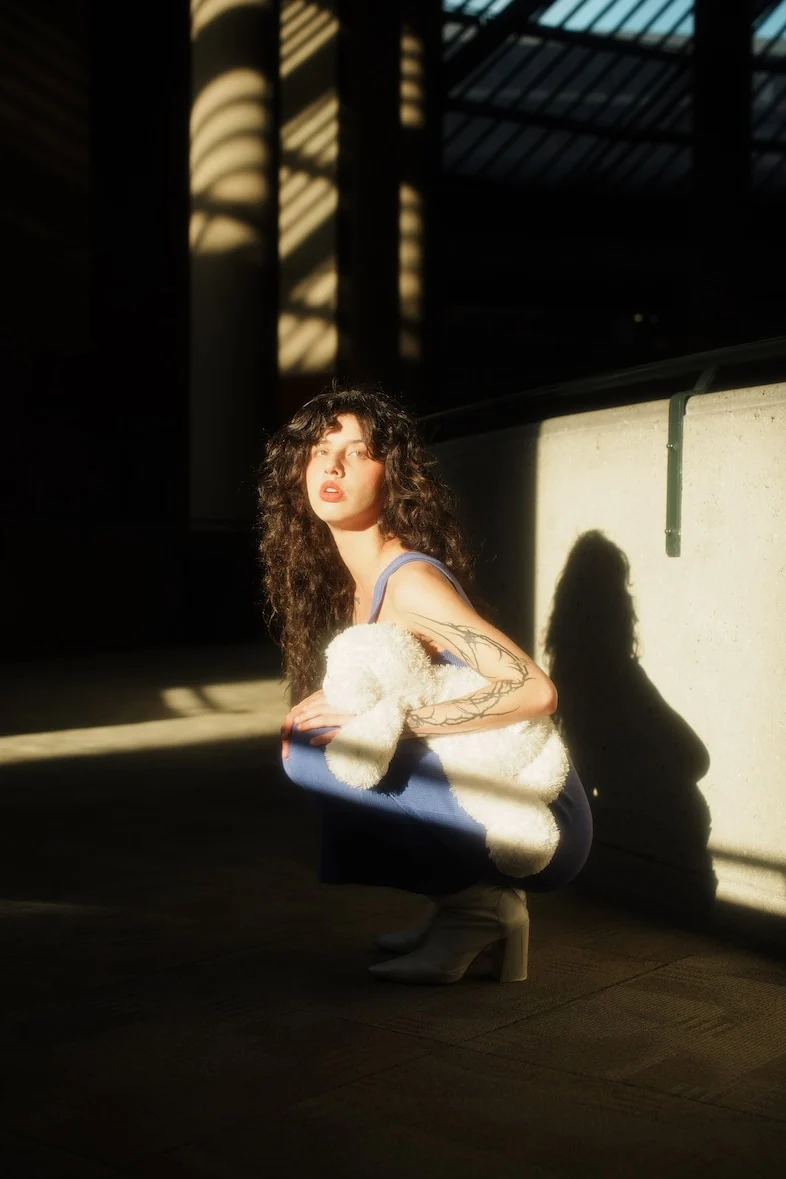
At the dawn of the current year, the music industry witnessed a phenomenon as 21-year-old singer Lamb, born Jules, embarked on a daily social media posting challenge that would fundamentally reshape her career trajectory. Her life at the time could be succinctly described by a series of stark numbers: a Los Angeles waitress earning $18 an hour, maintaining a modest 600 followers on Instagram, and registering a mere 21 monthly listeners on Spotify. Yet, in a testament to the transformative power of digital platforms and authentic artistry, by the close of February, Lamb had not only garnered high-profile endorsements from industry titans like Drake, Russ, and SZA but had also seen her dedicated listener base skyrocket to breach the 100,000 mark. This rapid ascent prompted her to transition from her waitressing job to dedicating herself to music full-time, a dizzying change she describes with a laugh, "It’s been a crazy month."
Lamb’s consistent digital presence, a deliberate strategy of posting new music content daily, undoubtedly laid the groundwork for her breakthrough. However, it was the explosive virality of her single, "Overkill," that acted as the primary catalyst, catapulting her from relative obscurity to a burgeoning online sensation. The track, a captivating blend of Jersey club rhythms and indie vocal sensibilities, introduces the Venice Beach-born artist as a narrator embodying the persona of a hopelessly infatuated ex-girlfriend, driven to extreme lengths for proximity to her former lover. The lyrics paint a vivid, almost cinematic picture of this obsession: "Sure, it might be overkill at least I get to spend the night," she sings, detailing scenarios like "sleeping in a mini-skirt inside the lobby," "pushing all the buttons in the elevator," and engaging in "the most outrageous shit so you would want me." This unvarnished portrayal of intense desire, coupled with its distinctive sound, resonated profoundly with a global audience.
The Genesis of a Viral Sensation: A Chronology
Lamb’s journey began with a clear, self-imposed mandate: to post music on social media every single day starting January 1st. This strategy, while seemingly straightforward, required immense discipline and a deep understanding of the evolving digital landscape for music discovery. In an era where algorithms dictate reach and engagement, consistent content creation is paramount. For independent artists, platforms like TikTok and Instagram Reels have become indispensable tools, offering a direct conduit to potential fans without the traditional gatekeepers of major labels or extensive radio play. Lamb’s commitment to this daily challenge ensured a steady stream of content for these platforms, increasing her chances of algorithmic recognition and organic discovery.
Prior to this pivotal challenge, Lamb, whose birth name is Jules, had already been cultivating her musical craft for years. Her experience as a waitress in one of the world’s most competitive cities, Los Angeles, underscores the financial realities many aspiring artists face. Her modest follower and listener counts were typical for an independent artist working outside the mainstream machinery, highlighting the significant barrier to entry for widespread recognition. This background serves to amplify the dramatic shift in her fortunes following "Overkill."
The turning point arrived with "Overkill." While the exact mechanism of its initial viral spread remains part of the digital mystique, it quickly gained traction, likely through user-generated content, dance challenges, or curated playlists on social media. The song’s unique sonic fingerprint and relatable, albeit exaggerated, lyrical narrative created a potent combination for virality. Within weeks of its release, the track began attracting attention from influential figures within the music industry. The "co-signs" from established artists like Drake, Russ, and SZA were not merely symbolic gestures; such endorsements from high-profile figures can trigger massive waves of new listeners, accelerate algorithmic promotion, and validate an emerging artist in the eyes of both the public and industry professionals. This cascade of attention directly translated into the exponential growth of her listener base, culminating in her ability to leave her day job and pursue music full-time, a dream for countless artists.
Deconstructing "Overkill": A Sonic Tapestry
The compelling allure of "Overkill" lies in its audacious sonic fusion: the powerful, rhythmic thrum of a Jersey club beat meeting Lamb’s uniquely "dulcet vocal tones." This unexpected pairing forms the cornerstone of her self-described "electronic lyrical" sound. It’s a conceptual framework that, as Lamb explains, represents "a pendulum swing between organic human composition and futuristic digital soundscapes," drawing loose comparisons to the pioneering work of artists like James Blake, known for his experimental blend of electronic production with soulful, melancholic vocals.
To appreciate this blend, understanding Jersey club is crucial. Originating from Newark, New Jersey, in the early 2000s, Jersey club is a subgenre of house music characterized by its distinctive syncopated drum patterns, often incorporating a prominent kick drum on every beat, layered with chopped vocal samples and repetitive, high-energy synth melodies. Its infectious, dance-oriented rhythms have seen a significant resurgence in recent years, influencing pop, R&B, and hip-hop. Lamb’s innovation lies in juxtaposing this raw, energetic, and often aggressive beat structure with her inherently melodic and softer vocal delivery.
"My music has aspects of ballads and lyrical music with structured movement," Lamb articulates, "but it’s still electronic with all these new wave sounds. I like that juxtaposition. You can have a really cool acoustic track and then kind of ham it up with some drum chops, and it’s fucking amazing." This philosophy underpins her approach, creating a sound that is both familiar in its lyrical depth and fresh in its electronic execution. She posits a theory that beats are not inherently confined to specific genres, advocating for interpretive freedom in music creation. "When I hear a Jersey club beat, I don’t only hear a hard-ass drill rapper over it," she states, "I hear really intricate melodies that fall into a specific meter. I’m just trying to create room for a lot of different genres to coexist." This open-mindedness allows her to forge "some weird third thing," as she playfully describes her genre-defying creations.
A Foundation Built on Diverse Influences
While "Overkill" might appear to be an "overnight success," Lamb is quick to dispel this notion. "People think I had one viral song and blew up overnight – very not true," she clarified in an interview with Dazed. "I had a lot of music out in the ether; it’s just that only 21 people knew it existed." This statement underscores the often-invisible years of work that precede a public breakthrough. Her decision to unrelease previous material upon the success of "Overkill" signals a deliberate artistic pivot, recognizing the emergence of a truly distinct sound. "The second I released ‘Overkill,’ I knew I was going for such a new sound that I unreleased everything else. It’s just the tip of the iceberg of something so much bigger."
Lamb’s musical foundation was laid long before her viral moment. Her formative years were steeped in musical education, including extensive participation in choir and theatre throughout her schooling. Notably, she founded and presided over her school’s rap club from sixth to eighth grade, where students would engage in freestyling during lunch periods. This early exposure to rap cultivated a profound appreciation for meter and rhythmic interplay, even as she acknowledged her voice wasn’t suited for traditional rap delivery. "I knew I didn’t have the voice for rap, but I just couldn’t get over how fun it was to fall into pockets," she recalls. This early training in rhythmic structure likely informs her current ability to seamlessly integrate her melodic vocals with complex electronic beats.
Her influences span a wide and sophisticated spectrum. Rather than contemporary pop, Lamb cites classical composition as a primary wellspring of inspiration. Miles Davis, particularly his album Miles Runs the Voodoo Down, deeply shaped her perspective on musical structure, demonstrating that it need not conform to rigid conventions. Stevie Wonder’s seminal album Songs In The Key of Life is another touchstone, embodying the expansive and ambitious musicality she aspires to achieve in her own projects. During her middle school years, her tastes leaned towards old-school hip-hop legends like A Tribe Called Quest, Cypress Hill, and Nas, before she discovered Isaiah Rashad, an artist who "ruled [her] world" in seventh grade. This rich tapestry of influences, from jazz and soul to classic and contemporary hip-hop, explains the depth and unexpected combinations found in her music.
The Persona and the Personal: Unpacking "Overkill’s" Lyrics
The vivid and somewhat extreme lyrics of "Overkill" prompt questions about their autobiographical nature. Lamb offers a nuanced explanation: the song is "half true and half not," an "exaggeration of a way that I have acted previously in relationships." While the specific, theatrical visuals like "the elevator and all of those visuals are more metaphorical," she admits to having engaged in "similar things" in her younger years, such as waiting up in an ex-partner’s apartment at 16 or 17. She candidly acknowledges, "I was a crazy ex-girlfriend."
However, Lamb distinguishes between her artistic persona, "Lamb," and her personal self, Jules. "Lamb is a persona, right? I definitely think Lamb is the kind of girl to do that but Jules – me, personally – wouldn’t." This artistic distance allows her to explore intense emotional states and complex characterizations without fully identifying with them. She believes the song’s resonance stems from its depiction of a character seeking validation, a theme that strikes a chord with many listeners. "That song paints a picture of a girl who is simply interested in the validation of knowing someone, at least, will keep her around, and I think that resonates with a lot of people. That song does anything except paint me in a good light! I think it’s good, though." This honesty in portraying less-than-flattering aspects of human emotion is a hallmark of compelling songwriting.
Even her stage name, "Lamb," carries a personal, endearing origin story rooted in a childhood tantrum. Her Brazilian mother affectionately calls her "lambinia," a nickname born from a five-year-old Lamb’s passionate desire for a stuffed lamb display animal in a mattress store. The story culminates in a kind teenager secretly placing one in their bag, a cherished item Lamb still possesses and uses as her profile picture, illustrating a deep connection to her identity.
Beyond her lyrics, Lamb’s artistic identity extends to her personal style. She describes her fashion sense as "handmade and tailored," largely because she sews many of her own clothes. This hands-on approach reflects a desire for clothing that fits her perfectly and expresses her unique personality. She views herself as a "jack-of-all-trades" when it comes to style, articulating this through an imaginative metaphor: "I have three wolves inside of me at all times arguing for the spotlight. One of them dresses like a little man, the other dresses like a pretty princess, and the third is a funny mix of the two that, for some reason, needs a ripped shirt that’s totally destroyed." This eclectic description further solidifies her image as a multifaceted artist who defies easy categorization.
Vocal Timbre and Future Horizons
Regarding her vocal qualities, Lamb acknowledges her unique timbre, which she believes "lends well to singing." Despite her early affinity for rap and a strong grasp of rhythm, she candidly admits, "I probably understand rhythm better than I understand melody, even, which is crazy to me." She attributes her lack of a "voice for rap" to her upbringing in Venice Beach, shaping an accent that is "the most LA beach woman shit in the world!" However, she remains open to the possibility of integrating rap into her music in the future, stating, "I do think there’s room for rap in my music, though. Maybe one day I’ll get a rap record out." This forward-looking perspective suggests an artist continually evolving and experimenting.
Looking ahead, Lamb is already immersed in a new project, promising a departure from simply replicating "Overkill." She hints at a collection of songs that are "sadder than people are expecting," with a more "sombre" lyrical tone, while maintaining an "electronic and empty" soundscape. Her excitement is palpable: "Shit, dude, I’m actually really excited for it. I don’t think any of the songs sound the same, but they all exist in the same world. There’s something for everybody but I am definitely not making 50 more ‘Overkills,’ I’m sorry!" This commitment to artistic growth and diverse exploration is a strong indicator of her long-term vision.
When asked about dream collaborations, Lamb’s choices further illuminate her artistic depth: D’Angelo, a neo-soul icon known for his intricate musicianship and emotive vocals, and, if born in a different era, Sly Stone, the legendary frontman of Sly and the Family Stone, renowned for pioneering funk, soul, rock, and psychedelic music. These selections highlight her appreciation for artists who push boundaries, blend genres, and possess profound musicality.
Broader Implications: The New Music Industry Paradigm
Lamb’s meteoric rise is more than just an individual success story; it serves as a powerful case study for the seismic shifts occurring within the music industry. Her journey exemplifies the democratizing potential of social media platforms, which have effectively dismantled many traditional barriers to entry for independent artists. In an era where a single viral clip can launch a career, artists no longer solely rely on the gatekeepers of major record labels, A&R scouts, or extensive radio promotion to gain traction. Instead, authenticity, consistent content creation, and a unique sound capable of capturing fleeting attention spans are becoming paramount.
The rapid accumulation of listeners and endorsements from established artists underscores the industry’s increasing responsiveness to organic virality. Labels and industry executives are now actively scouting platforms like TikTok and Instagram for emerging talent, recognizing that grassroots popularity often translates into engaged fanbases and commercial viability. This trend has implications for talent discovery, artist development, and even the traditional album cycle, as singles can now generate massive buzz independently before a full project is released.
Furthermore, Lamb’s genre-bending approach, marrying indie vocals with Jersey club production, reflects a broader cultural trend towards musical eclecticism and the erosion of rigid genre boundaries. Audiences, particularly younger demographics, are increasingly open to and appreciative of hybrid sounds that defy easy categorization. This encourages artists to experiment freely, fostering innovation and pushing the sonic envelope. Lamb, with her "electronic lyrical" vision, is at the forefront of this new wave, demonstrating that artistic integrity and commercial success can coalesce in unexpected and exciting ways. Her story is a compelling narrative of perseverance, innovation, and the undeniable power of the digital age to rewrite the rules of stardom. Her latest single, "Fort," is out now, offering another glimpse into her evolving artistic landscape.