







The intersection of high fashion and generative artificial intelligence reached a new milestone during the most recent New York Fashion Week as Alta, the fashion-technology startup founded by Jenny Wang, unveiled its latest enterprise integrations. Since its inception, Alta has been frequently characterized as the real-world realization of the fictional technology seen in the 1995 cult classic film "Clueless," in which protagonist Cher Horowitz uses a computerized interface to coordinate her wardrobe. Today, that cinematic vision has evolved into a sophisticated platform that has generated over 100 million outfits, supported by $11 million in venture capital and a growing list of blue-chip industry partners.
The Genesis of Alta and the $11 Million Seed Milestone
The trajectory of Alta shifted significantly last year following a successful $11 million funding round led by Menlo Ventures. The investment signaled a robust appetite in the venture capital community for consumer-facing AI applications that offer more than just novelty. Joining Menlo Ventures were several high-profile strategic investors, including the Anthology Fund—the venture arm of the AI research firm Anthropic—and Jenny Fleiss, the co-founder of Rent the Runway. The round also drew participation from prominent figures within the fashion industry itself, such as supermodels Karlie Kloss and Jasmine Tookes, suggesting a rare alignment between technical engineering and the aesthetic demands of the modeling and design worlds.
This capital infusion was earmarked for the refinement of Alta’s proprietary AI models, which allow users to create highly personalized digital avatars. Unlike earlier iterations of virtual "paper dolls," Alta’s technology utilizes advanced computer vision and generative modeling to ensure that clothes drape and fit on a user’s specific digital likeness with high fidelity. The platform’s ability to bridge the gap between a user’s physical closet and a digital planning tool has positioned it as a central player in the "personal identity layer" of the emerging AI economy.
Technical Evolution: From 2023 Launch to 100 Million Outfits
Since its official debut in 2023, Alta has experienced rapid scaling. The platform’s metrics indicate a high level of user engagement, with over 100 million outfits generated to date. This volume of data provides the company with unique insights into consumer styling preferences, seasonal trends, and brand affinity. Recognition from major publications such as Time and Vogue, which named Alta one of the top innovations of the year, has further solidified its standing in a crowded "fashion-tech" marketplace.
A critical component of Alta’s success is its dual-pronged business model. The consumer-facing app serves as a digital "closet manager," where individuals can digitize their existing wardrobe, plan future purchases, and experiment with styling. Simultaneously, the company has aggressively pursued a B2B (business-to-business) strategy, forming partnerships with major industry entities like Poshmark and the Council of Fashion Designers of America (CFDA). These collaborations aim to standardize the way digital garments are represented across different retail ecosystems, ensuring that an item purchased on one platform can be seamlessly integrated into a user’s Alta avatar.
The New York Fashion Week Integration: Public School New York
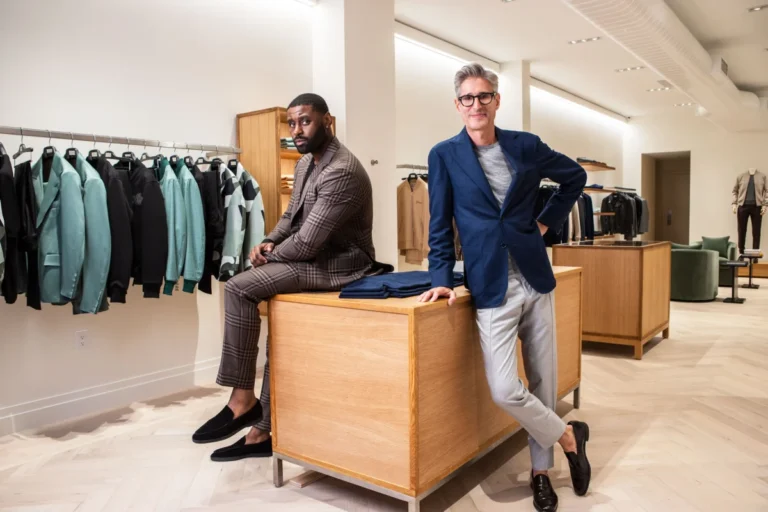
The most recent demonstration of Alta’s enterprise capabilities occurred during New York Fashion Week, centered on a collaboration with the storied brand Public School New York. This partnership marked a significant moment for both entities. Public School, led by designers Dao-Yi Chow and Maxwell Osborne, recently returned from a multi-year hiatus, using this season’s showcase as a "grand re-debut."
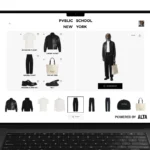
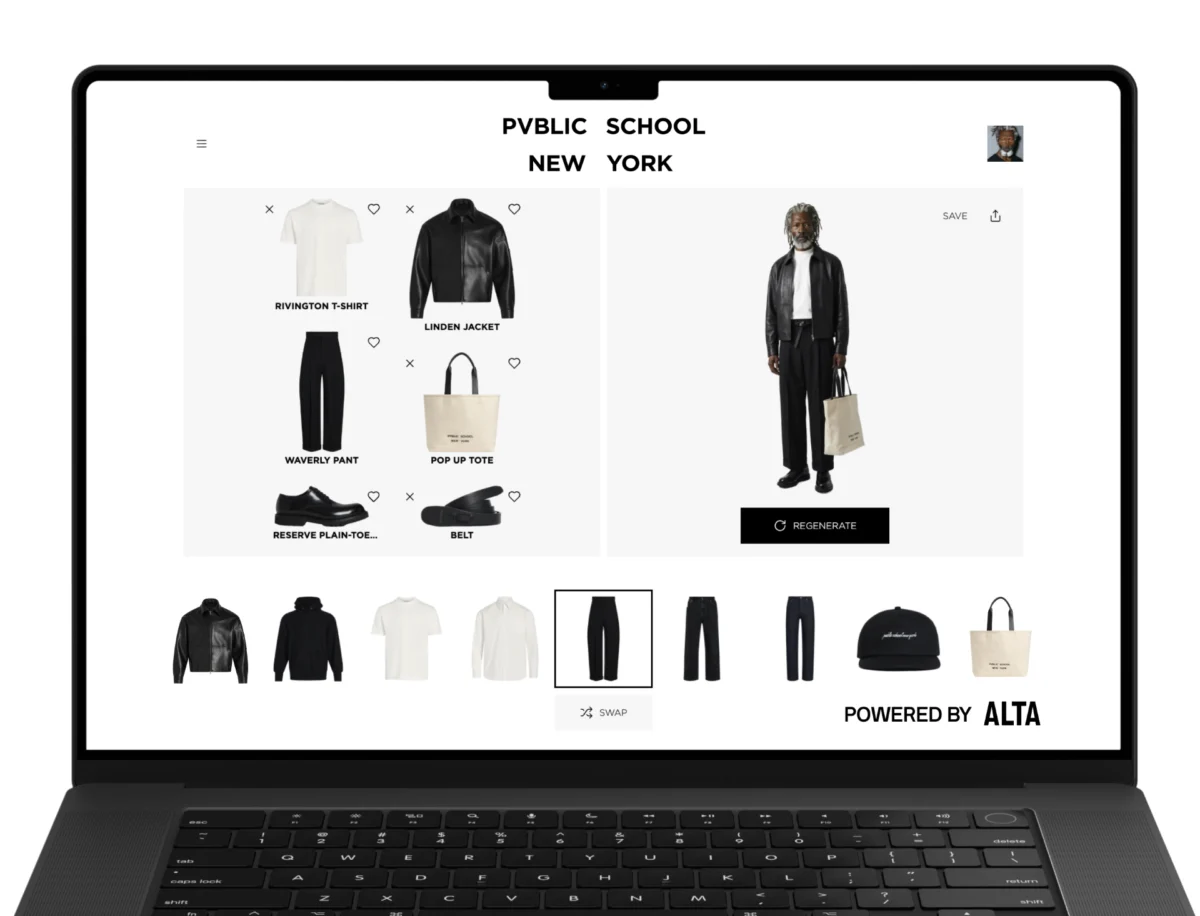
The integration allows shoppers to visit the Public School website and, through a "Style with Alta" interface, instantly see how new collection pieces—such as the Linden Jacket—look on their personalized Alta avatars. This moves the online shopping experience away from static, one-size-fits-all photography toward a dynamic, individualized simulation.

According to Chow, the decision to partner with Alta was driven by a need to modernize the brand’s storytelling. "We have to look at tech as a partner in the business today," Chow noted during the event, emphasizing that the goal was not to use AI as a design tool to replace human creativity, but as an interactive medium to allow consumers to experience the brand remotely. The connection between the two companies was facilitated by the founder of Poshmark, an angel investor in both Alta and Public School, highlighting the tight-knit nature of the fashion-tech investment community.
Competitive Analysis: Speed, Accuracy, and User Experience
While virtual avatars are not a new concept in fashion—major retailers like Zara and luxury houses like Balmain have experimented with digital models for years—Alta distinguishes itself through technical efficiency and user agency. Jenny Wang has noted that traditional virtual try-on solutions often suffer from high latency and limited flexibility. For instance, while some competitors’ avatars are restricted to wearing a maximum of four items and can take up to two minutes to render, Alta’s system allows users to layer at least eight items in a matter of seconds.
This speed is essential for the "styling" aspect of the app. In a retail environment, consumers are less likely to use a tool that requires a long wait for every outfit change. By reducing the friction of digital dressing, Alta encourages a "sandbox" style of shopping where users can test dozens of combinations in a single session. This increased engagement is a primary selling point for brands looking to increase time-on-site and reduce the high cost of returns—a perennial problem in e-commerce where "fit and style" uncertainty accounts for the majority of sent-back items.
The Rise of Agentic Commerce and the Personal Identity Layer
Looking toward the future, Wang envisions Alta as much more than a digital closet. She describes the platform as the "personal identity layer for the future of consumer AI and shopping." This concept ties into the broader industry shift toward "agentic commerce," where AI agents act on behalf of the consumer to find, style, and purchase goods.
For agentic commerce to be effective, an AI needs access to a comprehensive data layer that understands the user’s physical dimensions, existing wardrobe, and aesthetic preferences. Alta aims to be that data layer. By holding the "digital twin" of the consumer, Alta can theoretically tell an AI shopping assistant exactly how a new pair of trousers will look with a jacket the user already owns, or whether a specific brand’s sizing will be compatible with the user’s body type.
Broader Industry Implications and Economic Outlook
The implications of Alta’s growth extend into sustainability and supply chain management. The fashion industry is frequently criticized for its environmental impact, much of which is driven by overproduction and the logistics of returns. By providing a more accurate "try-on" experience before a purchase is made, Alta’s technology could potentially lower return rates across the industry, which currently hover around 20% to 30% for online apparel sales.
Furthermore, the integration of Alta’s technology into brand websites suggests a shift in how designers view their digital presence. In the "2015 era" of fashion, tech was often relegated to a separate department or viewed as a marketing gimmick. In the current landscape, as evidenced by Public School’s re-debut, technology is being treated as an essential infrastructure for consumer interaction.
As Alta continues to announce more brand partnerships and expands its integration capabilities, the focus will likely remain on maintaining the balance between high-end fashion aesthetics and rigorous technical performance. With the backing of both Silicon Valley and Seventh Avenue, Jenny Wang’s company is transitioning from a "Clueless"-inspired startup into a fundamental component of the modern retail stack. The success of the Public School integration serves as a blueprint for how other heritage and contemporary brands might navigate the transition from traditional e-commerce to an AI-driven, avatar-centric future.