










Our editors curate highly rated brands that are first assessed by our rigorous ratings system. Buying through our links may earn us a commission—supporting the work we do. Learn more. If you reside in France, navigating the landscape of ethical clothing brands can be a discerning task. This comprehensive guide will illuminate five French clothing brands that have earned "Good" or "Great" ratings through our first-class methodology, showcasing the nation’s commitment to a more responsible fashion future.
The French Fashion Revolution: A Paradigm Shift in Sustainability
In recent years, France has unequivocally positioned itself as a vanguard in the global fight against fast fashion, diligently addressing the detrimental impacts of overconsumption and waste within the textile industry. This leadership is not merely rhetorical but is firmly rooted in progressive legislative action and a growing cultural imperative to champion sustainability. The nation, renowned for its heritage in haute couture and ready-to-wear, is now pioneering a new era of fashion—one that prioritizes environmental stewardship and social equity.
The impetus for this "French Fashion Revolution" stems from a confluence of factors. Globally, the fashion industry is identified as one of the most polluting sectors, responsible for approximately 10% of global carbon emissions, significant water usage, and immense textile waste. France, with its deep-seated appreciation for quality, craftsmanship, and environmental protection, has felt a particular urgency to confront these challenges head-on. Public awareness regarding the environmental footprint and ethical shortcomings of ultra-fast fashion brands has also surged, fueled by reports of exploitative labor practices, the widespread use of synthetic, non-biodegradable materials like polyester, and the relentless churn of disposable garments.
Legislative Milestones and Enforcement
France’s commitment to combating fast fashion is best illustrated by a series of landmark legislative measures:
-
2019 Anti-Waste Law for a Circular Economy (AGEC Law): This foundational bill, passed in February 2020 (following its introduction in 2019), was a world-first, explicitly banning companies from destroying unsold clothes and electronics. Beyond textiles, the law aimed to transform France’s economy from a linear "take-make-dispose" model to a circular one. It introduced measures such as a repairability index for electronics, extended producer responsibility for various product categories, and targets for reducing single-use plastics. For the fashion industry, the ban on destruction of unsold goods was a critical step, forcing brands to rethink their production volumes and supply chain management, encouraging donations, recycling, or upcycling instead of landfilling or incineration. This move sought to mitigate the colossal waste generated by overproduction and the common industry practice of disposing of surplus stock.
-
2024 Anti-Ultra-Fast Fashion Legislation: Building on the AGEC law, France escalated its efforts with new legislation targeting ultra-fast fashion specifically. This bill, which gained unanimous approval in the National Assembly in March 2024 and is expected to proceed to the Senate for final approval and presidential assent, is designed to curb the environmental and social damage caused by brands that churn out thousands of new products daily at exceptionally low prices. Key provisions include:
- Advertising Ban: A prohibition on advertising ultra-fast fashion products, limiting their visibility and perceived desirability among consumers.
- Eco-Surcharge System: The introduction of an escalating environmental surcharge on ultra-fast fashion garments. Starting at a modest sum, this surcharge is projected to reach up to €10 per item by 2030. The revenue generated from this tax will be used to subsidize sustainable clothing brands and fund consumer awareness campaigns, effectively making ultra-fast fashion more expensive and less competitive while supporting ethical alternatives.
- Mandatory Environmental Disclosures: A requirement for ultra-fast fashion brands to provide clear environmental impact information at the point of sale. This empowers consumers with the data needed to make informed purchasing decisions, highlighting the often-hidden costs of cheap clothing.
The SHEIN Controversy: A Flashpoint in the French Fashion Revolution
The regulatory offensive against ultra-fast fashion reached a critical juncture with the direct confrontation involving Chinese e-commerce giant SHEIN. This episode underscored France’s unwavering resolve and the growing public outcry against the practices of such behemoth brands.
In early 2025, French authorities reportedly explored legal avenues to suspend SHEIN’s website nationwide, citing serious concerns over content deemed inappropriate for minors, specifically the alleged sale of "childlike sex dolls and weapons." While this initiative was ultimately dismissed by the courts, the legal challenge compelled SHEIN to implement stringent measures, including robust age verification protocols and content filtering systems, to safeguard children from harmful material. This legal pressure highlighted the broader concerns about the lack of oversight and ethical responsibility in the digital fast fashion landscape.
The public sentiment against SHEIN crystallized further in November 2025, when the brand opened its first physical store in Paris. This event was met with significant public protest, with environmental activists, labor rights advocates, and concerned citizens taking to the streets to demonstrate against SHEIN’s business model. Protesters voiced strong opposition to the brand’s alleged labor exploitation, its massive environmental footprint from rapid production and synthetic materials, and its contribution to a culture of disposability. Concurrently, a Change.org petition garnered over 110,000 signatures, urging local authorities and consumers to reject SHEIN and similar ultra-fast fashion retailers, emphasizing the desire for Paris to uphold its reputation as a global fashion capital committed to ethical and sustainable practices.
As noted by writer Nicole Lipman in an op-ed for The Guardian in November 2025, "By making it harder to purchase from Shein through corporate regulation, we can discourage the growth of ultra-fast fashion and limit its power in the market." This sentiment encapsulates the strategic intent behind France’s legislative efforts: to create a regulatory environment that disincentivizes the exploitative practices of ultra-fast fashion—such as squeezing suppliers, exploiting workers with precarious wages and unsafe conditions, rapidly churning out poorly made polyester garments, and employing dark user interface patterns to pressure shoppers—thereby promoting a fairer and more sustainable industry.
This proactive stance by France is not merely about punishing problematic players; it is fundamentally about creating a more equitable playing field. By stemming the tide of ultra-fast fashion, the legislation inherently opens doors for more sustainable brands to thrive. When consumers are educated about the true cost of clothing—the work, love, and time involved in crafting garments slowly, by individuals who are paid and treated fairly—they are more likely to champion businesses that prioritize ethical production.
Defining Ethical Fashion: A Holistic Approach
To identify truly ethical brands, consumers need a clear framework. An ethical brand distinguishes itself by positively impacting three core pillars: people, the planet, and animals. Our independent sustainability experts rigorously analyze brands’ public disclosures on their actions and impacts against these criteria.
-
People: This pillar focuses on ensuring fair treatment and safe working conditions across the entire supply chain, from raw material sourcing to garment assembly. Key considerations include:
- Child Labour and Forced Labour: Strict policies and verifiable practices to prevent these egregious human rights violations.
- Worker Safety: Adherence to robust health and safety standards in factories and workplaces.
- Freedom of Association: Respect for workers’ rights to join trade unions and collectively bargain for better conditions.
- Living Wage: Payment of wages that allow workers to meet their basic needs and provide for their families, going beyond minimum wage requirements. Transparency in the supply chain, often through supplier lists and third-party audits, is crucial for accountability.
-
Planet: An ethical brand demonstrates a profound commitment to environmental stewardship throughout its operations. This involves:
- Resource and Energy Use: Minimizing consumption of water, energy, and other natural resources. Prioritizing renewable energy sources.
- Carbon Emissions: Measuring and actively reducing greenhouse gas emissions across the supply chain, working towards carbon neutrality.
- Waterway Impact: Implementing strategies to reduce water pollution from dyeing and finishing processes, treating wastewater effectively.
- Chemical Management: Safely managing and disposing of chemicals, opting for non-toxic alternatives (e.g., certifications like OEKO-TEX, GOTS).
- Sustainable Materials: Prioritizing lower-impact materials such as organic cotton, linen, hemp, Tencel, recycled polyester, and upcycled fabrics, while avoiding virgin synthetics and materials derived from endangered forests.
- Waste Reduction: Adopting circular economy principles like designing for durability, promoting repair services, and ensuring products are recyclable at the end of their life.
-
Animals: The treatment of animals within the supply chain is another critical ethical dimension. An ethical brand aims to minimize or eliminate animal products, advocating for cruelty-free practices.
- Animal Welfare Standards: If animal products like wool or down are used, they must come from certified sources that ensure high animal welfare standards (e.g., Responsible Wool Standard, Responsible Down Standard).
- Avoidance of Harmful Materials: Refraining from using materials associated with severe animal cruelty, such as fur, angora, karakul, and exotic animal skins and hair.
- Vegan Fashion: Ideally, the brand is 100% vegan, offering products free from all animal-derived components.
Choosing to shop from companies located in your country or region offers additional benefits. Beyond reducing the carbon footprint associated with long-distance shipping, local shopping directly supports domestic economies, fosters local craftsmanship, and often allows for greater transparency and shorter supply chains. This aligns perfectly with France’s vision for a resilient and responsible fashion industry.
Spotlight on Five Leading French Ethical Brands
In line with France’s progressive stance, a growing number of local brands are embracing these ethical tenets. Below, we spotlight five exemplary French fashion brands that have been independently analyzed by our sustainability experts and earned "Good" or "Great" ratings for their demonstrable commitment to people, the planet, and animals. These brands represent the vanguard of ethical fashion in France, offering stylish and conscious choices for the discerning consumer.
-
Facettes Studio
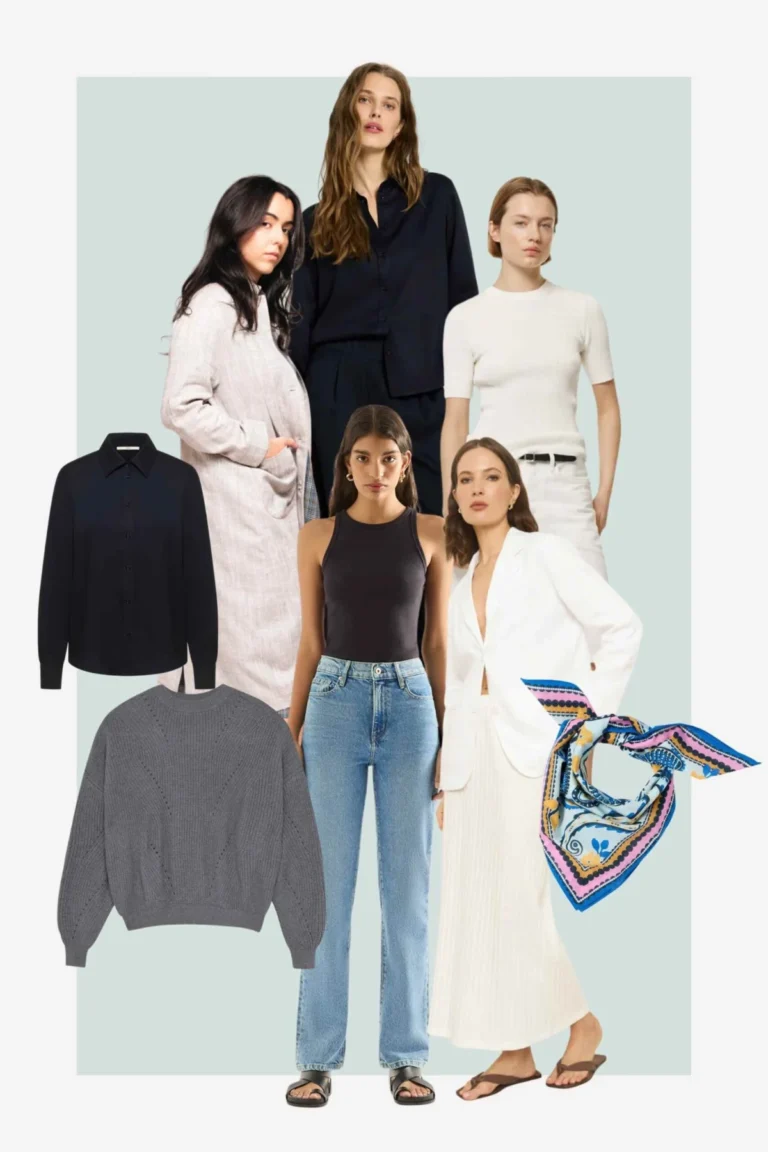
Facettes Studio is a quintessential Parisian brand dedicated to crafting "wardrobe essentials for the multifaceted woman." Embodying a commitment to circularity, the brand exclusively utilizes upcycled materials, giving new life to fabrics that would otherwise go to waste. A core principle of Facettes Studio is its categorical ban on polyester and polyamide from its collections, opting instead for more sustainable alternatives. Its signature collections revolve around elegantly tailored suits, offering timeless pieces designed for longevity. Further extending its commitment to a circular economy, Facettes Studio provides a valuable repairs and alterations service, encouraging customers to prolong the life of their garments.- Find its clothes in sizes FR 34-44.
- See the rating.
- Shop Facettes Studio.
-
Dressarte Paris
Dressarte Paris champions the art of custom clothing, offering a unique service that combines luxurious aesthetics with lower-impact materials. Specializing in made-to-order garments, Dressarte significantly reduces waste inherent in traditional mass production by creating pieces only when a customer places an order. The brand frequently sources its exquisite materials from surplus fabrics, diverting high-quality textiles from landfills. Customers have the flexibility to choose from existing standard sizes or provide their own precise measurements, ensuring a perfect fit and minimizing returns—another facet of sustainable consumption. Dressarte Paris embodies slow fashion, emphasizing quality, individuality, and reduced environmental impact.- See the rating.
- Shop Dressarte Paris.
-
Courbet
Courbet is a distinguished French high jewellery brand that exemplifies how luxury can align with sustainability. In an industry often associated with environmentally and socially problematic mining practices, Courbet takes a principled stand by utilizing a significant proportion of lower-impact materials. Central to its ethical approach is the use of recycled gold, which dramatically limits the environmental footprint associated with traditional gold mining. This includes reducing the demand for new extraction, minimizing the use of hazardous chemicals (like cyanide and mercury), and conserving vast amounts of water and energy typically consumed in the production of virgin gold. Courbet’s elegant designs prove that exquisite craftsmanship and ethical sourcing can go hand-in-hand, offering conscious consumers a guilt-free indulgence in fine jewellery.- See the rating.
- Shop Courbet.
-
Auria Paris
Auria Paris presents a clothing brand that is distinctly feminine, modern, and deeply committed to ethical principles. A standout feature of Auria Paris is its 100% vegan stance, ensuring that no animal products are used in any of its collections, appealing to a growing demographic of ethical consumers. The brand also makes extensive use of more responsible materials, including a high proportion of recycled fabrics, thereby reducing reliance on virgin resources and mitigating textile waste. Auria Paris’s commitment extends to offering inclusive sizing, with most items available in sizes XS to 4XL, promoting accessibility and body positivity within the sustainable fashion movement.- See the rating.
- Shop Auria Paris.
-
Bluebuck
Bluebuck is a French menswear label that combines a playful, adventurous spirit with a profound love for nature and a commitment to sustainability. Specializing in technical menswear basics and swimwear, Bluebuck designs its products to be durable and long-lasting, counteracting the disposability of fast fashion. A key element of its ethical framework is local production, with manufacturing largely based in Portugal. This strategic choice significantly minimizes the brand’s transportation impacts and allows for closer oversight of labor conditions. Bluebuck also prioritizes better materials, prominently featuring GOTS (Global Organic Textile Standard) certified organic cotton and recycled marine plastic in its collections, tackling both land-based and ocean plastic pollution.- Find most items in sizes XS-2XL.
- See the rating.
- Shop Bluebuck.
The Road Ahead: Sustaining the Momentum
The actions taken by France represent a significant leap forward in the global movement for ethical and sustainable fashion. By enacting pioneering legislation, challenging the dominant players of ultra-fast fashion, and fostering an environment where ethical brands can thrive, France is setting a powerful precedent. This "French Fashion Revolution" is not just about legislative mandates; it’s about a cultural shift, encouraging consumers to value quality, longevity, and ethical production over transient trends and cheap disposability.
As the global fashion industry continues to grapple with its immense environmental and social footprint, France’s model provides a blueprint for other nations. The journey toward a fully sustainable fashion industry is ongoing, requiring continuous innovation, increased transparency, and unwavering consumer advocacy. Supporting brands like Facettes Studio, Dressarte Paris, Courbet, Auria Paris, and Bluebuck is not merely a purchase; it is an investment in a future where fashion is synonymous with responsibility, craftsmanship, and respect for all.
Good On You publishes the world’s most comprehensive ratings of fashion brands’ impact on people, the planet, and animals. Use our directory to search thousands of rated brands.
We updated this article on 17 February 2026. Our editors frequently make updates to articles to ensure they’re up to date. We refreshed our suggestions to ensure they reflect brands with recent ratings.