








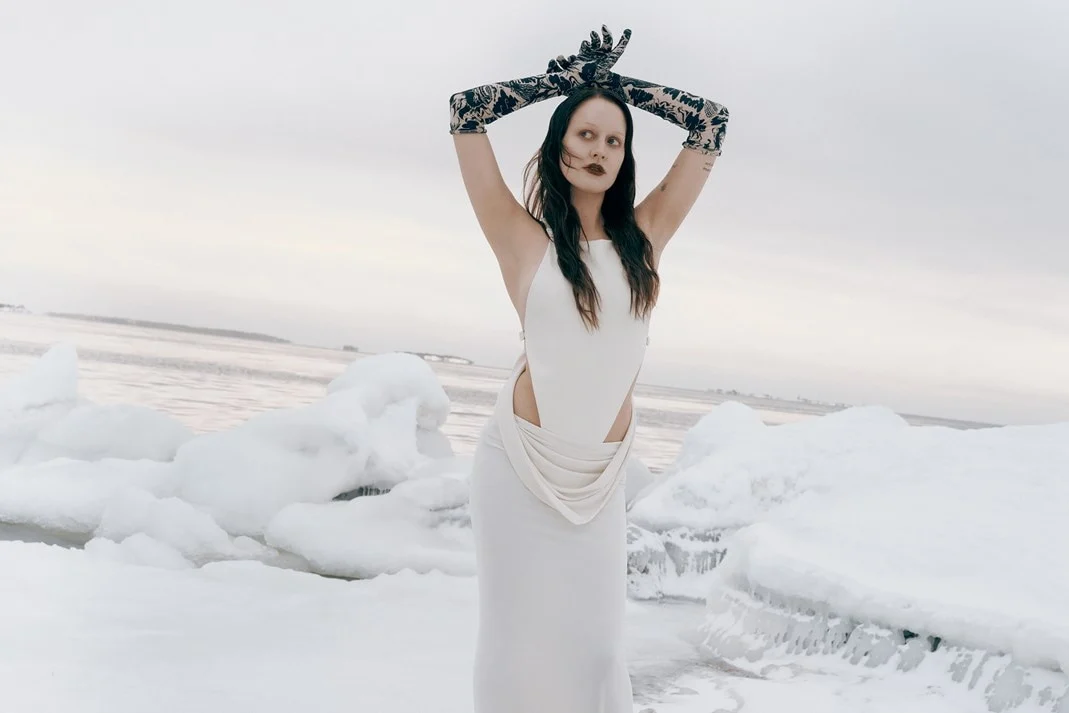
The primordial Temppeliaukio Church, an architectural marvel carved directly into rock, served as an unlikely yet fitting stage during last year’s Helsinki Music Week for Finnish singer Pehmoaino. At 25, her performance was a captivating convergence of raw talent and profound introspection. Seated on a cushion, flanked by an electronic synthesizer and a cellist, her ethereal voice resonated through the church’s unique acoustics, creating an immersive experience that transported listeners. The raw, rock-hewn ceiling towering above seemed to echo the vast, untamed Finnish landscape—verdant forests, reindeer-dotted fields, and snow-capped mountains—a beauty from another era that her sound inherently invoked. This initial encounter immediately established Pehmoaino as an artist distinct from conventional pop archetypes. While an attendee playfully dubbed her and her partner, premier Finnish rapper MELO, the "Beyoncé and Jay-Z of Finland," Pehmoaino’s understated presence and profound artistry suggested a different kind of star—one whose journey to prominence has been anything but conventional, deeply rooted in personal truth and national character.
A Winding Path to Reluctant Stardom
Pehmoaino’s trajectory into the music spotlight began precociously at the age of 12, when she emerged victorious from Finland’s The Voice Kids. However, this early brush with fame, often a springboard for many aspiring artists, remains a complex and bittersweet memory for her. She recounts the experience with a candor that reveals the pressures placed upon a young talent. "I was so scared to be there; it wasn’t my idea," Pehmoaino confessed to Dazed, recalling how the overwhelming environment led to a panic attack, necessitating a retake of her initial performance round. Her family, recognizing her innate vocal gift, encouraged her participation, but for Pehmoaino, singing was a deeply personal act, not one for public spectacle.
This formative experience was further complicated by her self-identified neurodivergence, a facet of her identity that profoundly shapes her perception of the past. "When people bring that [experience] up now, I struggle to realise that I was actually really there," she explains, highlighting a disconnect between the memory and her current understanding of herself. This early exposure to the demanding machinery of the entertainment industry, coupled with her intrinsic sensitivities, steered her away from the typical post-talent show path. Instead of pursuing a mainstream pop career akin to artists like Sweden’s Zara Larsson, who also found early fame, Pehmoaino retreated inward. She sought to reconnect with her creativity on a more personal, unadulterated level, finding solace and expression in poetry.
This period of introspection proved pivotal, allowing her to cultivate an artistic voice that was authentically her own. Her eventual return to music was on her own terms, a deliberate choice that, ironically, led to even greater success. At 19, under the moniker Pehmoaino, she released her debut single, "haluun takas mun perhoset" ("I want my butterflies back"). This track, a delicate yet grand piano-backed elegy to childhood innocence, unexpectedly captivated the nation and became one of the first Finnish songs to achieve viral status on TikTok. The track’s organic spread across the digital landscape marked a significant moment for Finnish-language music, demonstrating the power of authentic expression to transcend traditional industry gatekeepers. Pehmoaino herself reflects on this sudden ascent with a characteristic blend of humility and bewilderment: "It’s weird and fun that I’ve become a pretty well-known name in Finland… how did it go this way?" This sentiment is often echoed by her producer, who has reportedly marveled at the unexpected, yet well-deserved, organic growth of her career, validating her unconventional approach.
The Poetic Core of Pehmoaino’s Artistry
Pehmoaino’s unique approach to music is inextricably linked to her deep-seated connection to poetry and language. Unlike many contemporary artists who might prioritize beat or production, her creative process begins with the lyrical and melodic core. "I always come up with the lyrics and the melody first, and then produce the track around it," she elaborates. This method, she believes, distinguishes her sound from Iskelmä, Finland’s most widely listened-to pop genre, which often emphasizes more conventional song structures, sentimental themes, and a focus on catchy, often danceable, melodies. Pehmoaino’s dedication to lyrical depth offers a stark contrast, carving out a unique niche within the Finnish music scene.
This lyrical primacy has roots deep in her family history. Her grandmother, described as "very dramatic," was a poet whose work inspired Pehmoaino from a young age. Growing up, Pehmoaino would write poems to cheer her ailing grandmother, forging an early bond with the power of words and the emotional resonance they could carry. Her mother, a therapist, further influenced her worldview, fostering an environment where emotions and the intricacies of the human brain were openly discussed and explored. This background instilled in Pehmoaino a profound understanding of inner landscapes, which she deftly translates into her songwriting, exploring complex themes with remarkable sensitivity.
Her relationship with language itself is foundational. She humorously recalls a childhood anecdote shared by her mother, illustrating her precocious connection to sound and meaning. "My mom told me that I learned to sing before I knew how to speak," she recounts. An aunt’s husband would secretly record her, placing a microphone in a teddy bear, telling the one-year-old that the "teddy is sick, so you have to sing to them." During these impromptu performances, Pehmoaino would pronounce words correctly while singing, yet struggle with coherent speech when conversing with her parents. "That’s interesting, it tells me that there’s something about my brain… lyrics are how I learned how to speak," she muses, highlighting a profound, almost primal, link between musicality and linguistic development in her life.
The artist’s stage name, Pehmoaino, further encapsulates this intriguing duality. "Pehmo" translates to "soft" in Finnish, a descriptor that, on the surface, appears to align with her ethereal vocal quality. However, Pehmoaino reveals an ironic depth to the chosen moniker. "It’s kind of ironic, because I am soft, but I’m also pretty tough," she explains. This toughness manifests in the challenging themes she explores within her "softly" delivered lyrics: abuse, attachment issues, and the complex struggle of self-hatred hindering the ability to accept love. These are not typically the subjects of mainstream pop, particularly for an artist who gained initial fame through a children’s talent show. The name, which originated as an online handle and evolved from friends playfully appending adjectives like "loser" to her given name, has now become a poignant reflection of her artistic identity—a gentle exterior enveloping a resilient, introspective core.

Finnish Culture and the Anti-Pop Star Persona
Pehmoaino’s journey and artistic ethos resonate deeply with core tenets of Finnish culture. Her seemingly reluctant embrace of success, often downplaying her achievements as "weird," aligns perfectly with the national emphasis on "working hard and being humble." This cultural trait, often referred to as sisu—a concept of stoic determination, grit, bravery, and resilience in the face of adversity—manifests in a collective disinclination towards overt self-promotion or boasting. For an artist to achieve millions of streams (a significant feat considering there are only five million Finnish speakers globally) and yet remain grounded, is, in itself, a very Finnish form of stardom. Her success, which sees her releases regularly accruing streams in the tens of millions on platforms like Spotify, translates to a remarkably high per capita listenership, underscoring her profound impact within a relatively small linguistic market.
The unique position of Finnish-language music within the global landscape further solidifies this "outsider" identity. With Finnish being a Finno-Ugric language, distinct from the Indo-European languages prevalent across much of Europe, it presents a significant barrier to international penetration. "Being from Finland, however, automatically makes you a bit of an outcast from the world, because we have a language that only five million people speak, and they’re almost all in Finland," Pehmoaino observes. This linguistic isolation creates a strong internal solidarity within the Finnish music scene, a phenomenon the interviewer noted during Helsinki Music Week, an event designed to showcase Finnish talent and foster industry connections. While some Finnish artists might attempt to cross over by singing in English, this can sometimes be met with skepticism locally, perceived as a departure from humility or a genuine attempt to connect with a broader audience rather than a natural artistic evolution. Pehmoaino, however, embraces her Finnish roots, making music in her native tongue while still supporting peers who choose to sing in English, recognizing the shared challenge of global recognition.
The Helsinki music scene, in particular, has experienced a vibrant resurgence, fueled in part by the unique circumstances of the COVID-19 pandemic. With traditional venues shuttered, artists and audiences found creative alternatives, organizing outdoor parties "under bridges and in the woods." This period fostered a robust, independent spirit, allowing a younger generation to forge new sounds and community bonds. The adaptability and communal spirit exhibited during this time are characteristic of Finnish resilience. Pehmoaino believes this burgeoning scene, rich in innovation and authentic expression, remains largely undiscovered by international audiences due to the language barrier, lamenting, "People [internationally] are missing out by not speaking Finnish."
Nature, Darkness, and Artistic Survival
The profound connection between the Finnish landscape and its artistic output is a recurring theme in Pehmoaino’s reflections. Her music, often described as "big and open," mirrors the expansive, unpopulated natural spaces of her homeland. She grew up in Oulu, specifically in Meri-Lappi, or "Ocean Lapland," an area characterized by its vastness and proximity to both sea and wilderness. This upbringing instilled in her a deep love for nature, which she considers a wellspring of inspiration. Finland is known for its vast forests, comprising over 70% of its land area, and thousands of lakes, contributing to a strong national identity tied to the natural world.
Her creative process often involves seeking solitude in these natural settings, actively cultivating "boredom" to allow ideas to surface. "I try to make space for boredom and to hang out in the woods," she explains. This practice echoes the ancestral wisdom of her grandmother, who would walk to school in paper shoes through the wilderness, connecting with the land in a primal way. For Pehmoaino, being in nature is a spiritual act, a way to reconnect with the "women who came before me," extending the poetic legacy that began with her grandmother’s verses. This deep-rooted reverence for nature is a common thread in Finnish cultural identity, influencing everything from literature to design.
Beyond its physical beauty, the Finnish environment, with its prolonged periods of darkness, also plays a crucial role in shaping the national artistic temperament. During winter months, particularly in northern Finland where Pehmoaino grew up, daylight hours can be minimal, with some regions experiencing weeks of polar night. "It’s pretty dark all the time, so art is a pretty big way of surviving this dark country," Pehmoaino states, articulating a sentiment widely understood in Nordic cultures. The long, dark winters and the stark beauty of the landscape foster an introspective, often melancholic, yet deeply resilient artistic sensibility. This environment necessitates creative outlets as a means of processing, reflecting, and enduring, making art not merely an aesthetic pursuit but a vital mechanism for survival and cultural expression. The prevalence of darker, more reflective themes in Finnish music, literature, and film can often be traced back to this environmental influence.
Navigating Nordic Nuances: Finland vs. Sweden
The conversation naturally turns to a comparison with neighboring Sweden, particularly in the context of pop music. Sweden, often perceived as Finland’s "older sibling" in terms of global cultural influence, boasts a highly successful pop music export industry, epitomized by producers like Max Martin and artists like Zara Larsson. Pehmoaino acknowledges these distinctions: "Sweden is like Finland’s older [sibling]; it’s more international. People joke that they’re trendier and dress better—Stockholm’s bigger than Helsinki and Finland is like the sadder version of Sweden. We have more woods and it’s greyer." This playful yet insightful comparison underscores a fundamental difference in national branding and artistic ambition. While both countries are part of the Nordic region, their cultural expressions in music have diverged significantly over the decades.
While Sweden has mastered the art of crafting globally palatable pop, with its music industry generating substantial revenue from international exports (estimated at hundreds of millions of Euros annually), Finland’s musical identity often leans towards the alternative and the introspective. Pehmoaino points to artists like Bladee and Drain Gang as examples that "speak pretty well to the Finnish music culture." These acts, known for their experimental, often melancholic, and genre-defying sounds, resonate with a deeper aspect of the Finnish psyche than the polished, upbeat "Max Martin