










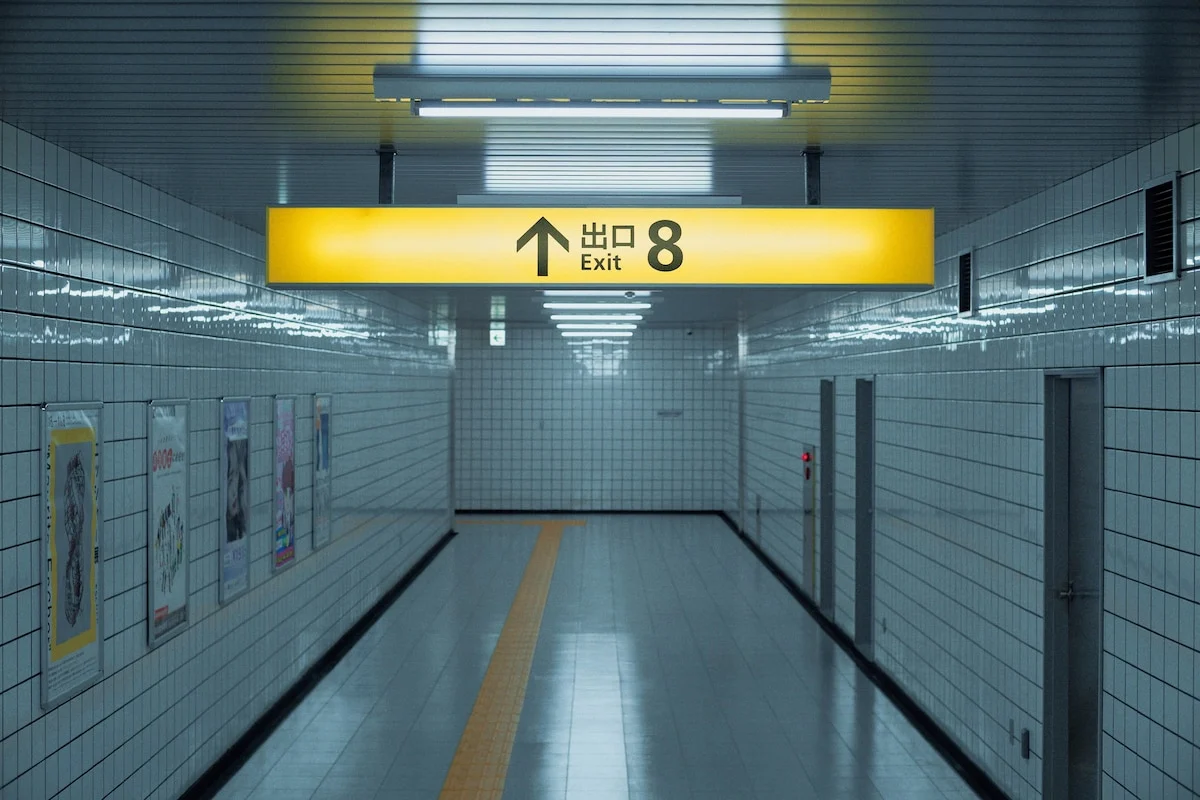
Exit 8, the highly anticipated horror film adaptation of Kotake Create’s viral video game, transcends conventional genre boundaries to deliver a profound psychological experience that challenges viewers to confront the unsettling realities of modern existence. The film, directed by the acclaimed Genki Kawamura, crafts a hypnotic narrative around a man trapped in an endlessly looping subway passage, forcing him to meticulously observe his surroundings for "anomalies" to find his way out. This seemingly simple premise evolves into a chilling commentary on the pervasive anxiety of routine, the insidious nature of societal apathy, and the inescapable guilt accumulated within a capitalist framework. As the film prepares for its theatrical release in the US on April 10 and the UK on April 24, it promises not merely a scare, but a lingering introspection that extends far beyond the cinema hall, blurring the lines between fiction and the mundane horrors of daily life.
From Viral Game Sensation to Cinematic Nightmare: The Exit 8 Genesis
The journey of Exit 8 from a niche video game phenomenon to a major cinematic release underscores a growing trend in media adaptations that prioritize atmospheric tension and psychological depth over traditional action. The original game, released by independent developer Kotake Create, quickly garnered international attention in late 2023 for its minimalist yet terrifying concept. Players navigate a seemingly endless, sterile underground passage, tasked with identifying subtle "anomalies" – a flickering light, a misplaced poster, an extra shadow – to determine whether to proceed or turn back. This unique gameplay loop, reminiscent of "walking simulator" horror titles and the burgeoning "liminal space" aesthetic popular in internet culture, captivated audiences with its unsettling banality and the deep-seated fear of being trapped in an inescapable, subtly shifting reality. Its viral success, amplified by countless streamers sharing their experiences and frustrations, highlighted the game’s universal appeal in tapping into anxieties surrounding routine and the unnoticed distortions of everyday environments.
Genki Kawamura, a celebrated figure known for his multifaceted contributions to Japanese cinema as both a producer (of global hits like Your Name. and Belle) and director (If Cats Disappeared from the World, Mirai), recognized the inherent cinematic potential in Exit 8. His immediate engagement with the game and observation of its widespread reception on platforms like Twitch revealed a fundamental insight: "There were as many stories surrounding this game as there were people playing it," Kawamura noted in a recent interview. He perceived the game not just as an interactive experience, but as a "device to give us a peek into human nature." This realization laid the groundwork for adapting Exit 8 into a film that would not merely replicate gameplay mechanics, but expand upon its thematic underpinnings, translating its interactive dread into a passive yet equally immersive cinematic experience.
Genki Kawamura: A Master Storyteller’s Multidisciplinary Vision
Kawamura’s decision to helm Exit 8 is particularly significant given his illustrious career, which spans best-selling novels, acclaimed animated features, and live-action dramas. His previous works, such as the melancholic novel If Cats Disappeared from the World and the Oscar-nominated animated film Mirai, consistently explore profound themes of regret, mortality, the human condition, and the intricate web of connection and isolation that defines modern existence. This thematic continuity provides a rich context for understanding his approach to Exit 8. For Kawamura, the film is not just a horror story, but another canvas for examining what lies beneath the surface of our daily lives.
His creative philosophy, as he articulates it, involves "80 per cent of my work is not necessarily to create, but to notice things that are happening in this world. What is it that people want or yearn for? What is it that they fear?" This observational approach is crucial to Exit 8‘s power. By translating these observations into narratives, Kawamura aims to "convey it back to people in a way that will allow them to notice and see the world in a slightly different way." This ambition aligns perfectly with Exit 8‘s premise, which compels viewers to notice the imperceptible, the "out of ordinary," in a world designed to render us numb. The adaptation process involved careful consideration of how to transpose the interactive engagement of a video game into a passive medium, a challenge that Kawamura addressed by blurring the lines between player and spectator. He aimed to create an experience where the audience sometimes inhabits the protagonist’s perspective, actively searching for anomalies, and at other times, feels like an observer watching someone else’s desperate struggle, akin to a livestream. This meta-narrative approach respects the game’s origins while innovating cinematic storytelling.
Navigating the Endless Loop: The Art of Repetitive Horror
One of the most remarkable aspects of Exit 8 is its ability to maintain tension and engagement despite its inherent reliance on repetition. The film’s protagonist, known only as "The Lost Man," is trapped in an infinite loop within a sterile, fluorescent-lit subway passage. The rules are stark: "Do not overlook anything out of the ordinary… If you discover an anomaly, turn back immediately… If you don’t, proceed in the direction of Exit 8." This simple directive becomes the engine of a deeply unsettling psychological ordeal. Unlike many horror films that rely on jump scares or explicit gore, Exit 8 leverages the mundane to create its most profound terrors. The "anomalies" are often subtle: a slightly altered sign, a misplaced object, a momentary shift in lighting. This forces the audience into a state of heightened vigilance, scanning the screen alongside The Lost Man, creating a unique, almost interactive form of passive engagement.
The effectiveness of this repetitive horror lies in its ability to erode the viewer’s sense of normalcy and trust in their own perception. Psychologically, repetition, especially in an enclosed and unchanging environment, can induce a state of mild dissociation and anxiety. The film capitalizes on this, transforming an ordinary setting into a source of existential dread. As one early reviewer noted, the film "almost put me in a trance," compelling active participation in the anomaly hunt. While some anomalies lean into more traditional horror tropes with grotesque imagery, the film’s most chilling moments are born from its eerie mundanity. This approach resonates with the growing appeal of "liminal space" horror, which taps into the unease associated with transitional, often deserted, spaces that feel both familiar and subtly wrong. By making the audience question their own observations, Kawamura ensures that the film’s repetitive structure never becomes boring, but rather intensifies the pervasive sense of being trapped and disoriented.
The Unnamed Protagonists and the NPC Phenomenon
Kawamura’s deliberate choice to leave the characters unnamed in Exit 8 is a crucial element of its thematic depth, extending the film’s commentary beyond the immediate narrative. He explains this decision by stating, "I did that so they almost feel like non-playable characters in a video game." This concept is then masterfully applied to real-world observation: "when I look at my own life when I’m commuting on the train in Tokyo, I feel like I’m the main character. From someone else’s point of view, they’re the main character, and I’m the NPC." This perspective highlights the subjective nature of individual experience within a densely populated, often anonymous, urban environment.
By periodically shifting perspectives to other unnamed characters encountered within the subway system, the film subtly elevates these "NPCs" from background elements to individuals with their own unspoken lives and struggles. This technique not only enriches the narrative tapestry but also underscores the inherent isolation of modern city life, where countless personal narratives intersect daily yet remain largely unacknowledged. The film’s ability to give fleeting glimpses into these other lives, without ever fully revealing their backstories, mirrors the transient connections and perceived anonymity of daily commutes. It suggests that everyone we encounter is the protagonist of their own complex story, and we, too, are often merely background figures in theirs. This philosophical underpinning amplifies the film’s psychological impact, making the viewer reflect on their own position within the vast, indifferent machinery of urban existence.
The Subway as a Microcosm: Apathy in the Urban Labyrinth
The subway station, a universal symbol of urban commuting, serves as the perfect setting for Exit 8‘s exploration of societal apathy and its psychological consequences. Kawamura explicitly links the film’s setting to his observations of daily life in Tokyo, a metropolis where millions navigate intricate public transport systems. He notes the pervasive isolation despite physical proximity: "As I commute on the subway in Tokyo every day, there are many people that I share the car with, but we’re all on our smartphones, so much so that it feels very isolating." This observation points to a global phenomenon where digital connectivity often replaces genuine human connection, fostering a collective detachment from immediate surroundings and the suffering of others.
Kawamura deepens this critique by connecting it to the broader social landscape: "If a baby were crying, I’m sure most people wouldn’t even notice what’s happening. And if you look at what’s on our screens, there’s violence and wars. We see it, but we pretend not to notice." This powerful statement identifies a "certain apathy that we can feel right below our skin," a collective sin of indifference that builds up over time. In Exit 8, this intangible guilt manifests physically within the sterile, "sanitized corridor" of the subway. The anomalies, Kawamura suggests, are not merely random disturbances but "reflections back on the individuals who are living with that guilt." This transformation of internal moral decay into external, terrifying distortions is at the heart of the film’s horror. It posits that the true nightmare is not an external monster, but the internal rot of our own numbed conscience, projected onto the very routines we use to escape uncomfortable realities. The film therefore becomes a stark allegory for the "capitalistic hellscape" that demands conformity and suppresses natural impulses, leaving individuals adrift in a sea of unacknowledged anxieties and mounting guilt.
Crafting a Horror That Lingers: Beyond the Silver Screen
Genki Kawamura’s artistic intent for Exit 8 extends far beyond the typical cinematic experience. He made a conscious decision for the film to be seen in theaters, not on smartphones, emphasizing the communal and immersive nature of the big screen. Crucially, he designed the film to "continue" even after the credits roll, particularly for audiences making their way home. "After seeing the film, I wanted people to go through that same mundane act of transportation, but see the world through a different lens," Kawamura explained. This desire to blur the boundaries between fiction and reality is a defining characteristic of Exit 8‘s unique horror.
For audiences in Tokyo, this experience is further amplified by specific auditory cues. Kawamura deliberately incorporated the "very unique jingle" of Tokyo subways into the film, intending for it to "continue beyond the film. You hear it in the film, and then you hear it in real life – it’s almost linking the two worlds." This ingenious meta-narrative technique ensures that the unsettling atmosphere of Exit 8 doesn’t dissipate with the final scene. Instead, it subtly infiltrates the viewer’s everyday reality, making their familiar commute a potential extension of the film’s endless, anomaly-filled passage. This enduring psychological impact is what elevates Exit 8 from a mere horror film to a profound commentary, forcing audiences to question the normalcy of their own routines and the unseen "anomalies" that might be lurking just beneath the surface of their "ordinary" lives. The film thereby achieves its ultimate goal: to make the nightmare never truly end, but rather to merge with the everyday.
The Broader Implications: Exit 8 and the Future of Adaptations
Exit 8 stands as a significant case study in the evolving landscape of video game adaptations. Historically, the transition from interactive gameplay to linear cinema has been fraught with challenges, with many adaptations failing to capture the essence or success of their source material. However, recent years have seen a shift, with films and series like The Last of Us and Arcane demonstrating that faithful yet innovative adaptations are possible when creators understand and respect the core narrative and thematic elements of the games. Exit 8 contributes to this positive trend by proving that even minimalist, atmospheric games can be successfully translated by focusing on their psychological underpinnings rather than just their mechanics.
The film’s success in leveraging repetition and mundane horror also offers valuable insights into the contemporary horror genre. As audiences become increasingly desensitized to overt gore and jump scares, there is a growing appetite for sophisticated, psychological horror that preys on deeper anxieties. Exit 8‘s exploration of apathy, alienation, and the insidious nature of systemic pressures resonates powerfully in a world grappling with information overload, social disconnection, and existential dread. Its unique approach to interactive viewership, even in a passive medium, also signals a potential direction for future cinematic experiences, inviting deeper engagement and blurring the traditional roles of audience and participant. By transforming a simple game mechanic into a rich allegory for modern societal ills, Exit 8 not only delivers a terrifying cinematic experience but also establishes a new benchmark for how intellectual properties can be adapted to provoke thought and inspire self-reflection.
Conclusion: A Mirror to Our Mundane Terrors
Exit 8 is poised to leave an indelible mark on both the horror genre and the discourse surrounding contemporary societal anxieties. Through its meticulous adaptation of a viral video game, Genki Kawamura has crafted a film that is as intellectually stimulating as it is viscerally unsettling. By immersing viewers in a repetitive, subtly shifting labyrinth, the film effectively deconstructs the psychological toll of routine and the moral compromises inherent in navigating a "capitalistic hellscape." Its profound commentary on apathy, isolation, and the unacknowledged guilt of modern urban life serves as a stark mirror, reflecting our own tendencies to tune out, to ignore, and to numb ourselves to the world around us. As audiences step out of the theater and back into their daily commutes, Exit 8‘s lingering dread and its subtle reminders of unseen anomalies will undoubtedly prompt a new, unsettling awareness of their surroundings. This is a film designed not just to entertain, but to transform perception, ensuring that the nightmare, in its most mundane and terrifying form, truly never ends.