








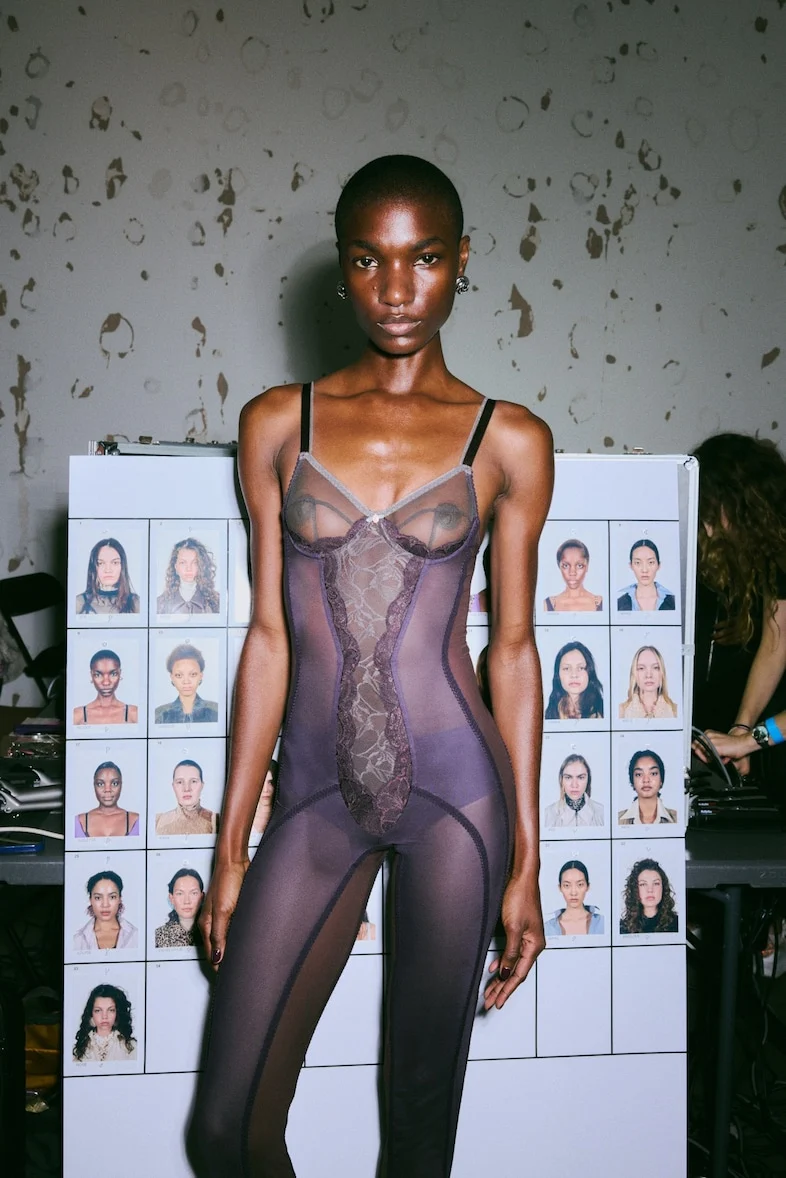
Yesterday morning, amidst the bustling schedules and high-stakes atmospheres of Paris Fashion Week, design duo Ester Manas and Balthazar Delepierre marked their official return to the global fashion capital’s runway after a significant two-year hiatus. Their comeback comes at a critical juncture for the international fashion industry, arriving precisely as conversations surrounding body inclusivity, representation, and the economic accessibility of luxury garments reach a boiling point. The timing of their return is not merely coincidental; it is a vital intervention in an industry that has systematically backtracked on its promises of diversity over recent seasons.
According to data compiled in the recent Vogue Business Size Inclusivity Report, the state of runway representation for plus-size models has deteriorated to alarming lows. During the recent seasons, representation plummeted from an already negligible 0.8 percent down to a stark 0.3 percent across major international fashion weeks. Industry analysts and cultural critics note that this drastic reduction is directly correlated with the absence of pioneering, size-inclusive labels like Ester Manas from the official calendars. While the heavy burden of representing an entire demographic should never rest solely upon the shoulders of one or two independent brands, the re-emergence of Manas and Delepierre on the official schedule serves as a powerful reminder of what inclusive, boundary-pushing design looks like on a global stage.
The Chronology of an Absence: Tracing the Duo’s Path to Paris
To understand the weight of Ester Manas’s return to Paris, one must examine the timeline of the brand’s rapid ascent and subsequent strategic retreat. Founded in 2019, the label quickly disrupted the traditional European luxury market by centering its entire ethos around size-inclusivity, proving that high fashion and innovative tailoring could—and should—cater to bodies beyond standard sample sizes. The brand’s clever use of adjustable hardware, stretch fabrics, and wrap-around constructions allowed a single garment to fit multiple sizes, transforming inclusivity from an afterthought into a sophisticated design principle.
By 2021 and 2022, Ester Manas was a darling of the Paris schedule, garnering critical acclaim, commercial interest, and a dedicated following. However, the immense operational and financial pressures of maintaining a presence on the grueling international fashion calendar forced the independent brand to step back. The two-year absence allowed the designers time to recalibrate, restructure, and forge meaningful partnerships. During this hiatus, however, the broader industry moved backward. As major houses quietly rolled back their tokenistic casting efforts in the post-pandemic landscape, the percentage of plus-size looks on runways shrunk to near-extinction. Consequently, yesterday morning’s presentation was not just a runway show; it was a reclamation of space in an industry that desperately requires corrective action.
An Unlikely Convergence: Primadonna Meets Michael Scott
For their highly anticipated comeback collection, Ester Manas and Balthazar Delepierre opted for an unexpected yet brilliant collision of cultural and historical references. Titled Somehow I Manage—a direct reference to the fictional, self-aggrandizing memoir written by regional manager Michael Scott in the hit US television mockumentary series The Office—the collection balanced self-aware humor with meticulous craftsmanship.
While the title offered a witty, knowing nod to the logistical and emotional hurdles of surviving two years away from the formal fashion ecosystem, the design execution was treated with the utmost seriousness. The centerpiece of the season was a major collaborative partnership with Primadonna, a heritage Belgian lingerie brand boasting a storied 161-year history. This synergy allowed Manas and Delepierre unprecedented access to a vast, historical archive of undergarment manufacturing, corsetry, and textile engineering.
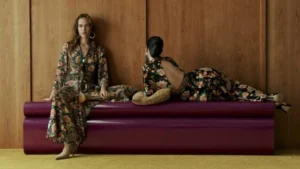
The resulting garments explored the tension between exposure and concealment, vulnerability and armor. Sheer body stockings rendered in soft pastel hues formed the foundation of many looks, featuring structured panels meticulously outlined with delicate, vintage-inspired lace. In keeping with modern styling trajectories that dissolve the boundaries between private and public attire, traditional undergarments were thrust outward, worn as primary outerwear pieces. These sensual elements were intentionally disrupted by jarring yet harmonious print clashes, notably pairing aggressive cheetah patterns with cool-toned baby blues and crisp neutrals.
Material Explorations and Stylistic Contrasts
The runway presentation showcased a masterclass in texture, proportion, and stylistic juxtaposition. Following the sheer bodysuits and intimate wear, the collection expanded into tailored garments that challenged traditional silhouettes. Striped shirting was reimagined with asymmetric cuts, while bouncy, kinetic beaded skirts provided movement and theatricality against rigid, technical outerwear jackets.
Interspersed throughout the lineup were oversized, boxy jackets that swallowed the frame, sharply contrasting with sudden, revealing flashes of exposed lace and skin. This deliberate friction between utility and seduction formed the philosophical core of the presentation. In a post-show statement detailing their creative direction, the designers explained the rationale behind the styling choices:
"There is no reason why the sexy cannot mingle with what, we sometimes assume, does not belong to that category at all."
This design philosophy has been a hallmark of the Ester Manas brand since its inception. By rejecting the historical fashion industry trope that plus-size clothing must be conservative, form-hiding, or structurally muted, Manas and Delepierre continue to champion the radical notion that larger bodies deserve to be adorned in sensual, daring, and unapologetically fashionable garments.
The Broader Implications for the Fashion Industry
The return of Ester Manas arrives at a critical economic and cultural moment for the global fashion industry. As luxury conglomerates face scrutiny over falling sales and shifting consumer demographics, questions surrounding inclusivity have increasingly been sidelined in favor of safe, homogenized commercial strategies. The Vogue Business Size Inclusivity Report data—highlighting the drop to 0.3 percent representation—signals a systemic failure among major luxury houses to cater to the modern consumer base.
Industry analysts suggest that the ongoing contraction of size diversity on the runway is not merely an aesthetic regression, but a commercial miscalculation. The global plus-size apparel market represents a multi-billion-dollar sector with immense purchasing power. Yet, major legacy houses continue to treat size diversity as a seasonal trend to be adopted and discarded at whim, rather than a permanent structural evolution.
Independent brands like Ester Manas carry an unfair burden in this ecosystem. Because major corporations frequently abdicate their responsibilities toward inclusive casting, independent designers who champion diversity are often viewed as the sole standard-bearers of a movement that requires industry-wide reform. Despite these structural challenges, the commercial and critical reception of Somehow I Manage proves that there is an insatiable appetite for intelligent, beautifully constructed inclusive fashion.
Reactions from Industry Insiders and the Press
Fashion critics, buyers, and digital commentators have responded to the comeback collection with overwhelming enthusiasm, viewing it as a high point of the Paris Fashion Week calendar. Social media channels flooded with imagery from the runway, focusing particularly on the intricate lace work, the historical depth of the Primadonna collaboration, and the refreshing diversity of the casting choices.
Stylists and retail buyers noted that the integration of Primadonna’s archival techniques added a layer of luxury and historical authenticity that elevated the collection beyond a standard conceptual showcase. By bridging contemporary streetwear sensibilities with over a century of lingerie craftsmanship, Manas and Delepierre demonstrated a maturity and evolution in their design language that promises longevity for the brand’s renewed chapter.
Furthermore, cultural commentators highlighted the brilliance of the collection’s title. In a notoriously self-serious industry that often struggles to laugh at itself, Somehow I Manage functioned as both an inside joke among fashion insiders and a resilient anthem for independent designers navigating a volatile post-pandemic economic landscape.
Looking Forward: What Lies Ahead for Ester Manas
As Paris Fashion Week draws to a close, the return of Ester Manas leaves a lasting impression on an industry desperately searching for authenticity and structural progress. While a single successful runway show cannot single-handedly reverse the broader decline of runway inclusivity documented by industry reports, it establishes a high benchmark for what independent labels can achieve when they refuse to compromise their values.
The partnership with Primadonna points toward a future of intelligent collaborations where heritage brands can leverage their historical archives to support innovative, forward-thinking designers. For Manas and Delepierre, the immediate focus will be on translating the critical acclaim of Somehow I Manage into sustained commercial success, ensuring that their reentry into the Paris schedule is permanent.
Ultimately, the event served as a vital reminder that fashion is at its most potent when it challenges societal norms, embraces diverse forms of beauty, and refuses to apologize for taking up space. As the industry reflects on the sobering statistics of size inclusivity reports, the message radiating from the Ester Manas runway is clear: inclusivity is not a trend to be abandoned, but an essential foundation for the future of style.