








The third edition of Drapers’ seminal Sustainability and the Consumer report, published in partnership with Smurfit Westrock, has been released after a four-year interval, a period marked by profound shifts within the global fashion industry and consumer behaviour. The comprehensive findings, which surveyed 2,000 UK shoppers, underscore a significant mainstreaming of environmental and ethical considerations in purchasing decisions, even as a persistent gap between stated intent and consistent action continues to challenge brands and retailers. This renewed focus on consumer sentiment arrives at a critical juncture, as the fashion sector grapples with escalating environmental regulations, increased public scrutiny over its supply chains, and the imperative to transition towards more circular and responsible business models.
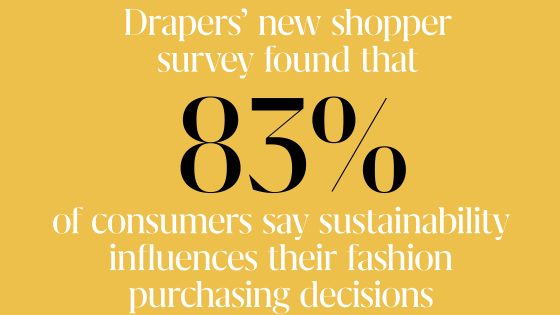
The report highlights a substantial increase in consumer awareness and concern regarding sustainability. More than eight in ten (83%) respondents affirmed that sustainability holds importance for them or directly influences their purchasing choices. A striking 56% stated that it actively shapes what they buy, demonstrating a clear progression from mere awareness to tangible impact on consumer habits. Furthermore, nearly a quarter (24%) reported that sustainability influences the majority of their purchases, signalling a significant commercial opportunity for brands that can authentically meet these evolving expectations. This data represents a considerable leap from previous years, reflecting a growing collective consciousness spurred by global climate conversations, heightened media coverage of fashion’s environmental footprint, and the rising prominence of ethical consumption movements.
The Enduring Challenge: Bridging the Intention-Action Gap
Despite the pronounced shift in consumer intent, the report meticulously details the enduring "intention-action gap," a well-documented phenomenon where stated values do not always translate into consistent purchasing behaviour. While a growing proportion of shoppers, 36%, now believe most of their purchases are sustainable – a notable increase from 21% in 2022 – this optimistic self-assessment often collides with practical realities. Consumer behaviour remains heavily influenced by pervasive economic pressures, acute price sensitivity, and, crucially, a lingering uncertainty about the practical implications of "sustainability" in the context of fashion products.
This gap, though potentially narrowing as the 2026 report indicates a 10% increase in consumers factoring sustainability into their decisions compared to four years ago, illustrates the complex interplay of factors at play. Sustainability, while gaining ground, still competes fiercely with traditional purchasing drivers. Quality and durability emerge as paramount, cited by 86% of consumers, closely followed by price and style, both at 84%. In an era marked by economic instability and inflationary pressures, shoppers are naturally prioritising value, longevity, and affordability. This often relegates sustainability to a secondary consideration, rather than the primary determinant, in the final purchasing calculus. Industry analysts suggest this dynamic necessitates a strategic repositioning of sustainable offerings, integrating them seamlessly into the core value proposition rather than presenting them as a separate, premium attribute.
Economic Realities: The Price Barrier and Perceived Value
The Drapers report unequivocally identifies price as the single most formidable barrier to widespread sustainable purchasing, with 44% of consumers citing it as a major deterrent. While there is a general understanding among consumers regarding why sustainable products might incur higher costs – often due to ethical labour practices, premium eco-friendly materials, and more localised production – affordability continues to impede broader adoption. A significant 77% of respondents expressed a willingness to buy more sustainable items if they were cheaper, and 46% indicated an openness to paying a premium. However, this willingness to pay more typically extends only to modest price increases, highlighting a ceiling on consumer elasticity for sustainable goods.
This finding presents a critical challenge for fashion businesses. The report implicitly suggests that sustainability cannot be positioned merely as a luxury add-on. Instead, it must be integrated into a holistic value proposition that actively emphasises durability, cost-per-wear, and long-term utility. Brands are encouraged to communicate how sustainable choices can lead to savings over time, mitigating the initial higher price point. Consumers, the report notes, are demonstrating a willingness to make certain trade-offs for sustainability, such as accepting longer delivery times or fewer style options, but these concessions rarely extend to sacrificing fundamental aspects like convenience or proper fit, which remain non-negotiable for the majority.
The Rise of Circularity: Recommerce and Rental Gain Momentum
Beyond initial purchasing decisions, the report provides compelling evidence of the growing traction of circular fashion models. More than half of all consumers surveyed reported having bought or sold second-hand clothing online within the past year. This engagement is particularly robust among younger demographics, who are increasingly embracing pre-owned fashion as a sustainable, affordable, and often unique alternative to new purchases. Charity shops continue to serve as the most popular avenue for consumers to offload unwanted garments, reflecting a long-standing cultural habit and community engagement.
However, the ecosystem of circularity is expanding rapidly. Retailer take-back schemes, where brands offer incentives for customers to return used items, and dedicated resale models, often integrated directly into brand websites or facilitated by third-party platforms, are experiencing significant growth. While still a niche segment, clothing rental services are also beginning to attract interest, as consumers explore flexible, temporary access to fashion items, particularly for special occasions or to experiment with trends without the commitment of ownership. This shift towards recommerce and rental signifies a fundamental re-evaluation of fashion consumption, moving away from a purely linear "take-make-dispose" model towards one that prioritises resource efficiency and extended product lifecycles. Global market analyses corroborate this trend, projecting the second-hand apparel market to outpace fast fashion growth significantly in the coming years, driven by a confluence of sustainability concerns and economic prudence.
Navigating the Information Landscape: Confidence, Clarity, and Trust
Despite the increasing engagement with sustainable fashion, the report reveals that consumer confidence in their understanding of sustainability remains limited. While a majority believe they grasp the concept, only a minority express high confidence in their knowledge. This highlights a significant opportunity for brands and retailers to simplify and clarify their sustainability messaging. The onus is on the industry to translate complex environmental and ethical concepts into practical, tangible benefits that resonate with everyday shoppers, moving beyond jargon and towards actionable insights.
Crucially, the report clarifies that consumers perceive sustainability as a multifaceted concept, extending far beyond purely environmental impact. Social factors, such as fair pay and safe working conditions for garment workers, rank as top priorities. This holistic understanding reflects a broader societal expectation for responsible fashion that addresses both planetary and human well-being, aligning with the growing emphasis on ESG (Environmental, Social, and Governance) principles in corporate accountability.
However, consumer trust in brands’ sustainability claims remains fragile. Many shoppers express scepticism, particularly concerning assertions about fair wages and ethical labour practices. This widespread scepticism fuels a strong demand for greater transparency across the supply chain. Consumers are increasingly proactive, researching sustainability credentials before making purchases, relying heavily on independent reviews, third-party certifications (such as GOTS for organic textiles or Fair Trade for ethical production), and verified data over brand-generated marketing claims alone. The battle against "greenwashing," where companies make unsubstantiated or misleading environmental claims, is intensifying, making authentic and verifiable communication paramount for building lasting trust.
Furthermore, packaging has emerged as a highly visible indicator of a brand’s sustainability commitment. Clear labelling regarding recyclability, minimal use of materials, and the adoption of eco-friendly packaging solutions all play a crucial role in shaping consumer perceptions and actively enabling more sustainable behaviour at the point of purchase and post-consumption.
Industry Leadership and Future Imperatives
A pivotal finding of the report is the clear expectation from consumers for the fashion industry to take the lead in driving systemic change. Brands and retailers are overwhelmingly seen as the primary agents of progress, positioned ahead of both government regulation and individual consumer action. This reflects a significant shift towards greater corporate accountability, where credibility is earned through demonstrable action, unwavering transparency, and measurable improvements rather than aspirational marketing.
The four-year hiatus between Drapers’ reports underscores a period of immense transformation for the fashion industry. Since the previous edition, global awareness of climate change has intensified, regulatory bodies have begun to introduce stricter environmental standards, and technological advancements have enabled greater supply chain traceability. Events such as the COVID-19 pandemic further exposed vulnerabilities in global supply chains and prompted a re-evaluation of consumption patterns, accelerating the shift towards digital channels and a greater appreciation for local and ethical production.
In light of these findings, the report paints a vivid picture of a consumer landscape defined by escalating expectations, cautious trust, and practical constraints. Shoppers are increasingly motivated to make sustainable fashion choices, but their ability to do so is contingent upon affordability, clarity of information, and credible proof of impact. For fashion businesses, the opportunity is clear: to bridge this existing gap by delivering solutions that are not only environmentally and socially responsible but also economically accessible, functionally compelling, and aesthetically desirable. This necessitates continued innovation in materials, manufacturing processes, and business models, coupled with transparent communication strategies that empower consumers to make informed choices. The future of fashion lies in its capacity to transform intent into impactful action, creating a virtuous cycle of sustainable consumption and production.