






Photographer Domino Leaha is set to unveil her deeply personal and expansive project, Unfulfilled, a photobook and forthcoming exhibition that chronicles over a decade of human connection, fragility, and the enduring quest for meaning. Spanning across global cultural epicenters including London, Los Angeles, Milan, and New York, the project offers an unvarnished look into the lives of Leaha’s closest confidantes – friends, lovers, and muses – capturing their intimate moments of joy, struggle, and profound vulnerability. Slated for exhibition at the prestigious Quattro Milano gallery on April 9, 2026, Unfulfilled promises to be a landmark exploration of the emotional landscape that defines contemporary relationships.
The Genesis of "Unfulfilled": A Deep Dive into Emotional Origins
At the heart of Unfulfilled lies Leaha’s fundamental artistic philosophy: "For me, everything is about feeling. I want people to feel something." This declaration underscores the project’s visceral and emotive core, distinguishing it from purely observational documentary work. The title itself, Unfulfilled, emerged from a period of profound personal heartbreak, a revelation that lends the project an additional layer of autobiographical authenticity. During a time of emotional turmoil following a romantic split, Leaha found solace and resonance in Shakespearean sonnets. It was within this poetic exploration that the word "unfulfilled" resonated deeply, crystallizing her internal state. "I realised it captured exactly what I was feeling – a sense of wanting, of requiring more than could be returned," Leaha explains. This personal epiphany transformed a private sorrow into a universal theme, anchoring the project in an emotion accessible to anyone who has experienced longing or unrequited desire.
The concept of "unfulfillment" is not presented as a deficit but rather as an inherent aspect of the human experience – a perpetual state of desiring, evolving, and sometimes falling short of an idealized return. This nuanced perspective elevates the project beyond mere documentation of personal relationships, inviting viewers to reflect on their own experiences of longing and the often-elusive nature of complete satisfaction in life and love. By framing her work through this lens, Leaha taps into a collective consciousness, acknowledging the inherent human condition of striving for more, even when faced with the beauty of what already exists.
A Visual Diary Across Continents: The Scope and Subjects
Unfulfilled is a testament to the enduring power of long-term artistic engagement, meticulously documenting relationships that have evolved, fractured, and sometimes reconnected over more than ten years. The project’s expansive geographical reach – from the gritty elegance of London to the sun-drenched sprawl of Los Angeles, the fashion-forward energy of Milan, and the relentless dynamism of New York – reflects not only Leaha’s own transnational lifestyle but also the interconnectedness of modern lives. Each city serves as a backdrop to a deeply personal narrative, illustrating how environments shape and reflect individual journeys.
The subjects of Unfulfilled are not mere models but individuals deeply embedded in Leaha’s life. "I photographed the people that I love the most," she states, emphasizing the profound personal investment in each image. This collection includes current friends, former lovers, and old acquaintances with whom communication has ceased, creating a complex tapestry of past and present connections. This diverse cast allows Unfulfilled to explore the full spectrum of human relationships – from the passionate intensity of romance to the enduring bonds of friendship and the lingering echoes of connections lost. The longitudinal nature of the project provides a rare glimpse into the ebb and flow of these relationships, capturing individuals at various junctures of their personal growth and emotional states. The chapters, organized by the subjects’ names, function like individual character studies, each revealing a unique arc within the broader narrative of human connection. This structure enhances the "visual diary" aspect, inviting viewers to witness the intimate transformations and stagnations that occur over time.
Unpacking Vulnerability: Themes of Fragility and Resilience
The true potency of Unfulfilled lies in its courageous exploration of raw human vulnerability. Leaha delves into narratives that are often hidden, exposing the "private and personal narratives of loss, heartbreak, and addiction we can all find in ourselves." The project is a stark portrayal of life’s inherent paradoxes, encompassing "stories of longing, vanity, defiance, joy, and surrender," all contributing to what Leaha describes as "the tragedy and grace of life, in its ever-unfulfillable nature." This profound statement from the project’s foreword sets the tone for a collection that refuses to shy away from discomfort, instead embracing it as an integral part of the human experience.
Many of the individuals photographed were navigating intense personal struggles, facing "their own forms of fragility – addiction, anorexia, withdrawal." Leaha’s lens captures these battles with unflinching honesty, transforming private pain into a shared human experience. Crucially, Leaha includes herself in this narrative of brokenness. "All the people in the book are broken," she says, "and I was broken too." This admission is vital, establishing a reciprocal vulnerability between the artist and her subjects, fostering an environment of trust that allows for such profound intimacy to be captured. It suggests that the act of photography was not merely observational but a mutual process of recognition and shared experience, where both parties contributed to the emotional depth of the work. The project thereby becomes a powerful commentary on shared humanity, reminding us that even in our most isolated moments of struggle, there is a fundamental commonality that binds us. This reciprocal honesty distinguishes Unfulfilled from more detached documentary styles, imbuing it with a raw, empathetic power that resonates deeply with audiences.

The Art of Unvarnished Truth: Photographic Technique and Style
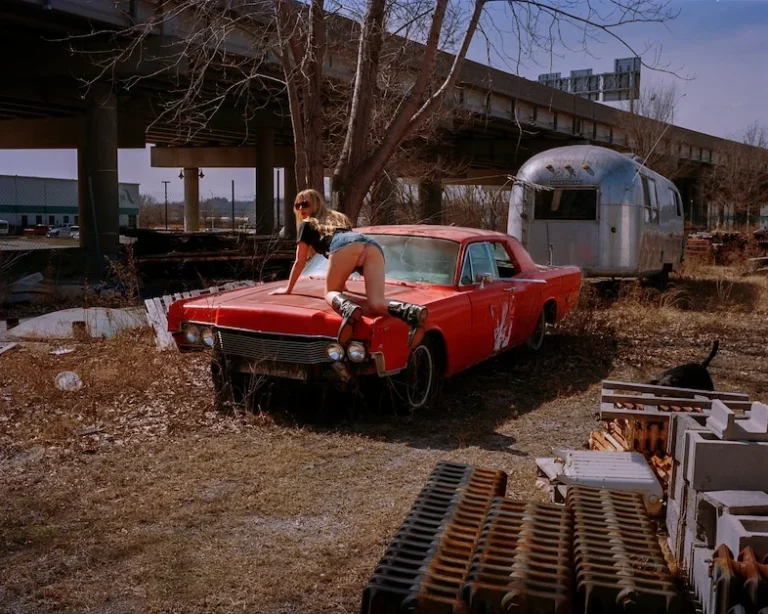
Domino Leaha’s photographic approach in Unfulfilled is characterized by an unwavering commitment to authenticity and an intuitive mastery of light and composition. Eschewing digital manipulation, Leaha states, "I don’t edit anything within my work, instead I like to play with lights and composition a lot." This dedication to capturing moments as they naturally unfold reinforces the project’s "visual diary" ethos, ensuring that what the viewer sees is as close to the lived experience as possible. This choice aligns her work with a tradition of purist photography, where the integrity of the captured image is paramount, emphasizing the photographer’s skill in framing and timing over post-production alterations.
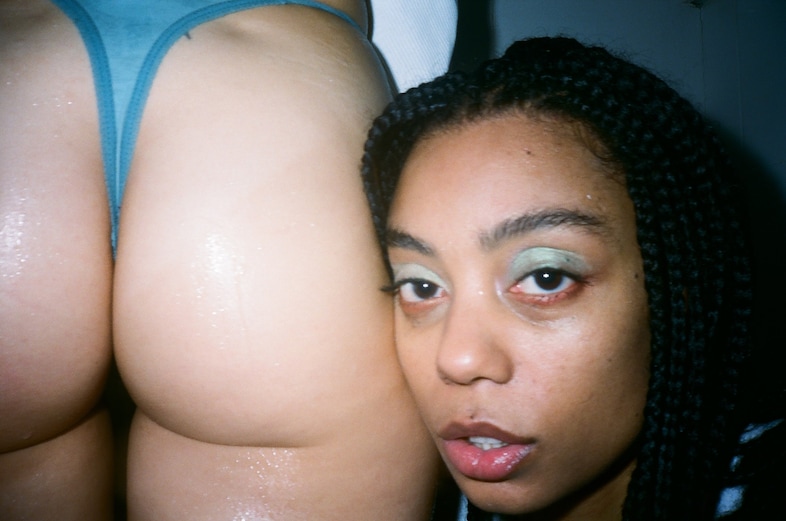
The images themselves are strikingly intimate and often set in mundane, everyday spaces, which paradoxically heightens their emotional impact. Subjects are depicted "sprawled across bedsheets, others topless and sitting poolside." One particularly arresting image features a subject "entirely naked, splashed in an electric blue paint and thrashing around on a mattress," a powerful metaphor for raw emotion and vulnerability. These settings—cluttered bedrooms, echoing apartment hallways, local parks—are not glamorous, yet Leaha’s cinematic eye transforms them into stages for profound human drama. She possesses a unique ability to find the extraordinary in the ordinary, making the personal universal.
Leaha’s narrative technique within the photobook is equally compelling. By presenting subjects at different points in their lives, she creates a chronological unfolding of their stories. "I found it very interesting to take pictures of these people in different moments of their lives," she explains. "You can see the changes, the moments before and after certain events… It’s like a visual diary of intimacy." She recalls poignant examples, such as one subject appearing in 2018 and again in 2022 before a relapse, or another navigating life between squats in New York. These temporal juxtapositions offer a rare and powerful insight into the continuous, often turbulent, journey of human existence, allowing viewers to witness the visible traces of time, experience, and struggle etched onto the lives of her subjects. The unedited nature of the photographs further enhances this sense of raw truth, inviting viewers into an unmediated dialogue with the images.
Beyond the Lens: Voices from Within the Project
Adding another layer of profound intimacy and multi-perspectival depth to Unfulfilled are the accompanying scans of handwritten notes and scraps of letters from the subjects themselves. This inclusion is a deliberate choice by Leaha, designed to "give the audience the opportunity to see what the people think about being photographed by me." It transforms the photobook from a singular artistic vision into a dialogue, offering rare insights into the reciprocal nature of the artistic process and the complex dynamics between photographer and subject.
These personal testimonials are often as raw and poetic as the photographs they accompany. Melanie Blue, a friend of Leaha’s, signs off a note with the striking declaration: "Thank you for loving my scars and invading me with your passion like a tender disease." This powerful phrase encapsulates the intense, sometimes challenging, yet ultimately healing nature of being seen and accepted in one’s vulnerability. It speaks to the profound trust and emotional exchange that must have characterized their relationship, allowing for such an intimate photographic portrayal. Another subject, Martina, writes, "I’ve crossed oceans to see you again. Love never dies." This line not only highlights the enduring nature of certain connections but also underscores the magnetic pull Leaha seems to exert on those around her, inspiring profound loyalty and a willingness to transcend physical barriers for connection.
Other notes recount initial encounters with the photographer, some blossoming into heartfelt poems that recall the intense magnetism and specialness of their relationships at the time. Others are more austere, perhaps reflecting different facets of the relationships or the subjects’ personalities. Regardless of their tone, these handwritten additions are invaluable. They provide context, emotional anchors, and most importantly, they validate the authenticity and depth of the connections Leaha captures. They offer a rare glimpse into the minds and hearts of the subjects, allowing them to reclaim a voice within their photographic representation. This collaborative element enriches Unfulfilled, making it not just a collection of images, but a multi-faceted narrative of human interaction and emotional exchange, where the subjects are not merely observed but actively participate in the storytelling.
The Photobook as a Narrative Medium
The choice of the photobook as the primary medium for Unfulfilled is a deliberate and astute artistic decision. In an era dominated by fleeting digital images, the photobook offers a tangible, immersive, and intimate experience, allowing for a sustained engagement with the narrative. It provides a structured format to present the decade-long chronology of relationships and emotional evolutions, with each page turn akin to turning a leaf in a personal diary. The physical presence of the book, its texture, the arrangement of images, and the inclusion of handwritten notes create a unique tactile and visual journey that digital platforms cannot fully replicate.
Photobooks have long been recognized as a powerful artistic medium for storytelling, particularly for projects that delve into personal narratives and long-form documentary. Unlike a gallery exhibition, which offers a curated, often limited, selection of works, a photobook allows the artist to control the sequencing and pacing, guiding the viewer through a carefully constructed emotional and visual arc. For Unfulfilled, this means that the interplay between the photographs and the intimate textual elements—the notes, poems, and letters—can be experienced in a cohesive and deeply personal manner. The photobook becomes an archive of emotions, relationships, and time, a cherished object that viewers can revisit and reflect upon, deepening their connection to Leaha’s profound exploration of the human condition.
Contextualizing Intimate Photography: A Legacy of Vulnerability
Domino Leaha’s Unfulfilled stands firmly within a rich and compelling tradition of intimate and confessional photography. Artists throughout history have turned their cameras inward, exploring personal relationships, family dynamics, and the hidden facets of private life. Pioneers like Nan Goldin, with her iconic "The Ballad of Sexual Dependency," or Larry Clark’s raw portrayal of youth culture in "Tulsa," paved the way for a photographic genre that blurs the lines between art, autobiography, and documentary. These artists, much like Leaha, sought to capture the messy, often uncomfortable, truths of human existence, challenging conventional notions of privacy and public display.
Leaha’s work distinguishes itself through its emphasis on mutual vulnerability and the longitudinal aspect. While Goldin’s work often presented a stark, almost voyeuristic, glimpse into a subculture, Leaha’s Unfulfilled is characterized by a reciprocal openness, where the subjects’ voices and feelings are explicitly integrated into the narrative through their handwritten notes. This collaborative dimension adds a layer of ethical consideration and shared agency, making the project a testament to trust and mutual understanding rather than mere observation. Her focus on the "unfulfilled" aspect also provides a unique philosophical framework, transcending specific situations to touch upon a universal human yearning. In a world increasingly saturated with curated, perfected images, Leaha’s unedited, raw, and deeply felt photographs serve as a powerful counter-narrative, reminding us of the enduring power of authentic human connection and the courage it takes to reveal one’s true self.
The Road to Quattro Milano: Anticipation for the Exhibition
The announcement that Unfulfilled will culminate in an exhibition at the esteemed Quattro Milano gallery on April 9, 2026, marks a significant milestone for Domino Leaha and the project. An exhibition offers a different dimension to the experience of the photobook, allowing for large-scale prints, curated installations, and a communal viewing experience. In a gallery setting, the raw intimacy of Leaha’s photographs will be amplified, potentially immersing viewers more directly into the emotional landscapes she has meticulously documented. The physical space of the gallery can be utilized to create an atmosphere that complements the project’s themes, perhaps through specific lighting, spatial arrangements, or even soundscapes that evoke the complex emotions of "unfulfillment."
The Quattro Milano gallery, known for its commitment to contemporary art and its global reach, provides an ideal platform for Unfulfilled to reach a wider international audience. The exhibition will allow critics, collectors, and the general public to engage with Leaha’s work in a dynamic and interactive manner, fostering discussions around vulnerability, long-term artistic projects, and the evolving nature of photographic intimacy. The anticipation surrounding this event is significant, as it promises to be a powerful artistic statement that will undoubtedly leave a lasting impression on the contemporary art scene.
Broader Implications: The Universal Search for Connection
Ultimately, Unfulfilled transcends its origins as a personal diary to become a universal meditation on the complexities of human relationships and the persistent search for connection in an imperfect world. Leaha’s work invites viewers to confront the uncomfortable yet deeply human truth that fulfillment is often an elusive horizon, a state of being constantly sought but rarely fully attained. This universal resonance is precisely what Leaha hopes for: "People don’t know me or these people I photographed," she acknowledges, "but I hope they can still feel something close to what I felt."
The project’s exploration of vulnerability, loss, and the shared human condition speaks to an innate desire for understanding and empathy. In a society often characterized by superficial connections and curated self-presentations, Unfulfilled offers a radical act of honesty, stripping away pretenses to reveal the raw, beautiful, and sometimes painful realities of human interaction. It reminds us that our personal struggles, our heartbreaks, and our unfulfilled longings are not isolated experiences but threads that weave us into the larger tapestry of humanity. Through her art, Domino Leaha encourages a deeper self-reflection and a more compassionate understanding of others, affirming that even in our brokenness, there is a profound connection to be found. The enduring impact of Unfulfilled will lie not just in its aesthetic qualities, but in its capacity to provoke introspection and foster a collective sense of empathy in a world that deeply craves authentic connection.