










London-based designer Ellie Misner has unveiled her Autumn/Winter 2026 demi-couture collection, a deeply personal and conceptually rich exploration of the anxieties surrounding milestone birthdays. Titled "It’s My Birthday, I Can Cry If I Want To," the collection delves into the specific psychological tension that accompanies birthdays ending in a zero, translating anticipation, existential reflection, and post-celebration catharsis into a series of highly conceptual and meticulously crafted garments. The collection, which debuted as part of the AW26 fashion calendar, stands out for its candid portrayal of imperfection and the human experience within the typically pristine world of high fashion.
The Genesis of ‘It’s My Birthday, I Can Cry If I Want To’
Misner’s latest work is directly inspired by her personal experience of approaching her 30th birthday, a universally recognized period of self-assessment and societal pressure. "There’s a specific kind of dread reserved for birthdays that end in a zero – a low, buzzing anxiety that begins long before the candles are lit," Misner explains, articulating the core sentiment driving the collection. This anxiety manifests as a feeling of not having met perceived life milestones or achieving a certain level of "polish" expected by society. The collection, therefore, serves as a sartorial commentary on these internal and external pressures, offering a visual narrative that oscillates between the glamor of celebration and the messy reality of human vulnerability.
The creative process for "It’s My Birthday, I Can Cry If I Want To" began approximately 12 to 18 months prior to its unveiling, typical for a demi-couture collection of this complexity. Initial concept development involved extensive mood boarding, material research, and silhouette sketching, all centered around the theme of a celebratory night that gradually unravels. Misner’s design philosophy consistently prioritizes narrative and emotional resonance, a hallmark that has garnered her increasing attention within the competitive London fashion scene since her eponymous label’s establishment in the late 2010s. Her prior collections often hinted at themes of strength and fragility, making this current exploration a natural, albeit more direct, evolution of her artistic voice.
Deconstructing the Narrative of Imperfection
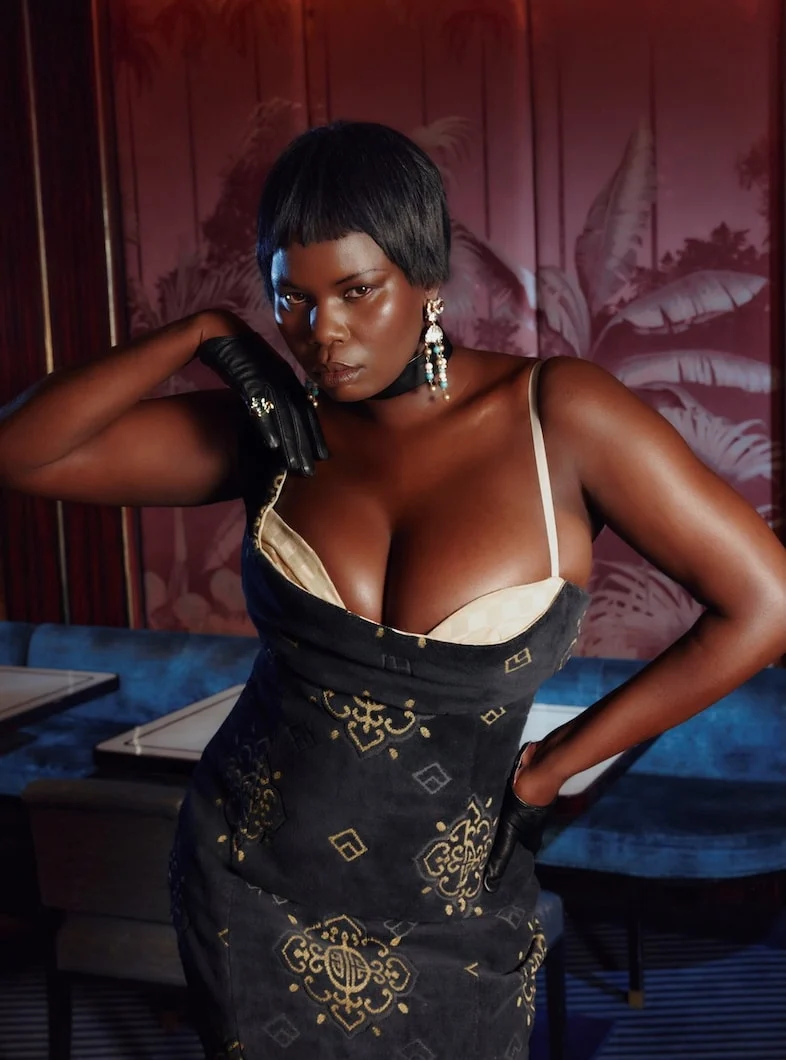
The collection’s accompanying campaign visuals and the garments themselves unfold like a cinematic sequence, capturing distinct moments of a birthday night out. Misner describes the aesthetic as a fusion of "jazz bar fantasy and a memory you can’t quite place," creating an atmosphere that is both glamorous and slightly disorienting.
One of the collection’s most striking pieces illustrates this narrative of unraveling perfection. An initial look, meticulously crafted with glimmering mother-of-pearl embellishments on pristine ivory silk, embodies the initial anticipation and idealization of the perfect celebration. This garment, designed to be "almost too perfect," then undergoes a deliberate transformation. A simulated wine stain, specifically a rosé spill, is immortalized across the ivory silk using darker crystals. This detail is not merely decorative; it is a profound narrative device. "It’s a moment of disaster, but there’s nothing you can do about it, so you just think, ‘Fuck it,’ and make the best of it," Misner states, encapsulating the collection’s ethos of embracing unforeseen imperfections. This particular design choice highlights Misner’s innovative use of materials and embellishment to convey complex emotional states, moving beyond purely aesthetic considerations.
The exploration of party mishaps continues throughout the collection with a series of conceptual looks that elevate everyday embarrassments to high drama:
- The Bathroom Stand-off: Two identical gowns, each featuring dramatic, "zhuzh-y" trains, are presented in a conceptual "bathroom stand-off." This scenario evokes the awkwardness of encountering a rival or experiencing a moment of self-doubt in a private space during a public event. The visual repetition underscores themes of comparison and self-consciousness.
- The Busted Zip: A garment features a meticulously designed "busted zip," threatening to expose more than intended. This detail speaks to vulnerability, accidental exposure, and the sudden loss of composure. The precision required to create a "busted" element that remains aesthetically pleasing yet conveys malfunction is a testament to demi-couture craftsmanship.
- The Snagged Heel: Another look portrays a heel snagged on a carpet, with a piece of the carpet seemingly "coming along for the ride." This whimsical yet poignant detail symbolizes how minor incidents can disrupt an otherwise elegant appearance, and the decision to carry on despite them.
These scenarios, drawn from Misner’s personal "nerves at turning 30," collectively challenge the idealized imagery often associated with fashion and celebration. "I’ve never been that into birthdays, and this one felt massive. There’s so much pressure to be at a certain point in your life, to have achieved certain things. I found I hadn’t hit a lot of those, and life didn’t feel as polished as I’d imagined, so the collection reflects that. You can be a bit of a mess and still be fab," Misner affirms. This statement serves as the collection’s manifesto, advocating for authenticity over an unattainable perfection.
The Significance of Demi-Couture and Misner’s Niche
Ellie Misner’s decision to present "It’s My Birthday, I Can Cry If I Want To" as a demi-couture collection is significant. Demi-couture occupies a unique space in the fashion industry, bridging the gap between ready-to-wear and haute couture. It involves bespoke elements, artisanal craftsmanship, and often a limited production run, but typically at a more accessible price point and with less stringent regulations than haute couture, which is governed by the Chambre Syndicale de la Haute Couture.
The global demi-couture market has seen steady growth, particularly among consumers seeking unique, high-quality garments that offer personalization and a distinctive narrative. Industry analysts estimate this segment to be growing at an annual rate of 5-7%, driven by a desire for individuality and sustainability over mass production. Designers like Misner thrive in this niche, offering artistic expression and exceptional craftsmanship without the often prohibitive costs and exclusivity of traditional haute couture. Her focus on conceptual narratives further distinguishes her in a market that values storytelling and emotional connection. Misner’s use of intricate embellishments like mother-of-pearl and crystals, combined with delicate silks and precise tailoring, aligns perfectly with the expectations of the demi-couture clientele who appreciate the blend of art and wearability.
The Architectural Role of Corsetry
A defining feature of Misner’s aesthetic, and particularly prominent in this collection, is her signature use of corsetry. Far from being merely restrictive undergarments, Misner’s corsets are reinterpreted as both "literal and emotional scaffolding." They act as visible, structural elements within the garments, suggesting a framework that holds everything together, even as other elements appear to unravel. This duality is central to the collection’s message.
Historically, corsetry has been associated with shaping the female form to conform to prevailing beauty standards, often implying constraint. However, Misner subverts this traditional interpretation. In "It’s My Birthday, I Can Cry If I Want To," the corsets function as "survival tools," providing a sense of internal strength and control amidst external chaos. They symbolize the resilience required to navigate life’s imperfections and societal pressures. Even when other parts of a garment depict disarray – a stain, a snag, a tear – the underlying corset remains intact, offering a visual metaphor for inner fortitude. This intentional contrast between polish and unravelling is what gives Misner’s work its profound impact this season, suggesting that one can maintain composure and elegance even when life feels messy. The choice to make these corsets visible, often in luxurious fabrics and with intricate detailing, elevates them from functional underpinnings to integral design statements, reinforcing the idea of "choosing how" one falls apart.
Broader Implications and Industry Reception
Ellie Misner’s "It’s My Birthday, I Can Cry If I Want To" arrives at a time when the fashion industry is increasingly grappling with questions of authenticity, inclusivity, and sustainability. The collection’s embrace of imperfection and vulnerability resonates deeply with a cultural shift away from curated, flawless imagery towards a more honest representation of reality.
Fashion critics and industry observers have noted Misner’s ability to infuse deeply personal narratives with high-level craftsmanship, setting her apart from peers. "Misner consistently challenges conventional beauty standards, proposing that true elegance lies not in flawlessness, but in the confidence to embrace one’s entire experience," commented a leading fashion journalist following the collection’s debut. Stylists are also keen on the collection’s potential for editorial impact, recognizing its strong conceptual underpinning and visual drama. The collection is anticipated to perform well with clients who seek garments with a story, particularly those who appreciate avant-garde sensibilities combined with bespoke quality.
The broader impact of Misner’s work extends beyond individual sales. By openly addressing the psychological toll of societal expectations and presenting "mess" as a form of "fab," she contributes to a vital conversation about mental well-being and self-acceptance within the aspirational world of luxury fashion. Her collection serves as a powerful reminder that "things go wrong. Dresses stain, plans unravel, and people disappoint. And yet, the night continues." This resilient message of embracing the inevitable imperfections of life, rather than resisting them, is arguably the collection’s most significant contribution to contemporary fashion discourse. It suggests a future where high fashion can be both aspirational and relatable, celebrating the human condition in all its messy glory.
As the fashion world looks towards AW26, Misner’s collection stands as a poignant and expertly executed statement, affirming that vulnerability can be a source of strength and that true style emanates from an authentic self, flaws and all. The collection is not merely about clothing; it is about a philosophy for living.