





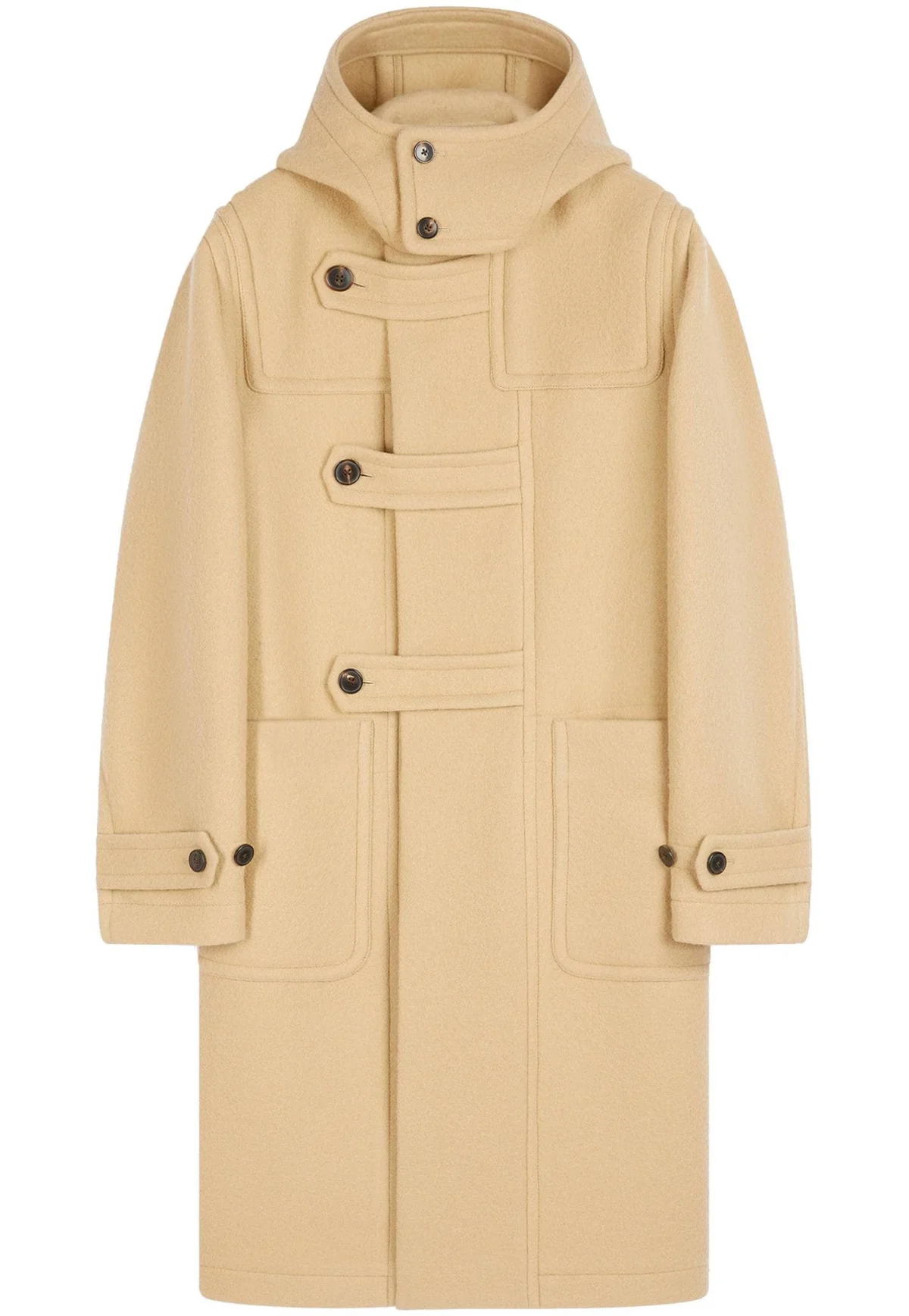
The duffle coat stands as one of the most resilient and historically significant outerwear pieces in modern menswear, combining over a century of utilitarian pedigree with renewed prominence on contemporary fashion runways. Moving far beyond its pop-culture association with fictional literary bears, the garment has transitioned from naval decks and mid-century academic circles into a seasonal staple embraced by both heritage labels and high-fashion design houses. Industry analysts note a sustained resurgence in consumer demand for durable, weather-resistant outerwear, positioning the duffle coat at the intersection of historical authenticity and practical winter utility.
Historical Evolution and Military Origins
The lineage of the duffle coat traces back to the late 19th century, rooted deeply in the operational requirements of the British Royal Navy. Originally engineered to withstand the punishing, freezing environments encountered on the decks of open-air warships, the coat was designed as a heavy-duty layer for sailors facing extreme maritime weather. Its distinctive moniker originates from Duffel, a town in the province of Antwerp, Belgium, which historically produced the coarse, thick woolen fabric utilized in the garment’s initial construction.
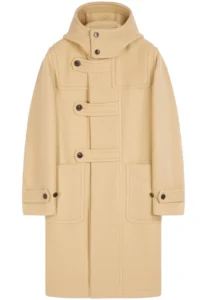
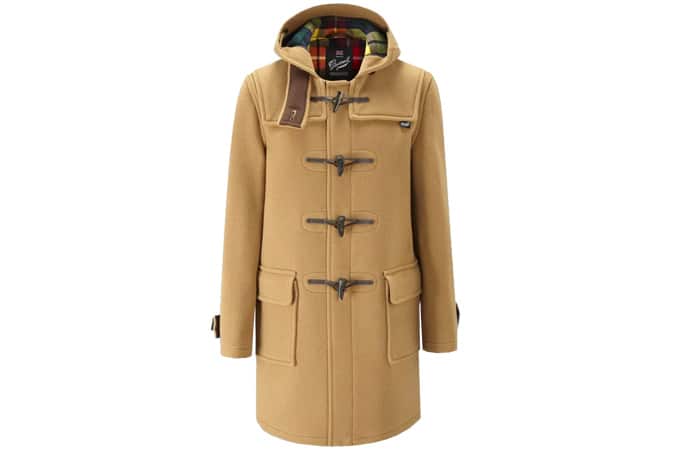
By the time of the First World War and throughout the Second World War, the design had become standard issue across naval branches. Military officials, including Field Marshal Bernard Montgomery—a prominent historical figure often associated with the garment—relied on its robust protection against biting winds and persistent rain. The architectural specifics of the coat were entirely function-driven: oversized hoods were constructed to accommodate naval caps and headgear, high-fastening collar bars shielded the neck from sea spray, and signature buffalo-horn toggles paired with thick rope loops allowed sailors to fasten and unfasten the garment efficiently while wearing heavy-duty winter gloves.

Following the conclusion of the Second World War, vast quantities of military surplus duffle coats flooded the commercial market. This surplus availability proved transformative for the garment’s cultural standing. Offered at low price points and prized for its indestructible physical construction, the coat quickly found a dedicated consumer base among post-war university students, artists, intellectuals, and beatniks. This demographic adoption permanently imbued the silhouette with an understated, preppy academic aesthetic that continues to define its civilian appeal today.
Technical Specifications and Material Science
At its core, a traditional duffle coat is characterized by a generous, boxy silhouette designed specifically to accommodate heavy layering underneath. While modern interpretations frequently lean toward trimmer, tailored profiles, classic iterations drop to approximately knee-length, enveloping the wearer in substantial warmth.

The primary functional merit of the duffle coat lies in its textile composition. Marianne Tse-Laurence, head of design at British heritage outerwear institution Gloverall, highlights the inherent properties of heavy boiled wool as the driving force behind the garment’s longevity.
"The thick boiled wool means it is weather resistant, it will also keep its shape for years and is really hard wearing," states Tse-Laurence. "The wool has lanolin, which is a natural oil from sheep which helps wick water away from the body helping insulation."
This natural moisture-wicking and water-resistant capacity distinguishes traditional wool duffles from modern, synthetic technical jackets that rely on chemical treatments, taped seams, and artificial membranes. Furthermore, the sheer weight of the fabric provides a tactile element that aligns with current consumer preferences for authentic, heritage-driven menswear investments.
Market Analysis and Runway Resurgence
In recent years, luxury houses and contemporary designers have reintroduced the duffle coat into global collections on an unprecedented scale. Runways featuring collections from diverse labels—ranging from traditional tailoring houses like Valentino to contemporary sportswear brands such as Kent & Curwen—have signaled a broader industry consensus regarding the silhouette’s commercial viability.

This resurgence is supported by broader shifts in consumer purchasing behavior. As sustainability becomes an increasingly critical metric in fashion analytics, the demand for durable, long-lasting garments has outpaced fast-fashion turnover. Duffle coats, by virtue of their heavy-duty construction and timeless design paradigm, represent a sustainable alternative to disposable winter wear. Industry data from retail aggregators indicates a notable year-on-year increase in search volume and sales for woolen outerwear, particularly in classic colorways such as camel, navy, forest green, and charcoal.
Evaluating Fit and Selection Criteria
For consumers navigating the modern market, purchasing a duffle coat requires careful consideration of structural proportions, fabric weight, and intended layering requirements. According to style experts, establishing the correct fit is paramount to achieving both comfort and aesthetic balance.
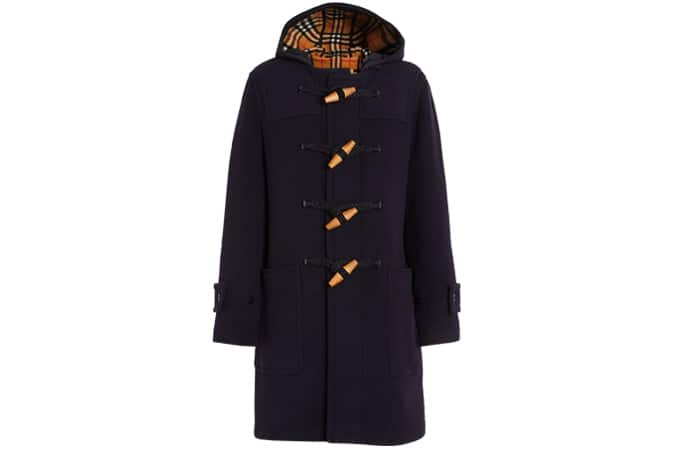
- Length and Proportion: Traditional duffle coats are cut with a roomy, extended drape intended to cover heavy knitwear and suit jackets. Shorter, cropped variations function more similarly to casual jackets. Shoppers are advised to trial prospective purchases while wearing the thickest layers they intend to pair with the coat, ensuring the toggles fasten across the chest without straining or pulling the fabric.
- Fabric Composition and Construction: While heritage styling provides visual appeal, buyers must examine care labels to understand the exact textile blend. Heavy wool offers superior warmth and durability but introduces bulk; conversely, lower price points frequently incorporate high percentages of synthetic fibers such as polyester, which may alter breathability and thermal regulation. Additionally, buyers should note that a traditional wool hood does not guarantee full waterproofing during heavy downpours.
Comprehensive Brand Directory and Market Offerings
The contemporary marketplace features a diverse array of manufacturers producing duffle coats, spanning century-old heritage specialists to contemporary luxury fashion houses.
Gloverall
As arguably the most recognizable name associated with the duffle coat, Gloverall’s commercial history is intertwined with the garment. Following the post-WWII depletion of military surplus, the brand began producing civilian-friendly iterations featuring trimmer bodies and cropped variations. Today, Gloverall remains a market leader, updating its signature pieces through refined fits, diverse color palettes, and periodic high-profile design collaborations.

Original Montgomery
Claiming a lineage that extends back to the 1890s as a foundational supplier to the British military, Original Montgomery operates as one of the oldest surviving producers of the garment. Maintaining domestic manufacturing in England, the brand preserves traditional design hallmarks—such as deep patch pockets and heavy wool construction—while integrating modern, streamlined silhouettes.
Burberry
As a heritage brand deeply rooted in British military outerwear history, Burberry applies its rigorous tailoring standards to the duffle coat. Alongside traditional designs, the label incorporates runway-driven elements, including bold tartan linings, modernized patterns, and premium shearling-lined hoods.

Brooks Brothers
Renowned for American preppy tailoring and outerwear expertise, Brooks Brothers offers 100 percent wool duffle coats characterized by a sharper, more tailored cut through the torso. These iterations feature more subtle hardware and understated toggle fastenings, making them suitable for professional environments.
Mango and Topman
High-street retailers such as Spain’s Mango and the UK’s Topman provide accessible entry points for consumers seeking modern interpretations of the silhouette. While lower price points may necessitate blended fabric compositions incorporating polyester, these brands successfully replicate classic aesthetic details—including collar bars, fixed hoods, and horn toggles—within contemporary slim-fit templates.
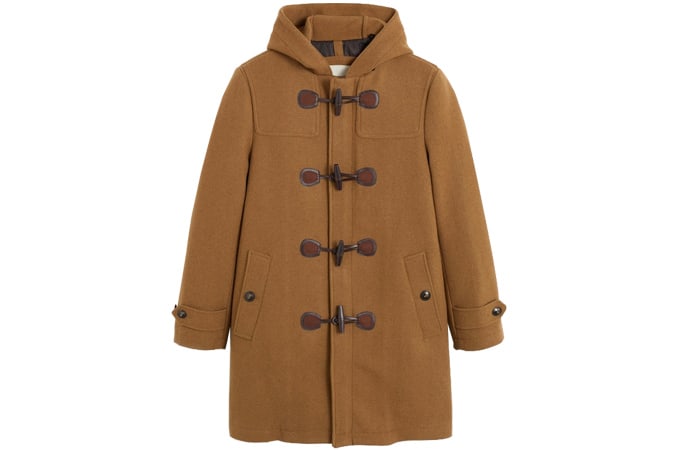
Luxury and Designer Interpretations (Dries Van Noten, Golden Goose, Ralph Lauren, Mackintosh)
High-end and designer markets approach the duffle coat through distinct brand philosophies. Dries Van Noten emphasizes sustainable, long-lasting construction aligned with ecological responsibility. Golden Goose introduces Italian-crafted iterations featuring cropped hems and statement hardware. Ralph Lauren bridges American collegiate preppy aesthetics with traditional British academic styling, and Mackintosh leverages its 1824 heritage to deliver mid-range outerwear defined by meticulous attention to detail.
Styling Methodologies and Contemporary Wardrobe Integration
Styling the duffle coat requires navigating its inherently casual, bulky nature. Olie Arnold, style director at luxury menswear platform Mr Porter, outlines foundational guidelines for incorporating the garment into a functional winter wardrobe.

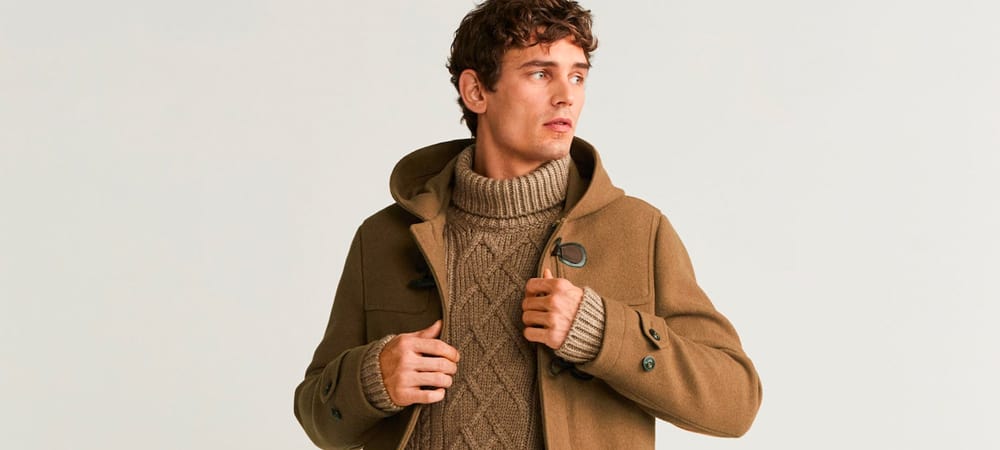
"The duffle coat is perhaps the most casual of coat styles to adopt for the winter season," says Arnold. "They traditionally finish just above the knee and are not supposed to be a tailored style, so when shopping for one, ensure it’s not too fitted so that layers can be worn underneath. The duffle is very flexible with its colour options; camel and navy are popular choices but shades of lighter blue and green work well too."
While the garment can be styled over formal tailoring to produce an effective high-low contrast, industry experts suggest it performs best when paired with equally robust textures. Heavy-weight raw denim jeans, corduroy trousers, and commando-soled boots complement the military and preppy dual heritage of the coat. For transitional layering, pairing a duffle coat over a denim trucker jacket, paired with chinos and minimalist sneakers, offers a contemporary urban silhouette. In sub-zero conditions, functional accessories such as a chunky knit beanie or heavy wool scarf complete the ensemble.

Socio-Economic and Environmental Implications
The resurgence of the duffle coat reflects a broader macroeconomic shift within the apparel sector toward durability and intentional consumption. As consumers face economic pressures alongside heightened awareness of the environmental impact of fast fashion, outerwear constructed from natural, renewable fibers like wool has gained significant traction.
Garments designed to endure decades of wear rather than a single seasonal cycle represent a fundamental pushback against disposable apparel trends. By bridging historical authenticity with modern aesthetic adaptability, the duffle coat has secured its status not merely as a cyclical trend, but as an enduring cornerstone of functional menswear design.