







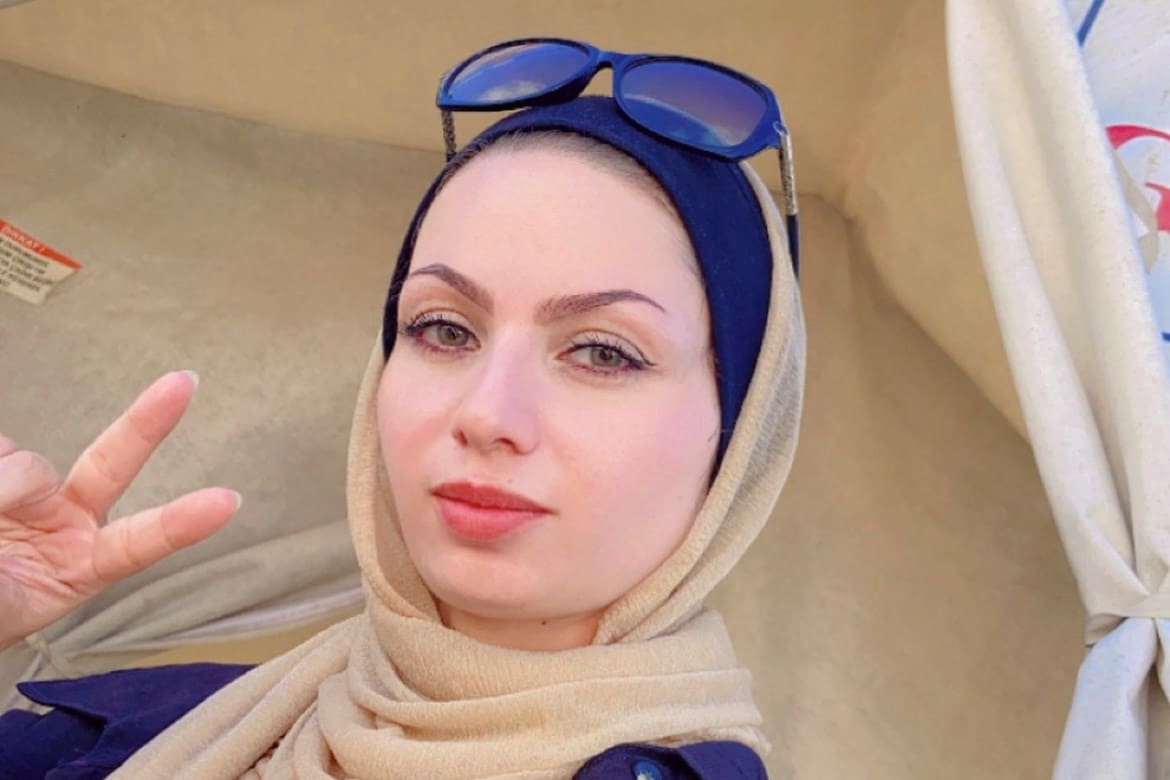
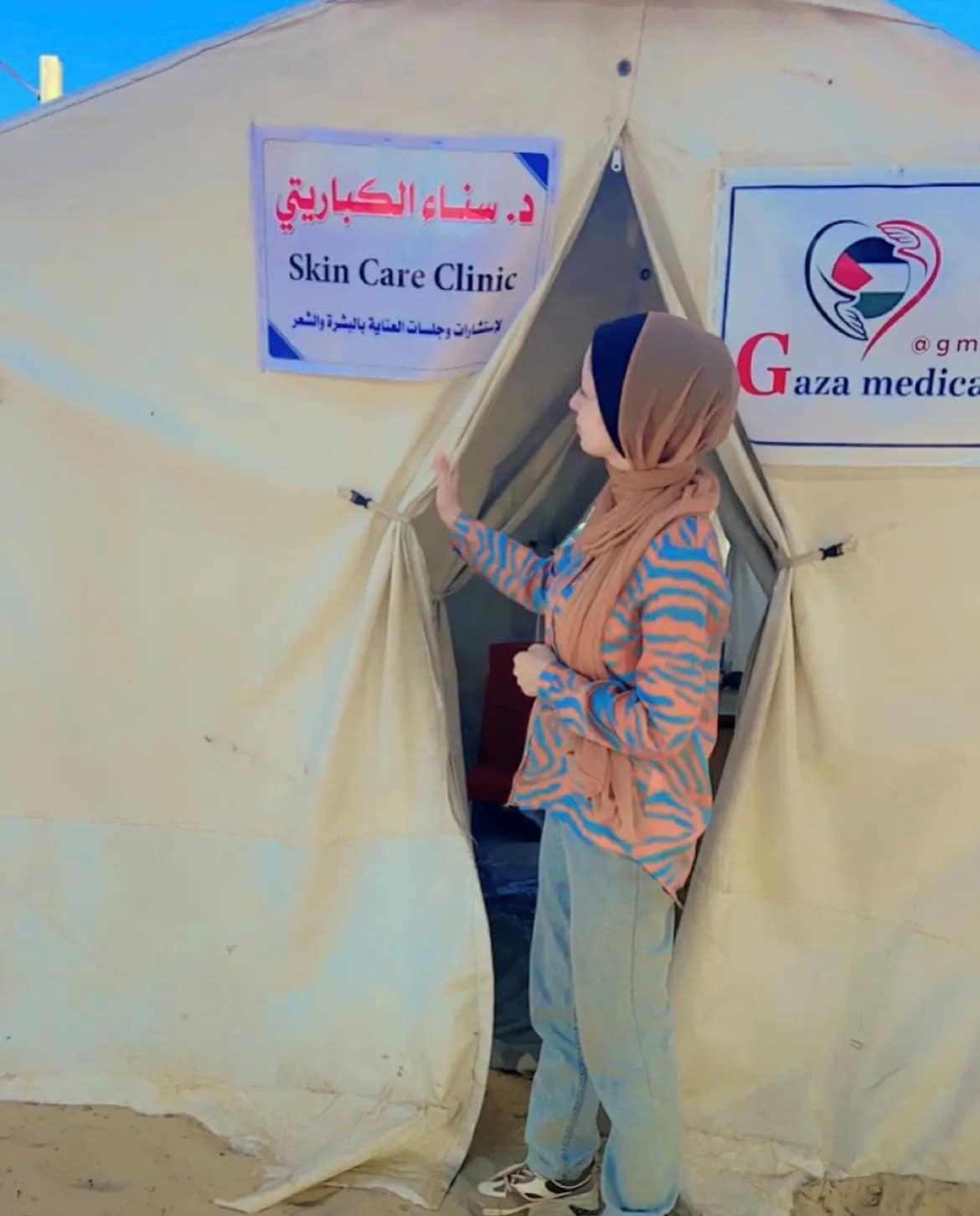
"We lost everything, but we won’t lose our beauty," declares Dr. Sana’a Kabariti, a dedicated skincare specialist in Gaza. This profound statement encapsulates a remarkable narrative of resilience and defiance emerging from one of the world’s most acute humanitarian crises. For the past two and a half years, Dr. Kabariti, a journeyed poet-turned-pharmacist-turned-aesthetician, has been on the front lines, not of physical combat, but of psychological and physical restoration, treating the severe skin conditions afflicting women in Gaza amidst what she describes as a genocide. Her work, alongside the efforts of others like content creator Shams Abdeen, highlights how acts of self-care and aesthetic maintenance have transformed into vital tools for survival, dignity, and the preservation of personhood in the face of unimaginable suffering.
The Unseen Scars: Skin Health in Crisis
The human toll of the ongoing conflict in Gaza since October 2023 is staggering. Reports from UNICEF indicate that Israel’s relentless attacks have internally displaced an estimated 1.9 million Palestinians, forcing them from their homes, many of which now lie in ruins, with 60 percent of the population’s residences destroyed. The Costs of War project at Brown University estimates that approximately 10 percent of Gaza’s residents have been killed or injured, a figure likely to be a significant undercount given the thousands still trapped beneath rubble. Beyond the direct casualties and infrastructural devastation, which includes hospitals and schools reduced to ruins, the Strip grapples with widespread famine and disease. Amidst these colossal tragedies, a quieter, yet deeply personal, form of suffering manifests: the profound impact of displacement, malnutrition, and chronic stress on the skin of women in Gaza, leaving visible traces that etch themselves onto their faces and bodies.
It is these poignant traces that Dr. Kabariti meticulously attends to. Her path to skincare was one of passion and purpose. Initially trained in pharmacy, she pivoted to aesthetics, undertaking 15 specialized courses and diplomas. She not only honed her skills but also began training other Gazan medical professionals, eventually establishing a clinic to offer vital services and treatments. The war, however, upended her life as it did for millions. Dr. Kabariti herself was displaced very early in the conflict, enduring a harrowing 14 additional displacements since. When she first fled her home, she instinctively packed essentials: cleanser, moisturizer, and SPF. Yet, these basic products proved woefully insufficient against the onslaught of environmental and emotional stressors.
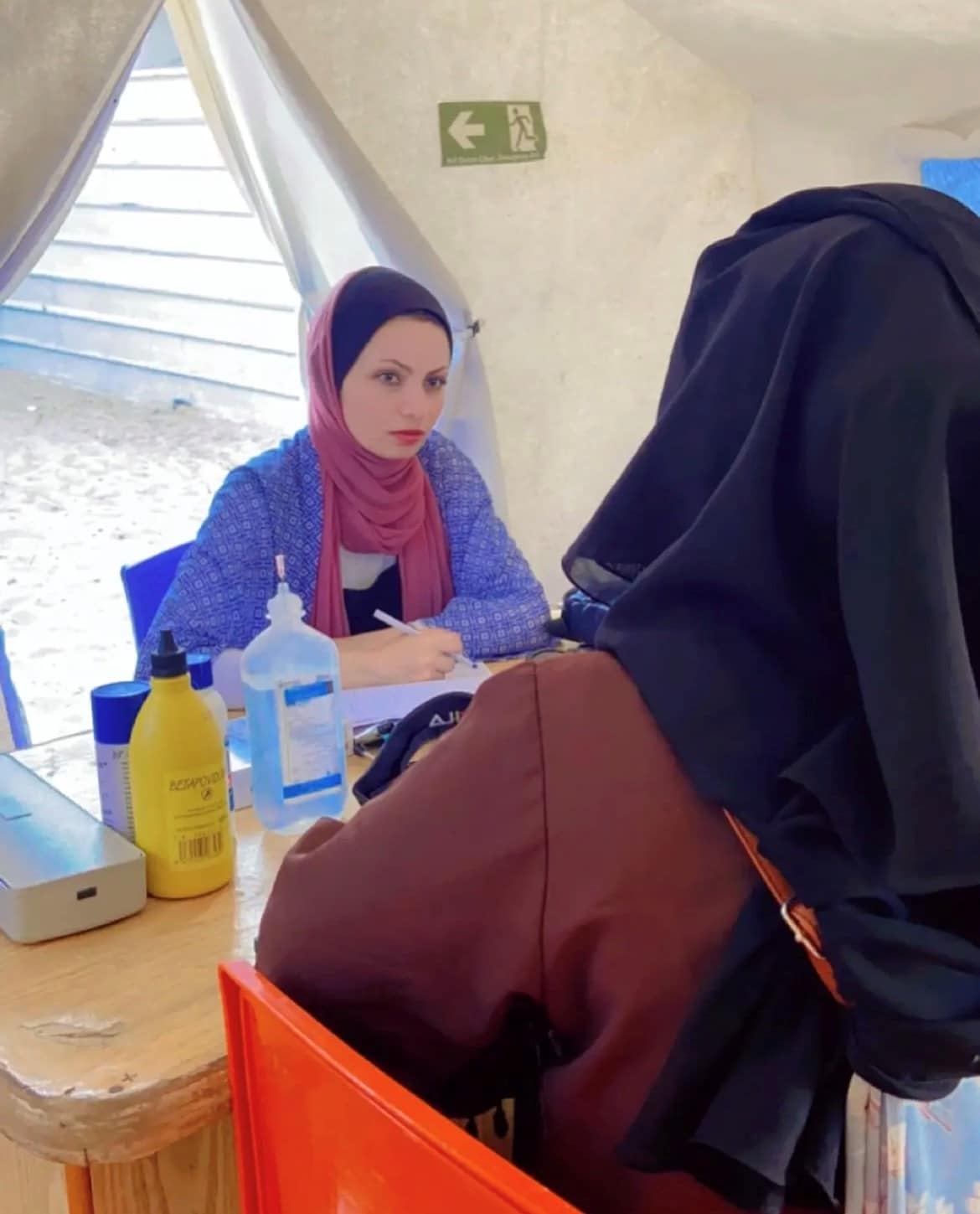
"Displacement majorly impacted my skin," she recounts. "I suffered from exhaustion, malnutrition, and a constant feeling of fear. I walked for extremely long distances in the blazing sun, the skin’s biggest enemy, and had to move from a coastal area to a desert climate. I started to suffer from discolouration." After five months of forced inactivity due, she resumed her practice, initially offering free consultations in Rafah. She anticipated that the mental bandwidth for skincare would be non-existent among those grappling with daily survival. To her surprise, she found the exact opposite. "The clients were very engaged," she notes. "Before the war, their concerns were about maintenance, but they now faced skin conditions that could not be ignored and clearly required treatment."
The predominant issues Dr. Kabariti encountered were severe discolouration and sunburn, direct consequences of prolonged, unprotected sun exposure. The repeated, forced displacements meant women often had to trek vast distances under an intense sun, only to seek shelter in makeshift tents that offered minimal protection from solar radiation. "Women felt they had completely changed; not only had their skin colour changed, but they felt they had aged ten years," Dr. Kabariti explains. "This is not just due to the sun, but stress, malnutrition, and instability all speeding up the signs of ageing." She now dedicates her expertise to treating hyperpigmentation, extreme dryness, facial melasma, and dark circles, as well as an array of skin conditions exacerbated by pollution and the unsanitary, overcrowded conditions prevalent in displacement camps.
Operating Under Duress: A Clinic in a Tent
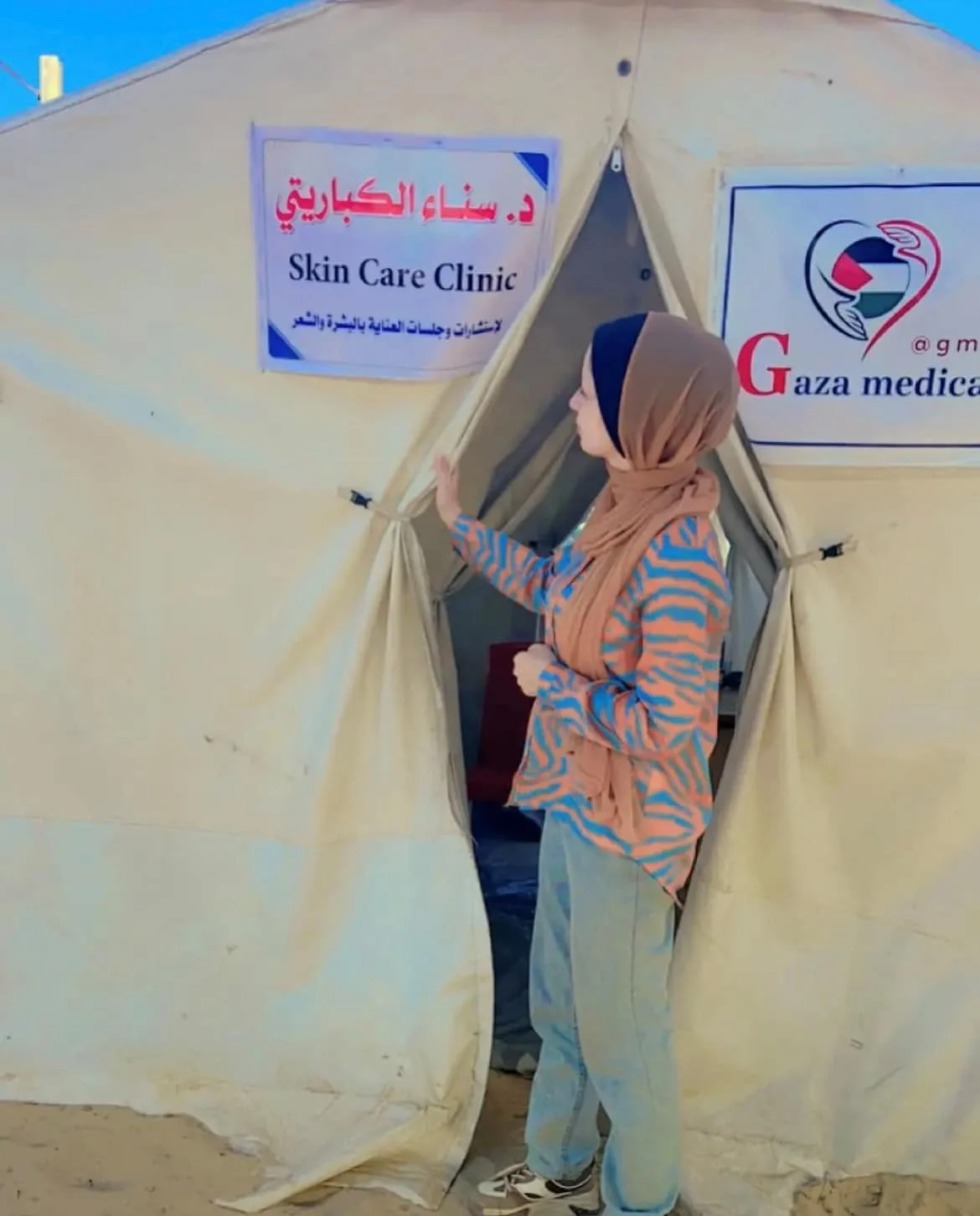
The provision of these treatments occurs under extreme duress. While Dr. Kabariti now operates from a more permanent clinic, for nearly two years she conducted her practice out of a tent, constantly relocating across various medical points within the Gaza Strip. These areas, like so many others, were perpetually targeted, whether by aerial bombardments or naval cruisers when situated near the coast. The range of treatments she could offer was severely constrained by the lack of proper facilities, and she faced immense struggles in sourcing essential supplies and products due to pervasive scarcity and exploitative price gouging.
Despite these formidable challenges, Dr. Kabariti’s unwavering commitment to her practice offers women in Gaza far more than mere dermatological care; it provides a lifeline. Throughout the conflict, Palestinians in Gaza have been systematically stripped of basic rights, forced into conditions of bare survival, and denied the fundamental spaces through which personhood is typically formed—work, education, rest, play, and care. Within this dehumanizing reality, beauty maintenance has emerged as a potent tool for survival and self-preservation. Healing the visible physical marks of displacement can significantly restore a sense of dignity and normalcy, offering a precious measure of control amidst the ceaseless violence that defines everyday life. In such extreme distress, beauty does not recede into frivolity; rather, it becomes a profound act of insisting on selfhood against a system seemingly bent on its erasure.
A Broader Canvas: Home and Self-Care as Resistance
The impulse for self-care and aesthetic order extends beyond personal skin health into the domestic sphere, even when "home" is a temporary tent. Gazan content creator Shams Abdeen exemplifies this broader form of resilience. Married on October 6, 2023, Abdeen was full of dreams and elaborate plans for decorating her new marital home. The war erupted the very next day, thrusting Abdeen and her husband into immediate displacement before they had a chance to transform their new house into a sanctuary. Suddenly living in a tent with minimal possessions—a couple of mattresses and pillows being their primary belongings—Abdeen began to meticulously document her daily routine of organizing her constricted space.
Her videos offer a poignant glimpse into her everyday life, characterized by a meticulous attention to detail and an innate sense of aesthetic care. Viewers watch as she neatly arranges her skincare products and cosmetics, applies liquid musk to her wrists, cultivates mint plants around her tent, and fastidiously organizes her and her husband’s clothing. "I’ve always been a very organized and tidy person," Abdeen explains. "I can’t exist in an unorganised place, and there always has to be a strong attention to aesthetics."
This inherent tendency took on a new and profound significance amidst the conflict. "I was extremely depressed, and I was searching for an escape," she confesses. "My studies were paused due to the war and subsequent poor internet connection, so there was nothing for me except the tent I was in." Her decision to film these personal videos was driven by a powerful internal imperative: "I filmed these personal videos to show we can carry on and take care of ourselves despite the tragedies we face."
The act of beautifying one’s living space, however humble, has long been recognized for its tremendous impact on mental health, particularly in contexts of displacement and trauma. A 2021 study, for instance, investigated the psychological impact of gardening among displaced Syrian women in Lebanon. The findings revealed that participants experienced a significant reduction in depressive symptoms after engaging in a structured gardening program. Among the various therapeutic factors identified, the aesthetic value of the plants provided crucial visual relief and a sense of beauty in otherwise deprived and desolate surroundings.
In Gaza, the ornamentation of the home, even a temporary tent, serves as a deeply restorative act of self-care. It is an assertion of agency, a defiant insistence on aesthetics against enforced ugliness, and a precious oasis of momentary calm amidst pervasive chaos and destruction. As Abdeen articulates, "When I organise what’s around me, my thoughts calm down, things become clearer. This was always my coping mechanism, but in the war, it became my only one. It doesn’t lessen the pain, but it clears my mind." Like Dr. Kabariti’s treatments, Abdeen’s daily rituals offer a crucial sense of control and serenity in the face of unrelenting, systemic violence.
The Humanitarian Catastrophe in Gaza: A Deeper Dive
The context in which these acts of resilience unfold is one of unprecedented devastation. Since October 7, 2023, following attacks by Hamas in southern Israel, the Israeli military has launched a sustained and intense offensive on the Gaza Strip. This offensive has dramatically escalated the pre-existing humanitarian crisis in the territory, which has been under an Israeli and Egyptian blockade since 2007.
-
Timeline of Escalation (Key Events):
- October 7, 2023: Hamas-led attacks in southern Israel trigger a massive Israeli military response.
- Early October – November 2023: Intensive aerial bombardment across Gaza. Israel implements a "complete siege," cutting off electricity, fuel, food, and water. Initial large-scale displacements begin, particularly from northern Gaza to the south.
- Late October 2023: Ground incursions begin, further intensifying fighting and displacement. Hospitals become overwhelmed and are increasingly targeted or become non-functional.
- November 2023: A temporary ceasefire allows for some humanitarian aid and hostage-prisoner exchanges, but fighting resumes swiftly.
- December 2023 – January 2024: Offensive expands to southern Gaza, including Khan Younis, leading to further mass displacement towards Rafah, which becomes the most densely populated area. Reports of widespread famine begin to emerge.
- February – April 2024: Humanitarian situation deteriorates rapidly. UN agencies report imminent famine, especially in northern Gaza. Health infrastructure is almost entirely collapsed.
- May 2024 onwards: Israeli military operations expand into Rafah, the last designated safe zone, triggering new waves of displacement for those already displaced multiple times. International Court of Justice (ICJ) orders Israel to halt its military offensive in Rafah, citing a plausible risk of genocide, which Israel rejects.
-
Supporting Data and Impact:
- Casualties: As of mid-2024, the Palestinian Ministry of Health in Gaza reports over 37,000 Palestinians killed, with tens of thousands more injured. The majority are women and children. The UN Office for the Coordination of Humanitarian Affairs (OCHA) notes the severe challenges in accurate casualty counting due to the ongoing conflict and lack of access.
- Displacement: Over 85% of Gaza’s 2.3 million population has been internally displaced, many multiple times, living in overcrowded shelters, makeshift tents, or open areas. UNRWA (UN Agency for Palestine Refugees) facilities are severely strained.
- Infrastructure Destruction: Satellite imagery and UN reports confirm the destruction of over 60% of Gaza’s housing units. Critical infrastructure, including water and sanitation systems, power grids, and roads, are largely non-functional. At least 33 hospitals have been rendered inoperable or severely damaged.
- Food Insecurity and Famine: The entire population of Gaza is experiencing acute food insecurity, with over a million people facing catastrophic levels of hunger (IPC Phase 5 – Famine). UNICEF and WHO have warned of widespread malnutrition and related diseases among children.
- Mental Health Crisis: Beyond the physical scars, the psychological trauma is profound. UNICEF reports that nearly all children in Gaza require mental health and psychosocial support. The constant threat, loss of family, homes, and sense of normalcy have created a widespread mental health crisis among all age groups.
Psychological and Sociological Implications
The stories of Dr. Kabariti and Shams Abdeen are not isolated anecdotes; they are powerful testaments to the deep-seated human need for dignity and self-determination, even in the most oppressive circumstances. Both women are acutely aware of how their online audiences might interpret their practices, challenging simplistic narratives. Abdeen firmly resists the idea that her acts of organization signify normalcy or contentment. "Some people take it as proof that your life is fine, without understanding what it means to lose your home and basic life essentials," she states. "Just because I’m organising doesn’t mean I’m okay, but I want to show how one can carry on."
Dr. Kabariti echoes this sentiment of enduring strength but emphasizes the immense ingenuity and resilience required. "I want people to understand that Palestinians are innovative even in the harshest and cruellest conditions," she asserts. Her statement, "Every job description requires working well under pressure. We go beyond that – we work well under a genocidal war," is a stark reminder of the extraordinary demands placed upon them.
These acts of self-care, whether through skincare or organizing a tent, transcend superficiality. They represent a psychological anchoring, a means of asserting agency and maintaining a sense of self when external forces are intent on stripping it away. In the face of systemic dehumanization, which aims to reduce individuals to mere statistics or victims, the insistence on personal care, beauty, and order becomes a subversive act of reclaiming humanity. It fosters a sense of control over a small part of one’s environment or body, providing a crucial buffer against the overwhelming chaos and trauma. This resilience-building mechanism is vital for mental well-being, offering momentary respite and a connection to a pre-war identity.
Global Awareness and Advocacy
The dissemination of these personal stories through media and social platforms serves a dual purpose. Firstly, they humanize the statistics of the conflict, allowing a global audience to connect with the individual struggles and triumphs within Gaza. Secondly, they challenge the prevailing narratives that often reduce conflict-affected populations to passive recipients of aid. Instead, they showcase the active agency, creativity, and indomitable spirit of people striving to maintain their lives and identities under extreme pressure.
These narratives also implicitly advocate for a broader understanding of humanitarian aid, extending beyond basic survival needs to include support for psychosocial well-being and the restoration of dignity. Access to essential hygiene products, opportunities for community-based self-care initiatives, and safe spaces for women to gather and support each other become critical components of a holistic humanitarian response.
While the violence these two women and countless others face is exceptional in its horror and scale, their practices reflect a fundamental human truth: beauty is not a frivolous indulgence but intrinsically bound up with the conditions that make life feel liveable. As the philosopher of aesthetics Arthur Danto observed, "[beauty] is not an option for life. It is a necessary condition for life as we would want to live it," and indeed, "one of the values that defines what a fully human life means." Under the oppressive weight of a violent colonial regime and ongoing conflict, skincare and home decor can only ever offer a temporary balm. However, when identity, personhood, and basic rights are brutally stripped away, an insistence on care and beauty transforms into an essential coping mechanism—one of the few powerful acts available through which individuals can reclaim a sense of humanity for themselves and demonstrate an enduring spirit in the face of relentless adversity.