







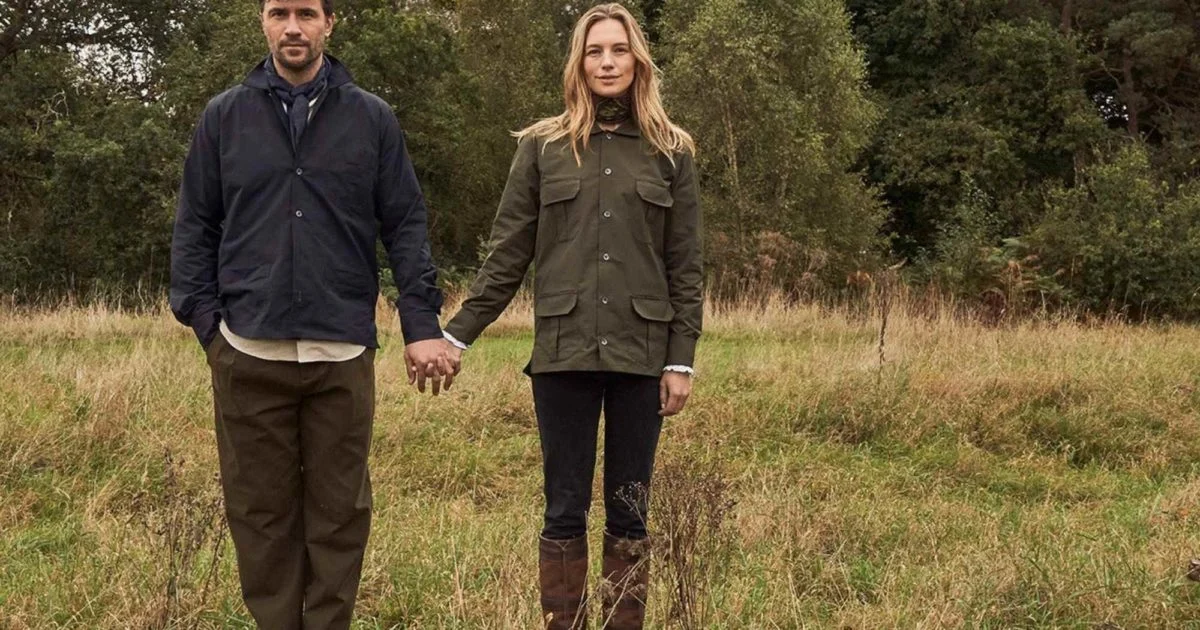
The iconic British brand Barbour, long synonymous with durable waxed cotton jackets, has received a "Not Good Enough" rating for its sustainability practices, according to a February 2025 assessment by independent ethical fashion watchdog Good On You. This evaluation highlights a growing chasm between heritage brands’ perceived longevity and their actual commitment to environmental, social, and animal welfare standards, prompting consumers to seek out more transparent and ethically robust alternatives for lasting outerwear.
Barbour’s Enduring Legacy Under Modern Scrutiny
Since its founding by John Barbour in 1894, Barbour has cultivated an almost mythical status, particularly within the English countryside and beyond. Its signature waxed jackets have graced the shoulders of royalty, including Queen Elizabeth II on her Scottish estate, cinematic heroes like Daniel Craig’s James Bond, and fashion luminaries such as Alexa Chung at Glastonbury. This ubiquity has cemented Barbour’s position as a fashion icon, further amplified by recent collaborations with contemporary brands like GANNI (rated "It’s a Start") and Erdem (rated "We Avoid"), pushing its classic aesthetic into the modern fashion zeitgeist. Defined by their distinctive navy or green hues, corduroy-lined cuffs and collars, and unparalleled weatherproof waxed coating, Barbour jackets are prized for their resilience against inclement weather and decades of wear.
However, the enduring legacy of quality and durability, while contributing to a product’s inherent sustainability by reducing consumption, does not automatically translate into ethical manufacturing or supply chain transparency. Good On You, an authoritative source for brand sustainability ratings, employs a rigorous system that assesses brands across numerous criteria related to their impact on people, the planet, and animals. The "Not Good Enough" rating for Barbour, updated in February 2025 from a previous assessment in 2022, indicates significant areas where the brand falls short of contemporary ethical expectations.
The Ethical Imperatives: Where Barbour Needs to Step Up
The comprehensive analysis revealed several critical deficiencies in Barbour’s operational practices. Environmentally, the brand provided no discernible evidence of strategies to address textile waste, a pervasive issue contributing significantly to global landfill burdens. Annually, the fashion industry generates over 92 million tonnes of textile waste, with a vast majority ending up in landfills or incinerated, underscoring the urgency for brands to implement circularity initiatives. Similarly, Barbour demonstrated no clear commitment or mechanisms for protecting biodiversity within its extensive supply chain, nor for substantially reducing its water usage – a significant concern given that conventional textile production is one of the most water-intensive industries globally, often leading to severe water scarcity and pollution in manufacturing regions.
On the social front, Good On You analysts found no evidence that Barbour ensures a living wage for workers throughout its supply chain. The absence of a living wage—defined as the income necessary for workers to afford a decent standard of living for themselves and their families—is a systemic issue across the fashion industry, often leading to exploitative labor conditions and perpetuating cycles of poverty. Furthermore, the lack of demonstrated financial security for its suppliers is a red flag, as unstable financial relationships can force suppliers to cut corners on labor costs and environmental safeguards, directly correlating with poor working conditions and wages. Industry experts and labor rights organizations consistently advocate for brands to implement robust policies and auditing mechanisms to ensure fair compensation and stable partnerships with their manufacturing partners.
Regarding animal welfare, Barbour utilizes animal-derived materials such as leather, wool, and down. Despite this, the rating indicated a lack of traceability for these products to the first stage of production, which is crucial for verifying ethical sourcing. There was also no clear evidence of robust mechanisms for implementing its stated animal welfare policy. This means consumers have no assurance that the animals contributing to Barbour’s products are raised and processed under humane conditions, free from practices like mulesing in wool production or force-feeding and live-plucking in down collection. The ethical sourcing of animal products requires meticulous supply chain mapping, independent third-party certifications, and transparent reporting to build consumer trust.
Barbour’s Glimmers of Progress and the Path Forward
While the overall rating is concerning, Barbour has demonstrated some positive steps. The brand operates a highly regarded repair program, which sees thousands of its iconic jackets rewaxed and mended each year. This initiative significantly extends product lifecycles, directly countering the fast fashion model and promoting a more circular approach to consumption. This commitment to longevity, inherent in the durability of their products, is a foundational element of sustainability, as it reduces the need for new purchases and minimizes waste.
Furthermore, since its 2022 rating, Barbour has made small but notable improvements, including measuring some of its greenhouse gas (GHG) emissions and committing to targets approved by the Science-Based Targets initiative (SBTi). The SBTi provides a framework for companies to set ambitious emissions reduction targets in line with the latest climate science, aiming to limit global warming to 1.5°C above pre-industrial levels. While this commitment is a crucial step towards climate action, its impact depends on the scope and ambition of the targets and, critically, on transparent reporting of progress. Despite these efforts, the overarching sentiment from the assessment remains that Barbour needs to dramatically enhance its transparency across its entire supply chain and operations.
The Broader Implications: A Call for Transparency in Heritage Fashion
Barbour’s "Not Good Enough" rating serves as a microcosm of a larger trend within the fashion industry: the increasing demand for accountability from brands, regardless of their heritage or market position. Consumers, particularly younger demographics, are becoming more discerning, actively seeking out brands that align with their values concerning environmental protection, social justice, and animal rights. This shift puts pressure on established brands, often with complex, multi-tiered global supply chains, to innovate and adapt.
For heritage brands, the challenge is particularly acute. They often rely on traditional manufacturing processes and long-standing supplier relationships that may not have evolved to meet modern sustainability benchmarks. Adapting requires significant investment in auditing, retooling, material innovation, and worker empowerment programs. However, maintaining brand loyalty in the 21st century increasingly depends on demonstrating a holistic commitment to ethical practices, not just product quality. Industry analysts suggest that brands that proactively embrace transparency and integrate sustainability deeply into their business models will be better positioned to thrive in an evolving market.
Leading the Way: Sustainable Alternatives to Barbour’s Aesthetic
For consumers who appreciate Barbour’s classic country aesthetic—its weatherproof waxed cotton jackets, robust wellington boots, and country-inspired apparel—but are seeking brands with a stronger ethical compass, a growing host of sustainable alternatives offer similar styles with superior sustainability credentials. These brands are often at the forefront of material innovation, ethical labor practices, and transparent supply chains, demonstrating that style and sustainability are not mutually exclusive.
ISTO.
This Portuguese brand is built on a mandate of creating timeless, season-transcending staple items. ISTO. prioritizes quality over quantity, offering a single, continuously available collection. Their commitment to transparency is evident in their use of organic materials and their practice of showing the true cost of each garment to consumers. This directness empowers customers to understand the value chain behind their purchase. ISTO. is available in sizes XS-XL.
See the rating and shop ISTO.
Wuxly Movement
A Canadian outerwear brand, Wuxly Movement excels in combining technical performance with responsible materials. Drawing inspiration from Canada’s rich heritage in quality manufacturing, the founder innovates using recycled and tech-based materials, notably committing to animal-free production. Their focus on high-performance rainwear, free from animal products, provides a direct ethical alternative for those seeking robust outerwear. Wuxly Movement offers sizes from 2XS-3XL.
See the rating and shop Wuxly Movement.
Amble Outdoors
Formerly known as Team Timbuktu, Australian brand Amble Outdoors specializes in high-performance waterproof raincoats and sweat-wicking outdoor wear. Their commitment to circularity is evident in their primary material choice: recycled plastic bottles. Manufacturing in Australia, they ensure closer oversight of production and reduced transportation emissions, contributing to a lower environmental footprint. Sizes are offered in XS-4XL.
See the rating and shop Amble Outdoors.
Outerknown
Co-founded by legendary surf champion Kelly Slater, Outerknown seamlessly blends style and function with a profound dedication to protecting natural resources. The brand holds Bluesign certification, ensuring responsible manufacturing processes that minimize environmental impact. Their partnership with the Fair Labor Association underscores a commitment to ethical labor practices and worker well-being across their supply chain. Outerknown’s range is available in sizes XS-2XL.
See the rating and shop Outerknown.
Finisterre
Born from the rugged demands of British surfers, Finisterre is a pioneering outdoor brand deeply rooted in a love for the sea. They are committed to creating exceptional products with a strong sustainable ethos, offering durable and performance-driven apparel. Their focus on longevity and responsible sourcing resonates with the values of the outdoor community. Most items are available in Sizes XS-2XL.
See the rating and shop Finisterre.
Rapanui
This award-winning UK fashion brand creates surf-inspired clothing from a wind-powered factory, emphasizing a commitment to renewable energy and sustainable production. Rapanui offers a range of items, from surf towels to hoodies, designed for warmth and comfort after a session, all produced with environmental responsibility at its core. Their range is available in UK sizes 8-18.
See the rating and shop Rapanui.
Toad&Co
A US brand dedicated to social and environmental responsibility, Toad&Co designs women’s and men’s apparel equally suited for outdoor adventures and casual urban settings. Their versatile and durable clothing reflects a commitment to minimizing environmental impact and fostering ethical production. Most items are available in sizes XS-2XL.
See the rating and shop Toad&Co.
Opera Campi
Founded in Italy in 2017, Opera Campi creates premium quality garments using locally-sourced raw materials. The brand employs a balanced approach to sustainability, making conscious choices throughout its supply chain. Beyond environmental efforts, Opera Campi demonstrates social responsibility by donating 4% of its profits to social causes. The brand offers inclusive sizing from 3XS-3XL.
See the rating and shop Opera Campi.
Patagonia
A global leader in ethical outdoor apparel, Patagonia embodies a deep commitment to environmental activism and responsible manufacturing. They are renowned for "Good" labor practices and their extensive use of recycled, rather than virgin, polyester. Patagonia has also set ambitious targets for reducing energy use and emissions, actively campaigning for environmental causes and promoting repair and reuse through initiatives like Worn Wear. The brand stocks sizes 2XS-3XL.
See the rating and shop Patagonia (also available second-hand via Retykle).
CARPASUS
This Swiss menswear brand specializes in fine shirts, ties, socks, and pocket squares. CARPASUS utilizes GOTS (Global Organic Textile Standard) certified cotton, ensuring organic production without harmful chemicals. Their commitment to local manufacturing reduces carbon footprint, and they meticulously trace their supply chain to guarantee that workers receive a living wage. Most products are available in EU sizes 36-46.
See the rating and shop CARPASUS.
WAWWA
A UK brand, WAWWA is dedicated to prioritizing the Earth and its inhabitants through organic, fair trade, and vegan-friendly clothing. They focus on creating a positive social impact by using lower-impact materials, including recycled content and non-toxic dyes. WAWWA also champions circularity by reusing offcuts to minimize textile waste. Find the range in sizes XS-2XL.
See the rating and shop WAWWA.
BEDI
Canadian brand BEDI crafts handmade bags, knits, and outerwear with a strong ethos of wearing a better tomorrow. They champion circularity through their careful selection of lower-impact and upcycled materials, including airline seat leather, recycled fish nets, vegan cactus leather, and sustainably grown cotton. BEDI’s slow fashion approach results in durable, utility-driven pieces designed for longevity. Find the range in sizes XS-XL.
See the rating and shop BEDI (also available via Immaculate Vegan).
Sheep Inc
A sustainable knitwear brand, Sheep Inc. is focused on responsibly sourcing the finest merino wool. Their founding principles revolve around "respect for nature and a shared belief in the power of innovation… harmony with the environment and animal welfare." This includes ensuring regenerative farming practices and high animal welfare standards for their wool suppliers. Most garments are available in XS-2XL.
See the rating and shop Sheep Inc.
Neem
Hailing from the UK, Neem specializes in men’s clothing with a core focus on ensuring a transparent supply chain and safeguarding the environment. They prioritize responsible sourcing and manufacturing to create ethical and stylish garments. Find most items in sizes S-2XL.
See the rating and shop Neem.
NIKIN
For those who want to visibly wear their commitment to the environment, Swiss brand NIKIN offers a unique proposition: a tree is planted for every product purchased. Beyond this direct impact, NIKIN is committed to sustainable production practices across its apparel range. Products are available in sizes XS-2XL.
See the rating and shop NIKIN.
tentree
Canadian brand tentree is built on a powerful mission: planting ten trees for every item purchased, aiming to regenerate ecosystems and create planting jobs globally. Having already planted over 65 million trees, tentree’s Earth-first approach ensures fair, safe working conditions and the use of lower-impact and recycled materials across its product line. tentree’s clothes are typically available from XS-XL.
See the rating and shop tentree.
Komodo
The UK brand Komodo places people and the planet first with its range of lower-impact menswear and womenswear. They actively use more responsible materials, including GOTS-certified organic cotton and hemp. Crucially, Komodo ensures that most of its suppliers pay a living wage to their workers, addressing a significant social equity issue within the fashion industry. Find most of the range in UK sizes 8-16.
See the rating and shop Komodo (also available via Immaculate Vegan).
The Future of Fashion: Informed Choices and Continuous Improvement
The "Not Good Enough" rating for Barbour underscores a critical moment for the fashion industry. As consumer awareness of environmental and social issues continues to grow, brands are increasingly being held accountable for their entire value chain. While Barbour’s legacy of durability and its repair program offer a foundation for sustainability, the call for greater transparency and deeper commitments to ethical labor, environmental protection, and animal welfare is clear. For conscious consumers, the expanding market of ethical and sustainable alternatives provides ample opportunity to make choices that align with their values, proving that iconic style can indeed go hand-in-hand with responsible production.
Editor’s note: This article is based on the Barbour rating published in February 2025 by Good On You and may not reflect claims the brand has made since then. Good On You publishes the world’s most comprehensive ratings of fashion and beauty brands’ impact on people, the planet, and animals. Our editors curate highly rated brands that are first assessed by our rigorous ratings system. Buying through our links may earn us a commission—supporting the work we do. Learn more at goodonyou.eco/our-editorial-mission/. We updated this article on 2 February 2026. Our editors frequently make updates to articles to ensure they’re up to date. We refreshed our selection to reflect brands with recent ratings. Feature image via Neem, all other images via brands mentioned.