









Apple has officially expanded its boutique accessory lineup through a collaboration with the Issey Miyake fashion house, introducing a high-end textile sleeve branded as the iPhone Pocket. This limited-edition product, which draws heavily from the late Japanese designer’s revolutionary "A Piece of Cloth" (APOC) philosophy, is positioned as a premium lifestyle accessory. The iPhone Pocket is available in two primary configurations: a short version retailing for $149.95 and a long, crossbody version priced at $229.95.
The launch marks a significant moment in the intersection of consumer technology and haute couture, signaling Apple’s continued interest in the luxury goods market. While Apple has previously faced public scrutiny for the pricing of utilitarian items—most notably its $19 Polishing Cloth released in 2021—the iPhone Pocket is framed not as a utility tool, but as a piece of wearable art. The product is crafted from a single piece of fabric, utilizing a ribbed mesh structure that mirrors the signature pleats that made Issey Miyake a household name in the global fashion industry.
Design Philosophy and the APOC Heritage
The core design of the iPhone Pocket is rooted in the APOC (A Piece of Cloth) concept, which was pioneered by Issey Miyake and Dai Fujiwara in 1997. This innovative manufacturing process uses computer-controlled looms to create entire garments from a single, continuous tube of fabric, requiring minimal sewing and significantly reducing material waste. By applying this concept to a smartphone accessory, the Miyake Design Studio—which continues the designer’s legacy following his passing in 2022—has created a form-fitting sleeve that adapts to the shape of the device.
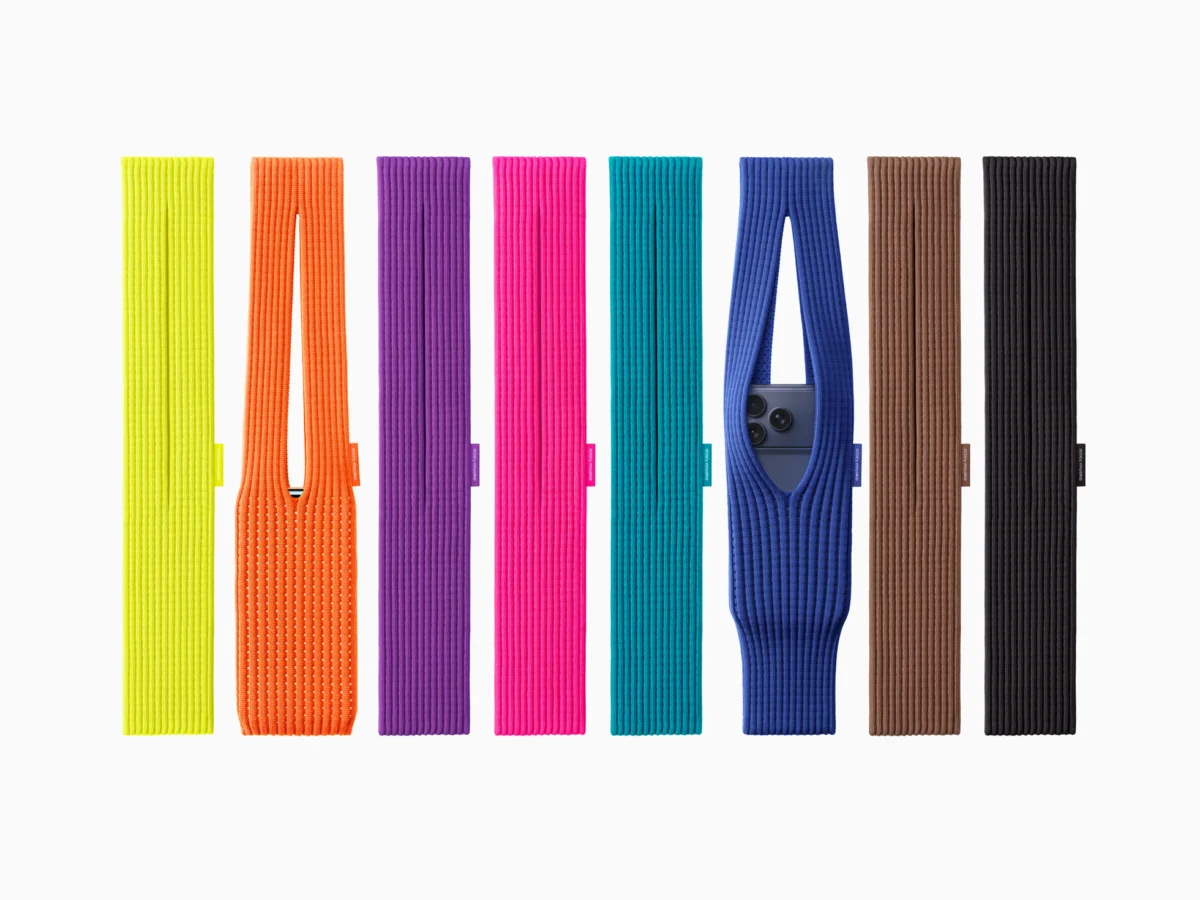
According to product specifications, the textile features a unique ribbed mesh that provides both elasticity and transparency. When the fabric is stretched over an iPhone, the open-weave structure subtly reveals the device’s color and allows the user to view notifications or the time on the display without removing the phone from the pocket. This "peek-through" functionality is a deliberate design choice intended to balance protection with accessibility.
The short version of the pocket is designed primarily as a protective sleeve or a decorative attachment for larger bags, while the long version includes an integrated strap, allowing it to function as a standalone crossbody bag. The crossbody model is currently offered in a more limited color palette, whereas the short version features a broader range of vibrant hues, including a signature "Lemon" yellow.
The Historical Connection: Steve Jobs and Issey Miyake
The collaboration between Apple and the Issey Miyake label is the culmination of a relationship that dates back nearly four decades. The connection began in the early 1980s when Apple co-founder Steve Jobs visited Sony’s headquarters in Japan. Jobs was impressed by the uniforms worn by Sony employees—designed by Miyake—which consisted of ripstop nylon jackets with sleeves that could unzip to become vests.

Inspired by this sense of corporate identity and efficiency, Jobs commissioned Miyake to design a uniform for Apple employees. However, when Jobs returned to Cupertino with the samples, the concept was met with significant resistance from the Apple workforce. While the company-wide uniform was abandoned, the personal bond between Jobs and Miyake deepened. Jobs eventually requested that Miyake design a personal uniform for him that would provide "convenience and a signature style."
This request resulted in the creation of the iconic black mockneck sweater that became synonymous with Jobs’ public image during the most transformative years of Apple’s history. Miyake reportedly provided Jobs with approximately 100 of these garments, which the CEO wore daily. Despite this long-standing personal history, the iPhone Pocket represents the first formal, commercially available product collaboration between the two entities, effectively bridging the gap between Jobs’ minimalist aesthetic and the modern "Apple as a luxury brand" era.
Market Positioning and Pricing Strategy
The $149.95 and $229.95 price points place the iPhone Pocket in a category far above standard silicone or leather cases, which typically retail between $49 and $59. This pricing strategy aligns with Apple’s historical approach to high-margin accessories and "special edition" collaborations, such as the Apple Watch Hermès collection.
Data from the luxury accessory market suggests that consumers are increasingly willing to pay a premium for brand-name tech peripherals. In 2024, the "phone bag" and "tech jewelry" segments saw a 15% year-over-year growth in the luxury sector. Apple’s entry into this specific niche follows the release of its own $59 crossbody strap earlier this year, which was positioned as a more utilitarian alternative. The Issey Miyake collaboration, by contrast, targets the "prestige" consumer who views the iPhone as a central element of their fashion ensemble rather than just a communication device.
Industry analysts note that Apple frequently uses these high-priced, "limited" items to anchor the perceived value of its brand. By associating the iPhone with a label like Issey Miyake—known for its presence in museums like the Metropolitan Museum of Art—Apple reinforces the narrative that its hardware is a design object on par with high fashion.
Cultural Context: The Rise of "Accessories for Accessories"
The iPhone Pocket enters the market amidst a broader cultural trend of hyper-accessorizing. In recent years, the consumer market has seen a surge in "accessories for accessories," a phenomenon driven by social media platforms like TikTok and Instagram. This trend includes items such as:
- Designer Charms: The rise of "Labubu" monster plush keychains, which can retail for anywhere from $30 to $10,000 for rare editions, often attached to high-end handbags.
- Miniature Bags: The popularity of "nano" bags from brands like Lululemon, Baggu, and Telfar, which are often too small to hold anything more than a set of keys or a pair of AirPods.
- Drinkware Personalization: The trend of "accessorizing" Stanley Cup tumblers with mini-pouches, straw covers, and charms.
The iPhone Pocket, particularly the short version, functions as a "sock" or "charm" for the phone, allowing users to color-coordinate their tech with their outfits. Market research indicates that Gen Z and Millennial consumers are the primary drivers of this trend, often utilizing small, brightly colored accessories to express individuality within a standardized tech ecosystem.

Technical Specifications and Availability
The iPhone Pocket is designed to be compatible with a wide range of iPhone models, including the most recent Pro and Pro Max iterations. The elasticity of the mesh ensures a snug fit regardless of the specific dimensions of the device.
Product Details:
- Material: 100% Polyester ribbed mesh (proprietary Miyake weave).
- Construction: Seamless, single-piece fabric.
- Colorways (Short): Lemon, Azure, Charcoal, Rose, and Sage.
- Colorways (Long): Black, Navy, and Terracotta.
- Weight: Approximately 15 grams (Short) / 45 grams (Long).
- Retail Availability: Apple Store Online and select flagship retail locations.
While the product is marketed as a "limited edition," Apple has not specified the total number of units produced. Historically, such collaborations remain in stock for a single season or until the initial production run is exhausted, after which they often command high prices on the secondary resale market.
Broader Implications for Apple’s Ecosystem
The release of the iPhone Pocket suggests a strategic shift in how Apple views the lifecycle of its products. By introducing high-fashion accessories, Apple is able to sustain consumer interest in the iPhone between major hardware release cycles. It also allows the company to capture revenue from the "lifestyle" segment of its user base, which may be less interested in technical specifications like processor speed and more focused on aesthetic integration.
Furthermore, this collaboration underscores a trend of "de-teching" technology. By wrapping a glass-and-metal device in a soft, organic textile inspired by traditional Japanese pleating, the iPhone Pocket attempts to soften the cold, industrial nature of the smartphone. This move toward "tactile tech" is expected to become more prevalent as devices become increasingly integrated into the daily fabric of human life.
As of the current quarter, Apple’s "Wearables, Home, and Accessories" segment continues to be a vital part of its financial portfolio, contributing billions in revenue. While the iPhone Pocket may not sell in the same volumes as the iPhone itself, its presence in the store serves as a powerful marketing tool, elevating the brand’s cultural status and appealing to a demographic that values the heritage of Issey Miyake as much as the innovation of Apple.