





The Center for Art and Advocacy in Bed Stuy, Brooklyn, is currently hosting a powerful exhibition titled "A Language We Share: Beverly Price and Gordon Parks," a compelling dialogue between two photographers separated by generations but united by a profound commitment to documenting the nuanced realities of Black life in Washington D.C. and beyond. The exhibition, which runs through June 19, brings together the intimate, striking portraits of contemporary artist Beverly Price with the iconic works of the legendary Gordon Parks, fostering a conversation that bridges eras while highlighting enduring social themes.
Beverly Price: A Channel for Sincerity and Preventive Justice
Beverly Price, whose work forms a significant part of this dual exhibition, describes her approach to photography not merely as an act of taking pictures but as a process of "channeling." This unique perspective underscores her deep emotional connection to her subjects and her desire to capture moments of profound sincerity and truth. "I really just want to capture a moment that I feel is sincere, and that has to speak to something real," Price explains, articulating a philosophy that resonates deeply with the spirit of photojournalism pioneered by figures like Parks.
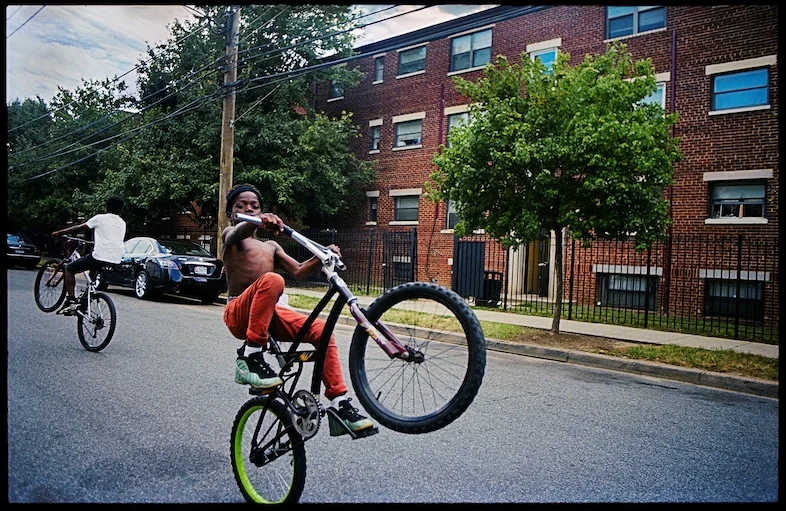
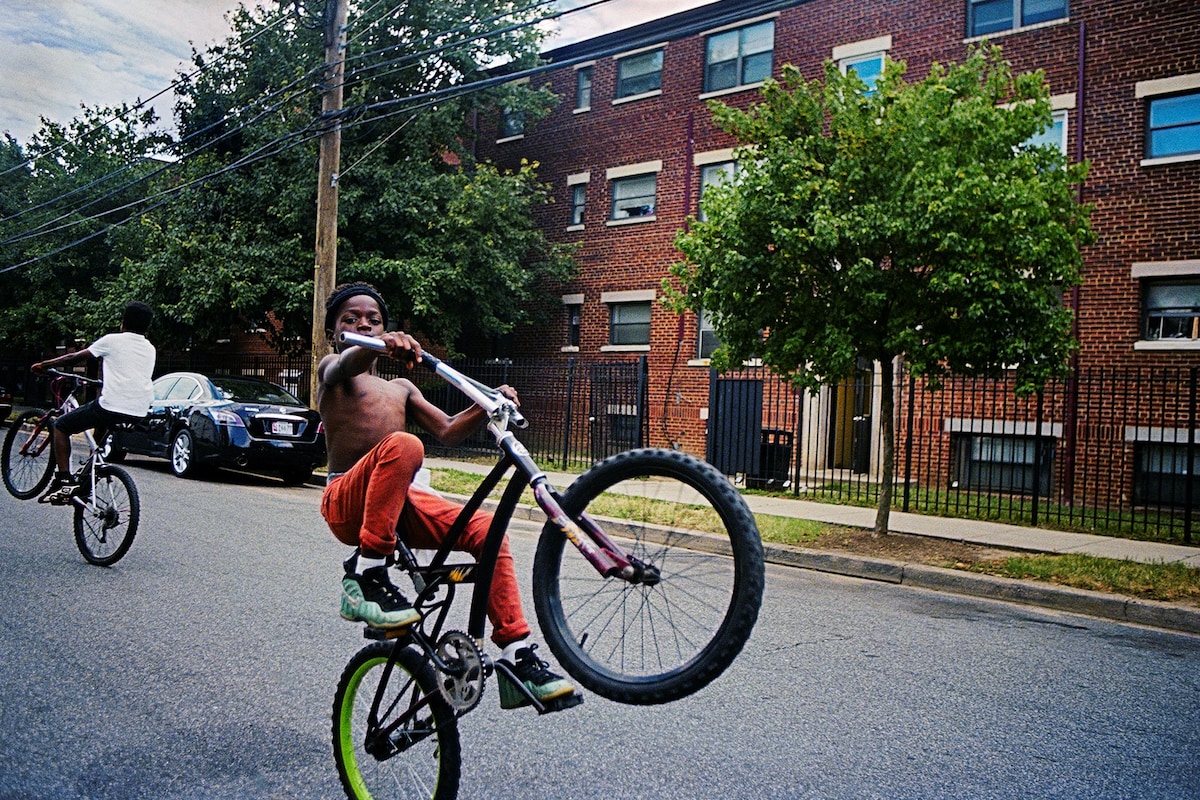
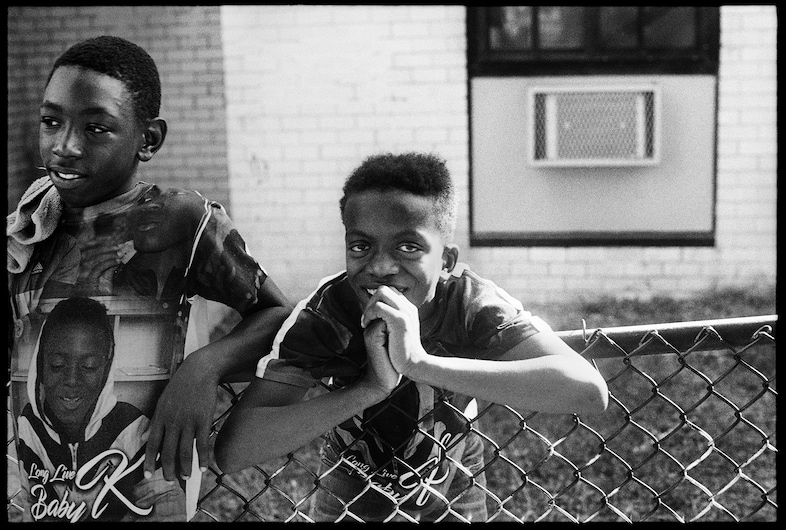
Price’s artistic journey is inextricably linked to her personal narrative. The exhibition notably coincides with the 20-year mark since her return home from incarceration in 2006. This pivotal life experience profoundly shaped her artistic vision, particularly her focus on youth. Having lost her own innocence at a young age, Price found a powerful connection with the children and adolescents she photographs in Washington D.C.’s historically Black neighborhoods. "I saw something in those kids that I wish someone had seen in me," she reflects. This empathy is the bedrock of her work, which she describes as "deeply rooted in preventive justice." Through her lens, Price advocates for the fundamental importance of allowing children to experience and preserve their childhoods, free from the systemic pressures and societal challenges that often prematurely strip away their innocence. Her photographs, taken after her release, vividly portray these young people in moments of both unbridled play and quiet, steadfast resistance, offering a poignant commentary on their resilience amidst adversity.
Gordon Parks: The Visionary Chronicler of Black America
Gordon Parks, born in Fort Scott, Kansas, in 1912, rose from humble beginnings to become one of the most influential photographers, filmmakers, and writers of the 20th century. His career, spanning several decades, was defined by a relentless pursuit of social justice and a profound dedication to capturing the human experience, particularly that of Black Americans. Parks’s early career saw him working for the Farm Security Administration (FSA) and later for the Office of War Information, where he documented the lives of African Americans during a period of intense racial segregation and economic hardship. His seminal work, "American Gothic, Washington, D.C." (1942), featuring Ella Watson, a Black cleaning woman, stands as a powerful indictment of racial inequality and remains one of the most iconic images of American photography.
Parks’s tenure at Life magazine, beginning in 1948, solidified his status as a pioneering photojournalist. For over two decades, he produced groundbreaking photo essays that brought the struggles and triumphs of Black communities to a national audience. His unflinching portrayal of poverty, discrimination, and the burgeoning Civil Rights Movement provided a crucial visual record of a transformative era. Beyond still photography, Parks broke barriers in cinema, becoming the first African American to direct a major Hollywood film with "The Learning Tree" (1969), followed by the hugely successful "Shaft" (1971), which redefined the blaxploitation genre. His multifaceted career, which also included composing music and writing poetry and memoirs, cemented his legacy as a Renaissance man whose art consistently championed humanity and challenged injustice. Parks passed away in 2006, making this exhibition a poignant tribute marking the 20th anniversary of his passing.
A Shared Lens on Washington D.C.: Past and Present Realities
The geographical and thematic overlap between Price’s and Parks’s work is a central tenet of "A Language We Share." Parks, who moved to Washington D.C. after securing photography positions in government offices in the 1940s, meticulously documented the pervasive bigotry, segregation, and struggle he witnessed in the nation’s capital. His images of 1940s D.C. serve as a stark historical record of a city grappling with systemic racial inequality under Jim Crow laws, where Black residents faced discriminatory housing practices, segregated public spaces, and limited opportunities. For instance, the infamous "alley dwellings" and stark economic disparities were common subjects for Parks, revealing the harsh realities often hidden beneath the city’s grand federal façade.
Price, who grew up on Capitol Hill, first encountered Parks’s work in eighth grade while researching a paper. Even then, the emotional resonance of his photographs left an indelible mark. Decades later, as Price began her own photographic exploration of D.C., she found herself drawn to the very same neighborhoods that Parks had documented: Southeast Anacostia and Barry Farms. This geographical synchronicity, initially unintentional on Price’s part, underscores a persistent thread of experience within these communities. "I think he saw something in DC that I still see in DC today," Price observes, highlighting the cyclical nature of certain struggles and the enduring presence of systemic issues, albeit in different manifestations.
The demographic shifts in Washington D.C. provide crucial context for Price’s connection to these neighborhoods. Her childhood home on Capitol Hill, once a vibrant Black community, has undergone rapid gentrification. Census data reveals a significant decline in D.C.’s Black population over recent decades, particularly in central areas, a trend often accompanied by rising housing costs and displacement. Between 2000 and 2010 alone, D.C.’s Black population decreased by over 30,000 residents, a trend that has continued. Price describes feeling unwelcome in her old neighborhood, a sentiment echoed by many long-term Black residents displaced by development. Finding community in Anacostia and Barry Farms, areas that have historically maintained a strong Black cultural presence, allowed her to feel "back at home again." This personal connection is further deepened by her memory of looking out from DC Jail at Anacostia Park, creating a profound, almost spiritual, link to the community she now photographs.
The Curatorial Dialogue: Bridging Eras and Experiences
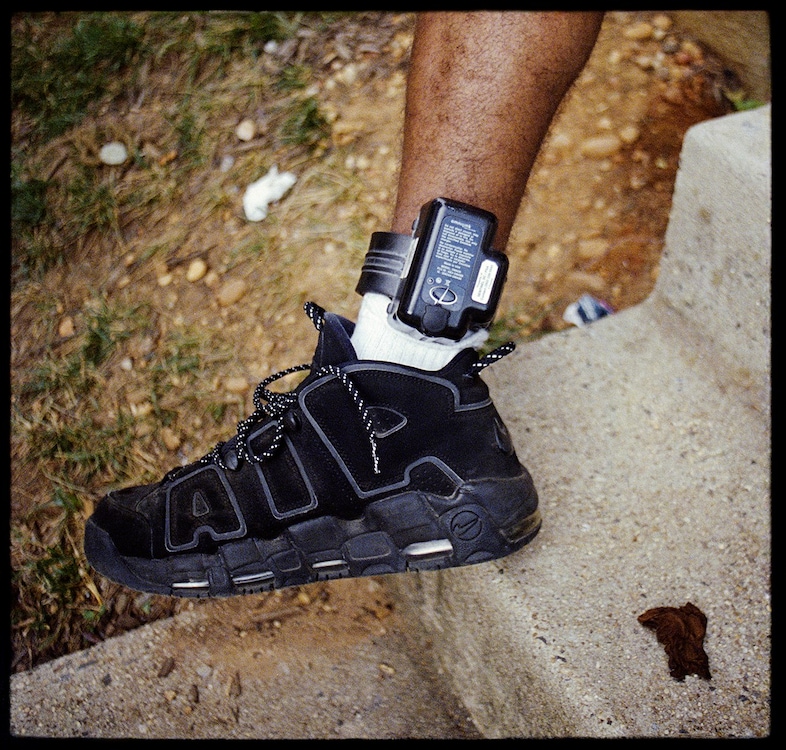
The exhibition’s curatorial vision thoughtfully orchestrates a dialogue between Parks and Price, demonstrating how a shared "language"—a visual syntax of empathy and social commentary—transcends time. One particularly powerful pairing features Parks’s Untitled, Chicago (1957) alongside Price’s Air (2018). Parks’s photograph depicts a young man confined within a jail cell, surrounded by cigarette smoke, with only his hands visible, conveying a sense of suffocating entrapment. In direct conversation, Price’s image portrays a young man outdoors, wearing Nike sneakers with the word "AIR" prominently displayed, yet tethered by an ankle monitor.
This juxtaposition is a masterful stroke, illustrating the evolution and persistence of systems of control and restriction. Parks’s image speaks to overt incarceration, while Price’s Air highlights the insidious nature of post-release surveillance, such as probation, where physical freedom is granted but systemic limitations persist. "For me, the pairing reflects both the experience of incarceration and the reality of returning home and living under systems like probation," Price explains. "It shows how freedom and restriction can exist at the same time." This thematic thread of "freedom and restriction" is woven throughout the entire collection, presenting a nuanced view of life where moments of ease and unrest often coexist.
The Power of Photography: Advocacy and the Human Spirit
Both Gordon Parks and Beverly Price wield photography as a powerful tool for advocacy, using their lenses to illuminate social inequities and affirm the inherent dignity of their subjects. Price’s photographs of children biking, playing in marching bands, and engaging in communal activities are balanced by images of young people holding protest signs and streets filled with demonstrators. This collection reveals not only the joy and vibrancy of her city but also its underlying realities—the ongoing struggles for justice and self-determination. Her focus on "preventive justice" through showcasing children’s right to childhood serves as a direct, visual appeal for policy and societal change.
Parks, similarly, saw his camera as a weapon against poverty and racism. His work for Life magazine often involved immersive, long-form photo essays that brought the human face of injustice to millions of readers, forcing a confrontation with uncomfortable truths. He believed in the transformative power of visual storytelling to foster understanding and inspire action. The Gordon Parks Foundation, established to preserve his legacy, continues to promote his work and support emerging artists who use photography to explore social issues, underscoring the enduring relevance of his artistic mission.
The shared philosophical underpinning of both artists lies in their commitment to depicting the human spirit. Price emphasizes, "I’m interested in seeing people’s spirit, not just the surface." This echoes Parks’s lifelong dedication to portraying the inner lives and resilience of individuals, even amidst the most challenging circumstances. He often spent extended periods with his subjects, building trust and allowing their true selves to emerge, whether documenting the daily life of a Harlem gang member or the abject poverty of a Brazilian favela. This profound humanism connects their disparate bodies of work, forming a cohesive narrative about the enduring power of the human spirit in the face of systemic pressures.
A Timely Reflection: Anniversaries and Enduring Relevance
The timing of "A Language We Share" is particularly resonant, marking not only the 20th anniversary of Gordon Parks’s passing but also two decades since Beverly Price’s return from incarceration. These parallel anniversaries infuse the exhibition with a heightened sense of historical and personal significance. Parks’s passing in 2006 marked the end of an era for a giant of American visual culture, but his influence continues to shape contemporary art and activism. Price’s 20-year milestone signifies a journey of profound transformation, demonstrating the potential for redemption, artistic expression, and meaningful contribution after overcoming significant personal adversity.
The exhibition serves as a vital reminder that while the specific contexts of racial injustice and economic disparity may evolve, the underlying human experiences of struggle, resilience, and the quest for dignity remain universal. The "language" they share is one of empathy, critical observation, and a steadfast belief in the power of the image to provoke thought, challenge assumptions, and inspire change. By placing these two powerful voices in conversation, The Center for Art and Advocacy invites viewers to reflect on the ongoing legacies of racial inequality and the enduring strength of community in Washington D.C., prompting a deeper understanding of how the past continues to inform the present.
"A Language We Share: Beverly Price and Gordon Parks" is more than just an art exhibition; it is a critical historical document and a contemporary call to action. It offers a unique opportunity to witness the profound connections between generations of artists dedicated to truth-telling and social justice, reinforcing the timeless relevance of their shared visual language in understanding the complex tapestry of American life. The exhibition is on view now through June 19 at The Center for Art and Advocacy in Bed Stuy, Brooklyn.