











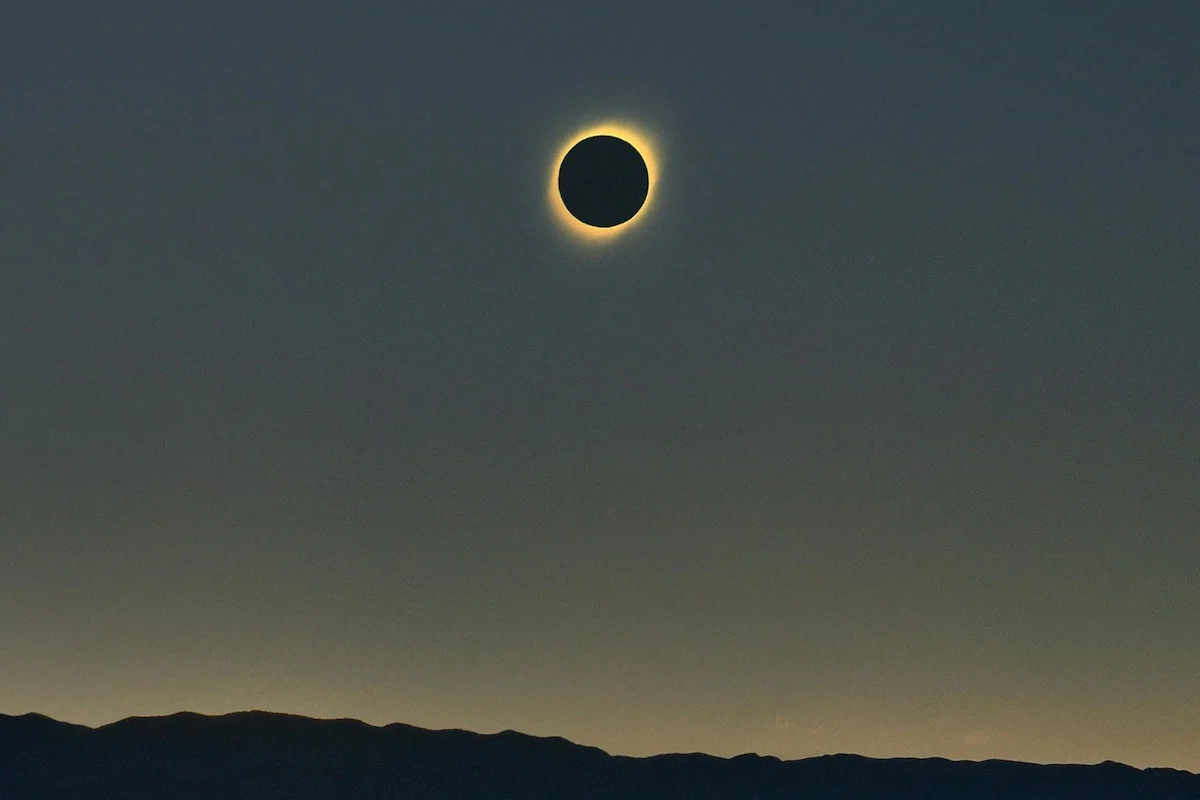
On August 12, 2026, the moon will execute a celestial ballet, passing directly in front of the sun, perfectly obscuring its luminous disk and casting a momentary shadow across parts of the Earth. This rare phenomenon, known as a total solar eclipse, will plunge regions along its path into an eerie, temporary twilight, allowing observers to witness the sun’s ethereal corona – its outermost atmosphere of hot plasma – with the naked eye. This event, a profound reminder of our planet’s place within a vast cosmic system, is poised to become a focal point for both scientific observation and collective human experience, particularly in Iceland, where an ambitious five-day festival, Iceland Eclipse, is set to converge with the path of totality.
Mitch Morales, founder of IMXP and producer of Iceland Eclipse, articulates the profound impact of such an event, stating, "It’s one of the few experiences that instantly reminds us of the miraculous fact that we’re living on a moving planet within a much larger cosmic system." He emphasizes the unifying power of the shared moment: "For a few extraordinary minutes, everyone looks up together. Differences disappear. We share the same sky." This sentiment underscores the festival’s mission to harness the unique energy of the eclipse, fostering a sense of shared wonder and cosmic connection among its attendees.
The Science and Rarity of Total Solar Eclipses
A total solar eclipse occurs when the Moon’s orbit perfectly aligns with the Sun and Earth, casting its umbra (the darkest part of its shadow) onto the Earth’s surface. Due to the precise orbital mechanics and the relative sizes and distances of the Sun, Moon, and Earth, such alignments are not only infrequent but also geographically limited. While partial solar eclipses are more common, a total solar eclipse in any given location is a truly once-in-a-lifetime event, occurring roughly once every 375 years for a specific spot on Earth. The Moon’s shadow, known as the path of totality, is typically only about 100 to 150 kilometers wide, meaning that only a narrow strip of the globe experiences the full effect. Outside this path, observers will only witness a partial eclipse, where the Moon covers only a portion of the Sun.
During totality, several remarkable phenomena unfold. As the Moon gradually covers the Sun, the ambient light dims, often taking on an otherworldly quality. Temperatures can drop noticeably, and animals may exhibit unusual behaviors, mistaking the sudden darkness for dusk. Just before and after totality, observers may witness "Baily’s Beads," points of sunlight shining through valleys on the Moon’s rugged limb, followed by the "diamond ring effect," a single brilliant bead of light resembling a diamond on a ring, marking the final moments before or the first moments after totality. Once the Sun is completely obscured, the corona, normally invisible due to the Sun’s intense brightness, becomes visible as a pearly white crown of light, stretching millions of kilometers into space. This provides a unique opportunity for scientists to study the Sun’s outer atmosphere, which plays a crucial role in space weather and solar winds affecting Earth.
The 2026 Eclipse Path: A Northern European Spectacle
The total solar eclipse of August 12, 2026, is particularly significant for Europe. Its path of totality will begin over the Arctic, sweep across the vast wilderness of Greenland, then traverse the dramatic landscapes of Iceland, before continuing southeast to northern Spain and parts of Portugal. For observers in Iceland, the eclipse will occur late in the evening, providing a unique opportunity to witness totality against a low-hanging sun, potentially enhancing the visual drama. The maximum duration of totality for this eclipse will be approximately 2 minutes and 18 seconds, occurring over the Atlantic Ocean, with land-based viewing durations varying slightly.
In the United Kingdom and vast swathes of continental Europe, a significant partial eclipse will be visible, with the UK experiencing its strongest partial eclipse since 1999. While not as dramatic as totality, a high-magnitude partial eclipse still offers a compelling astronomical display, provided viewers use appropriate eye protection. However, for those seeking the full, immersive experience of totality, the designated regions within the path are the only option. Among these, the wild and remote Snæfellsnes Peninsula in western Iceland has been identified as one of the objectively best places to view totality, thanks to its expansive, unobstructed vistas and minimal light pollution. Its rugged coastline, volcanic peaks, and glacial features offer a dramatic backdrop for the celestial event.
Iceland Eclipse: An Immersive Journey of Wonder
It is against this extraordinary backdrop that the Iceland Eclipse festival is strategically positioned. Billed as a five-day immersive experience, the festival commences on August 12, 2026, with the eclipse itself serving as its powerful "headliner." The subsequent four days are meticulously curated to explore themes of music, conversation, science, art, and workshops spanning diverse topics from spiritual practices and space travel to ecology. Morales articulates the ambitious nature of the endeavor: "We’re doing something remarkably ambitious in a remote place because some moments deserve that level of effort. If we can gather 3,333 eclipse seekers to witness one of nature’s rarest events together, we believe that shared sense of wonder has the power to stay with people long after they return home."
The festival’s mission is to send visitors away "realigned with the cosmos," a goal reflected in its eclectic assembly of performers, speakers, artists, scientists, storytellers, and mystics. The programming promises a dynamic daily schedule, potentially featuring performances by acclaimed artists like Imogen Heap alongside local Icelandic talents such as Daði Freyr and Vök. Attendees might transition from a sound healing ceremony to a presentation by a pioneering astronaut or a creative technologist, and then to a fireside talk by a local fisherman sharing insights into life amidst Iceland’s powerful natural forces. Morales highlights "wonder" as the guiding principle behind the curation, noting that regardless of their specific discipline – composing music, studying distant galaxies, designing spacecraft, building new technologies, studying consciousness, exploring the inner world, or creating immersive art – all participants are "asking fundamentally similar questions: Who are we? Where are we going? What is possible?" This interdisciplinary approach aims to foster holistic engagement, connecting scientific inquiry with artistic expression and spiritual introspection.
Logistics, Environmental Considerations, and Local Impact
Hosting an event of this scale in a remote location like the Snæfellsnes Peninsula presents significant logistical challenges. Infrastructure development for temporary accommodation, sanitation, waste management, and emergency services must be meticulously planned and executed. Local authorities and environmental agencies in Iceland will undoubtedly be collaborating closely with the festival organizers to ensure minimal ecological impact on the fragile volcanic landscape. The Icelandic government, known for its commitment to sustainable tourism and environmental protection, would likely enforce stringent regulations regarding visitor numbers, waste disposal, and impact on local wildlife and geological features.
Economically, the Iceland Eclipse festival is anticipated to provide a substantial boost to the local economy of the Snæfellsnes Peninsula and broader western Iceland. The influx of 3,333 attendees, along with festival staff and support personnel, will generate demand for accommodation, transportation, food services, and local goods. Local businesses, from guesthouses and restaurants to tour operators and artisanal craft shops, stand to benefit significantly. This economic injection could support job creation and stimulate local development, aligning with Iceland’s strategic efforts to diversify its tourism offerings beyond the capital region. However, careful management is essential to prevent "overtourism" and preserve the authentic character of the communities involved.
Excursions and Broader Implications
Beyond the core festival activities, Iceland Eclipse offers options for excursions to iconic local sites, enriching the visitor experience and connecting attendees with the unique geological and cultural heritage of the region. These include visits to glaciers, offering insights into Iceland’s dynamic ice caps; the 8,000-year-old Vatnshellir lava cave, providing a subterranean journey into volcanic history; and Ingjaldshólskirkja, considered the oldest of the country’s distinctive concrete churches, representing a blend of architectural simplicity and profound local history. These excursions serve to ground the cosmic experience of the eclipse within the tangible reality of Iceland’s awe-inspiring natural environment and rich cultural tapestry.
The claim of Iceland Eclipse being a "once-in-a-lifetime event" is not merely hyperbole; the next total solar eclipse to cross Iceland will not occur until 2196. This generational rarity imbues the 2026 event with exceptional significance for those who choose to witness it. However, the IMXP organization is not stopping there. Following the success of a previous event in Texas, plans are already underway for "Egypt Eclipse" in 2027, demonstrating a broader vision to curate similar immersive experiences around future celestial phenomena in diverse global locations. This commitment suggests a growing trend towards experiential tourism centered on astronomical events, recognizing their power to inspire, educate, and unite people from across the globe.
The convergence of a rare celestial event, a remote and spectacular natural setting, and a thoughtfully curated festival underscores the multifaceted appeal of the 2026 total solar eclipse in Iceland. It offers not only a fleeting glimpse into the mechanics of our solar system but also a profound opportunity for collective introspection, cultural exchange, and an unparalleled sense of shared wonder, reinforcing humanity’s enduring fascination with the cosmos.
Find out more about Iceland Eclipse here: https://icelandeclipse.com/