










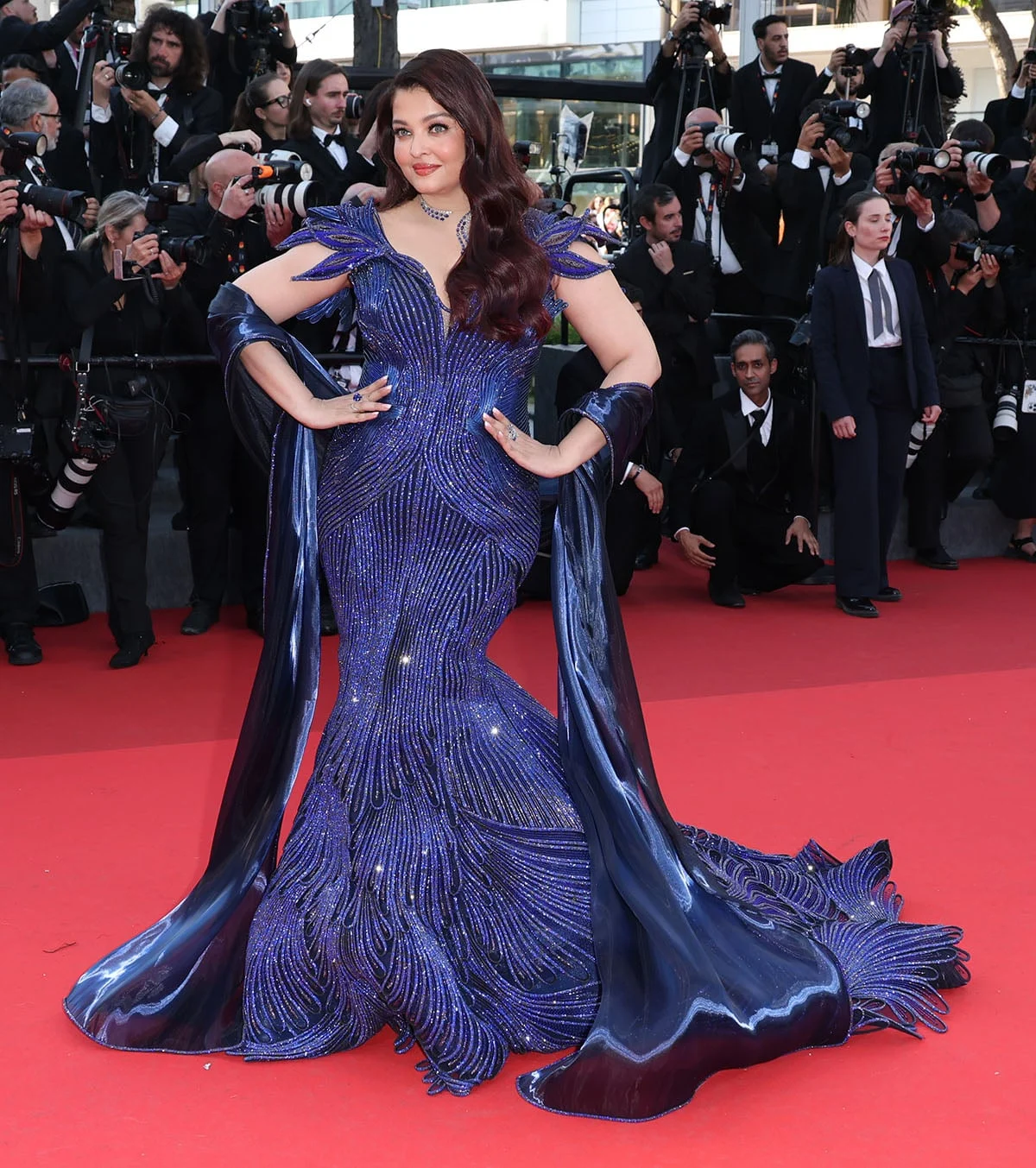
Aishwarya Rai Bachchan, a veteran presence at the Festival de Cannes, made her highly anticipated return to the red carpet for the premiere of Histoires De La Nuit. Marking her first appearance of the current festival season, the Indian actress and former Miss World presented a custom couture creation by Indian designer Amit Aggarwal. The appearance signals a continuation of the actress’s long-standing partnership with the festival, where she has served as a global ambassador for L’Oréal Paris for over two decades. The choice of attire for the premiere of the French drama, directed by Jonathan Millet, underscores a strategic shift toward avant-garde Indian designers who emphasize structural innovation and sustainable luxury.
The Architectural Vision of ‘Luminara’
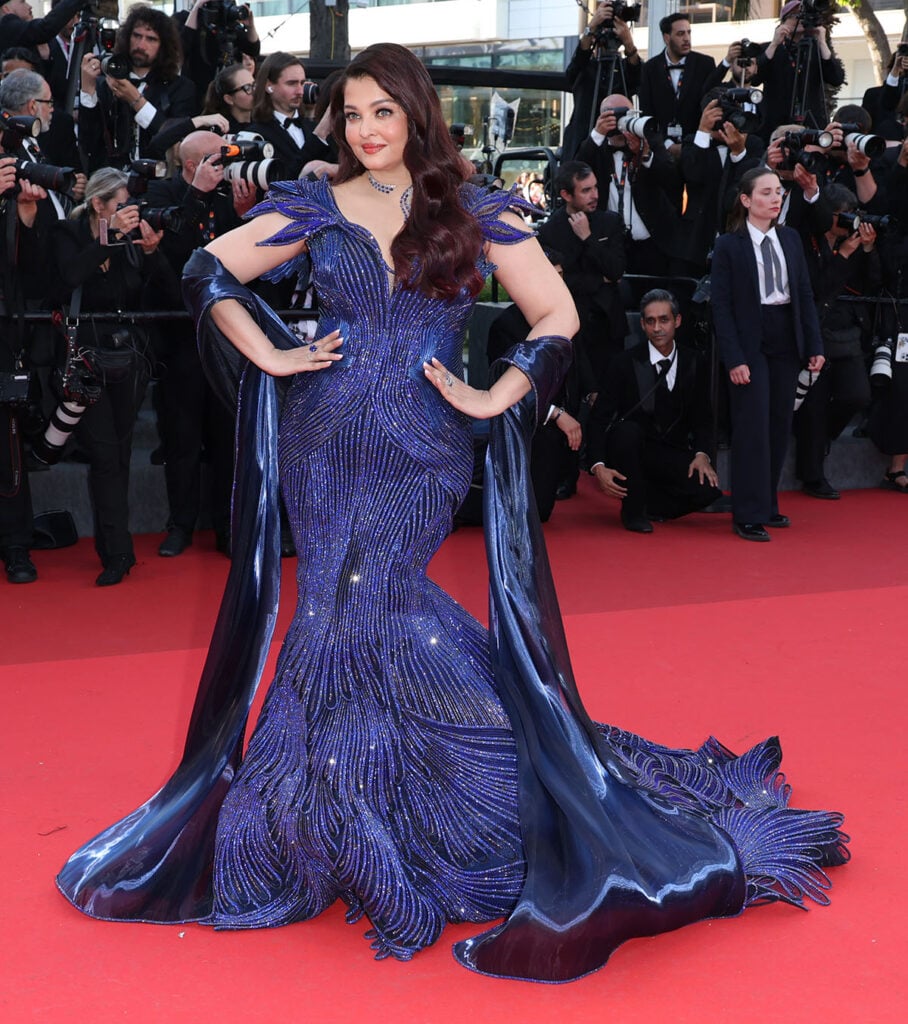
The gown, titled Luminara, is a bespoke piece from Amit Aggarwal’s high-fashion atelier, specifically engineered to interpret the concept of light in motion. The garment features a precision-engineered mermaid silhouette, a signature of the designer’s architectural approach to fashion. The construction utilizes Aggarwal’s hallmark techniques, incorporating thousands of crystalline embellishments that were hand-applied to create a refractive surface. These embellishments were arranged in sweeping, wave-like patterns across the bodice and skirt, designed to catch and disperse light as the wearer moves, creating a kinetic visual effect.
The color palette of the gown, described as "abyss-blue," was selected to evoke a cosmic or oceanic aesthetic, aligning with the "Luminara" theme. The design is characterized by dramatic winged shoulder details that provide a futuristic counterpoint to the traditional mermaid cut. To balance the rigidity of the structural elements, the ensemble included a liquid-like shawl wrapped around the arms. This accessory was crafted from a high-sheen, fluid fabric that cascaded into a train, mimicking the appearance of moving water. Industry analysts note that the technical complexity of the gown reflects the growing capability of Indian couture houses to compete on a global scale through the fusion of traditional craftsmanship and modern material science.
Chronology of Red Carpet Transitions
Bachchan’s 2026 Cannes appearance follows a series of high-profile fashion choices that have documented her stylistic evolution over the past several years. In 2024, the actress drew significant media attention for her collaborations with the design duo Falguni Shane Peacock. During that season, she attended the premieres of Megalopolis and Kinds Of Kindness in voluminous, heavily embellished gowns that leaned into maximalist aesthetics. These appearances were noted for their intricate embroidery and large-scale silhouettes, which sparked diverse commentary among fashion critics regarding the balance of traditional Indian motifs and red-carpet requirements.
By 2025, Bachchan shifted toward a more streamlined and sculptural direction. For the premiere of Colours Of Time, she collaborated with Gaurav Gupta, a designer known for his "infinity" swirls and pleated structures. The Gupta ensemble was widely praised for its sleekness and sophisticated use of negative space, marking a departure from the heavier ornamentation of previous years. The 2026 selection of Amit Aggarwal represents a synthesis of these two previous directions: it retains the grand, "major moment" impact of the Falguni Shane Peacock era while embracing the futuristic, structural precision introduced during her collaboration with Gupta.

Technical Execution and Styling
The realization of the Luminara look was overseen by celebrity stylist Mohit Rai, who has been instrumental in modernizing Bachchan’s public image in recent years. Rai’s strategy for the Histoires De La Nuit premiere focused on allowing the gown’s complex geometry to remain the focal point. Consequently, the styling was kept disciplined. Bachchan’s hair was styled in a classic, polished wave, and the makeup palette utilized cool tones to complement the abyss-blue fabric.
The designer, Amit Aggarwal, provided insights into the creation process via official sketches released alongside the event. The gown was the result of hundreds of hours of labor, involving the integration of recycled polymers and metallic polymers—materials Aggarwal frequently employs to achieve a metallic sheen without the weight of traditional metalwork. This technical choice is significant in the context of red-carpet logistics, where the weight and mobility of a gown can affect the wearer’s ability to navigate the high-pressure environment of the Palais des Festivals.
The Evolution of Indian Design on the Global Stage
The appearance of an Amit Aggarwal gown on a high-profile figure like Aishwarya Rai Bachchan at Cannes is indicative of a broader trend within the global luxury market. For decades, Indian presence on international red carpets was largely defined by traditional garments such as the saree or the lehenga. However, a new generation of designers, including Aggarwal, Gaurav Gupta, and Rahul Mishra, has successfully pivoted toward "New Age" couture. These designers utilize indigenous hand-weaving and embroidery techniques but apply them to silhouettes that align with Western high-fashion standards.
Market data suggests that the visibility of Indian designers at major film festivals contributes significantly to the growth of the Indian luxury goods market, which is projected to expand as global interest in "craft-led" luxury increases. By choosing Aggarwal, Bachchan acts as a bridge between the heritage of Indian textile art and the future of global fashion technology.
Historical Context of Aishwarya Rai Bachchan at Cannes
To understand the impact of the 2026 appearance, it is necessary to contextualize Bachchan’s history with the Cannes Film Festival. Her debut in 2002, alongside director Sanjay Leela Bhansali and co-star Shah Rukh Khan for the film Devdas, was a landmark moment for Indian cinema. At that time, her choice of a yellow Neeta Lulla saree became an iconic image of Indian culture on the French Riviera.
Over the subsequent two decades, Bachchan has navigated various fashion phases:
- The Hollywood Transition (2003–2010): During this period, she frequently opted for Western labels such as Armani, Roberto Cavalli, and Elie Saab, reflecting her growing profile in international cinema following roles in films like The Pink Panther 2 and The Last Legion.
- The Statement Era (2014–2019): This period was defined by bold, experimental choices, such as the gold Roberto Cavalli fishtail gown in 2014 and the "Cinderella" Michael Cinco gown in 2017. These looks were designed for maximum digital impact in the age of social media.
- The Indian Couture Renaissance (2022–Present): Her current phase is characterized by a deliberate return to Indian designers, albeit those who specialize in globalized, contemporary couture.
Official Responses and Industry Impact
While official statements from the Bachchan camp are rare, the collaboration was confirmed by Amit Aggarwal’s studio, which emphasized the synergy between the actress’s legacy and the brand’s vision for "engineered fashion." Stylist Mohit Rai noted that the objective was to deliver "unapologetic glamour" that met the high expectations associated with Bachchan’s Cannes appearances.
Film industry analysts suggest that Bachchan’s continued dominance on the Cannes red carpet, despite a selective filmography in recent years, reinforces her status as a "brand entity." Her presence at the Histoires De La Nuit premiere serves a dual purpose: it fulfills her contractual obligations to global sponsors and maintains the visibility of Indian cinema at a festival that is increasingly looking toward South Asia for market growth.
Broader Implications for the Festival
The 79th/80th editions of the Cannes Film Festival (as of the timeline of this event) continue to serve as the world’s premier intersection of cinematic art and high-stakes marketing. The inclusion of Histoires De La Nuit, a film dealing with themes of nocturnal mystery and human connection, provided a thematic backdrop that complemented the "cosmic" and "illuminated" nature of Bachchan’s attire.
As the festival progresses, the focus remains on how legacy stars like Bachchan adapt to a changing media landscape. The transition from traditional silhouettes to the structural "Luminara" gown suggests an awareness of the need for constant reinvention. By leveraging the technical prowess of designers like Amit Aggarwal, Bachchan ensures that her red-carpet appearances remain relevant to both traditional fashion critics and a younger, tech-savvy audience interested in the intersection of sustainability, technology, and luxury.
In conclusion, Aishwarya Rai Bachchan’s 2026 Cannes debut in Amit Aggarwal couture is more than a fashion statement; it is a calculated fusion of heritage and futurism. It reflects the rising influence of Indian design houses in the global luxury sphere and reaffirms Bachchan’s role as a primary ambassador for Indian aesthetics on the world stage. The Luminara gown stands as a testament to the evolving narrative of "Cannes glamour"—one that is increasingly defined by structural innovation, technical mastery, and a globalized approach to identity.