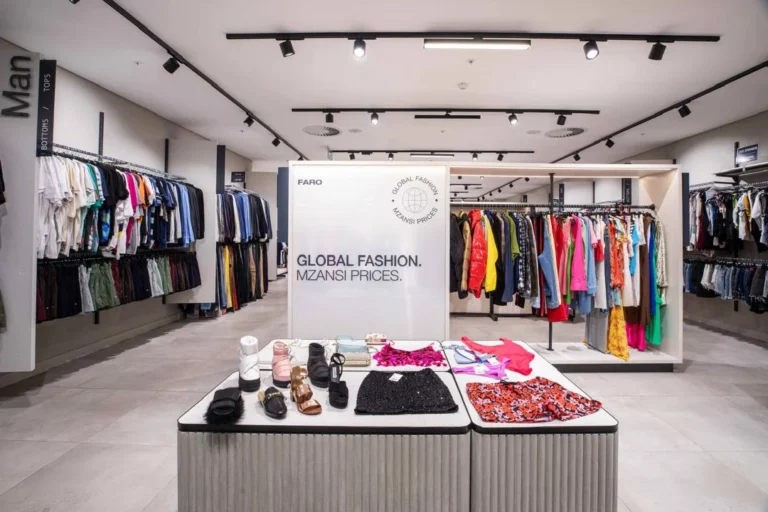










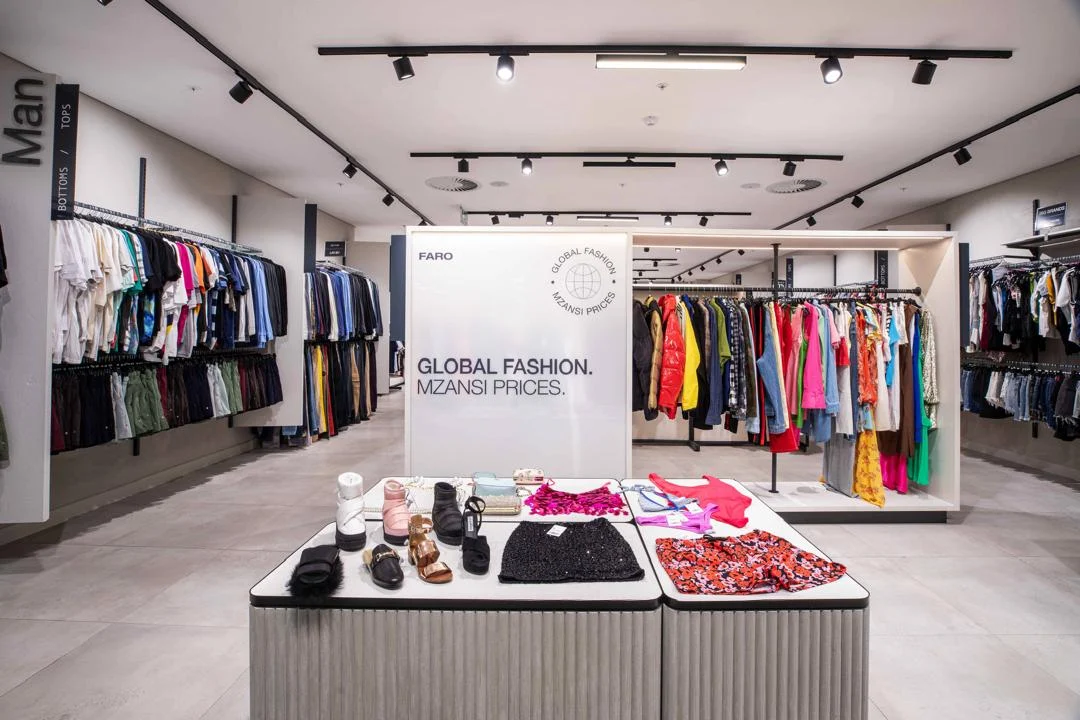
FARO, a South African-based fashion venture, has secured $6 million in a seed funding round to accelerate its mission of transforming the African retail landscape through a sophisticated "recommerce" model. The investment, led by Bloomberg President JP Zammitt, signals a growing institutional interest in startups that bridge the gap between global supply chain inefficiencies and the rising consumer demand in emerging markets. By acquiring unsold inventory and high-quality returns from major international brands, FARO aims to provide affordable, authentic fashion to African consumers while simultaneously addressing the mounting environmental crisis caused by textile waste.
The startup’s entry into the market comes at a critical juncture for the global fashion industry. Major retailers in the United Kingdom, Europe, and the United States are currently grappling with billions of dollars in unsold inventory. Traditionally, these brands have been hesitant to discount such stock heavily within their primary markets to avoid "market cannibalization"—a phenomenon where discounted older stock reduces the sales of full-priced new arrivals. Consequently, this excess inventory often ends up in landfills or is incinerated. FARO’s model offers a strategic alternative, diverting this stock to the African continent, where brand aspiration is high but purchasing power for full-price retail remains limited.
The Global Textile Crisis and the African Paradox
The fashion industry is frequently cited as one of the world’s most polluting sectors, contributing approximately 10% of global carbon emissions. A significant portion of this environmental footprint stems from overproduction. In 2024, reports indicated that global fashion giants like ASOS and H&M were managing inventory surpluses valued in the billions. While some of this is sold through off-price channels in the West, a staggering amount is exported as secondhand clothing to the Global South.
In Africa, the secondhand clothing market—often referred to as "Mitumba" in East Africa or "Salaula" in Zambia—is a staple of the economy. However, this reliance comes with a heavy ecological price. Current data suggests that between 30% and 40% of the secondhand items arriving at African ports are of such poor quality that they are deemed unusable upon arrival. These discarded textiles often end up in massive informal dumpsites or are burned, releasing toxic chemicals and clogging local waterways.
FARO seeks to disrupt this cycle by shifting the focus from "charity-grade" secondhand imports to "retail-grade" excess inventory and reconditioned returns. By sourcing directly from brands like Levi’s, Tommy Hilfiger, and Zara, the startup ensures that the products entering the market have a documented provenance and meet a higher standard of quality than the typical bulk-baled secondhand imports.
A Strategic Approach to Recommerce Operations
FARO’s business model is built on the concept of "recommerce"—the selling of previously owned or surplus new items through a structured retail environment. The startup’s operations are divided into two primary inventory streams: approximately 60% consists of brand overstock, while the remaining 40% is comprised of consumer returns.
Consumer returns present a unique challenge for global brands. Many items are returned with minor, repairable defects—a missing button, a loose thread, or a slight smudge from being tried on. In developed economies, the labor costs required to inspect, clean, and repair these items often exceed the item’s residual value, leading brands to discard them. FARO capitalizes on this by acquiring these items at ultra-low prices, sometimes as low as £1 per piece.
To transform these "damaged" goods into retail-ready products, FARO has invested in specialized reconditioning facilities. These centers are equipped with industrial-grade laundries and steam tunnels. Leveraging South Africa’s more affordable labor market, the company can meticulously restore each piece to a near-new condition. This value-addition process allows FARO to operate on a fixed-margin model, targeting a 45% margin after all processing and logistics costs are accounted for. According to co-founder and co-CEO David Torr, the company prioritizes passing savings to the consumer rather than inflating profits when margins exceed targets, a strategy designed to build long-term brand loyalty.
The Role of AI in Streamlining Supply Chains
One of the most significant barriers to scaling off-price retail is the complexity of inventory management. Unlike traditional retail, where a buyer might order 10,000 units of a single SKU (Stock Keeping Unit), off-price retail involves "broken" manifests—thousands of unique, single items with varying sizes, colors, and conditions. Historically, managing these manifests has been a labor-intensive process, often handled manually by teams of planners using Excel spreadsheets.
FARO is addressing this bottleneck by developing proprietary AI-powered agents. These tools are designed to automate the complex buyer workflows that currently stifle the industry. David Torr noted that some global brand headquarters employ thousands of people solely for data manipulation. FARO’s AI models are intended to perform these tasks in seconds rather than hours, with a level of accuracy that surpasses human capability.
Furthermore, the startup plans to implement AI-driven personalized shopping tools. Given the unpredictable nature of off-price inventory, notifying customers when their preferred brands or sizes arrive at a local store is crucial for maintaining engagement. This technological edge is expected to be a primary differentiator as the company expands its physical footprint.
Chronology of Growth and Market Expansion
FARO’s trajectory since its inception has been marked by rapid scaling and proof-of-concept success:
- Early 2023: FARO launched its first experimental pop-up store in South Africa. The store generated $100,000 in revenue in its first month, far exceeding internal projections.
- Late 2023: The company reached a revenue milestone of $2.3 million with only four operational stores. Traditional retail benchmarks suggested that seven stores would be required to reach the $2 million mark.
- Early 2024: Following a 20x revenue growth in its first year, the company secured its $6 million seed round.
- Future Outlook: The startup has set an ambitious goal of scaling to 1,000 stores over the next decade. While South Africa remains the initial focus due to its highly developed shopping mall infrastructure (boasting over 2,000 centers), the roadmap includes expansion into East Africa, West Africa, South America, and Southeast Asia.
The Competitive Landscape: Malls vs. E-commerce
FARO’s decision to focus almost exclusively on physical retail is a calculated response to the specific challenges of the African market. While e-commerce platforms like Jumia and Takealot have made significant strides, they face persistent hurdles related to logistical costs, "last-mile" delivery in low-density areas, and a lack of consumer trust in online payment systems.
Moreover, the rise of ultra-fast-fashion platforms like Shein and Temu has introduced new competition. These platforms appeal to price-sensitive consumers but often face criticism regarding the quality and sustainability of their products. FARO positions itself as a "status-conscious" alternative, offering established, high-quality global brands at prices that compete with unbranded fast fashion.
The startup’s leadership team brings a wealth of experience from both the African and global tech sectors. Co-founders Will McCarren, Chris Makhanya, and Amber Penney-Young hold backgrounds from prominent companies such as Amazon, Jumia, and UCOOK. This combination of logistics expertise and local market knowledge is central to FARO’s strategy of navigating the diverse consumer behaviors found across the continent.
Investment and Institutional Support
The $6 million funding round reflects a diverse coalition of investors. In addition to lead investor JP Zammitt, the round saw participation from several venture capital firms, including Presight Capital, Gharage Ventures, and E4E Africa. A group of angel investors with deep roots in global tech and logistics also joined, including Mato Perić (MPGI), Leonard Stiegeler (Pulse), and Tushar Ahluwalia (Razor Group).
The involvement of JP Zammitt is particularly noteworthy. As the President of Bloomberg, his backing suggests a confidence in FARO’s data-driven approach to solving supply chain inefficiencies. The capital is earmarked for further technology development, expanding the physical store network, and refining the localized pricing models necessary for international expansion.
Broader Economic and Social Implications
FARO’s success could serve as a blueprint for a more sustainable and equitable fashion ecosystem in emerging markets. By professionalizing the resale market, the company provides formal employment in its reconditioning centers and retail stores, contributing to local economic development.
From a consumer perspective, the model democratizes access to high-quality apparel. In many African nations, authentic branded clothing is a luxury reserved for the elite or obtained through expensive gray-market imports. FARO’s ability to offer these goods at a 70% discount makes them accessible to the burgeoning middle class.
As the global recommerce market is projected to reach $350 billion by 2027, FARO’s integration of AI, circular economy principles, and emerging market logistics places it at the forefront of a retail revolution. The coming years will determine if the startup can successfully navigate the cultural and economic nuances of markets like Kenya and Nigeria, but its initial success in South Africa has already established a compelling case for the future of "off-price" retail in the Global South.