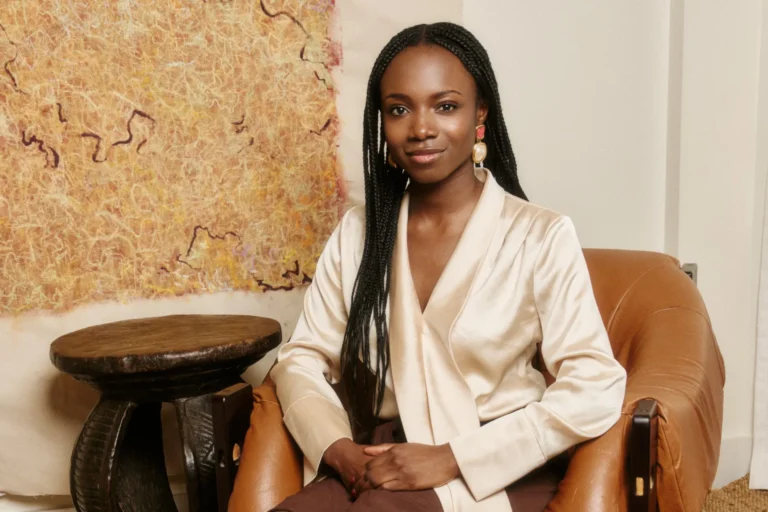










Alta, an artificial intelligence-driven personal styling and shopping platform, has announced the successful closing of an $11 million seed funding round led by Menlo Ventures. The capital infusion marks a significant milestone for the startup, which aims to bridge the gap between high-end personal styling and the everyday consumer experience through advanced generative AI and computer vision technology. Founded by Jenny Wang, a 28-year-old Harvard-trained engineer and former venture capitalist, Alta represents the culmination of a decade-long ambition to digitize the wardrobe experience in a way that was previously restricted by the limitations of early-stage machine learning.
The investment round features a high-profile roster of backers, signaling strong institutional and industry confidence in Alta’s potential to disrupt the multi-billion-dollar fashion technology sector. Participants include Benchstrength, Anthology Fund (the venture arm of AI powerhouse Anthropic), and Phenomenal Ventures, founded by Meena Harris. Notably, the round also drew significant interest from the fashion elite, including Aglaé Ventures—the investment firm of the Arnault family, owners of LVMH—and Meredith Koop, the renowned stylist to former First Lady Michelle Obama. High-profile individual investors such as DoorDash CEO Tony Xu, supermodels Karlie Kloss and Jasmine Tookes, and Poshmark co-founder Manish Chandra further bolster the company’s strategic positioning at the intersection of Silicon Valley and the global fashion capitals.
The Technological Evolution of the Digital Closet
The concept of a computerized wardrobe assistant has remained a fixture of popular culture since the 1995 film "Clueless," which featured a digital interface for outfit coordination. However, the realization of such technology has historically faced significant technical hurdles. Previous iterations of digital closets required manual data entry, lacked realistic visual rendering, and could not account for the nuanced variables of personal style, weather, and specific event contexts.
Jenny Wang’s vision for Alta was born from these frustrations. Having attempted to build similar products earlier in her career, she recognized that the requisite technology—specifically large language models (LLMs) and advanced image synthesis—had not yet reached maturity. The recent explosion in generative AI has finally provided the tools necessary to create a seamless, intuitive styling agent. Alta’s proprietary technology allows users to create a personalized virtual avatar that accurately reflects their body type and aesthetic preferences. This avatar serves as a digital mannequin, enabling users to "try on" clothes from their own closets or potential purchases in a hyper-realistic virtual environment.
The platform functions by aggregating data from various sources to build a comprehensive digital twin of a user’s physical wardrobe. Users can populate their digital closets by uploading photographs of garments, forwarding digital purchase receipts, or searching Alta’s extensive database of existing retail items. Once the closet is digitized, the AI acts as a 24/7 personal shopper and stylist, offering recommendations based on the user’s budget, lifestyle, local weather forecasts, and personal calendar.
Strategic Market Positioning and Industry Partnerships
Alta enters a competitive landscape that includes established players like Pinterest and Google Shopping, as well as niche styling apps like Whering and Cladwell. However, Wang argues that Alta’s competitive advantage lies in its technical architecture and user-centric design. While legacy platforms often prioritize advertising and broad search results, Alta is built to offer a deeply personalized, conversational interface that mimics the experience of working with a human stylist.
To ensure the AI’s fashion intelligence meets professional standards, Wang collaborated with Meredith Koop to train the underlying models. This partnership ensures that the suggestions provided by the AI are not merely algorithmic matches based on color or category, but are informed by the principles of professional styling, proportion, and seasonal trends.
Furthermore, Alta has already secured a strategic partnership with the Council of Fashion Designers of America (CFDA). This collaboration provides the startup with direct access to a broad network of designers and industry leaders, facilitating a feedback loop that informs product development. The partnership also positions Alta as a valuable tool for designers looking to understand consumer behavior and how their pieces are integrated into existing wardrobes.
Geographic Expansion and Global Ambitions
The company’s recent relocation from San Francisco to New York City reflects a strategic move to be closer to the heart of the American fashion industry. Wang noted that the shift was essential for fostering relationships with brands and industry stakeholders. Additionally, the move serves as a springboard for European expansion. With the backing of Aglaé Ventures and the support of tech influencer Zita d’Hauteville, Alta is eyeing the European market, specifically Paris, as its next major growth frontier.
In the Pacific and Oceania regions, Alta is collaborating with Marie Kondo, the world-renowned organizing consultant. This partnership highlights a secondary but vital aspect of the Alta platform: wardrobe management and sustainability. By providing users with a clear overview of what they own, Alta encourages "shopping one’s closet," potentially reducing the environmental impact of fast fashion by increasing the utility of existing garments.
Data-Driven Insights and the Future of Retail
The $11 million seed round will be primarily directed toward research and development and team expansion. Wang, who continues to be deeply involved in the coding of the platform, emphasizes that the team is composed of individuals who possess both high-level technical expertise and a genuine passion for fashion. This dual focus is critical as the company looks toward its next phase of growth: retail integration.
The implications for the retail sector are significant. One of the primary challenges in e-commerce is the high rate of returns, often exceeding 30% for apparel, largely due to issues with fit and styling uncertainty. By allowing users to see how a new item fits their avatar and interacts with their existing wardrobe before making a purchase, Alta could dramatically reduce return rates. This provides a compelling value proposition for retailers who are looking to optimize their supply chains and improve customer satisfaction.
Market data suggests that the global AI in fashion market is expected to grow at a compound annual growth rate (CAGR) of over 35% through 2030. Within this growth, personalized shopping experiences and virtual try-on technologies are identified as the most significant drivers of consumer adoption. Alta is positioned at the vanguard of this trend, moving away from static e-commerce grids toward dynamic, interactive, and personalized digital experiences.
Founder Background: A Multi-Disciplinary Approach
Jenny Wang’s background as a Harvard engineer and a former investor gives her a unique perspective on the intersection of technology and consumer behavior. Her career has spanned roles as a technical advisor to major brands and an intern at DoorDash, where she learned the complexities of scaling consumer-facing logistics platforms. Her involvement in "Kode With Klossy," Karlie Kloss’s initiative to teach young women to code, underscores her commitment to technical excellence and mentorship within the industry.
This diverse experience allowed Wang to navigate a fundraising environment that has become increasingly discerning. By leveraging her extensive network and demonstrating a deep understanding of both the technical "how" and the consumer "why," she was able to align a diverse group of investors behind a singular vision.
Broader Impact and Industry Analysis
The launch of Alta signifies a broader shift in the "Creator Economy" and the "Personalization Economy." As consumers become increasingly overwhelmed by the sheer volume of choices in the digital marketplace, AI agents like Alta act as filters, curating the noise into actionable, personalized insights.
From a sustainability perspective, Alta’s ability to help users rediscover forgotten items in their closets aligns with the growing "circular fashion" movement. By making the most of what is already owned, the platform indirectly addresses the overconsumption issues inherent in modern retail.
Furthermore, the involvement of the Arnault family via Aglaé Ventures suggests that even the highest echelons of luxury fashion are preparing for a future where digital and physical wardrobes are inextricably linked. As luxury brands increasingly explore digital twins and NFT-linked physical goods, a platform like Alta provides the necessary infrastructure for consumers to manage these assets.
As Alta moves forward, the primary challenge will be the continued refinement of its computer vision models to handle a near-infinite variety of fabric textures, drapes, and lighting conditions. However, with $11 million in fresh capital and the backing of some of the most influential names in both tech and fashion, the company is well-equipped to tackle these challenges. The transformation of the "Clueless" closet from a cinematic fantasy into a functional reality appears to be closer than ever, driven by a new wave of entrepreneurs who see fashion not just as aesthetic, but as a complex data problem waiting to be solved.