










Michael Preysman, co-founder of the once-pioneering "quiet luxury" apparel brand Everlane, has officially unveiled plans for a new venture, less than a week after the surprising acquisition of Everlane by the fast-fashion behemoth Shein. This development, announced on May 27, 2026, marks a pivotal moment for Preysman, signifying a rapid pivot following his departure from the company he meticulously built, and setting the stage for a new chapter in an industry grappling with sustainability, speed, and corporate consolidation. The move has sent ripples across the fashion landscape, prompting industry analysts to consider the evolving dynamics between ethical consumerism and mass-market retail strategies.
The Unfolding of a Retail Saga: Everlane’s Journey and Shein’s Ascendancy
Everlane, founded by Michael Preysman in 2010, carved out a significant niche in the fashion market with its unwavering commitment to "radical transparency." The brand promised consumers a clear understanding of its supply chain, factory conditions, and true costs, a stark contrast to the opaque practices prevalent in the industry. This ethos resonated deeply with a growing segment of consumers seeking quality, timeless basics produced ethically, aligning perfectly with the burgeoning "quiet luxury" trend that prioritizes understated elegance and craftsmanship over overt branding. For years, Everlane cultivated a loyal following, celebrated for its minimalist aesthetic, durable materials, and a business model that sought to bridge the gap between high fashion and accessible pricing, all while championing responsible manufacturing.
However, the retail landscape is relentlessly dynamic, and even trailblazers face formidable challenges. While Everlane achieved substantial growth, reportedly reaching over $100 million in annual revenue by the mid-2010s, it also encountered hurdles common to scaling ethical businesses, including supply chain complexities, pricing pressures, and intense competition. The brand, despite its strong initial vision, faced increasing scrutiny regarding its own transparency claims in later years, particularly concerning labor practices and pricing structures, which sometimes tested the loyalty of its most ardent supporters. These challenges, combined with the escalating costs of independent operation in a consolidated market, set the stage for a significant strategic shift.
Conversely, Shein’s rise has been nothing short of meteoric. Emerging from relative obscurity, the China-based online retailer leveraged an ultra-fast fashion model, driven by sophisticated AI algorithms and a hyper-responsive supply chain, to flood the market with trendy, ultra-affordable garments. Shein’s valuation soared, reaching an estimated $100 billion by 2022, though more recent figures have fluctuated. Its business model, characterized by rapid design-to-production cycles and direct-to-consumer digital marketing, allowed it to dominate segments of the global market, particularly among Gen Z consumers. However, Shein’s rapid expansion has been shadowed by persistent controversies, including concerns over labor conditions, environmental impact due to its high volume and disposability, and allegations of intellectual property infringement.

The Shein Acquisition of Everlane: A Strategic Confluence
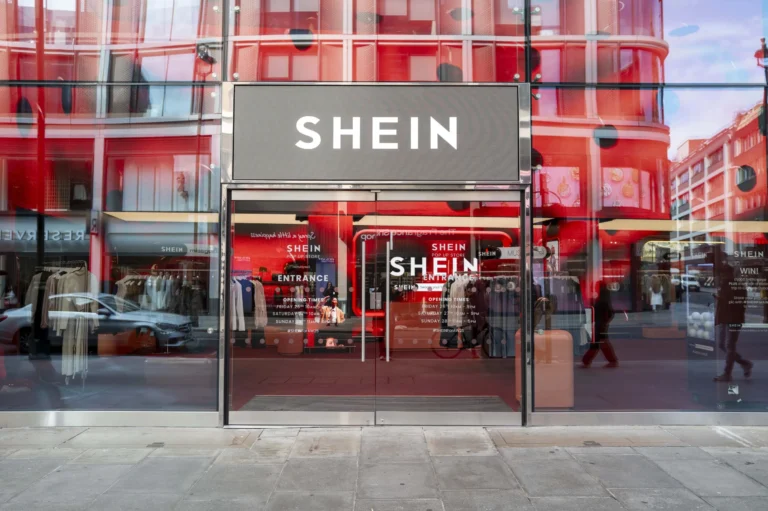
The announcement of Shein’s acquisition of Everlane in early May 2026 sent shockwaves through the industry. While the financial terms of the deal were not publicly disclosed, industry analysts estimate the transaction to be a multi-million dollar acquisition, reflecting Shein’s aggressive diversification strategy. For Shein, the acquisition of Everlane represents a calculated move to expand its market reach beyond its core fast-fashion demographic. By integrating a brand known for its quality, ethical stance, and "quiet luxury" appeal, Shein aims to:
- Diversify its portfolio: Attract a more affluent, discerning customer base that prioritizes sustainability and timeless design.
- Enhance brand perception: Mitigate some of the negative perceptions associated with its ultra-fast fashion model by associating with a brand historically rooted in ethical practices.
- Leverage Everlane’s supply chain expertise: Potentially integrate elements of Everlane’s more responsible sourcing networks into its broader operations, albeit on a limited scale initially.
- Expand market share: Gain immediate access to Everlane’s established customer base and penetrate new market segments.
For Everlane, the acquisition likely offered a lifeline, providing access to substantial capital, Shein’s vast logistical network, and unparalleled economies of scale. Despite its ethical foundations, Everlane, like many direct-to-consumer brands, faced increasing pressure to sustain profitability and growth amidst rising customer acquisition costs and a highly competitive retail environment. The partnership, from Everlane’s perspective, could be seen as an opportunity to secure its future, scale its operations, and potentially extend its mission with the backing of a global powerhouse, albeit with the inherent risks of brand dilution.
Michael Preysman’s Next Chapter: A Return to Roots?
Less than a week after the Everlane-Shein deal became public, Michael Preysman’s announcement of a new brand signals a clear intention to remain a significant player in the ethical and design-conscious fashion space. While details regarding the new venture are still emerging, sources close to Preysman indicate a strong likelihood that his new brand will re-emphasize the core values that initially defined Everlane: radical transparency, sustainable production, and high-quality, minimalist design. This swift re-entry suggests a continued passion for building businesses that prioritize ethical considerations and a desire to operate independently of the pressures that led to Everlane’s acquisition.
Industry observers speculate that Preysman’s new brand might focus even more intensely on niche segments within the sustainable luxury market, perhaps exploring advanced materials, circular design principles, or hyper-localized production models. The timing of this announcement suggests a desire to carve out a distinct identity immediately, differentiating itself from the new Everlane under Shein’s ownership. It is plausible that Preysman aims to recapture the segment of Everlane’s original customer base that may feel alienated by the Shein acquisition, offering an alternative that aligns more closely with their core values.
Chronology of Key Events:
- 2010: Everlane is founded by Michael Preysman, pioneering the "radical transparency" model in fashion.
- Mid-2010s: Everlane experiences rapid growth, establishes itself as a leader in ethical basics and "quiet luxury," achieving significant revenue milestones.
- Late 2010s – Early 2020s: Everlane faces increasing operational challenges, competition, and scrutiny regarding its own transparency claims. The fast-fashion landscape, led by Shein, rapidly expands, creating new market pressures.
- Early May 2026: Shein announces its acquisition of Everlane, with terms undisclosed but widely reported in financial media. The news sparks considerable debate and analysis within the fashion industry.
- May 27, 2026: Michael Preysman announces the imminent launch of his new, as-yet-unnamed brand, signaling a rapid return to the entrepreneurial space.
Industry Reactions and Expert Analysis
The dual announcements have elicited varied reactions from stakeholders across the fashion ecosystem.
Statements from Michael Preysman (inferred): While no direct quote on the Shein acquisition was provided, Preysman’s decision to launch a new brand so quickly speaks volumes. His inferred sentiment likely revolves around an unwavering commitment to his founding principles. "My passion for innovative design, ethical production, and genuine transparency remains the driving force behind my work," a representative might state. "This new chapter represents an opportunity to explore fresh approaches to responsible fashion, pushing boundaries and building a brand that truly reflects the evolving values of today’s conscious consumer."
Statements from Shein (inferred): A spokesperson for Shein might reiterate the strategic importance of the Everlane acquisition. "The integration of Everlane into our portfolio aligns perfectly with our vision to diversify our offerings and cater to a broader global consumer base," a statement could read. "We are committed to preserving Everlane’s distinct identity and legacy of quality, while leveraging Shein’s operational efficiencies to scale its reach and enhance its value proposition to customers worldwide. This move underscores our commitment to evolving as a comprehensive retail platform."
Industry Analysts: Fashion industry analysts have offered a range of perspectives:
- Dr. Eleanor Vance, Retail Strategy Consultant: "Shein’s acquisition of Everlane is a fascinating, high-stakes experiment. On one hand, it grants Shein access to a demographic and brand narrative that has historically been antithetical to its own. On the other, it risks alienating Everlane’s core customer base, who are often fiercely loyal to ethical sourcing and may view this acquisition as a compromise of those values. The challenge for Shein will be to integrate Everlane without diluting its brand essence, which is a monumental task given their vastly different operational philosophies."
- Marcus Chen, Sustainable Fashion Economist: "Preysman’s quick return is a testament to the enduring power of founder-led vision in the ethical fashion space. It signals a potential counter-movement against the consolidation trend, suggesting that true innovation and commitment to sustainability might best flourish outside the structures of fast-fashion conglomerates. His new venture will be watched closely as a bellwether for the future of independent, values-driven brands."
- Sarah Jenkins, Consumer Behavior Analyst: "Consumers are increasingly sophisticated. While affordability remains a key driver, especially in a challenging economic climate, there’s a significant segment that values provenance and ethics. Preysman’s new brand could tap into a renewed demand for genuine ‘quiet luxury’ that isn’t just about aesthetics but also about integrity. The market is ripe for brands that can credibly deliver on both."
Broader Impact and Implications
The developments surrounding Everlane, Shein, and Michael Preysman carry significant implications for the broader fashion industry:
- The Future of "Quiet Luxury" and Ethical Fashion: The acquisition raises questions about the long-term viability of independent ethical brands. Will "quiet luxury" become an increasingly commoditized segment absorbed by larger players, or will new, nimbler brands emerge to champion these values? Preysman’s new venture suggests the latter, potentially galvanizing a new wave of founders committed to sustainable practices.
- Shein’s Evolving Strategy: The Everlane acquisition indicates a clear strategic shift for Shein beyond its ultra-fast fashion origins. It signals an ambition to become a more diversified global fashion conglomerate, capable of catering to a wider spectrum of consumer preferences and price points. However, the integration process will be critical; failure to authentically maintain Everlane’s brand identity could backfire, damaging both brands.
- Consumer Trust and Brand Integrity: The contrasting business models of Everlane and Shein present a unique challenge regarding consumer trust. Everlane’s original customers valued its transparency and ethical claims. How Shein manages Everlane’s supply chain, pricing, and marketing will determine whether these customers remain loyal or migrate to alternative brands, potentially including Preysman’s new venture. This situation will serve as a case study in how corporate acquisitions impact brand integrity and consumer perception.
- The Role of Founders in Sustainable Innovation: Preysman’s swift re-entry into the market underscores the entrepreneurial drive inherent in the sustainable fashion movement. It suggests that even amidst large-scale corporate maneuvers, individual visionaries remain crucial in pushing boundaries and offering alternatives that align with evolving societal values. His new brand could become a beacon for those who believe that genuine sustainability requires independent thought and action.
- Market Consolidation vs. Niche Specialization: The fashion industry continues to witness both market consolidation, with larger groups acquiring smaller brands, and the emergence of highly specialized niche brands. This particular saga highlights the tension between these two forces. While Shein seeks to consolidate, Preysman’s move represents a renewed focus on niche specialization and differentiation based on core values.
The coming months will be crucial in observing how Shein manages the Everlane brand and how Michael Preysman’s new venture takes shape. The outcomes will not only redefine the trajectories of these specific entities but will also offer valuable insights into the future direction of the global fashion industry, particularly concerning the delicate balance between profitability, ethics, and consumer demand in an ever-changing retail landscape.