










Shell Cordovan, widely acclaimed as the "King of Leathers," is revered for its extraordinary durability and distinctive, deep luster, qualities that set it apart in the world of luxury materials. However, even this most regal of leathers is susceptible to the ravages of time and neglect, capable of losing its coveted sheen and structural integrity if not properly maintained. A recent collaboration between an influential online publication and Preston Soto of The Elegant Oxford, a distinguished authority in shoe care and restoration, sought to underscore this reality by undertaking the ambitious project of restoring a pair of heavily worn Meermin loafers crafted from Shell Cordovan. This initiative not only served as a practical demonstration of advanced restoration techniques but also as a crucial educational platform for understanding the unique physiological and chemical properties of this unparalleled material.
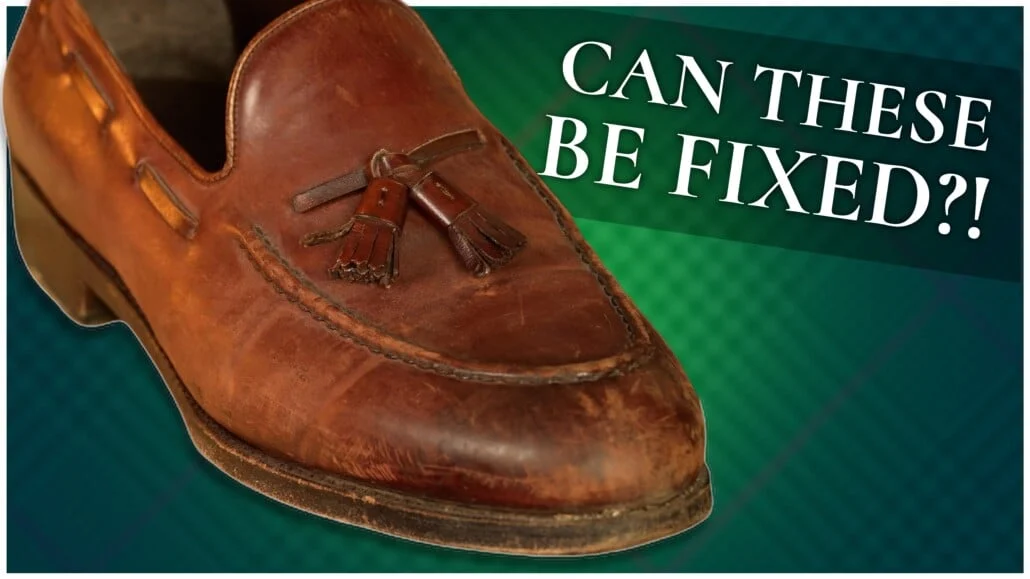
The project began with a pair of Meermin loafers, known for offering high-quality, Goodyear-welted footwear to a broader audience, which had evidently endured significant wear. Their condition presented a formidable challenge, showcasing the kind of deep-seated grime, scuffs, and structural fatigue that often leads owners to believe their treasured footwear is beyond salvation. The partnership with The Elegant Oxford and Preston Soto aimed to demystify the restoration process, providing a comprehensive visual and textual guide to revitalizing Shell Cordovan. This undertaking highlights a critical distinction: unlike conventional calfskin, Shell Cordovan is a fibrous membrane sourced from the hindquarters of a horse, demanding an entirely different approach to care and restoration due to its dense, non-porous structure and inherent oil saturation.
The Genesis of a King: Understanding Shell Cordovan’s Unique Nature
To fully appreciate the intricacies of Shell Cordovan care, one must first understand its origins and the laborious process that transforms raw equine hide into a material unlike any other. Shell Cordovan is not merely leather; it is a specific cut, known as the "shell," derived from the muscular subcutaneous layer beneath the hide of a horse’s rump. This membrane is characterized by an exceptionally dense, non-fibrous structure that lacks the typical grain pattern found in bovine leathers.
The tanning process for Shell Cordovan is notoriously lengthy and complex, often taking up to six months, particularly at renowned tanneries like the Horween Leather Company in Chicago, which has been producing cordovan for over a century. This traditional vegetable tanning process involves a meticulous regimen of soaking, shaving, and hot stuffing – where a rich blend of oils, greases, and waxes are worked deep into the leather. This "hot stuffing" saturates the material, imbuing it with its remarkable durability, water resistance, and self-lustering capabilities. It is this unique composition that necessitates specialized care, deviating significantly from the methods suitable for conventional calfskin. The absence of a discernible grain, coupled with its natural oil content, dictates that cordovan responds differently to products and physical manipulation, making expert guidance indispensable for its long-term preservation.
The Restoration Challenge: A Chronology of Revival
The chosen Meermin loafers represented a common scenario: beloved footwear that had suffered from prolonged exposure to elements and inadequate maintenance. Preston Soto’s approach to their restoration provided a meticulous chronology of steps, each tailored to the unique characteristics of Shell Cordovan.
Initial Assessment and Deep Cleaning: The first phase involved a thorough assessment of the loafers’ condition, noting areas of heavy soiling, surface abrasions, and the presence of "blooming." Soto began with a gentle but effective deep cleaning, using specialized cleaners designed to lift dirt without stripping the leather’s essential oils. This was a crucial departure from calfskin cleaning, where more aggressive degreasers might be employed. For cordovan, maintaining the intrinsic oil content is paramount.
Addressing Structural Issues and Imperfections: Following cleaning, attention turned to specific cordovan-related issues. The loafers exhibited "bumps" or welts, a common phenomenon when cordovan is exposed to moisture. Soto demonstrated the application of a dedicated cordovan cream, which provides a slight dampness, followed by the use of a deer bone. This ancient tool, or any smooth, hard object, is vital for physically compressing the fibers back into their original, smooth alignment. This technique is not merely cosmetic; it actively re-establishes the integrity of the leather’s surface.
Nourishment and Conditioning: With the surface prepared, the next step focused on nourishing the leather. Unlike calfskin, which readily absorbs conditioning agents, cordovan requires minimal product. Soto applied a thin layer of specialized cordovan cream, formulated with a lower solvent content and a higher proportion of natural oils. The emphasis here was on gentle application and extensive working of the product into the leather through friction rather than saturation. This ensured the oils were redistributed and the leather revitalized without clogging its dense fibers.
The Polishing Phase: Friction Over Product: The final stage of restoration involved bringing back the iconic luster. This phase critically highlighted the "less product, more friction" mantra for cordovan. Instead of layering on heavy waxes, Soto utilized vigorous brushing with a horsehair brush. This action generates heat and friction, encouraging the natural oils within the cordovan to rise to the surface, creating its characteristic high-gloss shine. Any subsequent light application of cordovan wax was executed sparingly and buffed extensively to avoid build-up, particularly in areas prone to "rolls." The before-and-after transformation, visually documented in the accompanying video, served as a powerful testament to the efficacy of these specialized techniques.
Expert Insights: Decoding Shell Cordovan Care
The restoration project served as a practical foundation for a deeper dive into frequently asked questions regarding Shell Cordovan care, providing authoritative answers that differentiate it from general leather maintenance.
Q: What is the main difference between caring for Shell Cordovan and regular calfskin?
A: The fundamental difference lies in their anatomical structure and tanning. Calfskin possesses a distinct grain layer with pores, allowing it to absorb products relatively easily. Shell Cordovan, conversely, is a dense, non-porous membrane that is inherently saturated with oils from its extensive tanning process. Therefore, cordovan requires significantly less product application and a much greater emphasis on "friction"—vigorous brushing and buffing—to maintain its unique luster. Over-application of products on cordovan can lead to a dull, gummy surface as the material struggles to absorb excess compounds.
Q: What is the white, waxy residue appearing on my cordovan shoes?
A: This phenomenon, known as "blooming," is a characteristic of well-tanned Shell Cordovan, particularly from tanneries like Horween. It occurs when the natural fats and oils, generously infused into the leather during the "hot stuffing" tanning process, migrate to the surface and solidify. Blooming is not a defect but rather an indicator of the leather’s rich oil content. It can be easily removed by wiping with a soft cloth or, more effectively, by brushing vigorously with a horsehair brush. This brushing action not only removes the surface residue but also helps to redistribute the oils back into the leather, enhancing its natural sheen.
Q: Can I use standard shoe polish on Shell Cordovan?
A: It is strongly advised against using standard shoe polishes on Shell Cordovan. Many conventional polishes contain high concentrations of solvents and waxes that can be detrimental to cordovan’s unique composition. Solvents can strip away the crucial natural oils that define cordovan’s character and durability, leading to dryness and cracking. Furthermore, hard waxes can build up on the non-porous surface, creating an unsightly, cracked layer, especially in areas of movement. Instead, a dedicated cordovan cream or polish, specifically formulated with a lower solvent content and higher nourishing oils, should be used to protect and enhance the leather without compromising its integrity.
Q: How do I fix the "bumps" or welts that appear on cordovan after it gets wet?
A: Shell Cordovan is susceptible to "raising its grain" or forming tiny bumps and welts when exposed to water, a reaction of its dense fibers to moisture. To rectify this, apply a minimal amount of cordovan cream to the affected area. While the leather is slightly damp from the cream, use a deer bone (a smooth, polished bone designed for this purpose) or any equally smooth, hard object to physically compress and rub the fibers back down. This process, often referred to as "boning," realigns the fibers and restores the leather’s smooth, flat surface.
Q: Why do my cordovan shoes have "rolls" instead of creases?
A: This is a hallmark feature of Shell Cordovan and a clear differentiator from calfskin. Because cordovan is a membrane rather than a skin with a distinct grain layer, it does not "crease" or "break" in the conventional sense. Instead, the material "rolls" in areas of natural movement, such as the vamp. These rolls are a sign of genuine Shell Cordovan and contribute to its unique aesthetic. It is crucial never to apply hard wax polish to these rolls, as the wax will inevitably crack and flake, detracting from the shoe’s appearance. Gentle conditioning with cordovan cream and regular brushing are sufficient for these areas.
Q: How often should I polish my cordovan loafers?
A: Over-polishing is one of the most common mistakes made with Shell Cordovan. Due to its inherent oil content and dense structure, cordovan rarely requires intensive polishing. Most of the time, a vigorous brushing with a horsehair brush for two to three minutes is all that is needed to reactivate its natural oils and restore its brilliant shine. New cream or wax should only be applied sparingly, typically every 10 to 15 wears, or when the leather visibly begins to appear dull or dry, indicating a need for replenishment of its surface oils.
Q: Is Shell Cordovan actually waterproof?
A: Shell Cordovan is not entirely waterproof, but it is highly water-resistant. Its exceptional density and abundant oil content make it an excellent choice for inclement weather, offering significantly better protection against moisture penetration compared to most other leathers. However, as previously mentioned, prolonged or heavy exposure to water can still cause the surface to "spot" or "welt." While water will not typically ruin the leather, it will necessitate maintenance, such as brushing and "boning," to restore the smooth finish once the leather has dried naturally. Prompt drying away from direct heat is always recommended.
Broader Implications and The Future of Sustainable Luxury
The collaboration between the publication and The Elegant Oxford transcends a simple shoe restoration; it represents a significant contribution to consumer education and the broader discourse on sustainable luxury. By demonstrating the potential for revival in heavily worn Shell Cordovan footwear, the initiative underscores the inherent longevity and investment value of this material. In an era increasingly conscious of environmental impact and ethical consumption, the ability to extend the life of high-quality goods through proper care aligns perfectly with the principles of slow fashion.
Preston Soto’s detailed work and expert guidance serve as a beacon for enthusiasts and novices alike, proving that with the right knowledge and tools, even the most neglected Shell Cordovan can be brought back to its former glory. This not only empowers consumers to protect their investments but also fosters a deeper appreciation for the craftsmanship involved in both the creation and maintenance of such exquisite materials. Industry observers frequently lament the decline in consumer knowledge regarding specialized product care, making educational ventures like this particularly vital. It reinforces the notion that luxury is not just about acquisition, but also about responsible ownership and diligent preservation, ensuring that the "King of Leathers" continues to reign supreme for generations.