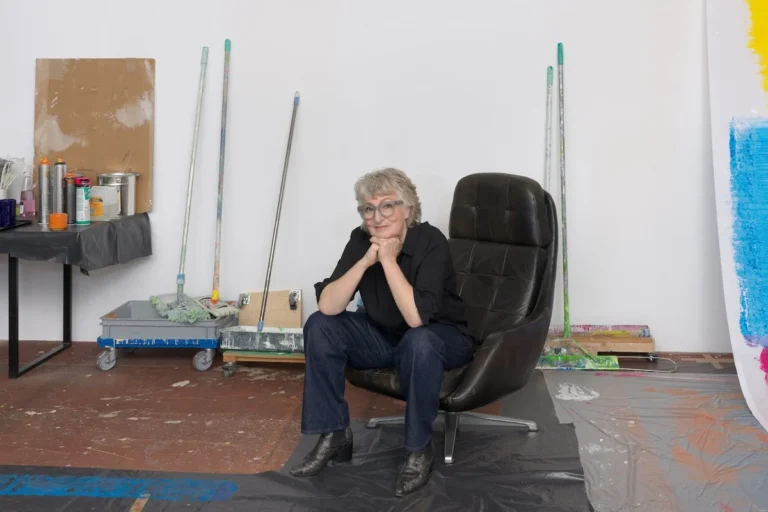





For decades, the work of Shu Lea Cheang has navigated the slipstream between the visible and the coded, the monumental and the transient. Operating at the precarious edge where the rigid architecture of the institution meets the fluid, defiant energy of the margins, Cheang has consistently pushed boundaries and redefined artistic engagement. From her seminal contributions to net art in the 1990s—which fundamentally reimagined the internet as a site for political subversion and community-building—to the sprawling, multi-sensory installations of her contemporary practice in filmmaking and performance, she has remained a defining force in the global art landscape. Her latest exhibition, LOVER LOVE (2026), an interactive, four-channel video installation now filling the Leslie-Lohman Museum of Art in New York, stands as her most urgent and visceral intervention yet, directly confronting the escalating legislative assaults on queer and trans lives.
Long before the art world found its vocabulary for ‘intersectionality’, Cheang was already weaving together technology, queer politics, and social memory with a restless, avant-garde spirit. Her career is a testament to the power of staying marginal while standing firmly at the center of the world’s most urgent conversations. Her early digital works, such as BRANDON (1998-1999), a groundbreaking web-based artwork commissioned by the Solomon R. Guggenheim Museum, explored the complex narratives of gender, identity, and justice through the lens of a murdered transgender man, Brandon Teena. This early foray into digital storytelling established her as a pioneer, utilizing the nascent internet not merely as a display medium but as an active, participatory space for political and social critique. This foundational approach—engaging audiences directly in the construction of meaning and challenging passive consumption—foreshadowed the radical interactivity that defines LOVER LOVE. There is an undeniable bravery in her trajectory: a refusal to be categorized or quieted, consistently choosing paths that challenge the status quo and amplify marginalized voices.
The Genesis of "LOVER LOVE": From Desert Encounter to Museum Walls
The story of how LOVER LOVE (2026) came to exist matters as much as the work itself, illustrating Cheang’s deep commitment to organic collaboration and responsive artistry. In 2024, Cheang embarked on a tour across America with a newly restored print of her 1994 debut feature film, Fresh Kill. This lesbian cyberfeminist thriller, originally set against the backdrop of toxic waste and corporate greed on Staten Island, unexpectedly served as a catalyst for her next major project. At a screening in Tucson, Arizona, Cheang encountered a queer and trans community whose vitality, rootedness in each other, and connection to the land left an indelible impression. This encounter was not merely an observation but an invitation; she returned, drawn by the palpable energy and resilience she witnessed. Eight members of that vibrant community would subsequently become the beating heart of LOVER LOVE.
Thirty years after making a film that critically examined environmental injustice and marginalized identities in an urban context, Cheang found herself in a starkly different landscape—a desert that would crack her work open into something new and necessary. This geographical and communal shift underscores Cheang’s evolving artistic methodology, moving from speculative fiction to direct engagement with contemporary lived experiences. The resulting work—an interactive video installation comprising four large screens on movable tracks—now fills the Leslie-Lohman Museum, New York’s only dedicated LGBTQ+ art museum, bringing a powerful, immediate resonance to its mission of preserving and celebrating queer artistic expression. The exhibition is widely regarded by critics as one of the most urgent presentations in a New York gallery this year, reflecting a heightened cultural awareness of the ongoing struggles faced by the trans community.
Interactive Engagement: Confronting Societal Brutality
What LOVER LOVE asks of its audience, before it asks anything else, is direct physical engagement. The four film screens, each displaying footage of the Tucson performers, hang on movable tracks within the gallery space. Visitors are compelled to interact: to push them, to drag trans bodies across frames, to fold images into each other, creating collisions that are both unplanned and deeply symbolic. This hands-on interaction immediately implicates the viewer, transforming them from passive observer to active participant.
Each time a screen is touched and moved, the gallery’s subwoofers trigger a fragment of Aérea Negrot’s voice—looped from her potent 2011 song that gives the work its title—pumped through the room at a frequency designed to be felt viscerally in the sternum. Cheang has described this mechanism with a precision that resonates profoundly: moving the screens, she states, is the audience enacting society’s brutality. This mechanism is not merely an artistic device; it is a profound commentary on the casual and systemic violence that displaces, fragments, and attempts to diminish trans bodies in society.
However, Cheang’s vision refuses to end in defeat. There is a second, crucial movement to this idea. When the screens are pushed out of alignment, the images do not disappear into the void; instead, they spill onto the walls, onto the floor, into corners the projection was never meant to reach. The trans bodies that viewers might have inadvertently or deliberately tried to displace are suddenly everywhere, proliferating beyond their original confines. What was meant to diminish instead expands, and the room fills not just with Aérea’s haunting voice but with the collective force of bodies that refuse to be contained or moved. This dynamic interplay between brutal displacement and defiant proliferation forms the conceptual core of LOVER LOVE, offering a powerful metaphor for the resilience of the trans community.
Aérea Negrot: A Central Presence and Enduring Legacy
This brutality, as presented in the museum, is far from abstract. Visitors are physically rearranging trans bodies with their bare hands at a moment when the health, safety, and autonomy of those same bodies are under coordinated legislative attack across the United States. The consequence of each movement is immediate, sonic, and entirely personal. This is what distinguishes genuinely participatory art from the kind that merely flatters with the illusion of agency: real participation demands responsibility. Attendees come to witness, but they become the mechanism, embodying the very societal forces Cheang seeks to expose.
Aérea Negrot—a musician, Cheang’s collaborator across multiple films, a trans woman, and an immigrant—is present in every second of this work. Tragically, she passed away in October 2023. Cheang shared a deeply personal interpretation of Negrot’s death, stating her belief that Negrot did not choose to die when she stepped out of a window, but rather genuinely believed she could fly. This belief is rendered as the film’s opening image: a six-winged seraph soaring above the Arizona sky, Negrot elevated into a symbol of transcendence without being reduced to one. It is a nakedly devotional act of image-making, a gesture of profound love and grief that art criticism often treats with suspicion—too direct, too raw, insufficient ironic distance. Yet, it is precisely the refusal of that distance that imbues the image with its immense power. The grief here is not merely an emotion; it is structural, holding the entire work together, a foundational element of its emotional and political architecture. Negrot’s spectral presence, both sonic and visual, ensures that her legacy as an artist and a trans woman remains central to the narrative of resilience and defiance.
Voices from the Margins: Resistance and Hope
The performers Cheang found in Tucson bring their own extraordinary grammar to the screen. Cheang imposed no script, instead offering each participant space for a solo expression, allowing their authentic narratives and identities to unfold. The results are radically diverse and deeply personal: ritualized BDSM practices exploring power dynamics and consent; cactus spine needles drawing blood in a powerful act of self-possession and connection to the desert environment; a cello performance that ignites the stark landscape; and dark, drag personas that resist any fixed reading of self. This radical openness in Cheang’s directorial approach emphasizes the autonomy and multifaceted identities of her collaborators, moving beyond singular representations.
Before filming began, Cheang shared with the performers the story of Negrot: her music, her success, her immigration journey, her loneliness, and her untimely death. Cheang recounts that they received this narrative with a genuine desire to hold Negrot’s present tense intact, to ensure her continued presence not as a ghost of the past, but as a vital force in the present. A banner prominently displayed in the film declares: Aérea is present. This statement is not a metaphor, nor a comfort, nor wishful thinking, but a material condition of the work itself, grounding Negrot’s memory in the living, breathing reality of the exhibition.
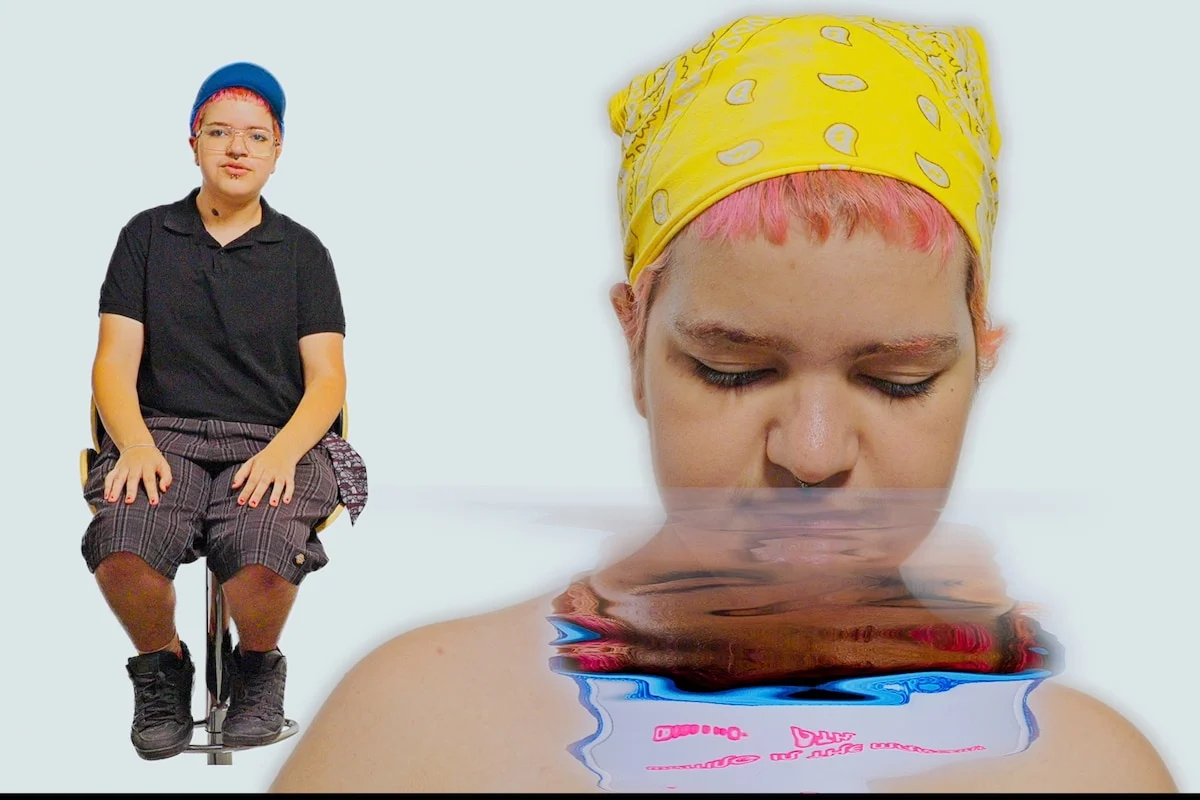
Among the performers is Azrael Fayme, a 17-year-old poet and trans activist whose personal experience powerfully underscores the contemporary urgency of LOVER LOVE. Fayme recounted being refused treatment for a common cold because doctors prioritized their trans identity over their symptoms—a stark example of systemic discrimination in healthcare. In the film, Fayme speaks eloquently about dreaming as the first step toward making a new reality, connecting this personal vision to broader historical and philosophical frameworks. Cheang frames Fayme’s words within the legacies of figures like Malcolm X and Arundhati Roy, linking the act of dreaming to the idea of a portal that opens on the other side of catastrophe. In 2026, with gender-affirming care criminalized by executive orders in numerous states and transition itself a legislative target, the word “dreaming” does not land softly. It lands as an act of profound refusal and resistance. Defiance, Cheang suggests, has found a quieter coat to wear, and that coat is hope—a hope more dangerous and resilient, covered in the protective, yet piercing, glochids of the desert cactus.
Navigating a Hostile Landscape: Political Urgency and Implications
The political context surrounding LOVER LOVE cannot be overstated. The year 2026 marks a critical period for LGBTQ+ rights, particularly for the transgender community in the United States. Following a surge in anti-trans legislation in the preceding years, targeting everything from gender-affirming care for minors and adults, to bathroom access, sports participation, and even the public display of drag, the political landscape is increasingly hostile. According to analyses by organizations like the ACLU and Human Rights Campaign, hundreds of such bills have been introduced and many passed across state legislatures, creating a climate of fear and insecurity. These legislative efforts systematically aim to make trans people invisible, to deny their existence, and to strip them of fundamental rights and bodily autonomy.
Cheang told this writer that she wanted to invert the logic of Día de Muertos; not a day of the dead, but a day for the living. What LOVER LOVE offers, against the current political moment’s systematic effort to make trans people invisible, is precisely the opposite of disappearance. It presents eight people from a desert city, living fully on their own terms, in an environment that both supports and challenges them, projected in a museum where their grief and joy, ritual and fury, fill all screens at once. This proliferation of trans bodies and narratives serves as a powerful counter-narrative to erasure, an undeniable assertion of presence and vitality.
The exhibition’s placement at the Leslie-Lohman Museum of Art further amplifies its impact. As the only dedicated LGBTQ+ art museum in the world with a mission to preserve, document, and celebrate queer art, Leslie-Lohman provides a crucial platform for such a politically charged and artistically innovative work. The museum’s commitment ensures that LOVER LOVE reaches an audience prepared to engage with its complex themes, fostering dialogue and understanding within and beyond the queer community.
Broader Impact and Legacy for Contemporary Art and Activism
LOVER LOVE is not just an exhibition; it is a critical intervention, demonstrating how contemporary art can serve as a potent site for political activism and social commentary. Cheang’s work challenges traditional notions of spectatorship, demanding active participation and moral accountability from its audience. By forcing viewers to physically manipulate images of trans bodies, she makes the abstract concept of societal brutality tangible and immediate. The subsequent proliferation of these images, rather than their diminishment, offers a powerful message of resilience, community, and the inherent impossibility of truly erasing marginalized identities.
Shu Lea Cheang’s trajectory, from pioneering net artist to master of immersive installations, underscores her enduring relevance and foresight. Her ability to anticipate and engage with urgent social issues, often before they enter mainstream discourse, solidifies her position as a visionary artist. LOVER LOVE builds upon her career-long exploration of technology, identity, and power, offering a timely and deeply affecting response to the challenges facing the trans community today. It is a testament to the power of art to create spaces for mourning, resistance, and radical hope, reminding us that even in the face of coordinated attacks, bodies that refuse to be moved will find ways to proliferate, to be seen, and to be heard.
LOVER LOVE is at the Leslie-Lohman Museum of Art, New York, until January 3, 2027.