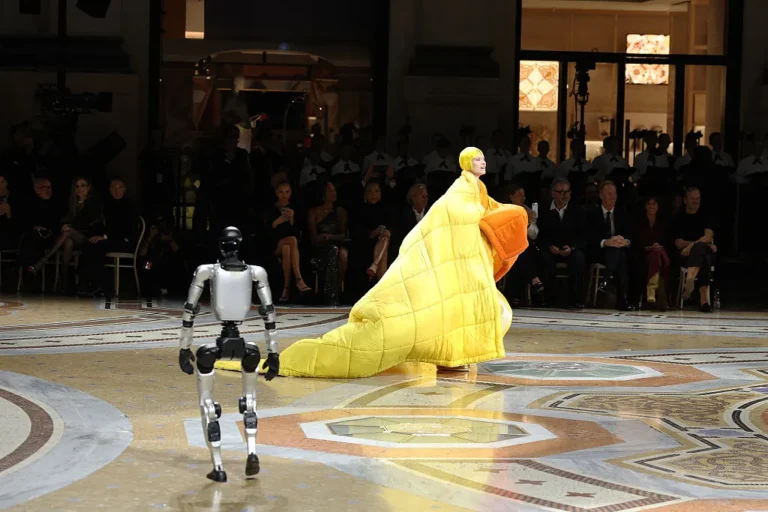










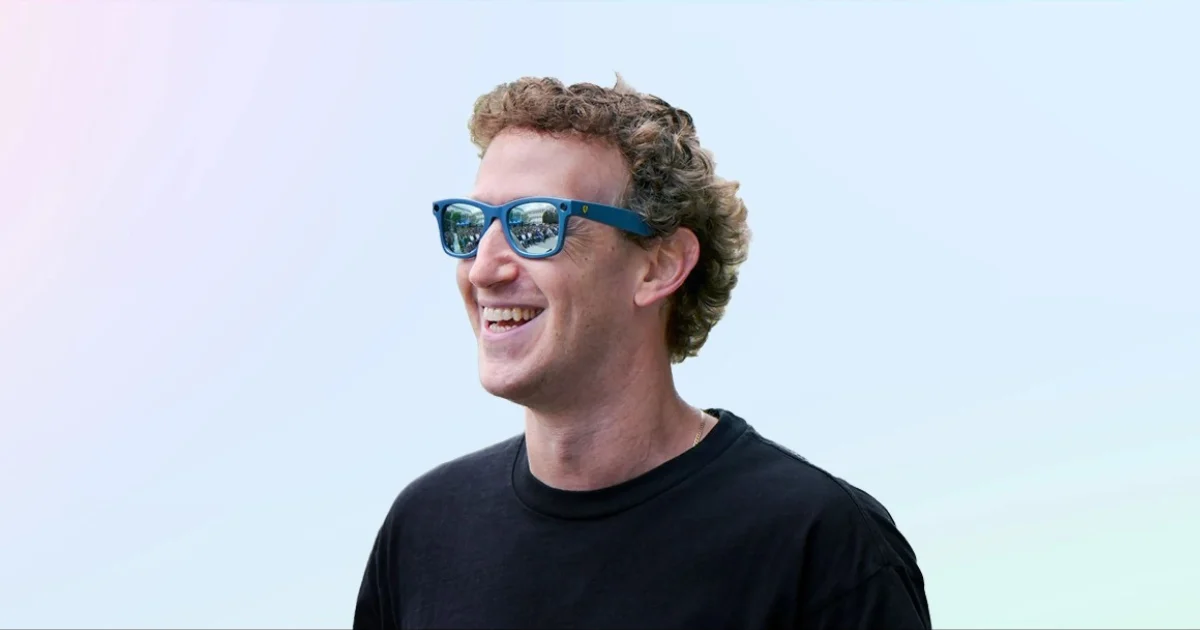
The intersection of Silicon Valley and European high fashion reached a new milestone on Thursday as Meta CEO Mark Zuckerberg and his wife, Priscilla Chan, took a high-profile seat in the front row of Prada’s Fall/Winter 2026 Fashion Week show in Milan. While the presence of tech royalty at a fashion event often generates tabloid interest regarding personal style, industry analysts view this appearance as a calculated business signal. Zuckerberg was observed in deep conversation with Lorenzo Bertelli, Prada’s Chief Merchandising Officer and the son of the house’s legendary head designer, Miuccia Prada. This public interaction has reignited speculation that Meta is preparing to expand its wearable artificial intelligence portfolio into the ultra-luxury segment, potentially through a dedicated Prada-branded edition of its successful AI smart glasses.
The rumors of a Meta-Prada collaboration are not entirely new, though the Milan appearance provides the most visual confirmation of a deepening relationship. In June 2025, reports surfaced indicating that Meta was actively exploring partnerships with high-end labels under the EssilorLuxottica umbrella, specifically naming Prada as a primary candidate for an AI-integrated eyewear line. While Meta has refrained from issuing a formal confirmation, the logistical and corporate infrastructure for such a deal is already firmly established.
The Strategic Evolution of Meta’s Hardware Ambitions
Meta’s journey into wearable technology has seen a dramatic shift in both strategy and consumer reception over the last five years. Initially launching the "Ray-Ban Stories" in 2021, the company faced lukewarm reviews and privacy concerns. However, the second and third iterations of the product, rebranded as Ray-Ban Meta AI glasses, have proven to be a breakout success for the company’s Reality Labs division.
According to recent financial disclosures from EssilorLuxottica, the French-Italian eyewear conglomerate that manufactures the devices, sales of Meta’s AI glasses reached over 7 million units in 2025. This represents a staggering 250% increase from the 2 million units sold in 2024. The growth is attributed to improved AI capabilities, including multimodal features that allow the glasses to "see" and interpret the wearer’s surroundings, as well as more diverse styling options.
The current lineup includes the classic Ray-Ban styles and the more recent Oakley Meta glasses, which were unveiled in mid-2025 to target the athletic and outdoor performance markets. A Prada collaboration would represent the third pillar of this strategy: the "luxury lifestyle" segment. By moving into the high-fashion space, Meta aims to transform smart glasses from a niche gadget into a status symbol, following the trajectory of the Apple Watch’s partnership with Hermès.
The EssilorLuxottica Connection and Licensing Dynamics
The feasibility of a Prada-branded Meta device is underpinned by the long-standing relationship between Prada and EssilorLuxottica. In early 2024, the Prada Group and EssilorLuxottica announced a significant ten-year renewal of their licensing agreement. This contract grants EssilorLuxottica the rights to design, produce, and distribute eyewear under the Prada and Miu Miu brands until at least December 31, 2030, with a provision for an additional five-year extension through 2035.
Because EssilorLuxottica is Meta’s exclusive manufacturing and design partner for its smart glasses, the legal and operational framework for a Prada AI line is already in place. During a recent earnings call, EssilorLuxottica executives noted that the "integration of technology into iconic frames" is a core growth driver for the next decade. For Prada, integrating Meta’s AI technology offers a way to maintain its reputation as a forward-thinking, avant-garde label while tapping into the burgeoning "wearable tech" market that is increasingly popular with Gen Z and Millennial consumers.
A Timeline of Meta’s Wearable Tech Expansion
To understand the potential impact of a Prada partnership, it is necessary to look at the chronological progression of Meta’s hardware strategy:
- September 2021: Meta (then Facebook) launches Ray-Ban Stories. The device focuses on photography and music but lacks sophisticated AI.
- October 2023: The second-generation Ray-Ban Meta glasses are released, introducing Meta AI and improved camera quality.
- June 2025: Reports emerge from CNBC and other outlets that Meta is developing high-fashion smart glasses, specifically targeting the Prada brand.
- September 2025: Meta unveils Oakley Meta glasses, expanding the technology into the sports and rugged-wear categories.
- February 2026: Mark Zuckerberg’s presence at Prada’s Milan show suggests the "Project Prada" collaboration is nearing a public unveiling, likely slated for the 2026 holiday season or early 2027.
Analyzing the Market: Why Luxury Matters for AI
The transition from Ray-Ban to Prada is more than just an aesthetic choice; it is a calculated attempt to solve the "Glasshole" problem—the social stigma associated with wearing tech on one’s face. By embedding AI into frames that are already coveted as high-fashion accessories, Meta effectively "hides" the technology within a desirable consumer product.
Market analysts suggest that a Prada version of the Meta glasses could command a price point significantly higher than the standard $299 Ray-Ban models. Industry estimates place a potential Prada AI frame in the $600 to $900 range. This would not only increase Meta’s hardware margins but also serve as a branding exercise to elevate Meta’s image from a data-driven social media firm to a sophisticated lifestyle and technology ecosystem.
Furthermore, the "Prada" brand carries a specific intellectual and architectural cachet. Under the creative direction of Miuccia Prada and Raf Simons, the brand has focused on the intersection of humanity and modernity. Integrating Meta’s "Orion" AR technology or advanced multimodal AI into Prada’s "Linea Rossa" or classic acetate frames would align with the brand’s history of technological experimentation in fabrics and manufacturing.
Privacy Concerns and the Growing Counter-Surveillance Movement
Despite the commercial success of Meta’s eyewear, the prospect of more pervasive, fashion-forward surveillance devices has sparked a significant societal backlash. As the technology becomes more discreet, public anxiety regarding unauthorized recording and data harvesting has intensified.
Recent reports in The New York Times suggest that Meta is considering the addition of facial-recognition features to its smart glasses. Such a feature would theoretically allow a wearer to identify strangers or pull up social media profiles simply by looking at someone. While Meta has stated that it is exploring these features with privacy in mind—potentially limiting them to "verified friends" or specific use cases—the news has been met with hostility from privacy advocates.
In the first quarter of 2026, a series of incidents highlighted this tension. In several major U.S. cities, citizens have been reported "decommissioning" public surveillance infrastructure, such as Flock license-plate readers and Ring doorbells, citing concerns over a "surveillance state." This sentiment has bled into the wearable market. A new mobile application, recently released by independent developers, uses Bluetooth and Wi-Fi signal detection to warn users if a pair of smart glasses is active within a 15-foot radius.
For a luxury brand like Prada, these privacy concerns represent a reputational risk. High-fashion consumers often value exclusivity and discretion. If Prada-branded glasses become synonymous with intrusive surveillance, it could alienate a segment of their core demographic. Consequently, industry insiders expect any Prada-Meta device to include highly visible recording indicators and robust privacy "kill switches" to mitigate these concerns.
Technical Implications and Future Outlook
The rumored Prada glasses are expected to utilize Meta’s latest AI architecture. This includes a specialized low-power processor capable of real-time translation, object identification, and voice-activated assistance. Unlike the bulkier VR headsets produced by Meta and competitors like Apple, the Prada collaboration is expected to prioritize a "glasses-first" form factor—maintaining the weight and balance of traditional luxury eyewear.
The business implications for Meta are clear: hardware provides a hedge against the volatility of the digital advertising market. By controlling the device, Meta controls the interface through which users interact with the physical world, positioning itself as the primary gatekeeper of the "AI-mediated reality."
As Milan Fashion Week concludes, the tech and fashion industries will be watching for a formal announcement. Zuckerberg’s pivot from the "Metaverse" of virtual reality to the "Metaverse" of wearable, stylish AI suggests a more pragmatic and commercially viable path forward. If the Prada collaboration comes to fruition, it will mark a definitive moment where high technology finally sheds its "geek" persona to become a permanent fixture of the global luxury market.
While Meta has not yet responded to requests for comment regarding the specifics of the Milan meeting, the visual evidence of Zuckerberg and Bertelli’s rapport suggests that the next generation of AI will not be worn in a lab, but on the runways of Milan and the streets of Paris. The success of this venture will ultimately depend on whether consumers value the convenience of AI more than the sanctity of their visual privacy.