




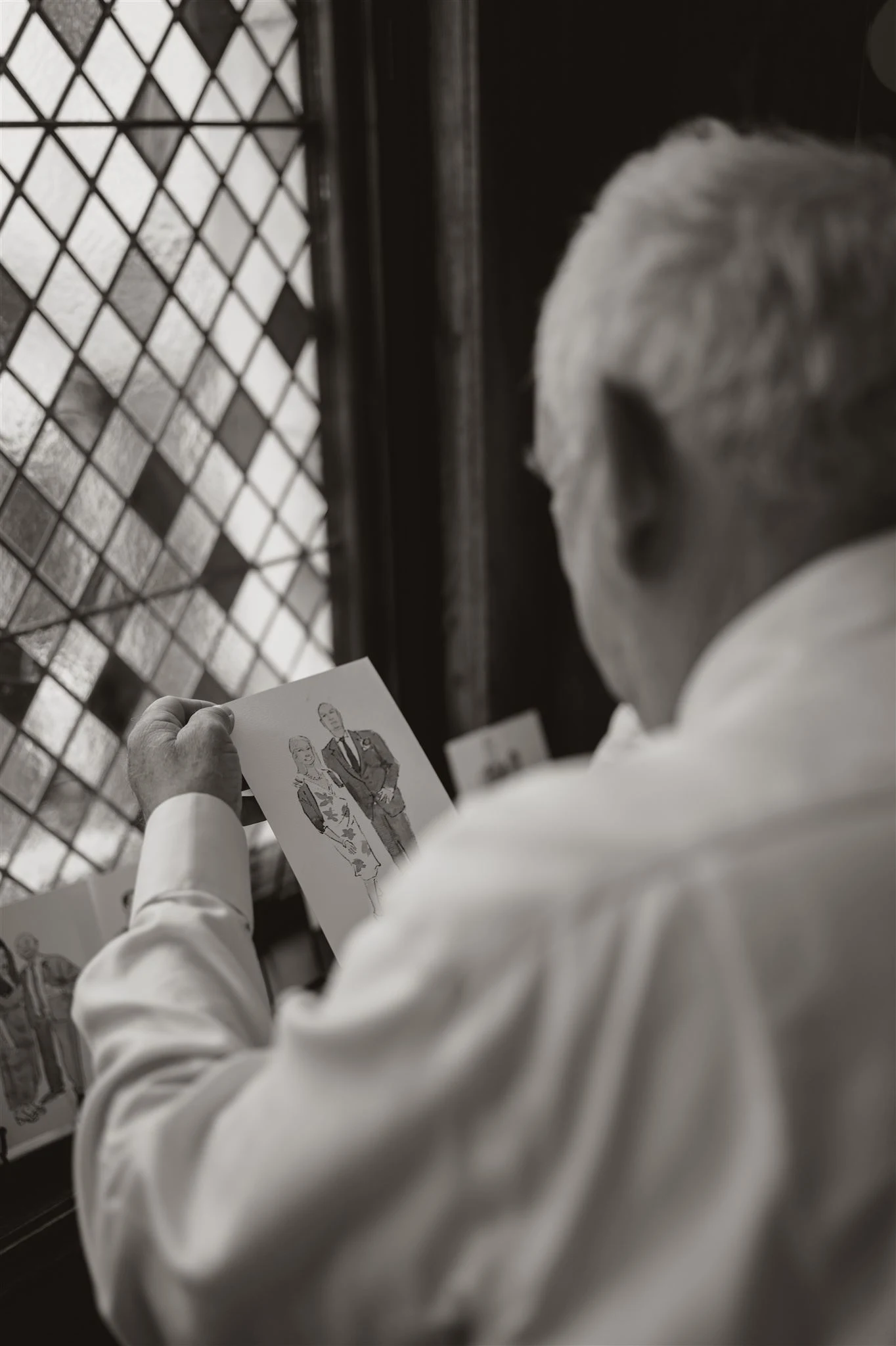
The contemporary wedding industry is witnessing a significant shift in how couples approach guest entertainment and keepsakes, moving away from digital-first experiences toward traditional, "slow" artistry. Central to this movement is Peter Kuznicki, the founder of Kuznicki Live, a classically trained draughtsman and illustrator who has transitioned from a long-standing career in the digital design sector to the niche field of live wedding illustration. Kuznicki’s work, which utilizes ink, brush, and watercolor, serves as both a live performance and a source of personalized memorabilia, providing guests with hand-painted portraits created in real-time during the wedding festivities. This resurgence of analog art occurs against a backdrop of rapid technological advancement, offering a tactile counterpoint to the ubiquity of smartphone photography and artificial intelligence in the creative arts.
The Professional Pivot: A Response to Digital Automation
Peter Kuznicki’s entry into the world of live wedding illustration was not a matter of chance but a calculated response to the shifting landscape of the creative industries. For 15 years, Kuznicki operated as a graphic designer, a role that saw him navigating the transition from traditional layout techniques to the increasingly automated world of digital design. However, the rise of generative artificial intelligence (AI) and its capacity to replicate commercial design tasks led to a period of professional disillusionment. As AI technology began to advance faster than industry regulations or standard workflows could adapt, Kuznicki identified a growing deficit in the "human" element of commercial art.
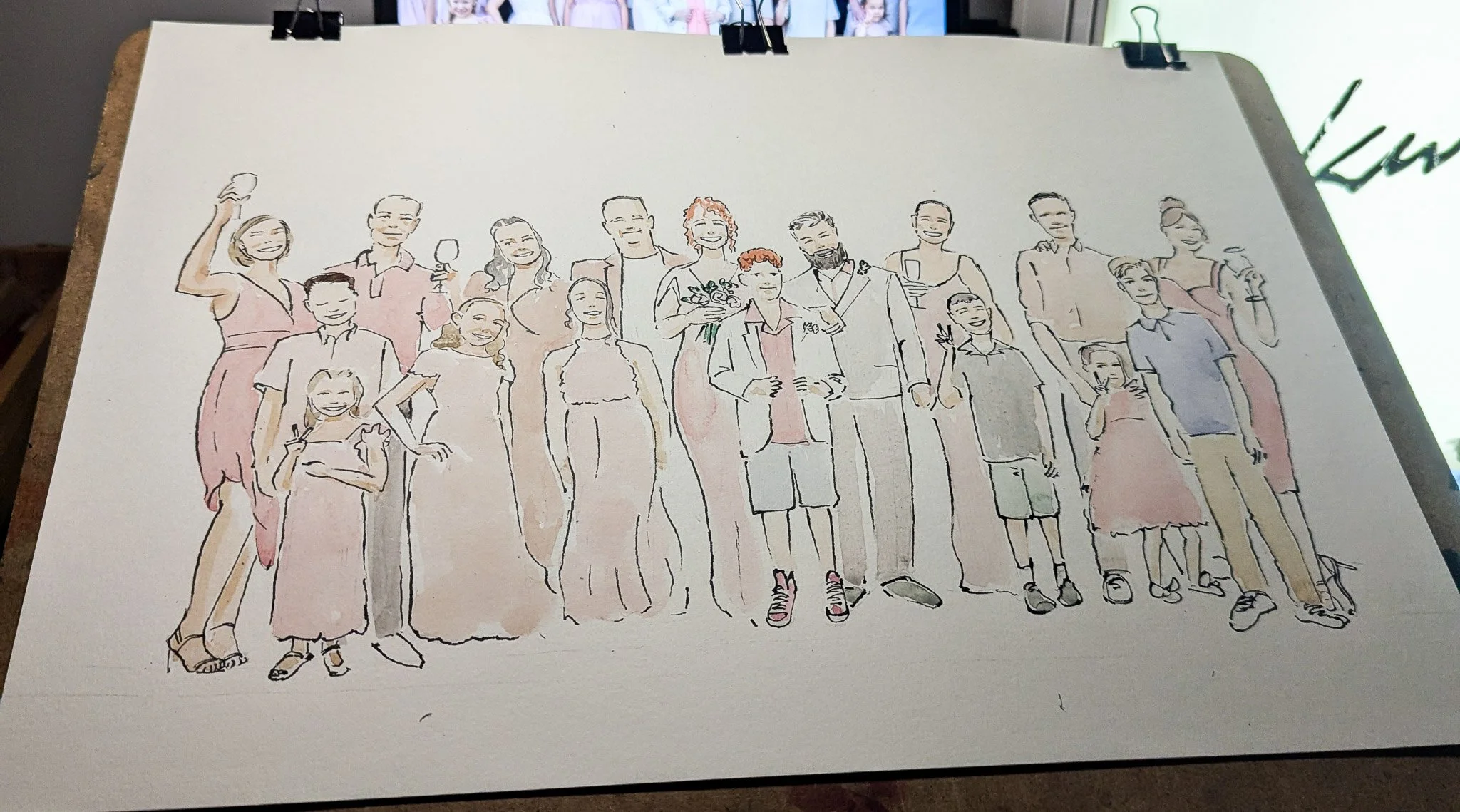
The transition toward live illustration began with a return to the fundamentals of draughtsmanship. To refine his ability to capture human likeness at the speed required for live events, Kuznicki implemented a rigorous training regimen. This involved sketching commuters on public transport and individuals in public parks, environments where subjects are in constant motion and do not pose for the artist. This practice, combined with weekly attendance at formal life drawing sessions, allowed Kuznicki to develop a repeatable, structural method for portraiture. By focusing on the underlying proportions of the head and the larger forms of the body before applying detail, he cultivated a technique that allows for both accuracy and stylistic flair within a three-to-five-minute window.
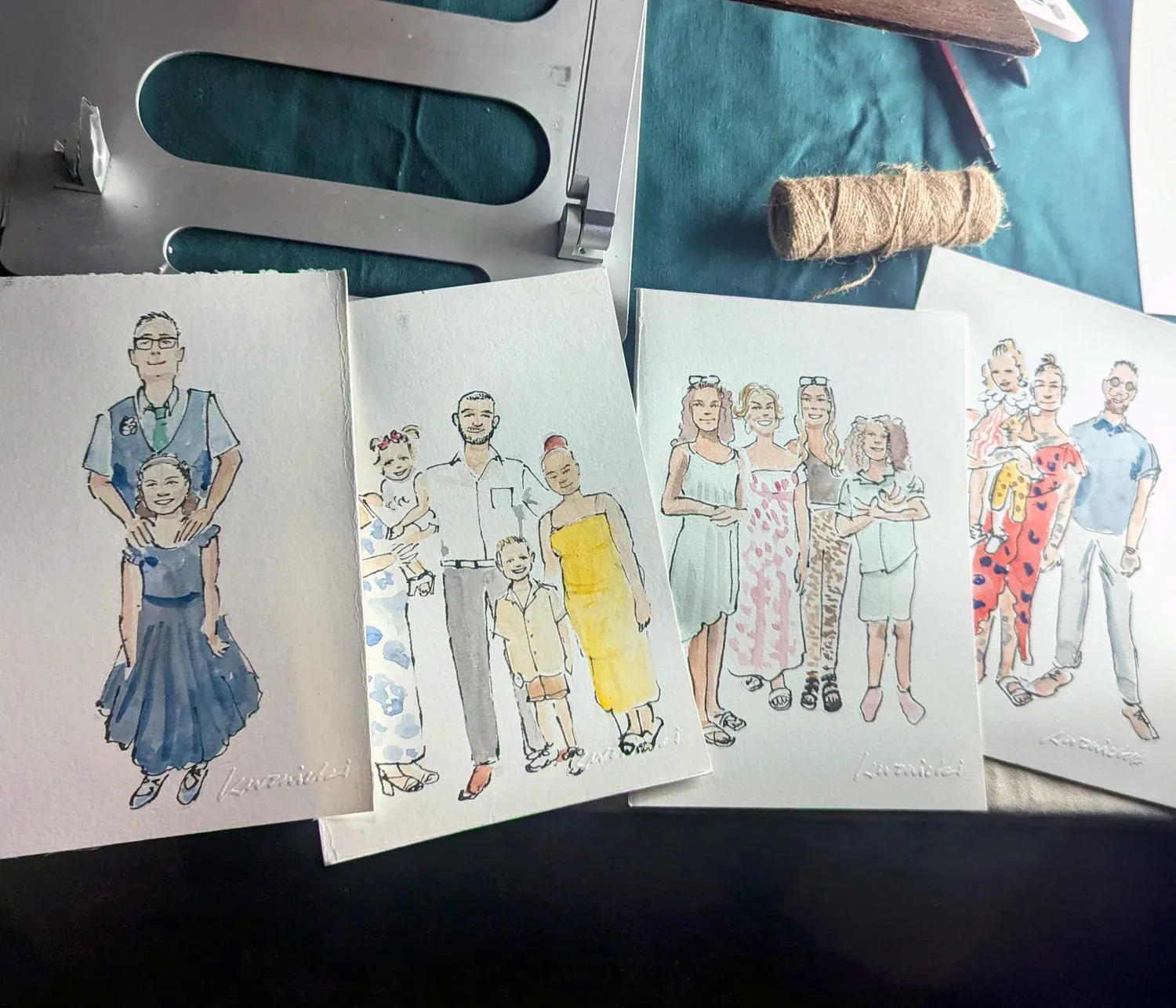
The definitive "click" moment for the brand occurred at the wedding of a couple named Deborah and Samson in Essex. The reception of his work at this event—specifically the emotional response from the bride and the spontaneous gathering of guests around his workstation—confirmed the market viability of live illustration. It was here that Kuznicki realized the value of his service was not merely in the final product, but in the social friction it removed from the event, acting as a natural icebreaker for guests who were previously unacquainted.
Technical Methodology and the Classical Approach
Kuznicki’s artistic output is characterized by an editorial, contemporary aesthetic that belies the traditional nature of his tools. He works exclusively with professional-grade ink and watercolor, materials chosen for their unpredictability and their ability to convey character through line weight and translucency. Unlike digital portraits, which can be endlessly edited, the use of ink on paper requires a "first-time-right" precision that appeals to couples seeking authenticity.
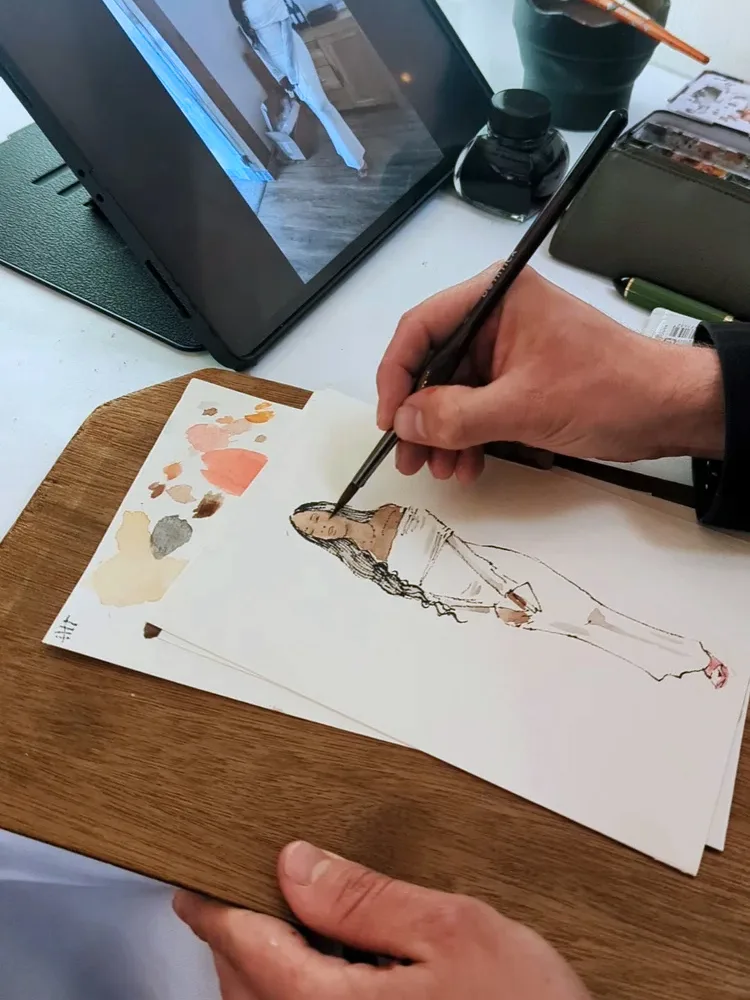
The process of creating a live portrait at a wedding follows a specific structural hierarchy:
- Form and Structure: The artist establishes the silhouette and the geometric proportions of the subject’s face using light initial marks.
- Ink Application: Using a brush and ink, the artist defines the character and features. The variation in line thickness is used to suggest movement and depth.
- Watercolor Wash: A limited palette of watercolors is applied to add dimension and vibrancy, typically focusing on the attire and skin tones to bring the sketch to life.
- Finishing: The work is allowed to dry quickly before being presented to the guest in a protective sleeve, often becoming the primary physical memento of the day.
This methodology is rooted in classical training, where the goal is to suggest detail rather than over-render it. This "suggestive" style is what gives the portraits their stylish, fashion-illustration feel, making them more desirable than traditional caricatures, which often rely on exaggeration and distortion.
The Wedding Industry Context and the Experience Economy
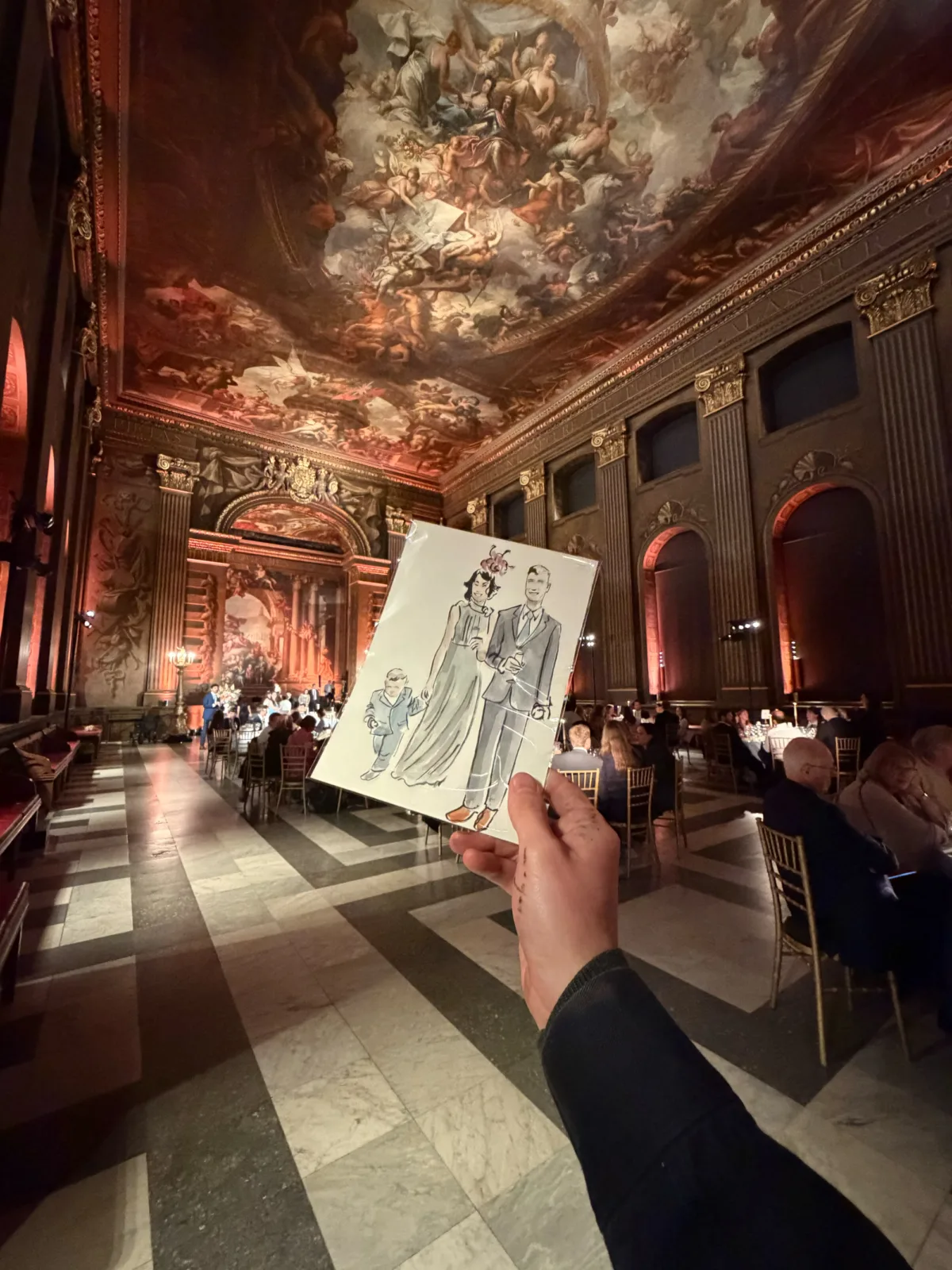
The rise of services like Kuznicki Live can be analyzed through the lens of the "experience economy," a term coined by Pine and Gilmore to describe a shift in consumer demand from services to memorable experiences. In the UK wedding market—which is estimated to be worth approximately £14.7 billion annually—couples are increasingly allocating budgets toward unique entertainment that provides a tangible takeaway.
Supporting data from various wedding planning platforms suggests that "guest experience" now ranks as a top-three priority for modern couples, often sitting alongside venue selection and catering. As weddings become more curated and social-media-focused, there is a paradoxical demand for "off-screen" moments. Live illustration fits this niche by providing a performance that guests can watch in person, fostering real-time interaction.
Furthermore, the longevity of the product is a significant factor. While digital photo booths and "social media stations" provide instant gratification, the physical nature of a watercolor portrait on archival-quality paper offers a sense of permanence. In an era where thousands of wedding photos may sit unseen on a cloud server, a hand-painted portrait often finds a permanent place in a guest’s home, serving as a long-term reminder of the event.
Bespoke Narrative Prints: Beyond the Live Event
In addition to live guest sketching, Kuznicki has expanded his services to include "bespoke wedding prints." This service operates on a different timeline and follows a workflow mirrored after the professional creative industries. Unlike the live sketches, these are collaborative, narrative pieces of art that tell the story of the couple’s relationship or the wedding day itself.
The process for these prints is highly structured:
- Consultation: The couple provides a brief detailing key locations, significant people, and "Easter eggs" (hidden references) they want included in the artwork.
- Compositional Sketching: Kuznicki creates a pencil map of the narrative, ensuring the visual flow of the story is coherent.
- Iterative Feedback: The couple reviews the composition, allowing for refinements before the permanent ink layers are applied.
- Color Exploration: Kuznicki typically provides three distinct color palettes, allowing the couple to choose a scheme that matches their home decor or the wedding’s original color story.
- Archival Production: The final artwork is printed using Giclée techniques with archival inks on high-quality fine art paper, ensuring the colors do not fade over decades.
This service caters to a different market segment: those looking for a piece of fine art that captures the "feeling" of their wedding in a way that a single photograph cannot. By combining multiple scenes, people, and symbols into one cohesive illustration, Kuznicki acts as a visual biographer for the couple.
Social Dynamics and the Impact on Event Flow
From an event management perspective, the inclusion of a live illustrator serves a strategic purpose in the wedding timeline. The "lull" periods of a wedding—typically during the drinks reception or the transition between the wedding breakfast and the evening party—can often result in a dip in energy.
Observations of Kuznicki’s work show that his presence creates a "third space" at the venue. Guests who may not know anyone else at the wedding often use the artist’s station as a focal point for conversation. The act of watching a portrait emerge from a blank page serves as a low-pressure social catalyst. This "natural ice-breaking" effect is frequently cited by couples as one of the primary benefits of the service, as it encourages guests from different social circles to interact without the need for forced activities.
Broader Implications for Human Artistry
The success of Kuznicki Live is indicative of a broader cultural trend: the "Handmade Revolution." As AI continues to democratize the creation of digital imagery, the value of human-made, "imperfect," and "lived" creative skill is appreciating. The "unsettling moment" mentioned by observers of the industry—where the line between human and machine-generated content is blurring—has created a premium on the "artist’s hand."
In a journalistic analysis of the field, it is clear that the future of event artistry lies in the marriage of high-level technical skill and personal connection. Peter Kuznicki’s transition from the digital screen to the physical canvas represents more than just a career change; it is a testament to the enduring relevance of traditional draughtsmanship in a digital world. By focusing on the "joy of watching" and the "permanence of the physical," Kuznicki Live has positioned itself at the forefront of a movement that prizes human imagination over algorithmic output.
As the wedding industry continues to evolve, the demand for such "elevated" and "bespoke" services is expected to grow. The implication for other creative professionals is clear: in an age of automation, the most sustainable path forward may involve a return to the very skills that machines find most difficult to replicate—the ability to connect, to observe, and to translate the human experience into a singular, hand-crafted moment.