






The faux hawk, a daring yet adaptable hairstyle, continues its reign as a popular choice for men seeking a blend of edgy style and everyday wearability. Evolving from the iconic mohawk, the faux hawk offers a more subdued yet equally impactful silhouette, allowing for diverse interpretations suitable for various face shapes, lifestyles, and personal preferences. This guide delves into the nuances of the faux hawk, from its definition and styling techniques to its myriad variations, offering comprehensive insights for those considering this versatile cut.
Understanding the Faux Hawk: A Sophisticated Edge
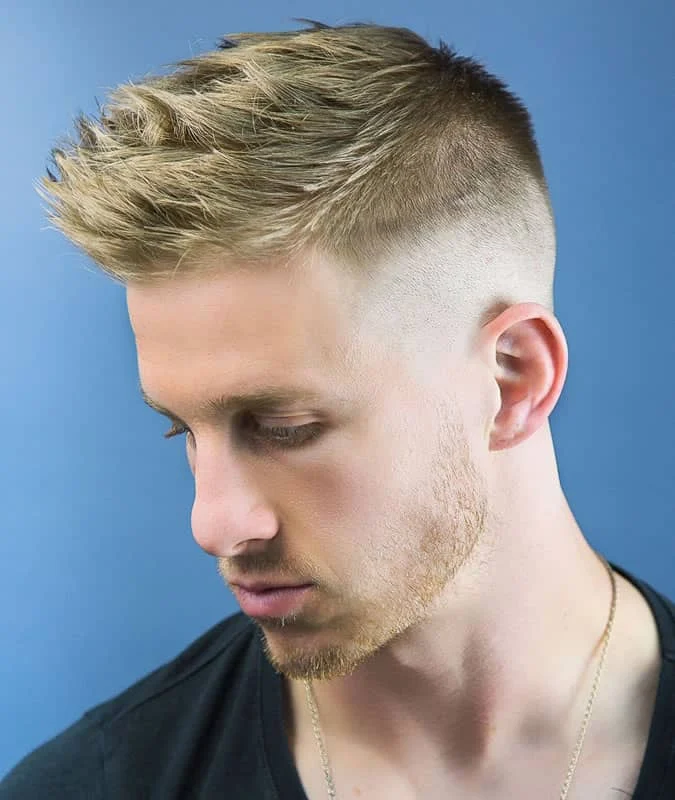
At its core, the faux hawk is characterized by shorter sides and back, with the hair on top left longer and styled to create a central ridge or "peak." Unlike its punk rock predecessor, the mohawk, which typically involves shaved sides and a dramatic central strip, the faux hawk maintains a more integrated look, making it a far more socially acceptable and practical choice for professional environments and daily life. Celebrity stylist Jason Collier, who has styled hair for notable figures like Justin Timberlake and Damian Lewis, explains, "The defining features of a faux hawk are a short back and sides but with longer than usual hair on the top – not as much length as a pompadour, but long enough that the hair can be spiked up or formed into a point." He further elaborates on its appeal: "It’s much more of a crowd-pleaser, less dramatic than a mohawk and has a sleek, urban sophistication to it that makes it a far more wearable look."
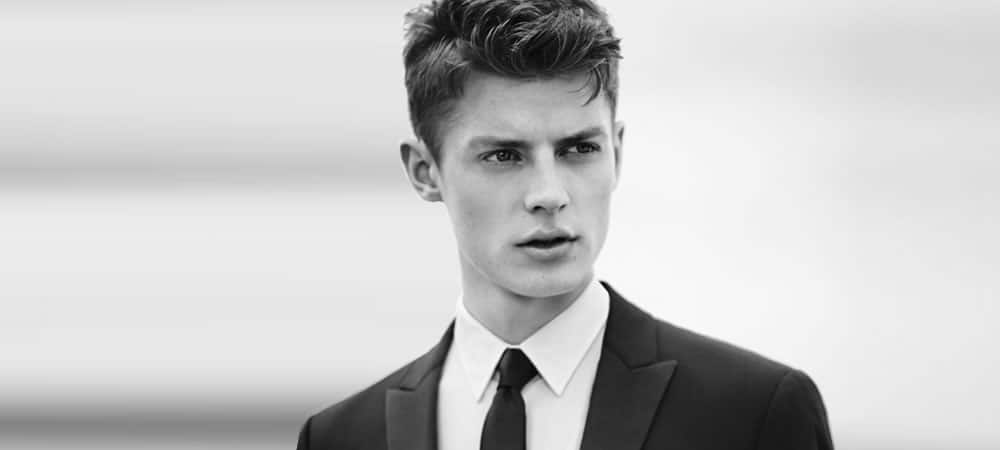
In essence, the faux hawk bridges the gap between a conventional short back and sides and a more avant-garde style. It offers enough visual interest to avoid being perceived as mundane, yet avoids the extreme statement that might deter more conservative individuals. The degree of the "peak" can be customized, allowing for subtle definition or a more pronounced, sculpted effect.
Navigating the Faux Hawk: Choosing the Right Style
Selecting the ideal faux hawk involves a careful consideration of two primary factors: face shape and lifestyle. Understanding how hair length and styling interact with facial features is crucial for achieving balance and enhancing one’s natural appearance.

For individuals with longer face shapes, such as rectangular or triangular, it’s advisable to avoid excessive length on top and overly tight sides. This approach prevents the hairstyle from elongating the face further. Conversely, those with wider face shapes, including heart or round, can benefit from adding height to the top and keeping the sides shorter. This creates a more balanced and proportionate look. As a general rule, oval-faced individuals possess the most versatility and can experiment with a wider range of faux hawk variations.
Lifestyle also plays a significant role. The seemingly effortless, tousled faux hawks often seen on celebrities are typically the result of meticulous styling. Longer faux hawks on top require more time and product to achieve and maintain their desired shape. For those with limited time for grooming, opting for a shorter faux hawk is a more practical solution. This ensures that the style remains manageable throughout the day without constant touch-ups.

Mastering the Art of Faux Hawk Styling
Achieving a well-styled faux hawk does not necessitate the use of industrial-strength hair gel. According to Jason Collier, the key lies in a combination of proper preparation and judicious product application.
For those with fine or straight hair, allowing it to air dry naturally before styling is often sufficient. However, individuals with thicker or wavier hair may find it beneficial to blow-dry their hair and brush it through to achieve a sleeker finish.

Product selection and application are critical. Overdoing it can result in stiff, unnatural spikes rather than a refined, textured look. Collier recommends using a strong-hold hair wax, applying a pea-sized amount. This should be warmed between the palms, spread evenly across the hands, and then applied to the hair to activate its hold.
The beauty of the faux hawk lies in its inherent design for quick and somewhat unstructured styling. Elaborate mirror time and an arsenal of styling tools are generally not required. Collier advises, "Simply use your fingers to push the lengths of the hair up, and tweak it until you’re happy with how the area looks. You could go completely spiky and separate each area, but the best finish for this kind of look is all pulled up, a little messy, nothing too ‘done.’" This approach emphasizes a natural, slightly disheveled aesthetic, adding to the style’s contemporary appeal.

Exploring the Versatile Faux Hawk Variations
The faux hawk is not a monolithic style but rather a flexible template that can be adapted in numerous ways. Each variation offers a distinct aesthetic, catering to different preferences and hair types.
The Faded Faux Hawk
This variation incorporates a gradual fade on the sides and back, blending the shorter hair into the longer top section. It offers a subtle nod to the mohawk’s edginess while remaining highly refined and professional. Hair stylist Joseph Lanzante, who heads one of the UK’s premier barbering training academies, explains the technical aspects: "To achieve a faded faux hawk, ask your barber to set the clippers on 0, then the hair should be faded into a grade 2, using 0.5 to 2 grades." He adds, "On top, hair should be of uniform length but layered. To finish this style use paste to define and separate the hair." This technique results in a clean, modern look that retains a hint of punk swagger.

The Short Faux Hawk
Ideal for men who prefer a more understated approach, the short faux hawk offers textural interest on top without compromising on practicality. It’s a versatile style that can transition seamlessly from casual settings to the office. Josh Thorner, a stylist at Manifesto Barbers in London, notes, "A clipper fade will achieve a sharp uniform look for a short faux hawk: the shorter the fade the greater the overall contrast will be." He advises discussing the desired length through the middle with your barber and opting for a rounded shape at the sides. Styling typically involves a surf spray to enhance texture, followed by a matte clay for a finished look.
The Shaggy Faux Hawk
This style is perfect for men with naturally wavy or curly hair who want to embrace their texture while still achieving a styled appearance. It features significant volume and texture on top, with minimal length on the sides, striking a balance between groomed and effortlessly cool. Joe Mills, hair stylist and owner of Joe and Co., suggests, "Ideally, the top should be at least 4 inches long and shaved at the sides: I would recommend having the top chopped into to add texture as this will help the peak to not fall flat." Styling involves sea salt spray applied to damp hair, blow-drying with fingers to create a messy quiff, and finishing with a matte paste.

The Medium Faux Hawk
The medium faux hawk strikes a harmonious chord, offering more length and styling potential than a short version, yet remaining less extreme than a long or faded iteration. It’s a well-rounded style that can be easily adapted or styled differently on subsequent days. Lanzante outlines the barbering approach: "To get a medium faux hawk hairstyle requires using hair clippers at the back and sides from grade 3 up to a grade 4." He further notes, "On the crown of the head hair should be layered in uniform length and defined and textured using a medium shine paste."
The Long Faux Hawk
This dramatic style is best suited for those with ample time for styling and an appreciation for bold hair statements. It requires careful maintenance to remain in peak condition, standing in stark contrast to a low-maintenance buzz cut. Thorner suggests, "For a long faux hawk ask for a clipper fade at the back and sides of your head, but one which isn’t too short. Ask your barber to keep the top disconnected from the sides; the top should be cut from the back to front and the back should be the shortest point. Ask for lots of length at the fringe." Texturizing with styling cream and blow-drying upwards and backwards, followed by a blast of cold air for hold, are key styling steps. Hairspray can be used for added longevity.

The Undercut Faux Hawk
This variation demands precision and a strong rapport with one’s barber. It features a significant disconnection between the long, often messy top and the sharply faded or undercut sides. This creates a high-contrast, high-impact look. Mills describes it as a "slightly shorter version of the shaggy faux hawk, but the underlying idea is the same. The top is still disconnected but with less length throughout." He emphasizes the need for at least a couple of inches of length on top to avoid an unkempt appearance. Styling involves texture spray, blow-drying, and finishing with a grooming cream to add definition with the fingers.
The Enduring Appeal of the Faux Hawk
The faux hawk’s persistent popularity stems from its inherent adaptability. It transcends fleeting trends, offering a timeless yet contemporary aesthetic. Its ability to be tailored to individual needs—from the boardroom to a night out—makes it a reliable choice for the modern man. As celebrity stylists and barbers continue to refine and re-imagine this versatile style, the faux hawk is set to remain a staple in the arsenal of fashionable men for the foreseeable future. Its evolution is a testament to the enduring power of a well-executed hairstyle that balances personality with practicality.