





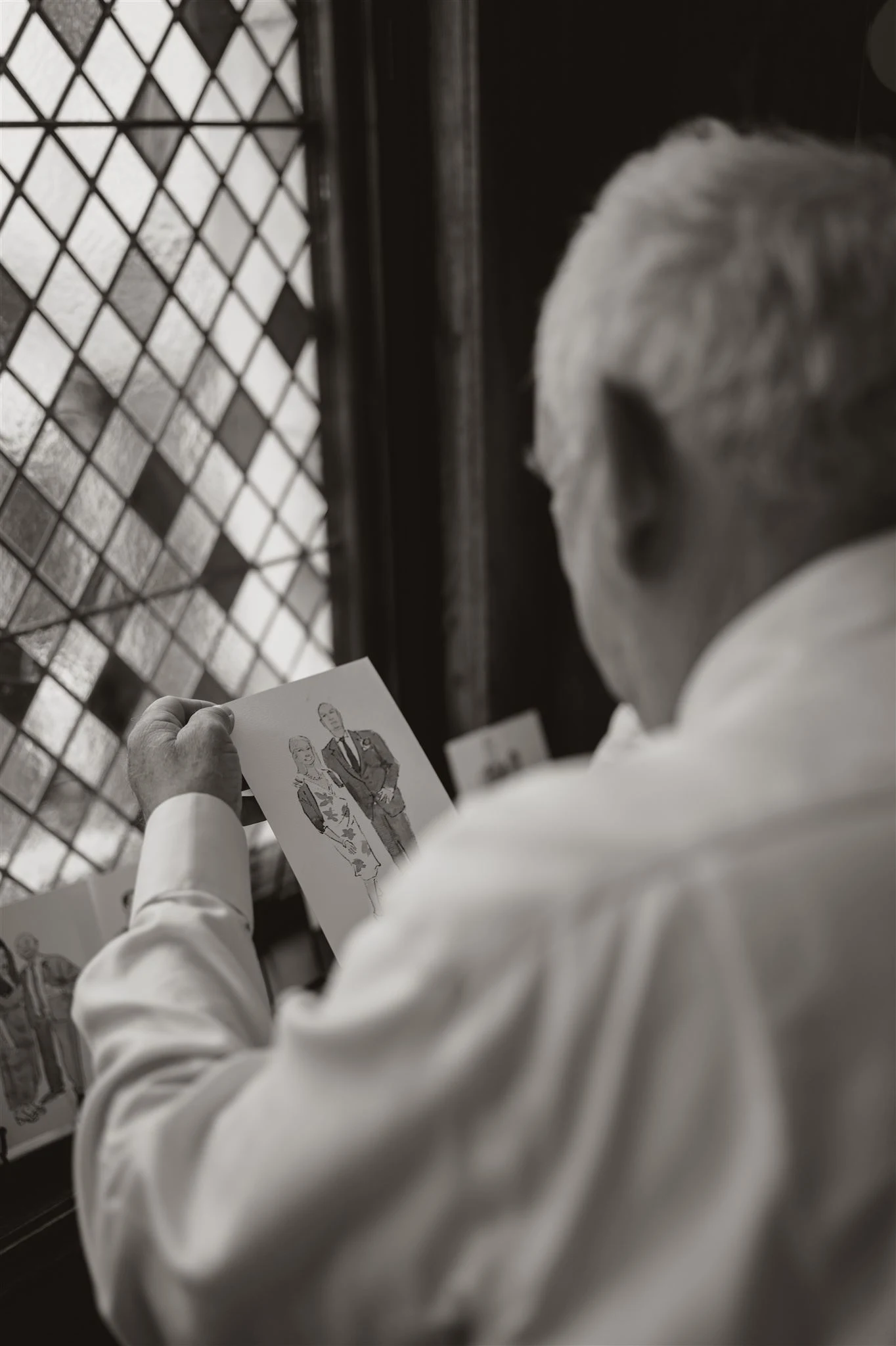
The global wedding industry, valued at approximately $70 billion as of 2024, is currently undergoing a significant paradigm shift as couples move away from standardized digital offerings in favor of artisanal, human-centric experiences. At the forefront of this movement is Peter Kuznicki, the founder of Kuznicki Live, an artist whose transition from the digital design sector to live event illustration highlights a broader cultural pushback against the rapid encroachment of Artificial Intelligence (AI) in creative fields. By utilizing traditional mediums—ink, brush, and watercolor—Kuznicki has tapped into a growing consumer desire for tangible, "human-made" keepsakes that serve both as entertainment and as permanent historical records of social gatherings.
The Intersection of Technological Displacement and Creative Evolution
The genesis of Kuznicki’s current career trajectory is rooted in the shifting landscape of the graphic design industry. Having spent 15 years as a professional graphic designer, Kuznicki witnessed firsthand the transformation of the creative sector. The recent and rapid advancement of generative AI models, which can produce complex imagery in seconds, has created a climate of uncertainty for traditional digital artists. Industry data suggests that a significant percentage of entry-level and mid-level design tasks are being automated, leading many professionals to seek out niches where human presence and physical skill are irreplaceable.
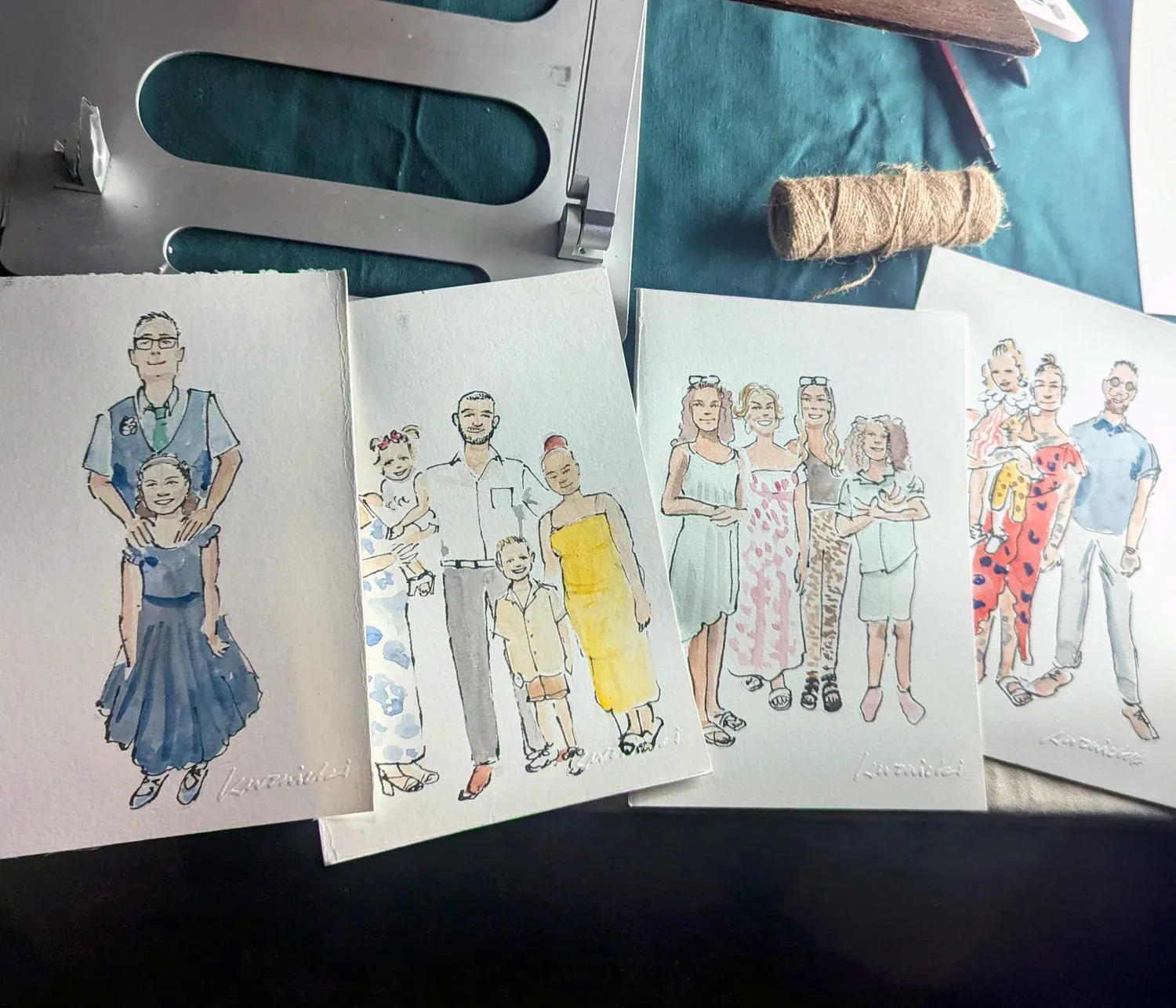
Kuznicki’s pivot was not merely a reaction to technological pressure but a strategic return to classical foundations. By maintaining a rigorous weekly life-drawing practice, he refined the ability to capture human likeness and movement with speed and precision. This transition reflects a wider trend identified by market analysts: as digital content becomes ubiquitous and easily replicated, "analog" skills—those requiring physical presence and manual dexterity—are seeing a substantial increase in market value. In the context of a wedding, where the emotional weight of the event is paramount, the presence of a live artist offers a level of authenticity that digital alternatives struggle to replicate.
Chronology of a Career Transformation
The transition from a desk-bound designer to a live event illustrator was a calculated process that began with public observation. Kuznicki started by sketching commuters on trains and visitors in public parks, a method used to test his ability to work under time constraints and in unpredictable environments. The objective was to bridge the gap between high-level classical draughtsmanship and the rapid-fire requirements of a live social event.
The pivotal moment in this professional evolution occurred during a wedding in Essex for a couple named Deborah and Samson. This event served as the "proof of concept" for Kuznicki’s business model. The reaction from the guests—characterized by immediate engagement and emotional resonance—confirmed that the value of the service extended beyond the final painting. It was here that the dual role of the live illustrator was solidified: acting as both a creator of art and a facilitator of social cohesion. The success of the Essex wedding provided the necessary momentum to establish Kuznicki Live as a specialized service within the high-end wedding market.
Technical Methodology and the Classical Tradition
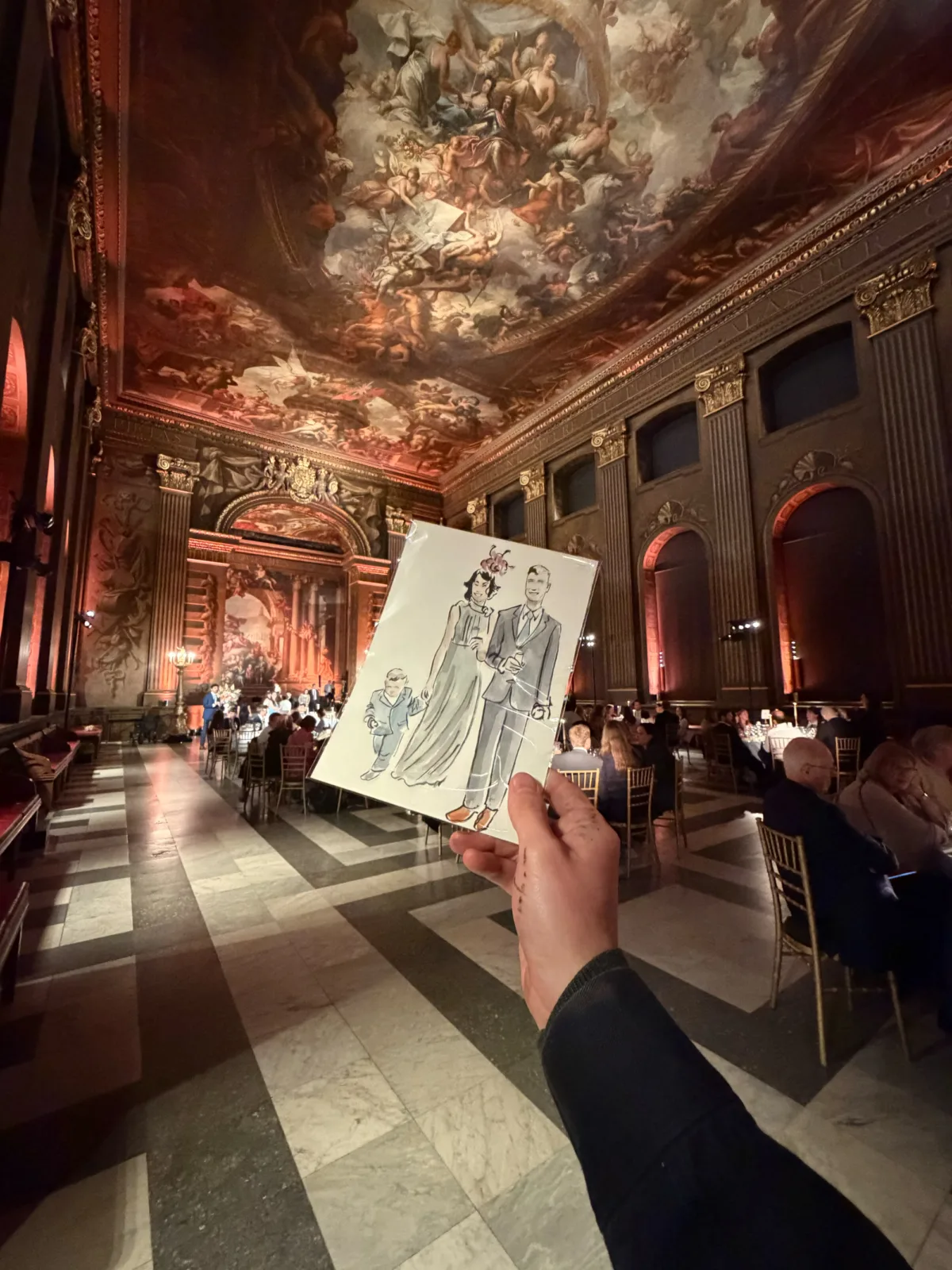
The speed at which a live illustrator must work often compromises the quality of the output; however, Kuznicki utilizes a repeatable, structured methodology rooted in classical training to maintain high standards. The process of capturing a likeness in a matter of minutes involves a hierarchical approach to drawing:
- Structural Mapping: Establishing the primary forms and proportions of the head and shoulders.
- Character Identification: Identifying the unique physical traits that define an individual’s likeness.
- Ink Application: Using brush and ink to create varied line weights that suggest movement and character.
- Watercolor Integration: Applying washes of color to add depth and vibrancy without obscuring the foundational linework.
Kuznicki’s choice of materials is a deliberate nod to the editorial and fashion illustration styles of the mid-20th century. By avoiding digital tablets and opting for archival-quality inks and fine paper, the resulting portraits are positioned as "contemporary classics." This technical rigor ensures that the work remains stylish and "editorial" rather than falling into the exaggerated tropes of traditional caricature, which has historically been the standard for live event drawing.
The Economic and Social Impact of Live Art at Events
From a logistical and economic standpoint, live illustration represents a growing sector of the "experience economy." Modern wedding planning increasingly prioritizes guest experience, with a significant portion of budgets allocated to interactive entertainment. Unlike traditional photographers, whose work is often not seen by guests until weeks after the event, a live illustrator provides immediate gratification and a physical product that guests take home.
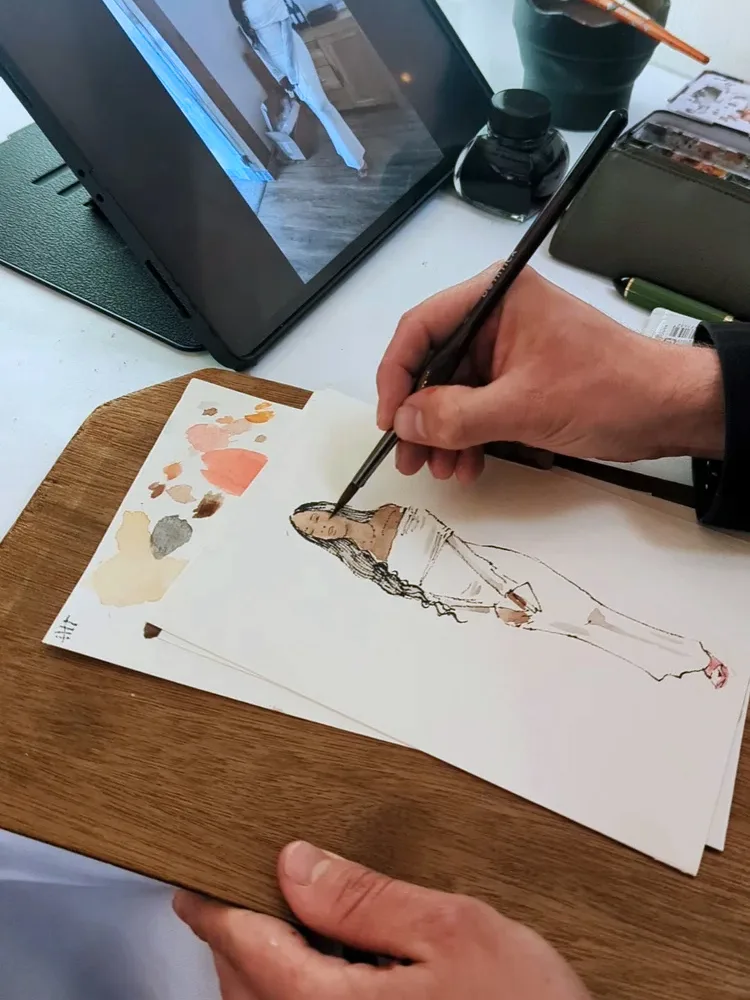
The social implications of this service are noteworthy. In a professional analysis of event dynamics, the presence of an artist serves as a "natural ice-breaker." At weddings, where different social circles—families, colleagues, and friends—often meet for the first time, the act of gathering around an artist’s station creates a neutral ground for interaction. Observations from Kuznicki’s engagements suggest that the process of watching a painting emerge fosters conversation among strangers, effectively reducing the social friction often found during the "cocktail hour" or transition periods of a wedding day.
Bespoke Collaborative Prints: A Secondary Revenue Stream
Beyond the live guest portraits, Kuznicki has introduced a structured creative process for "bespoke wedding prints." This service operates similarly to a professional design commission, involving a multi-stage workflow:
- Discovery and Narrative: A consultation phase where the couple identifies key locations, people, and "story beats" of their relationship.
- Conceptual Sketching: The development of a composition that maps out narrative elements in a cohesive visual space.
- Refinement and Feedback: A collaborative loop where the couple can request adjustments to the pencil drafts.
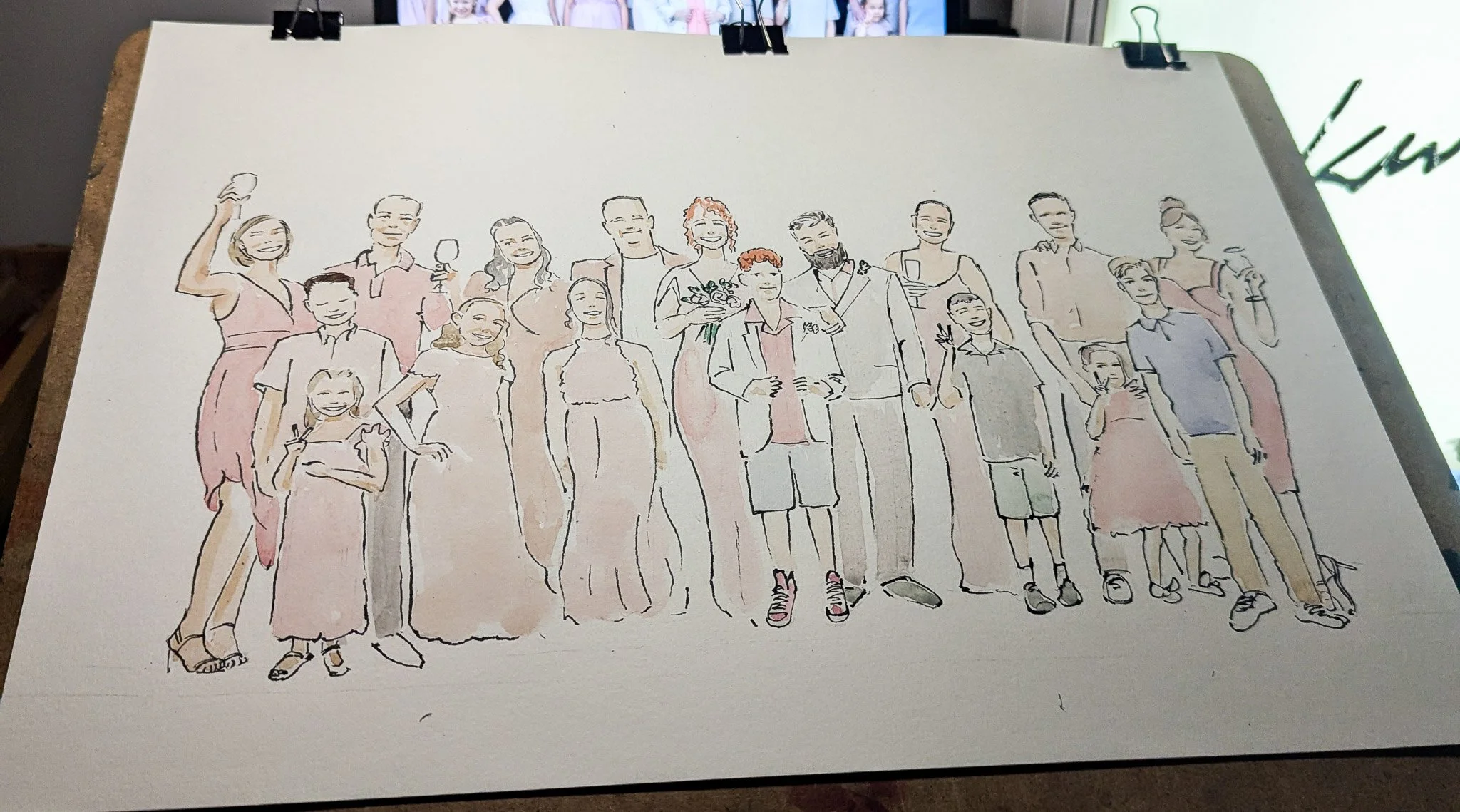
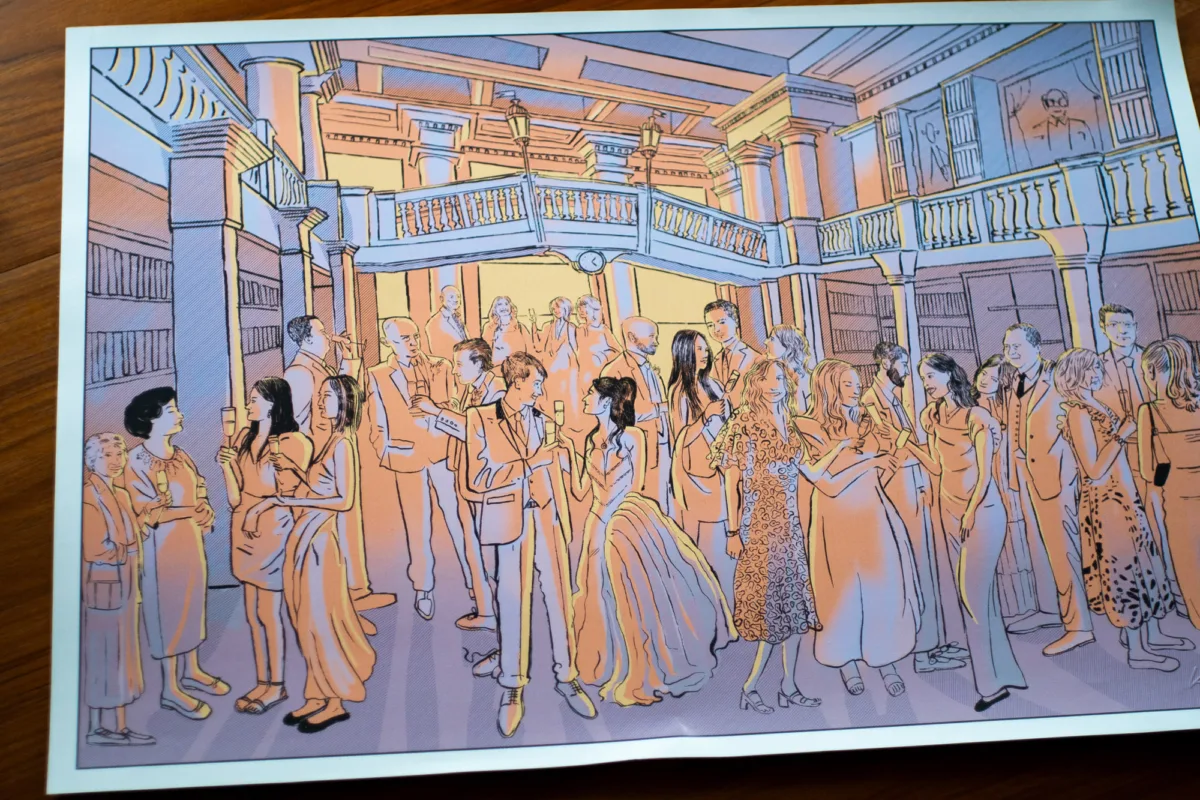
- Final Execution: The application of ink and a choice of three distinct color palettes, ensuring the final piece aligns with the couple’s aesthetic preferences.
The final product is printed using archival inks on high-quality paper, transforming the wedding memory into a piece of fine art. This diversification of services allows the artist to engage with clients both before and after the event, providing a comprehensive "visual legacy" of the marriage.
Market Trends: The Valuation of the "Human Touch"
The rise of Kuznicki Live is symptomatic of a broader rejection of the "uncanny valley" associated with AI-generated art. While AI can simulate styles, it lacks the "lived creative skill" and the ability to respond to the specific, fleeting atmosphere of a live event. In the luxury wedding market, exclusivity is a primary driver of value. A hand-drawn portrait, created in the moment, is inherently unique—it is a "one-of-one" artifact that cannot be perfectly replicated by an algorithm.
Furthermore, the "archival" nature of the work is a significant selling point. In an era where thousands of digital photos are taken at every event only to be stored on cloud servers and rarely revisited, a physical painting holds a different kind of permanence. It is an object that occupies physical space in a home, serving as a lasting reminder of a specific social bond.
Implications for the Future of Event Services
As the wedding industry continues to evolve, the success of practitioners like Peter Kuznicki suggests that the future of event services lies in the integration of high-level skill with personalized interaction. The "live" aspect of the work is essential; it is a performance as much as it is a service.
For couples navigating the complexities of modern wedding planning, the inclusion of a live illustrator offers a solution to several common challenges: it provides high-end entertainment, creates personalized favors for guests, and adds an element of sophisticated décor to the venue. More importantly, it celebrates the human element in an increasingly automated world.
The move toward live illustration is not merely a nostalgic trend but a robust response to the digitization of human experience. By combining 15 years of design experience with classical draughtsmanship, Peter Kuznicki has positioned himself at the center of a new artisanal movement—one that proves that even in the age of AI, the work of human hands remains the most compelling way to capture the essence of a human celebration.