




Filmmaker David Lowery has consistently navigated two distinct cinematic paths over the past decade: the visionary auteur behind critically acclaimed, experimental features like A Ghost Story and The Green Knight, and the director of expansive, family-friendly blockbusters such as Pete’s Dragon and Peter Pan & Wendy. This perceived duality, often a source of creative tension, forms the very genesis of his latest project, Mother Mary, a film that paradoxically marries the intimate introspection of his independent work with the grand scale typically associated with larger studio productions.
The Genesis of Mother Mary: A Director’s Internal Dialogue
The seed for Mother Mary was sown in 2019, during the demanding production of The Green Knight, A24’s freewheeling medieval fantasy. Lowery found himself simultaneously immersed in the world of independent filmmaking while also receiving notes from Disney on the script for his upcoming tentpole, Peter Pan & Wendy. This stark juxtaposition of creative environments led to an internal dialogue that manifested literally: one particularly stressful night, Lowery penned 20 pages of dialogue exploring the conflicting aspects of his artistic personality. This therapeutic exercise, a raw exploration of his professional duality, would evolve over seven years into Mother Mary.
The film, which has been described as a "mostly two-hander," centers on the reunion of two formidable women: Mother Mary (portrayed by Academy Award-winner Anne Hathaway), a globally renowned musician, and Sam Anselm (played by BAFTA-winner Michaela Coel), a cutting-edge fashion designer. Their paths converge when Anselm is tasked with creating a show-stopping dress for the pop star under extreme time pressure, a seemingly simple premise that rapidly unravels into a complex emotional and philosophical journey.
A Cinematic Tapestry: Blending Intimacy with Grandeur
Mother Mary defies easy categorization, shapeshifting between genres and thematic explorations. Lowery’s directorial vision ensures that despite its intimate core, the film maintains a grand cinematic presence. The camera frequently soars around Hathaway and Coel as they engage in intense verbal sparring within a secluded fashion studio, a space that feels more like a dreamscape than a tangible building. This dynamic cinematography elevates the conversations, transforming them into visually engaging sequences.
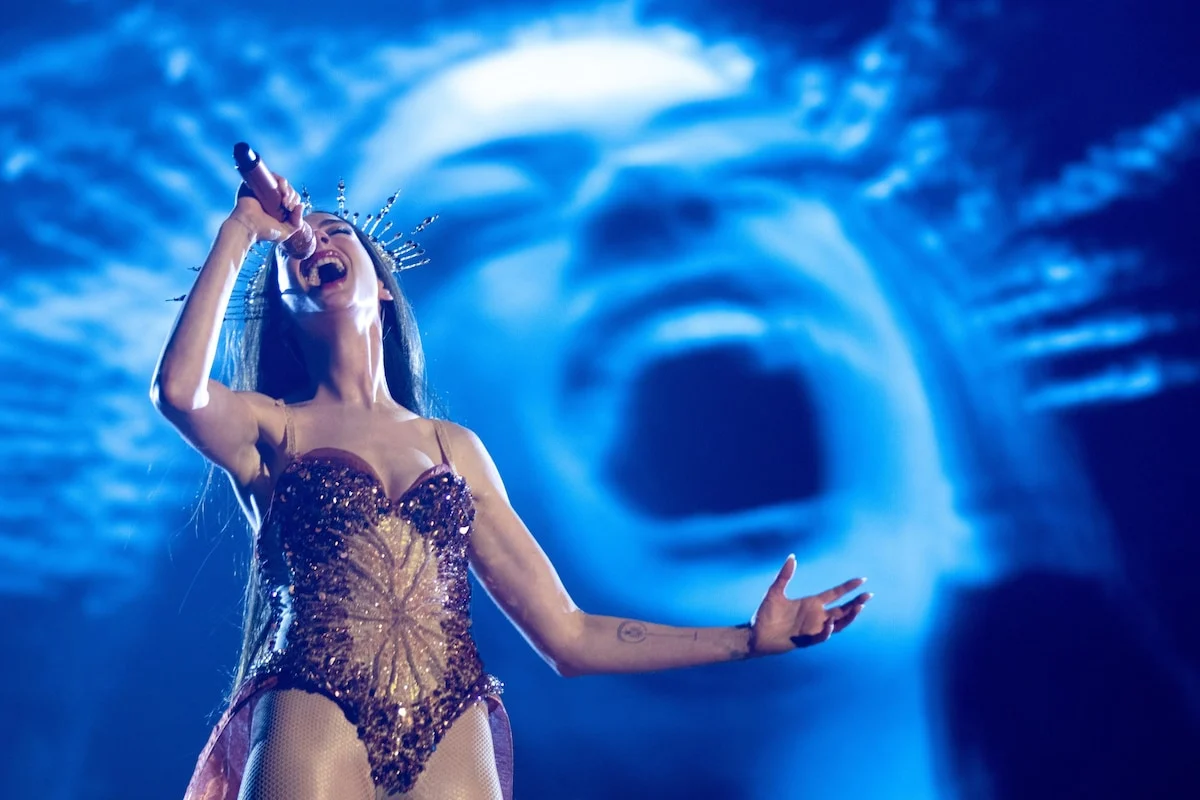
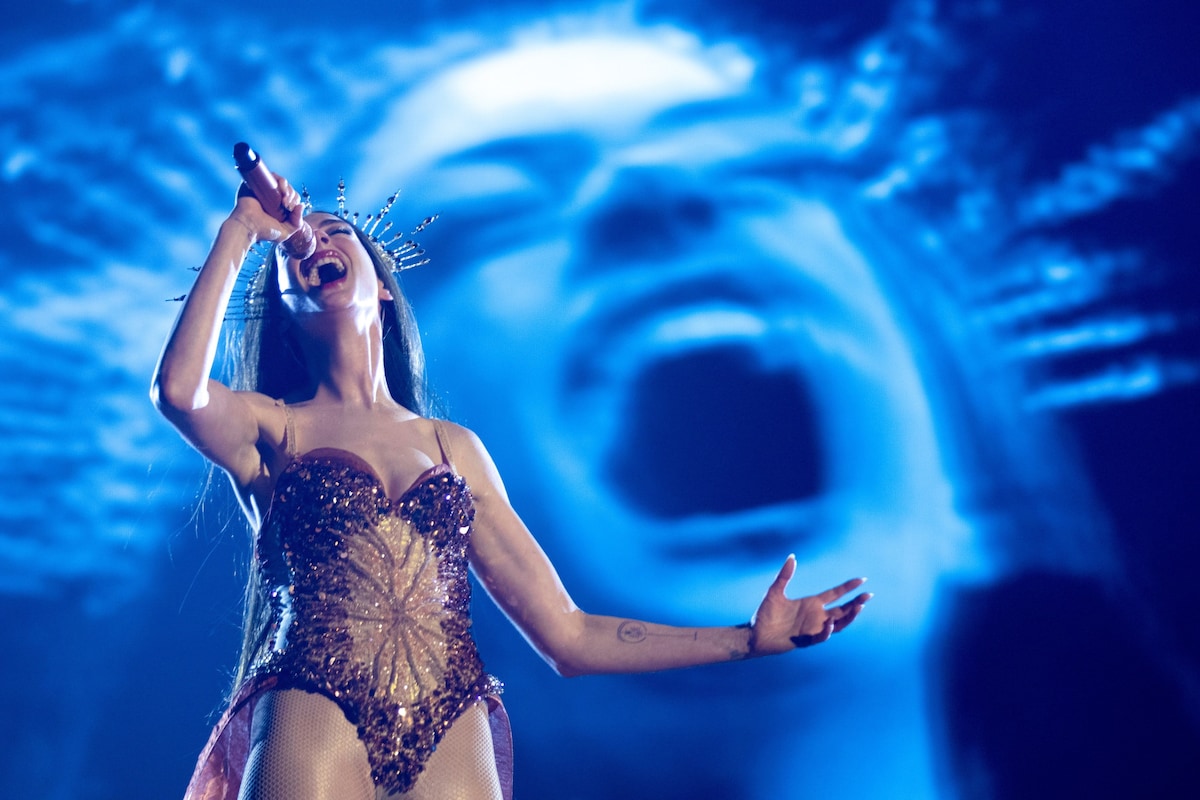
Hathaway delivers a performance where emotions pour freely, her face a canvas for Mother Mary’s inner turmoil. Coel, as Sam Anselm, matches this intensity with hard stares and unvarnished truths, dissecting the dissolution of their past relationship. Yet, the film transcends the confines of a stage play, incorporating elements that root it firmly in cinema: ethereal ghosts, concepts of quantum physics, and spectacular stage performances by Mother Mary for her adoring fans. These disparate elements are woven together to create a rich, multi-layered narrative that is both deeply personal and universally resonant.
The Power of Collaboration: Music, Fashion, and Narrative
A significant component of Mother Mary‘s expansive aesthetic and emotional depth lies in its high-profile collaborations. The film’s musical landscape is crafted by an impressive roster of contemporary artists: Charli XCX, Jack Antonoff, and FKA Twigs, with FKA Twigs also making a cameo appearance. These contributions are not mere background scores; they are integral to the narrative, reflecting the pop star persona and her creative output. Similarly, the film’s extravagant sets and meticulously designed costumes, by Bina Daigeler and the renowned Iris van Herpen, serve as extensions of the characters’ inner worlds, matching their intensity and turmoil. Van Herpen’s involvement, in particular, highlights the film’s ambition to integrate high fashion as a narrative and visual art form.
Lowery himself acknowledges the film’s self-reflective nature, a mirror to his own artistic identity, yet he also playfully suggests an ambiguity in this interpretation. The film, he explains, is an examination of the symbiotic relationship between artists and their collaborators, particularly in the realm of pop music and fashion. He cites inspirations such as Lady Gaga and her connection with Alexander McQueen, and Madonna’s collaborations with Jean Paul Gaultier. Lowery was fascinated by the profound intimacy and charged dynamic that develops when one artist creates the aesthetics that define another’s public persona, blurring the lines of individual creation and shared identity.
David Lowery on Craft, Persona, and Emotional Epicness
In a recent interview conducted just prior to Mother Mary‘s UK cinema release, Lowery offered insights into his creative process and the profound impact of the film. He described himself as inherently shy, a disposition that stands in contrast to the public-facing demands of his profession. Unlike musicians whose art is inextricably linked to their persona, Lowery finds refuge behind his films, viewing them as personal yet detached creations, "removed… and put them on a table for everyone to look at." This sentiment underscores his preference for indirect expression, a hallmark of his more experimental works.
His writing process for deeply personal projects like Mother Mary often begins outside conventional screenwriting software like Final Draft, opting instead for Microsoft Word. This method, he explains, allows him to "not think about it as a movie," but rather as pure text or an idea, freeing him from the constraints of formatting and the subconscious pressure of sharing a finished screenplay. It is a practice akin to writing by hand, fostering a more organic flow of emotion onto the page.
Working with contemporary music luminaries provided Lowery with invaluable insights into the life of a pop star. While he conducted some direct inquiries, he also gleaned much from existing resources, such as Charli XCX’s documentary on pop stardom and her interview with Dua Lipa. He humorously recounted an instance where his attempts to re-engineer a Charli XCX song for structural purposes were met with the insightful retort, "that’s not how pop songs work." This anecdote illustrates his humility and willingness to learn from experts in different creative fields, preventing him from "perilously close to ruining a great Charli XCX song."
The Extended Journey of Production and Evolving Perspective
The production of Mother Mary was an extended affair, stretching across 2023, 2024, and even into 2025 in a jokingly exaggerated timeline by Lowery, reflecting a "very distended process." He admitted that the prolonged engagement with the project makes it difficult to gain full perspective, comparing it to being unable to "see the forest from the trees." He anticipates that a year from now, his reflections on the film will be markedly different, marked by a sense of tenderness. This continuous evolution of understanding is a testament to the film’s complex layers and its deep personal resonance for the director.
Lowery, known for his appreciation of film criticism, deliberately avoids reading reviews of his own work upon release. This self-imposed digital detox is a mechanism to preserve his artistic integrity and mental space, preventing external opinions from influencing his ongoing creative journey.
A $20 Million Spectacle: Redefining Scale
A telling incident surrounding Mother Mary‘s release involved The Guardian mistakenly reporting its budget as $100 million, later issuing a correction to $20 million. Lowery, however, took this as a significant compliment. He views it as a validation of his consistent aspiration to make his films "look bigger than they were." This ambition was also evident in Peter Pan & Wendy, where he aimed for a $100 million film to appear like a $250 million production.
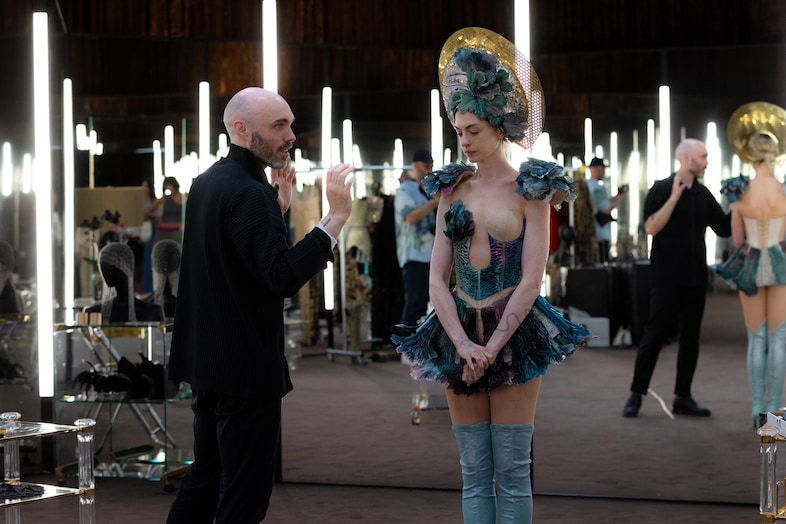
For Mother Mary, despite its relatively modest budget for a film of its visual scope, Lowery sought to achieve immense scale and spectacle. "I wanted this movie to feel huge," he stated, emphasizing that even the intimate scenes between two characters in an enclosed space were designed to convey "the breadth of the intimacy to feel cinematic." This commitment extended to the film’s visual language, meticulously crafted with cinematographers Andrew and Rina. Their decision to shoot in a 2.39 aspect ratio was a deliberate choice to imbue the film with an epic feel, even when the narrative revolves around a conversation between two individuals.
The spaciousness within the film’s primary setting, the fashion studio, serves a crucial purpose: to ensure that Mother Mary is unequivocally a "Movie with a capital ‘M’," distinct from a theatrical play. This spatial design, where walls seem to disappear, enhances the dreamlike quality and prevents the film from feeling constrained.
The Iconic Red Dress and Unseen Iterations
The film’s central MacGuffin, the "jaw-dropping dress" Sam Anselm must create for Mother Mary, needed to be an undeniable work of art. Lowery’s admiration for Iris van Herpen, a pioneering Dutch fashion designer known for her sculptural and technologically innovative creations, led him to seek her involvement. Van Herpen, a favorite designer of Lowery’s, read the script in 2022. In February 2023, Lowery and costume designer Bina Daigeler visited van Herpen’s Amsterdam atelier, where they were immersed in her museum exhibit preparations. It was there, amidst breathtaking designs, that they instantly gravitated towards a specific red dress design. This particular dress, reserved for the film’s finale, became a symbolic anchor, waiting for them at the culmination of their two-year production journey.
Lowery also revealed fascinating insights into the script’s evolution, including a draft written during the COVID-19 pandemic where all dialogue was removed. In this silent version, set on an Atlantic island, characters communicated solely through written notes and stationery. While never filmed, this iteration underscores Lowery’s experimental spirit and his willingness to push narrative boundaries, even if it meant a potentially higher budget for an island location.
The name "Sam Anselm" itself holds a subtle Easter egg for eagle-eyed fans, a recurring element from one of Lowery’s previous films, inviting audiences to discover connections across his diverse body of work.
A Unique Artistic Statement
Mother Mary stands as a unique artistic statement in David Lowery’s evolving filmography. It is a project born from his internal artistic struggle, a conversation between his independent spirit and his commercial aspirations. By blending the raw emotionality of an arthouse drama with the visual grandeur and collaborative ambition of a larger production, Lowery has crafted a film that defies easy categorization. Its reported $20 million budget, perceived as $100 million by some, further cements its status as a testament to Lowery’s ability to create emotionally epic and visually spectacular cinema without necessarily relying on blockbuster-level financing. As it makes its debut, Mother Mary promises to be a tender, intense, and deeply cinematic experience, reflecting the many facets of its visionary director.