





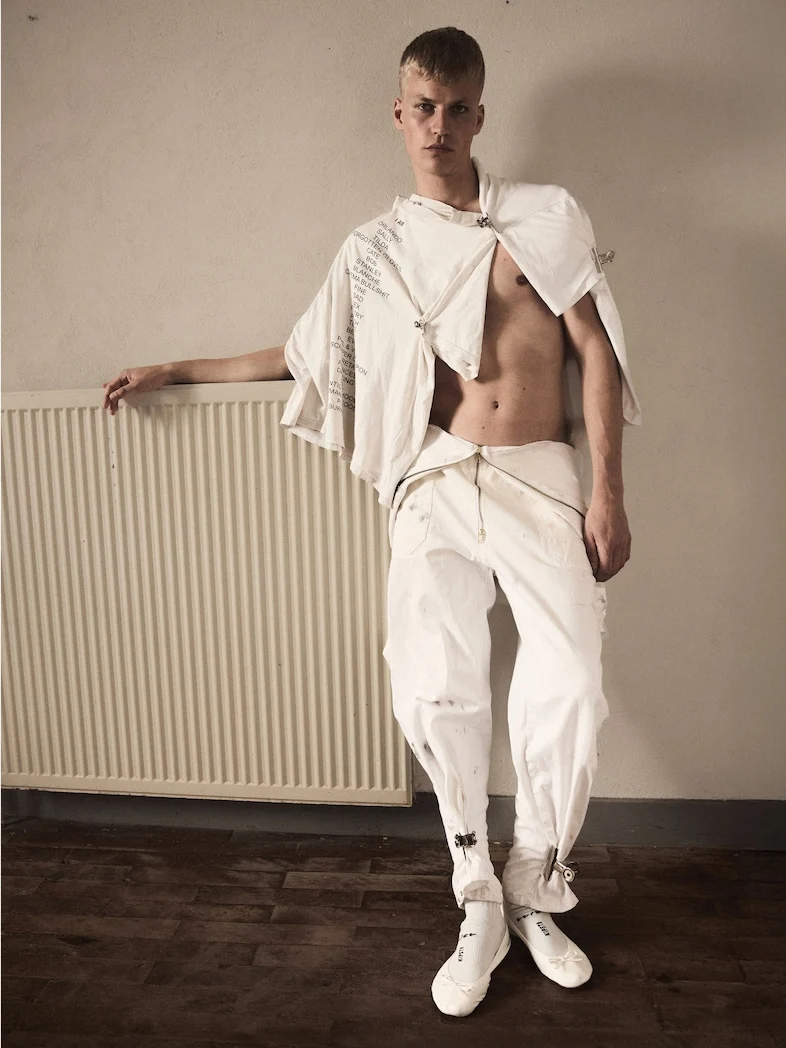
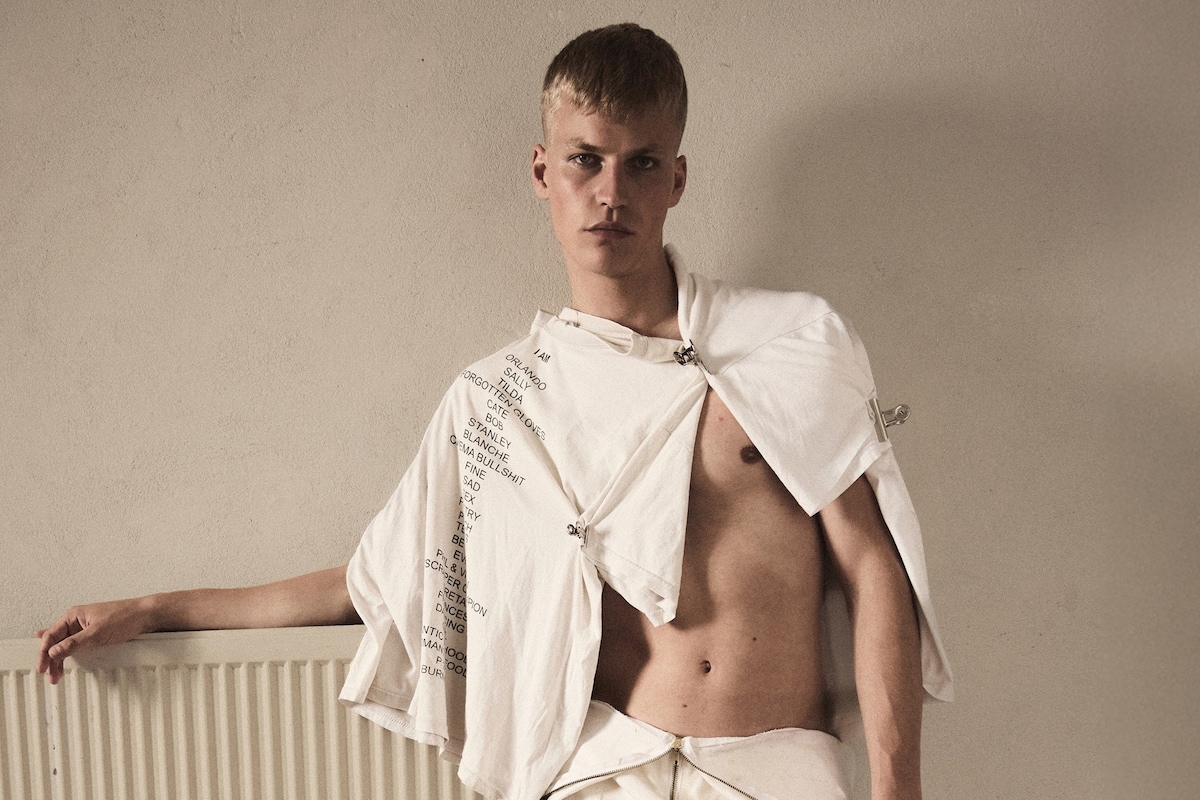
The fashion world is often perceived as a relentless engine of novelty, driven by seasonal cycles and the perpetual demand for the "new." Yet, amidst this churn, designers like Yorick Westerkamp are forging a path that champions resourcefulness, imagination, and a profound connection to personal history. His burgeoning brand, (PAPA) Yorick, is a testament to the transformative power of constraint, born from a period of forced creative stasis and evolving into a distinctive voice in contemporary fashion. Westerkamp’s debut collection, a vibrant tableau of "clips, swaddles and hems," boldly proposes new silhouettes meticulously crafted from his existing wardrobe, held together by the most unassuming of tools: office clips. This unconventional genesis not only defines his aesthetic but also positions him at the forefront of a growing movement advocating for a more sustainable and introspective approach to design.
The Genesis of (PAPA) Yorick: From Confinement to Creativity
The narrative of (PAPA) Yorick is deeply personal, rooted in a challenging period that ultimately served as a crucible for its unique philosophy. "It all started with a long sick bed, quite soon after I graduated," Westerkamp recounts, detailing a time when physical incapacitation clashed with an unceasing flow of creative ideas. This dichotomy—a fertile mind trapped within a constrained body and environment—forced a radical re-evaluation of his design process. Marooned in his home, he began to envision a collection built solely from the garments he already owned, a deeply intimate and resource-driven approach. The tools at his disposal were equally humble: simple metal office clips found within his apartment became the structural "system" for his nascent creations, allowing for fluid, temporary constructions without permanent alteration.
This period of imaginative ideation spanned two years, during which Westerkamp meticulously conceptualized his "fantasy collection." Upon his recovery, his bedroom was transformed into a hybrid atelier and photo studio, a sanctuary where these visions could finally take tangible form. He began intuitively draping his own clothes on friends and family, allowing their diverse body types and personalities to shape and animate the evolving designs. This collaborative process, grounded in personal relationships and the shared history embedded within his garments, imbued the collection with an authentic narrative depth. The initial pieces were not sewn, but rather sculpted and held by clips, a deliberate choice that emphasized adaptability, deconstruction, and the impermanence of form. This method not only challenged traditional garment construction but also underscored the brand’s commitment to transforming existing materials without irreversible interventions, a precursor to the broader sustainable fashion discourse.
A Tapestry of Characters: Crafting Narrative Through Repurposed Garments
The sheer volume of Westerkamp’s creative output during this intensive phase is remarkable. After creating nearly 300 distinct looks for approximately 30 friends and family members, the challenge shifted from creation to curation. Westerkamp, alongside his burgeoning creative team, embarked on an immersive process of categorization and storytelling. He printed every look, transforming his bedroom walls into an expansive mood board, a visual archive of his imagination. Through meticulous organization, grouping, and collaging, five distinct archetypal characters emerged from the amorphous collection: farmers, sailors, pirates, maidens, and aristocrats.
These characters were not merely aesthetic categories but inhabitants of an imaginative universe, each embodying a facet of Westerkamp’s fantastical vision. "Through the act of categorising these characters, the collection started to take shape and make sense," he explains. This narrative framework provided a coherent structure for the otherwise disparate repurposed garments, allowing for thematic consistency and depth. The development of this universe extended beyond the garments themselves, involving a collaborative effort with a dedicated team. Art directors Ferdi Sibbel and Robin Burggraaf were instrumental in shaping the overarching aesthetic and conceptual world. Kathinka Gernant helmed the beauty direction, while Hester Wernert crafted fantastical hair looks, each element contributing to the rich, immersive storytelling that defines (PAPA) Yorick’s aesthetic. This collaborative, character-driven approach elevates the collection beyond mere upcycling, transforming it into a theatrical exploration of identity, history, and imaginative escapism.
Academic Roots and Avant-Garde Influences
Westerkamp’s journey into fashion design is marked by a blend of self-taught resourcefulness and formal academic rigor. His early foray into the industry was an audacious act of self-invention. At the age of 18, after leaving his small village, he found himself in Sydney, where he boldly claimed to have finished fashion school—a fabrication that nonetheless landed him a position in the studio of Australian designer Ellery. This early experience, born of a desire to dive headfirst into the industry, provided invaluable practical exposure, despite its unconventional origin.
He later pursued formal education at the prestigious Gerrit Rietveld Academie in Amsterdam, renowned for its experimental and conceptual approach to art and design. The Rietveld Academie has long been a hotbed for avant-garde talent, fostering designers who challenge conventions and prioritize artistic expression over commercial viability. It was here that Westerkamp honed his craft, developing a design language that was inherently unique. A notable figure in his academic journey was Duran Lantink, a former Rietveld student himself and now the acclaimed creative director for Jean Paul Gaultier, who served as an examiner for Westerkamp’s final collection. This connection underscores the vibrant, interconnected network of talent nurtured by institutions like Rietveld. Beyond his brand, Westerkamp also dedicates a significant part of his creative energy to costume design for film, an avenue that allows him to explore the same sense of drama and narrative depth within a different, yet complementary, context. This dual practice enriches his understanding of storytelling through attire, whether for the runway or the screen.
The Punk Ethos of The Patchwork Family
Immediately following his graduation from the Gerrit Rietveld Academie, Westerkamp’s path intersected with The Patchwork Family, a "raucous fashion collective that staged guerrilla shows in Amsterdam." This collective, known for its anti-establishment spirit and radical approach to presenting fashion, provided a fertile ground for Westerkamp to further develop his design identity. He initially encountered them while working at a sex club, where the collective staged one of their boundary-pushing shows. Soon after, he was invited to join their ranks.
The Patchwork Family’s philosophy resonated deeply with Westerkamp. "I liked their philosophy of working together as young designers and supporting each other, rather than competing," he states, highlighting a stark contrast to the often cutthroat nature of the fashion industry. This collaborative spirit, coupled with their "punk, anti-establishment approach to fashion," offered Westerkamp a liberating environment where experimentation was encouraged and traditional hierarchies dismantled. He participated in several of their shows, gracing platforms during both Berlin Fashion Week and Amsterdam Fashion Week, gaining invaluable experience and exposure within a supportive, unconventional framework. Even today, Westerkamp acknowledges a strong connection to the collective, affirming their lasting influence on his ethos.
This period was particularly crucial for Westerkamp’s self-affirmation as a designer. During his academic studies, his unconventional methods—especially his "disregard for the need to create something new"—were frequently questioned. He admits to "trying to be provocative" at the time, but also concedes that he "didn’t fully own [his] design language yet." The Patchwork Family provided the critical space for this ownership to develop. It allowed him to solidify his unique approach, refining his voice and becoming "clearer and more direct in how I approach making work." This collective experience served as a vital bridge between his academic explorations and the confident launch of his independent brand, validating his vision and strengthening his conviction in a design philosophy that champions repurposing and imagination over mass production.
Redefining "Newness" in Sustainable Fashion
Yorick Westerkamp’s methodology, centered on repurposing existing garments, places (PAPA) Yorick firmly within the burgeoning movement of sustainable fashion, specifically championing the principles of circularity and upcycling. In an industry grappling with its environmental footprint—responsible for an estimated 10% of global carbon emissions and significant waste generation—designers like Westerkamp offer tangible solutions and inspiring alternatives. The global sustainable fashion market, valued at over $6.35 billion in 2020, is projected to reach $15.17 billion by 2030, indicating a substantial consumer and industry shift towards more ethical and environmentally conscious practices.
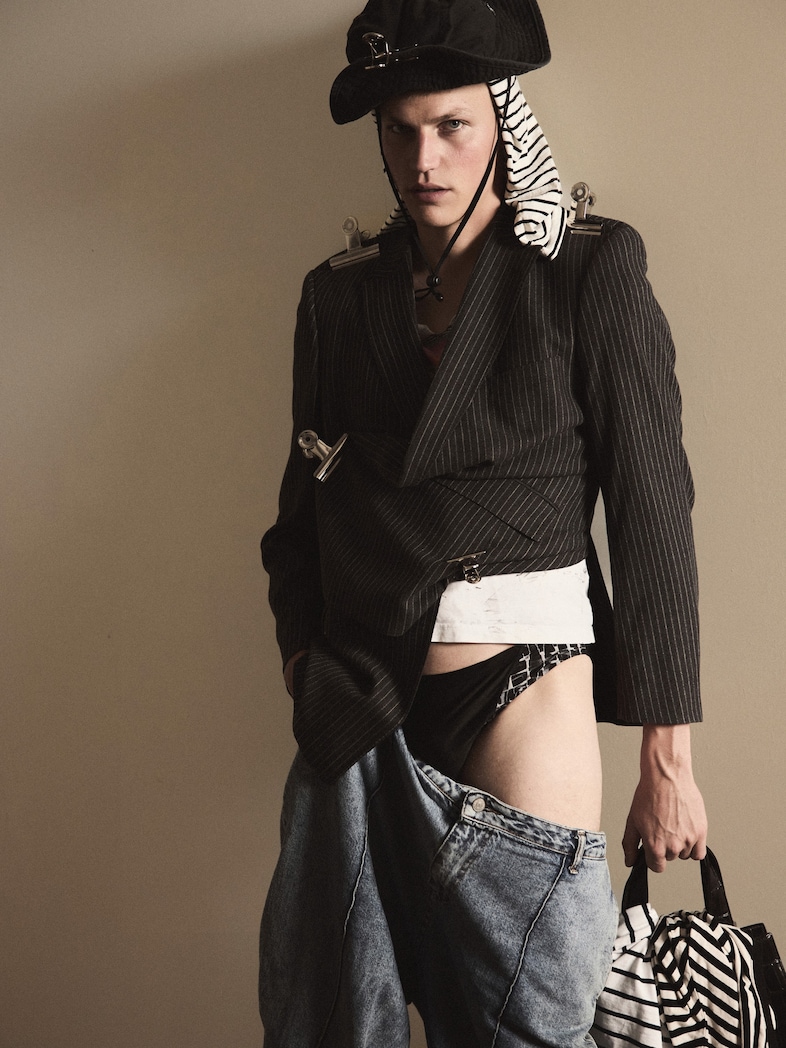
Westerkamp’s choice to build an entire collection from his own wardrobe is a powerful statement against disposability. It challenges the conventional understanding of "newness" in fashion, demonstrating that innovation can emerge not from virgin materials or entirely novel concepts, but from a radical reinterpretation of what already exists. This approach resonates with the work of other prominent designers who champion upcycling, such as his former examiner Duran Lantink, known for his elaborate deconstructions and reassemblies of designer garments, or Emily Bode, whose menswear collections often feature antique textiles and artisanal techniques. Marine Serre, another influential voice, has built a brand around her "Futurewear" ethos, heavily incorporating regenerated fabrics and upcycled elements. These designers, including Westerkamp, collectively illustrate a paradigm shift, proving that sustainability can coexist with, and even elevate, haute couture and conceptual design.
The use of simple clips as a primary fastening mechanism further underscores this ethos of impermanence and adaptability. It suggests that garments need not be fixed and immutable but can be fluid, capable of transformation and reinvention. This approach not only minimizes waste but also encourages a more creative and interactive relationship between the wearer and their clothing, fostering a sense of longevity and personal narrative within each piece.
Beyond the Runway: A Glimpse into Westerkamp’s Creative Universe
Beyond the meticulous craft of his collections, Westerkamp’s quickfire responses offer intriguing insights into his inspirations, personal style, and broader artistic vision. His earliest fashion icon was his mother, whom he describes as "the embodiment of a Mugler girl." This intimate memory of styling his mother for Saturday nights out—complete with high heels, stockings, pencil skirts, and smoky eyes—highlights an early fascination with drama, glamour, and the transformative power of clothing, elements that clearly resonate in his current work. Thierry Mugler, known for his architectural silhouettes and theatrical presentations, left an indelible mark on 80s and 90s fashion, and his influence through Westerkamp’s mother speaks to a foundational appreciation for bold, assertive design.
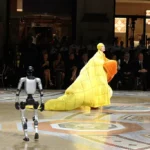
His choice of Alexander McQueen’s Spring/Summer 1998 show, "No. 13," as the ultimate fashion show to time-travel to, is particularly telling. This iconic show, featuring Shalom Harlow being spray-painted by robotic arms, is celebrated for its visceral emotion, technological innovation, and profound commentary on the relationship between humanity and machinery. It represents the pinnacle of fashion as performance art, an experience rather than merely a display of clothes—a sensibility Westerkamp clearly admires and seeks to emulate in his own conceptual presentations.
Westerkamp’s "Fashion Mount Rushmore"—Miguel Adrover, Miuccia Prada, Alexander McQueen, and Elsa Schiaparelli—further illuminates his aesthetic and philosophical leanings. Miguel Adrover is lauded for his radical repurposing of existing garments and his socio-political commentary embedded in fashion, a direct parallel to Westerkamp’s own upcycling philosophy. Miuccia Prada stands for intellectual rigor, subtle subversion, and a profound understanding of female identity. Alexander McQueen, as previously noted, represents unparalleled theatricality, emotional depth, and technical mastery. Elsa Schiaparelli, the surrealist pioneer, championed artistic collaboration, wit, and unexpected materials, embodying a fearless originality that broke traditional fashion norms. This quartet of designers underscores Westerkamp’s appreciation for innovation, conceptual depth, artistic expression, and a willingness to challenge the status quo.
His personal anecdotes, such as the ten-year-old Versace boxer briefs stolen from a hook-up, or his early memory of rocking baby blue hospital slip-ons despite being teased, speak to a deep-seated confidence in his own aesthetic choices and a defiant individuality. These moments reveal a designer who values personal narrative and authenticity, even in the most mundane or unconventional items, reinforcing the idea that fashion is an extension of identity, not merely trends.

When prompted to imagine a catwalk show with "money no object," Westerkamp envisions a "massive 90s locker room, huge open showers, all switched on and running hot: steamy. The audience would be placed right inside." This vision encapsulates his desire for immersive, sensory experiences, challenging the conventional distance between audience and presentation. It suggests a desire to break down barriers, creating an intimate, almost voyeuristic atmosphere that is both provocative and deeply engaging—a testament to his theatrical flair.
The Future of Resourceful Design
Yorick Westerkamp’s (PAPA) Yorick emerges not just as a new brand but as a significant voice advocating for a paradigm shift in the fashion industry. His work demonstrates that profound creativity and compelling aesthetics can flourish under self-imposed constraints, particularly when those constraints align with pressing global concerns like sustainability. By transforming his personal wardrobe into a canvas for grand narratives and intricate designs, Westerkamp offers a powerful blueprint for designers seeking to reconcile artistic ambition with environmental responsibility.
The implications of his approach extend beyond the immediate aesthetic impact. (PAPA) Yorick serves as an inspiring example of how individual ingenuity can challenge systemic waste and encourage a more thoughtful consumption of clothing. In an era where consumers are increasingly demanding transparency and ethical practices, brands like Westerkamp’s, built on principles of repurposing and storytelling, are poised to resonate deeply. His journey, from a period of isolation and physical limitation to the confident articulation of a unique design language, underscores the resilience of the creative spirit and the transformative potential of seeing value in the overlooked and the everyday. As the fashion industry continues its introspection regarding its future, designers like Yorick Westerkamp are not just creating clothes; they are crafting narratives of hope, resilience, and a more sustainable, imaginative tomorrow. His work invites us to reconsider our relationship with our own wardrobes, encouraging a deeper appreciation for the stories woven into the fabric of our lives.
The final question about seducing an alien race with "lingerie for all" and his preference for Helmut Lang Men’s Spring 1998, with his comment about "exploring my heterosexuality as an aesthetic these days," adds a layer of playful provocation and an ongoing exploration of identity that is