









Josh Silver’s inaugural adult novel, Fruit Fly, plunges readers into the intricate world of London’s literary scene, dissecting themes of identity, authenticity, addiction, and the often-dubious ethics of storytelling. The narrative commences amidst the ostentatious backdrop of a Friday night party in Crouch End, a setting populated by a self-proclaimed "wannabe Bloomsbury set," where cultural figures are casually reduced to "a total fucking mood." This satirical opening immediately establishes the novel’s critical lens on contemporary intellectual pretension and the commodification of artistic ideals.
The hosts of this gathering are Mallory and Ronan, a married couple whose lives project an image of effortless perfection. They are attractive, affluent, and reside in a meticulously designed home that serves as a testament to their curated existence. Mallory, once a celebrated literary figure following the success of her debut novel, Shallow Embers, finds herself in a post-success spiral, grappling with an acute case of writer’s block and an overwhelming obsession with maintaining her public image. Her internal struggle and external facade set the stage for the novel’s exploration of performativity, both personal and artistic.
The inciting incident unfolds as Mallory, a cisgender heterosexual woman unfamiliar with the intricacies of chemsex, embarks on a drunken internet search for inspiration, leading her unexpectedly to Grindr. This digital foray connects her with Leo, a young man entangled in addiction and a life of petty crime. Their burgeoning relationship forms the ethical core of Fruit Fly, presenting a complex dynamic where intentions are blurred and exploitation is a constant undercurrent. Leo, a self-confessed thief and fabulist, finds his narrative co-opted by Mallory, who sees in his lived experience the potential for her next bestseller. As both characters descend into increasingly desperate circumstances, Silver masterfully navigates the profound complexities of loneliness, fraught family dynamics, and the elusive nature of forgiveness.
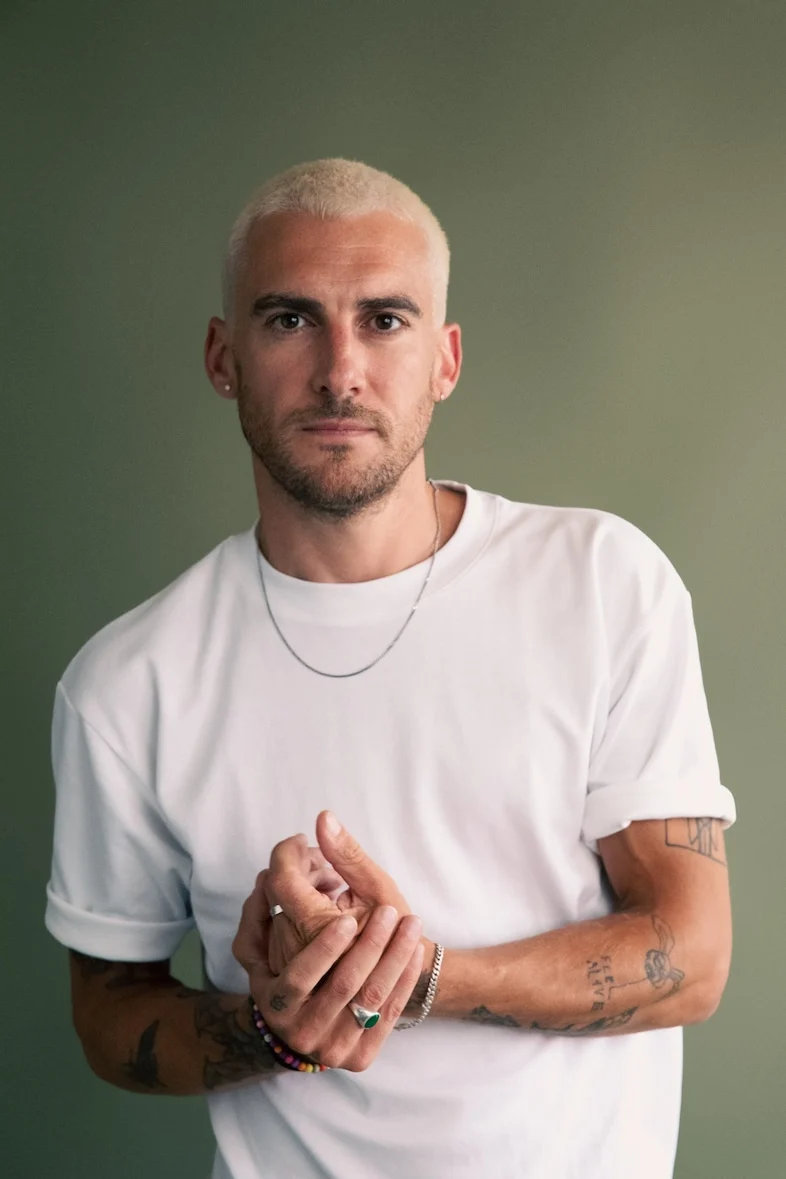
Josh Silver’s Transformative Career Path
Before venturing into the literary world, Josh Silver cultivated a diverse professional background, encompassing careers in acting and mental health nursing. His journey began with aspirations in theatre, leading him to train at the prestigious Royal Academy of Dramatic Art (RADA) in London and subsequently perform on both Broadway and the West End. This early chapter of his life, however, was marked by significant personal challenges, including a struggle with mental health and addiction.
"When you’re 17 and you’re choosing what you want to do with your life," Silver reflects on his acting career, "I certainly didn’t think too deeply about it. I had no real understanding of what that would look like in terms of a career." His pursuit of sobriety prompted a profound re-evaluation of his life’s direction and his definition of success. The pressure to maintain an acting career, despite his unhappiness, was rooted in a fear of perceived failure, especially after attending a renowned drama school and securing notable roles.
The pivotal moment arrived when Silver made the resolute decision to leave acting behind. "Literally the next day I signed up to retrain as a mental health nurse," he recounts. This pivot was driven by a deep-seated interest in human psychology, personality development, and interpersonal dynamics. The government’s provision of a second student loan for either teaching or nursing roles solidified his choice. During the COVID-19 pandemic, while many of his creative peers faced professional stagnation, Silver found himself immersed in the demanding yet rewarding environment of hospital wards, gaining invaluable experience and perspective. This period proved instrumental in shattering his preconceived notions of self and success, fostering a new sense of purpose that eventually reignited his creative spark, leading him to write a book every year for the past five years.
From Young Adult to Adult Fiction: A Shift in Approach
Silver’s literary output initially focused on young adult (YA) fiction, a genre he stumbled into rather than intentionally chose. His first book, set from the perspective of a 17-year-old in a dystopian origin story, drew heavily from his experiences and frustrations within the mental health system. It was his agent who identified its suitability for the YA market.
Transitioning to adult fiction with Fruit Fly marked a conscious shift in his authorial approach. Silver notes that while YA literature requires consideration for coming-of-age elements and a judicious handling of potentially triggering subjects, adult fiction offers a broader canvas for thematic exploration. "For adults, I felt like I could kind of go for it: there’s more space to explore human thought and the darkness that can come with it," he explains. This distinction allowed him to delve into the grittier, more morally ambiguous aspects of human experience without the inherent constraints of a younger readership, enabling a deeper examination of the psyche and societal complexities.
The Performativity of Pain and Systemic Pressures
Silver’s personal journey, particularly his struggles with addiction and the necessity of concealing aspects of his identity, profoundly informs the character of Leo in Fruit Fly. Leo, a 22-year-old gay man grappling with addiction, embodies a pain that Silver intimately understands. "I struggled a lot with addiction and having to hide parts of myself, coming from a world that didn’t fully accept who I was," he shares.
A central theme in the novel, and one that resonates deeply with Silver’s experience as a mental health nurse, is the "performativity of pain." He observes that Leo, like many individuals struggling within strained healthcare systems, learns to articulate and even exaggerate his suffering to be seen and heard. In a system where resources are scarce and beds are limited, the severity of one’s pain can dictate access to help. "I found the system to funnel people if the pain was being seen strongly enough," Silver explains. This phenomenon, where patients inadvertently learn to "perform" their distress to navigate bureaucratic hurdles, elevates pain to a form of currency or value within the narrative, prompting a critical examination of how suffering is perceived and utilized.
Evolving Perceptions of LGBTQ+ Identity and Storytelling
The conversation around identity and representation has undergone significant shifts throughout Silver’s lifetime, particularly concerning the LGBTQ+ community. He recalls a time in his acting career when discussing one’s gay identity was discouraged, seen as a potential impediment to professional advancement. "People would say to me, ‘Don’t mention that. It’s not going to help you,’" he recounts.
However, a dramatic shift occurred, driven by increasing calls for diversity and inclusive storytelling. Suddenly, being openly gay became an asset, a marketable identity. This rapid change raises a crucial question for Silver: Is this appetite for diverse narratives driven by genuine inclusion, or is it merely a commercial calculation? "The appetite for what is relevant – is it about making money, or is it about genuinely putting stories of diversity out there?" he ponders.
This leads to a broader discussion on authorial authenticity and the ethics of storytelling, a central pillar of Fruit Fly. The debate surrounding whether only gay actors should play gay characters, or whether straight actors can authentically portray gay trauma, parallels the literary question: Can writers only depict experiences that mirror their own? Silver challenges this notion by consciously writing Mallory, a cishet woman, from her perspective. "Am I only supposed to write people from my perspective, that have gone through the pain I’ve gone through? If I write about someone else’s pain, am I appropriating it, or am I using it in a positive way to shine a light?" These questions are not merely rhetorical; they are the very engine of Fruit Fly, prompting readers to consider the boundaries of empathy and creative license. Silver cites R.F. Kuang’s Yellowface, which cleverly addresses these themes through the lens of a white woman appropriating an Asian author’s work, as a significant inspiration for Fruit Fly‘s meta-narrative.
Shared Pain and the "Fag Hag" Trope
A provocative assertion in Fruit Fly posits that Leo and Mallory, despite their disparate backgrounds, share a fundamental commonality. Leo suggests that he steals Mallory’s possessions, while she steals his story, implying a parallel in their exploitative behaviors. Silver affirms this perspective, highlighting a shared subconscious pain rooted in the patriarchal, heteronormative systems they inhabit.
He delves into the historical "fag hag" dynamic, often a derogatory term, to illustrate a deeper bond between straight women and gay men. "It’s a bond between these two communities where we actually are sharing in an understanding of what it’s like to live in a world that is stacked against us," Silver explains. Mallory, manipulated and controlled by her husband’s demands, seeks an escape, while Leo struggles against a world that has marginalized him due to his sexuality. Their individual quests for connection, though manifesting differently, stem from similar wells of pain and a desire to break free from oppressive structures.
Mallory’s repeated justification for her questionable actions—"This is not problematic. This is unhinged bravery"—encapsulates the blurred line between self-preservation, genuine curiosity, and outright exploitation. Her fascination with Leo’s life, her clandestine attendance at an Alcoholics Anonymous meeting to glean his story, speaks to a desperate search for vitality and inspiration. Silver acknowledges the frustration and anger that can arise when stories are told by those outside the demographic, but emphasizes that Fruit Fly aims to explore these ambiguities rather than provide definitive answers. The act of writing the book itself was, for him, a personal exploration of these complex ethical terrains.
Satirizing the Publishing Industry and the Digital Age
Fruit Fly offers a sharp, satirical critique of the contemporary publishing industry, reflecting its increasingly commercialized and trend-driven landscape. Mallory’s initial success, for instance, is attributed not to critical acclaim but to a YouTuber who championed her book’s cover, underscoring the powerful influence of social media platforms like BookTok. The novel also touches upon the industry’s demand for specific narratives, the pursuit of screen adaptations, and editors’ pressures for certain endings—all elements that highlight the business-first mentality often overshadowing artistic integrity.
Silver’s interest lies in the "push for diversity" within publishing and the underlying nuances of this movement. Is it a genuine commitment to broader representation, or a calculated move to capitalize on cultural trends and boost sales? "The publishing industry is excited to have narratives about gay or LGBTQ+ people now, but lots of people used to not care," he points out. This shift raises questions about the authenticity of such engagement: "Now it’s useful to you to have that pain and that struggle. Do you sell more books because the cultural narrative is saying we can read those now?"
The novel scrutinizes the industry’s pervasive discourse around "authentic voice"—the expectation that authors must closely mirror their characters’ identities to tell their stories. Silver describes this as a "very muddy conversation," full of complexities that Fruit Fly seeks to unravel through its narrative choices. By satirizing the mechanisms through which art becomes commodified and personal narratives are co-opted, Silver creates a meta-commentary on the symbiotic and often parasitic relationship between life, art, and commerce.
Fruit Fly stands as a timely and provocative contribution to contemporary literature, inviting readers to critically examine the narratives they consume and the hands that shape them. It challenges conventional notions of empathy, authenticity, and the very act of storytelling in an increasingly complex and interconnected world.
Fruit Fly is published on April 23.