







Stepping into the digital labyrinth of the looksmaxxing manosphere reveals a complex ecosystem of advice, often culminating in highly questionable and dangerous do-it-yourself (DIY) practices aimed at achieving perceived male aesthetic ideals. These communities, flourishing across online forums, social media platforms like TikTok and YouTube, and encrypted chat groups, advocate for a range of methods—from seemingly innocuous facial exercises to extreme, medically unsupported, and life-threatening interventions—all in pursuit of a more "attractive" or "hypermasculine" appearance. The underlying philosophy often champions self-reliance and distrust of mainstream institutions, leading adherents down unregulated and perilous paths.
The Genesis and Growth of Looksmaxxing: A Digital Phenomenon
Looksmaxxing, a portmanteau of "looks" and "maximizing," emerged from the broader "manosphere"—a loose collection of online communities and ideologies centered around masculinity, men’s rights, and anti-feminist sentiments. While the term itself gained prominence in the mid-2010s, its roots can be traced to earlier online forums where men discussed self-improvement and attraction. Initially, it encompassed general advice on fitness, diet, fashion, and grooming. However, over time, the discourse has increasingly gravitated towards altering facial structure and body composition through non-traditional, often extreme, and medically unsound means.
The proliferation of looksmaxxing accelerated with the rise of visual social media platforms. Hashtags related to looksmaxxing, mewing, and "hunter eyes" have garnered millions of views on TikTok and YouTube, creating echo chambers where unverified claims are amplified and dangerous practices are normalized. These platforms serve as fertile ground for influencers who often leverage their own transformations—sometimes achieved through undisclosed medical procedures or even illicit substances—to gain followers and monetize their content. The allure for many young men stems from societal pressures regarding appearance, often exacerbated by unrealistic beauty standards promoted online and a perceived decline in male attractiveness in the dating market, a common grievance echoed within the manosphere. Data from various surveys indicates a growing concern among men regarding body image, with a significant percentage reporting dissatisfaction with their physical appearance, fueling the demand for perceived "solutions."
A Toolkit of Danger: Deconstructing Looksmaxxing Practices
The methods promoted within looksmaxxing communities can be broadly categorized into non-invasive DIY, moderately invasive unregulated, and outright dangerous. Each category presents its own set of risks, largely due to the absence of scientific validation, medical supervision, and professional expertise.
The Myth of DIY Facial Remodeling
Among the most common, yet scientifically dubious, practices are those aimed at altering facial structure through exercises and habits:
- Mewing: This involves positioning the tongue against the roof of the mouth, supposedly to reshape the jawline and improve facial symmetry. While some proponents claim it can correct orthodontic issues or define the jaw, the scientific community largely dismisses these claims, especially for adults whose facial bones are fully developed. Orthodontists and maxillofacial surgeons caution that improper tongue posture can, in fact, lead to issues like temporomandibular joint (TMJ) disorders, discomfort, and even dental problems, rather than aesthetic improvements.
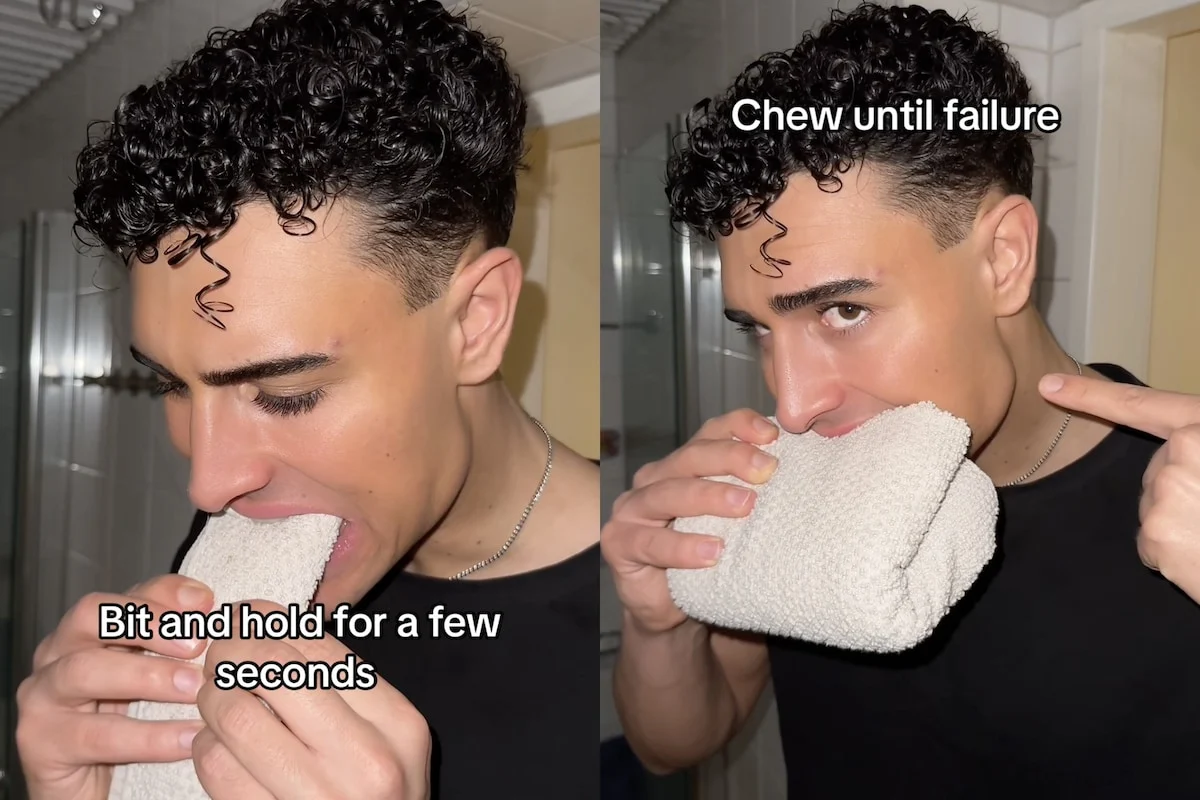
- Towel Biting: Adherents chew on a folded towel for extended periods daily, believing it will build jaw muscles and create a more chiselled appearance. Similar to mewing, this practice lacks scientific backing. Excessive chewing can lead to jaw pain, TMJ dysfunction, damage to dental enamel, and muscle hypertrophy in a way that is not necessarily aesthetically pleasing or healthy.
- Facial Exercises (Zygopush, Hunter Squeeze): These exercises aim to hollow out cheeks or create "wolf-like" or "hunter eyes" by manipulating facial muscles and skin. While some mild facial exercises can improve muscle tone, they cannot alter bone structure or eye shape. Aggressive manipulation can stretch skin, potentially accelerating wrinkle formation, and offers no guaranteed results for the desired structural changes.
Dr. Eleanor Vance, a consultant plastic surgeon specializing in facial aesthetics, emphasizes, "The underlying bone structure of the face is largely genetically determined and fixed by adulthood. While muscle mass can change, it cannot reshape bone. Many of these DIY techniques risk soft tissue damage, joint problems, and unrealistic expectations, rather than delivering genuine, safe improvements."
Bone Smashing: A Recipe for Disaster
Perhaps the most alarming and overtly dangerous practice is "bone smashing." This involves intentionally hitting one’s face with a hard object, often a household hammer, based on the pseudo-scientific belief that microfractures will stimulate bone regrowth, making facial bones "stronger" and more defined. This concept, loosely and incorrectly drawing from Wolff’s Law (which states that bone adapts to the loads it is placed under), is a catastrophic misapplication of biological principles.
The medical community universally condemns bone smashing as extremely dangerous. Instead of leading to stronger, more defined bones, it carries an immediate and severe risk of:
- Severe Fractures: Causing permanent disfigurement, requiring extensive reconstructive surgery.
- Infections: Open wounds and internal bone damage are highly susceptible to bacterial infections, potentially leading to osteomyelitis (bone infection) or sepsis.
- Nerve Damage: Leading to paralysis, loss of sensation, or chronic pain.
- Eye Injury: Including blindness.
- Brain Injury: Due to trauma to the skull.
- Scarring: Extensive and disfiguring scarring.
"The notion that blunt force trauma can selectively strengthen facial bones is not just absurd, it’s profoundly dangerous," states Dr. Marcus Thorne, an emergency room physician. "We’ve seen patients with severe facial trauma from accidents, and the outcome is rarely a ‘stronger’ or more ‘defined’ bone; it’s often a complex, life-altering injury. Deliberately inflicting such trauma is an act of self-mutilation with severe, potentially fatal, consequences."
The Perilous Path of Unregulated Substances
Beyond DIY physical manipulation, looksmaxxing communities frequently promote the use of unregulated and illicit substances for more invasive "enhancements." These often include performance-enhancing drugs, experimental pharmaceuticals, and unapproved injectables.
- Steroids and Testosterone Injections: Many looksmaxxers, including prominent figures like "Clavicular" (Braden Peters), openly discuss using testosterone and other anabolic steroids, often sourced from the internet or black markets, sometimes starting at a very young age. Clavicular, for instance, reportedly began ordering testosterone online at 14. Using these powerful hormones without medical supervision carries immense risks, including:
- Hormonal imbalances, impacting natural testosterone production.
- Cardiovascular issues (high blood pressure, heart damage).
- Liver damage.
- Psychological effects (aggression, mood swings).
- Infertility.
- Acne, hair loss, and gynecomastia (enlarged male breasts).
- For adolescents, premature closure of growth plates, stunting growth.
- Experimental Weight-Loss Drugs and Appetite Suppressants: Clavicular also admitted to using methamphetamines as an appetite suppressant and experimenting with Retatrutide, an experimental weight-loss drug not yet approved for general use. The use of illicit drugs like meth carries extreme health risks, including addiction, cardiovascular damage, neurological issues, and severe psychological disturbances. Experimental drugs, by definition, have not undergone rigorous testing for safety and efficacy, making their unregulated use a dangerous gamble with unknown side effects.
- Peptide Injections: Influencers like Joe Rogan have popularized peptides, such as BPC-157, for healing and performance enhancement, claiming benefits for injuries like elbow tendonitis. While some peptides have legitimate medical research applications, many are not approved for human use in a therapeutic context by regulatory bodies like the FDA. Looksmaxxers frequently turn to grey or black-market suppliers for these, risking contaminated products, incorrect dosages, and severe adverse reactions due to impurities or unknown long-term effects. The lack of sterile conditions for injection also presents a high risk of local and systemic infections.
- Injectable Collagen Threads and Fat Dissolvers: Clavicular also reportedly experimented with injecting dissolvable collagen threads into his penis for volume. Injecting any substance, especially non-medical grade or unapproved materials, into sensitive areas of the body without proper medical training and sterile techniques can lead to severe complications, including infection, granulomas (hardened lumps), scarring, tissue necrosis, and permanent disfigurement. Similarly, self-administering fat dissolvers can cause burns, nerve damage, and severe scarring.
These methods are not only physically dangerous but also legally precarious, as acquiring and using many of these substances outside of medical prescription is illegal. The absence of medical oversight means individuals lack crucial information about dosages, interactions, and potential side effects, transforming self-enhancement into a high-stakes experiment.
The Psychological and Sociological Roots of DIY Masculinity
The pervasive preference for off-market, DIY, or unregulated methods within the looksmaxxing manosphere is not arbitrary. It is deeply embedded in a particular strain of masculine ideology, as elucidated by sociological research.
Distrusting the "Matrix": Anti-Establishment Sentiments
According to Steven Roberts, a sociology professor at Monash University, this inclination is rooted in a desire to "signal that improvement is earned, not bought, which aligns with [the neoliberal masculine] ideals of independence and self-reliance." This perspective is crucial. In a world perceived as rigged or "the matrix"—a term borrowed from popular culture and frequently used in the manosphere to denote a system of societal control—professional institutions and commercial industries are often viewed with suspicion.
Professor Roberts explains, "In the manosphere, there’s sometimes a stated suspicion of commercial industries, [which] might even be situated as part of the exploitative or misleading ‘matrix’." This anti-establishment stance extends to the medical and beauty industries, which are often framed as profiting from male insecurity without offering genuine, "earned" solutions. The idea is that true improvement comes from self-mastery, discipline, and unconventional knowledge, rather than relying on external, commercialized services. This narrative fosters a community where members encourage each other to find "roundabout ways" of obtaining substances, such as posing as trans teenagers on forums to learn about off-market hormone acquisition, further bypassing legitimate medical channels.
The Rejection of "Feminine" Consumerism
Beyond distrust, another powerful driver is the perceived femininity of shopping and consumerism, particularly within the beauty industry. Historically, as sociologist Ann Oakley argued in her 1970s work, The Sociology of Housework, women’s exclusion from the workforce often limited avenues for identity formation, making consumption one of the few available means of self-expression. Over time, this contributed to a cultural framing of shopping as both feminine and a site of manipulation—an activity aligned with passivity rather than control.
Traditional masculinity, which often defines itself in opposition to what it perceives as feminine, therefore encourages men to distance themselves from practices culturally coded as "vain" and "frivolous," such as dependency on consumer goods and mainstream beauty work. Looksmaxxing, by emphasizing "DIY hacks," "discipline," "resourcefulness," and even "danger," re-frames aesthetic improvements through perceived hypermasculine terms. This is why male beauty brands often align themselves with militaristic or "tough" imagery; for example, male makeup brand War Paint or wellness brand Bravo Sierra, which collaborates with the US military. This re-framing allows men to engage in aesthetic pursuits while ostensibly adhering to masculine ideals of autonomy and resilience, even when these pursuits lead to dangerous, unverified practices.
Expert Voices: Warnings from the Medical and Academic Communities
The medical community is unequivocal in its condemnation of looksmaxxing’s dangerous practices. Dr. Sarah Jenkins, a dermatologist, warns, "There is zero scientific basis for practices like ‘bone smashing’ or self-injecting unregulated substances. These are not only ineffective but incredibly harmful, leading to irreversible damage, severe infections, and potentially life-threatening complications." Endocrinologists frequently highlight the severe and lasting impact of unregulated hormone use, especially in adolescents, affecting fertility, sexual function, and overall endocrine health.
Psychologists and mental health experts also express deep concern. Dr. Alex Thorne, a clinical psychologist specializing in body image, notes that looksmaxxing communities can exacerbate existing body dysmorphia and anxiety. "These spaces often prey on male insecurity, offering quick fixes that rarely work, leading to a cycle of disappointment, heightened anxiety, and a deeper dive into more extreme, dangerous behaviors," Thorne explains. "The constant comparison and pursuit of an unattainable ideal fostered in these communities can severely damage mental well-being."
Sociologists like Professor Roberts continue to highlight the broader societal implications, including how these online spaces can become conduits for radicalization. "The ‘matrix’ narrative, coupled with the distrust of mainstream institutions, can make individuals more susceptible to other extreme ideologies prevalent in the manosphere," he observes. "It’s not just about appearance; it’s about a worldview that fosters alienation and distrust, making young men vulnerable to manipulation."
Broader Implications: Health, Mental Well-being, and Societal Norms
The proliferation of looksmaxxing practices presents a growing public health challenge. As more individuals, particularly young men, engage in these unregulated and dangerous methods, emergency rooms and medical clinics may see an increase in cases of severe injuries, infections, and complications arising from self-inflicted harm or illicit substance use. The long-term health consequences, including chronic pain, disfigurement, organ damage, and mental health disorders, represent a significant burden on individuals and healthcare systems.
Beyond physical health, the mental health implications are profound. The relentless pursuit of an unattainable aesthetic ideal, fueled by online comparisons and influencer culture, can lead to severe body dysmorphia, anxiety, depression, and low self-esteem. The "looksmaxxing" journey, far from enhancing well-being, often traps individuals in a cycle of insecurity, self-criticism, and risky behaviors. The constant exposure to unrealistic standards and the pressure to conform to a hypermasculine ideal can erode self-acceptance and foster a negative self-image.
Societally, these trends reflect and reinforce harmful masculine norms. The emphasis on a specific, often aggressive, aesthetic ideal for men ("hunter eyes," "chiselled jawline") perpetuates narrow definitions of masculinity, pressuring men to conform to a rigid visual standard. This can stifle individuality and promote superficial values over character and genuine self-worth. The anti-establishment rhetoric also contributes to a broader societal distrust of scientific expertise and professional guidance, which has implications far beyond aesthetic pursuits.
The Unseen Cost: A Cycle of Insecurity and Profit
The irony inherent in the looksmaxxing phenomenon is stark. While purporting to offer an "earned" path to self-improvement and rejecting mainstream commercialism, many of these online spaces ultimately reproduce similar commercial dynamics. Influencers and content creators often profit handsomely from their audience’s insecurities and desire for self-betterment, whether through direct monetization of content, affiliate marketing for unregulated products, or the promotion of their own "guides" and "routines." This creates a new, often more insidious, form of exploitation where vulnerable individuals are steered towards dangerous and ineffective practices under the guise of "anti-establishment" wisdom.
Ultimately, when these DIY tricks inevitably offer little in the way of safe or effective results, the looksmaxxing narrative often provides another "lesson" for its adherents: the world, including legitimate institutions, cannot be trusted, reinforcing the cycle of cynicism and driving individuals further into the unregulated fringes. This perpetuates a dangerous feedback loop where initial disappointment leads to deeper distrust and a greater willingness to embrace increasingly extreme and hazardous "solutions," highlighting the urgent need for critical media literacy, mental health support, and accurate information to counter the pervasive and perilous allure of the looksmaxxing manosphere.