






Step inside the looksmaxxing manosphere and you’ll be inundated with tips and tricks on how to become more attractive, a digital realm where the pursuit of an idealized masculine physique takes a dark turn, leading adherents down paths of unverified, often dangerous, DIY methods and illicit substance use. The subculture, which has gained significant traction across social media platforms and dedicated online forums, promises a sculpted jawline, "hunter eyes," and an overall more "alpha" appearance, often through methods devoid of scientific backing and medical oversight. From rudimentary facial exercises to the self-administration of powerful hormones and experimental drugs, the looksmaxxing movement presents a complex interplay of body image anxiety, anti-establishment sentiment, and the commercialization of insecurity.
The DIY Arsenal: From Jawline Hacks to "Bone Smashing"
The foundational tenets of looksmaxxing largely revolve around at-home, do-it-yourself hacks designed to physically alter facial and bodily structures. These methods, propagated through online tutorials and community forums, range from the seemingly benign to the outright perilous. Among the most widely discussed is "mewing," a practice advocated by orthodontist Dr. John Mew and his son Mike Mew, which involves positioning the tongue against the roof of the mouth with the purported aim of improving jawline definition and facial structure. While proponents claim it can correct malocclusions and enhance aesthetics, mainstream medical and dental communities largely dismiss its efficacy for adults, citing a lack of peer-reviewed evidence and potential for exacerbating existing dental issues if performed incorrectly.
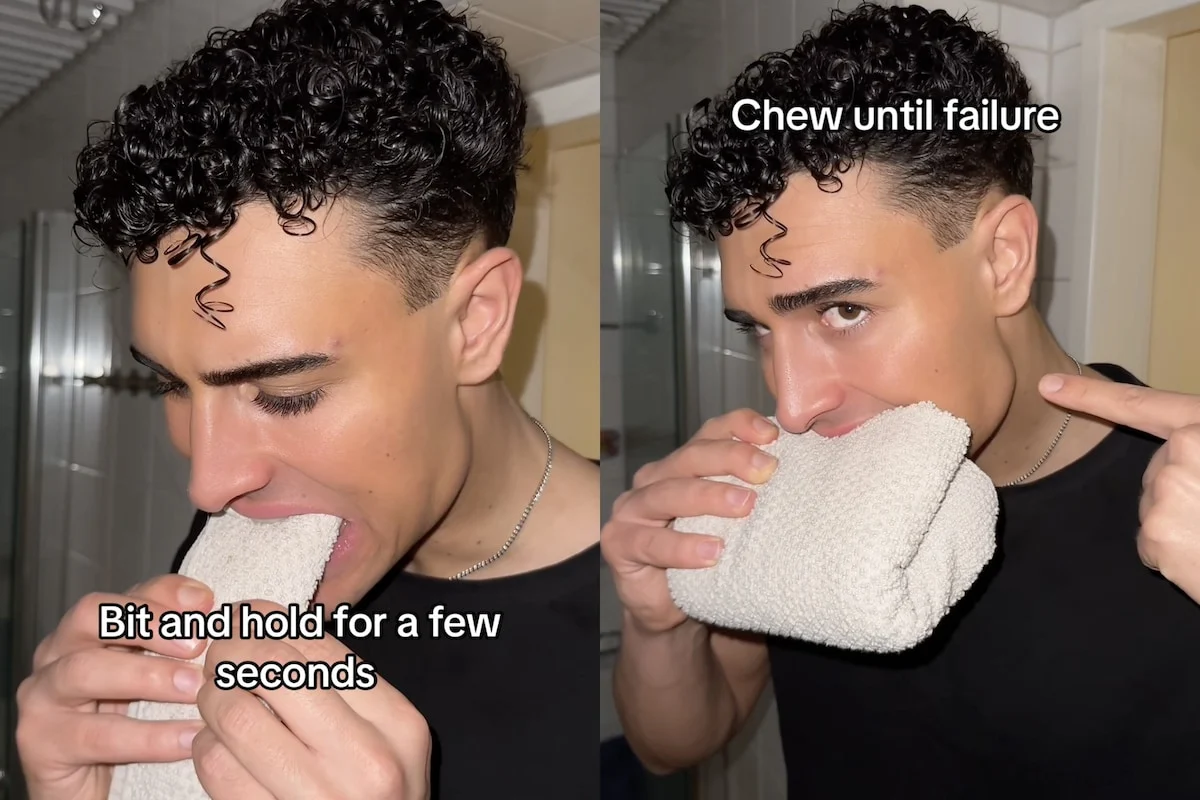
Another common practice is "towel biting," where individuals chew on a folded-up towel for approximately 15 minutes a day, believing this repetitive stress will strengthen jaw muscles and lead to a more chiseled look. Similarly, facial exercises like "Zygopush" and "the Hunter Squeeze" are promoted to hollow out cheeks and achieve "wolf-like" eyes, respectively. These exercises, often involving manual pressure or specific muscle contractions, are presented as natural alternatives to cosmetic surgery. However, dermatologists and plastic surgeons frequently warn that such strenuous facial manipulations can, over time, contribute to skin laxity, premature wrinkles, and even temporomandibular joint (TMJ) disorders, rather than yielding the desired structural changes.
The most extreme and alarming of these DIY methods is "bone smashing." This practice is based on the pseudoscientific belief that repeatedly hitting one’s facial bones with a household hammer or other blunt objects will cause microfractures that, upon healing, will result in stronger, more defined bone structure. Medical experts unequivocally condemn bone smashing as extraordinarily dangerous, warning of severe consequences including permanent disfigurement, fractures, nerve damage, chronic pain, infection, and even life-threatening trauma. Orthopedic surgeons and craniofacial specialists emphasize that bone remodeling is a complex biological process that cannot be influenced positively or safely by blunt force trauma, and attempting to do so is an act of self-harm.
The Escalation to Illicit and Unregulated Substances
Beyond the realm of DIY hacks, looksmaxxing frequently delves into more invasive and profoundly risky territories, often involving the procurement and self-administration of unregulated substances. This includes the use of anabolic steroids, fat dissolvers, and testosterone injections, typically sourced from untraditional, unregulated, or black-market channels.
Prominent figures within the looksmaxxing sphere exemplify this dangerous trend. "Clavicular," a well-known looksmaxxer, has openly admitted to a history of extreme and dangerous practices. He has stated using methamphetamine in the past as an appetite suppressant, a highly addictive and destructive illicit drug with severe health implications for the cardiovascular and neurological systems. He also reported using Retatrutide, an experimental weight-loss drug not yet approved for public use, highlighting a willingness to experiment with substances outside established medical protocols. Furthermore, Clavicular revealed he began ordering testosterone off the internet at the age of 14, bypassing medical supervision crucial for hormone therapy, and has even experimented with injecting dissolvable collagen threads into his penis for volume, a procedure fraught with risks of infection, scarring, and permanent damage when performed unprofessionally.
The allure of performance-enhancing drugs extends to peptides. Manosphere influencers like Joe Rogan have, for instance, championed the benefits of unregulated, experimental peptides, with Rogan crediting BPC-157 for healing elbow tendonitis in a remarkably short period. While some peptides show promise in clinical research, their unregulated availability leads many individuals to turn to grey or even black-market suppliers, where product purity, dosage accuracy, and safety are entirely unverified. The lack of regulatory oversight means these substances can contain contaminants, incorrect dosages, or entirely different compounds, posing serious health risks including liver damage, kidney failure, cardiovascular complications, and endocrine disruption.
Online looksmaxxing forums, such as Looksmxxing Forum, further illustrate the depths of this illicit trade, with members openly encouraging one another to exploit loopholes or engage in deceptive practices to obtain hormones. Some threads advise individuals to pose as transgender teenagers to learn "roundabout ways" of acquiring hormones through off-market channels, demonstrating a troubling disregard for ethical boundaries and medical safety in their pursuit of physical alteration. This highlights a culture of distrust in conventional medical pathways, often framed as part of an exploitative "matrix," leading users to seek alternative, dangerous routes.
The Manosphere’s Ideological Roots: Distrust, Self-Reliance, and the Rejection of the "Feminine"
The deep-seated preference for off-market hacks and DIY solutions within the looksmaxxing community is not merely a matter of convenience or cost; it is profoundly rooted in a specific ideological framework prevalent in the manosphere. According to Steven Roberts, a sociology professor at Monash University, this approach is driven by a desire to "signal that improvement is earned, not bought, which aligns with [the neoliberal masculine] ideals of independence and self-reliance." This ethos posits that true masculine self-improvement must come through arduous, autonomous effort, rather than reliance on external, commercial entities.
Despite often mirroring the competitive and individualistic language of the market economy, the manosphere frequently expresses profound distrust of "the establishment" and professional institutions, including the medical and beauty industries. Professor Roberts explains, "In the manosphere, there’s sometimes a stated suspicion of commercial industries, [which] might even be situated as part of the exploitative or misleading ‘matrix’." This worldview casts established systems as manipulative forces designed to disempower men, thereby justifying a turn towards unconventional, unregulated, and often clandestine methods.
This ideological stance also informs a strong reluctance among looksmaxxers to identify as "consumers," particularly within the beauty industry, which has historically been culturally coded as feminine. Ann Oakley’s seminal 1970s work, The Sociology of Housework, argued that women’s exclusion from the workforce often limited their avenues for identity formation, making consumption one of the few available means of self-expression. Over time, this contributed to a cultural framing of shopping and beauty work as both feminine and a site of manipulation—an activity aligned with passivity rather than active control.
As traditional masculinity defines itself in opposition to what it perceives as feminine, men seeking to embody this ideal must distance themselves from practices culturally coded as feminine, such as dependency on consumer goods and overt beauty work, which are often dismissed as "vain" and "frivolous." Looksmaxxing, therefore, ingeniously reframes aesthetic improvements through perceived hypermasculine terms: autonomous, resourceful, disciplined, and even dangerous. This reframing allows men to engage in appearance-enhancing activities while maintaining a perceived distance from "feminine" consumerism, aligning their pursuit with ideals of strength and self-mastery.
This explains why many beauty and wellness brands targeting men often align themselves with hypermasculine imagery or concepts of warfare. Examples include male makeup brand War Paint or wellness brand Bravo Sierra, which collaborates with the U.S. military to develop and test its products. This strategic branding attempts to legitimize male engagement with personal care by associating it with traditionally masculine domains. Similarly, it rationalizes the looksmaxxer’s comfort with alternative or DIY practices, despite the inherent lack of guaranteed success or safety. As Laura Pitcher aptly concluded in a Dazed article, "Following Clavicular’s lead towards a ludicrous beauty standard is without a doubt dangerous for your health."
The Digital Echo Chamber: Amplification, Exploitation, and Unrealistic Ideals
The rise of looksmaxxing cannot be understood without acknowledging the powerful role of digital platforms and social media algorithms. Online communities on Reddit, TikTok, and dedicated forums serve as echo chambers where these practices are shared, glorified, and amplified. Young men, often grappling with insecurities, social anxiety, or feelings of inadequacy in a highly visual and competitive digital landscape, are particularly susceptible to the promises of quick and radical transformations. Algorithms, designed to maximize engagement, can inadvertently push users deeper into these niches, exposing them to increasingly extreme content and creating a false sense of widespread acceptance for dangerous methods.
This environment fosters a culture where influencers, despite their anti-establishment rhetoric, paradoxically profit from their audience’s insecurities and desires for self-betterment. These individuals monetize their content through advertising, sponsorships, or direct sales of unproven supplements, effectively creating a parallel commercial ecosystem that mirrors the very "matrix" they claim to oppose. The irony, as Professor Roberts notes, is that "many of these [looksmaxxing] spaces reproduce similar commercial dynamics in different forms." This creates a cycle of exploitation where vulnerable individuals are sold unrealistic ideals and dangerous methods, often with little or no tangible positive results.
The pervasive nature of looksmaxxing content contributes to the normalization of body dysmorphia among men, where minor perceived flaws are magnified into significant sources of distress, driving individuals to extreme measures. The pursuit of "hunter eyes" or a "canthal tilt" reflects a hyper-specific, often unattainable aesthetic ideal that can severely impact mental health. When these DIY tricks and illicit substances inevitably fail to deliver the promised results, the looksmaxxing journey can devolve into deeper disillusionment and distrust, reinforcing the narrative that "the world cannot be trusted" and leaving young men more isolated and vulnerable than before.
Health and Psychological Consequences: A Dire Outlook
The implications of looksmaxxing are far-reaching and predominantly negative, spanning severe physical health risks and profound psychological damage. Physically, the self-inflicted trauma of "bone smashing" can lead to permanent disfigurement, chronic pain, and dangerous infections. The unsupervised use of steroids and hormones can cause irreversible hormonal imbalances, organ damage (including liver and kidney failure), cardiovascular disease, infertility, and severe mood swings. Experimental drugs like Retatrutide, used outside of clinical trials, carry unknown side effects that could be catastrophic. Even seemingly innocuous practices like excessive jaw exercises can lead to TMJ disorders, chronic pain, and dental issues.
Psychologically, the constant pursuit of an idealized, often unattainable, aesthetic fuels body dysmorphia and a distorted self-image. Individuals become fixated on minute details of their appearance, leading to anxiety, depression, and social withdrawal. The reliance on illicit substances can also lead to addiction, further compounding mental health issues. The manosphere’s toxic environment, which often promotes misogyny and aggression, can also contribute to a sense of isolation and a distorted understanding of healthy relationships and self-worth.
The prevalence of looksmaxxing represents a significant public health challenge. Medical professionals are increasingly encountering young men presenting with complications arising from these unregulated practices. Dermatologists report patients with skin damage from unverified products, while endocrinologists treat severe hormonal imbalances from self-administered steroids. The challenge is exacerbated by the secrecy and distrust inherent in the looksmaxxing community, making it difficult for individuals to seek legitimate medical help when complications arise.
Conclusion: Navigating the Perils of a Digital Obsession
Looksmaxxing, a growing phenomenon within the online manosphere, embodies a complex and dangerous intersection of male body image anxiety, anti-establishment ideology, and the digital amplification of misinformation. While promising self-improvement and a path to hypermasculine attractiveness, it often delivers only physical harm, psychological distress, and a reinforcement of toxic ideals. The allure of DIY fixes and illicit enhancements, fueled by a deep-seated distrust of conventional institutions and a rejection of perceived "feminine" consumerism, lures individuals into practices devoid of scientific validation and medical safety.
As this trend continues to evolve and proliferate online, it underscores an urgent need for critical media literacy, particularly among young men navigating the pressures of digital self-presentation. Addressing the underlying insecurities that drive individuals towards looksmaxxing requires a broader societal conversation about male body image, mental health, and the pervasive influence of online communities. Ultimately, the narrative that self-worth and attractiveness are found through dangerous, unproven means is a deceptive one, leaving its adherents not empowered, but often more vulnerable and exploited than before.